

As Israel held memorial ceremonies to mark two years since the October 7 Hamas massacre, a very different scene unfolded Tuesday evening in the heart of Berlin—the capital of the country that has long vowed to learn the lessons of history.
In Alexanderplatz, one of Berlin’s central squares, a few dozen young people—most of them Germans—gathered for what organizers called a “celebration” of the day that saw more than 1,200 Israelis slaughtered. Wearing keffiyehs and waving Palestinian flags, participants danced and chanted “Viva Palestina,” while police looked on.

Among them was Martina, a 22-year-old German history student. With a keffiyeh draped around her neck and an unflinching stare, she spoke with chilling conviction. “We’ve been a community for two years now,” she said. “We meet once or twice a week, raise banners, shout together. I don’t see why we should stop today. Something great happened two years ago—we proved we can break Jewish colonialism.”
A canceled protest turned into a street party
Berlin police had initially expected around 2,000 participants but revoked the demonstration’s permit just hours before it began. In the end, only a few dozen people showed up, vastly outnumbered by police—roughly a dozen officers for every demonstrator.
“We received special instructions today,” one officer told a reporter. “It’s October 7.”
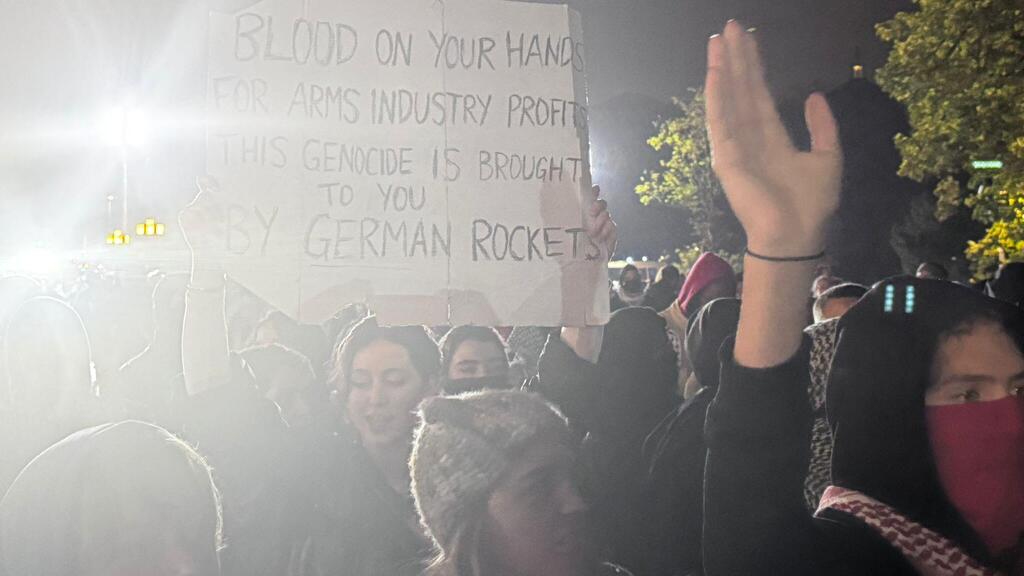
The cancellation followed signs of unrest the night before, when city walls, bulletin boards and lampposts were plastered with posters advertising “October 7 celebrations” and calling for “the continuation of the intifada.”
On one poster showing Shani Louk—a German-Israeli woman murdered at the Nova music festival—black paint had been smeared across her face and over the words “We are all Shani Louk.” Elsewhere in the city, photos of Israeli hostages and victims were displayed in somber remembrance.
When a Palestinian flag appeared and the first cry of “Viva Palestina” rang out, a line of heavily armed officers immediately moved in. Even in a Europe now accustomed to anti-Israel rallies masked as “protests,” a party celebrating the mass murder of Jews seemed to cross an unmistakable line.
“What is Nova?”
When told by a reporter that the Nova music festival—where hundreds of young people were massacred on Oct. 7, 2023—was being commemorated that same day at a Berlin exhibition, Martina appeared puzzled. “What is Nova?” she asked innocently.

In contrast, Berlin’s Brandenburg Gate was illuminated with the colors of the Israeli flag to mark the massacre
(Photo: Odd Anderson/ AFP)
Similar incidents were reported worldwide on the second anniversary of the massacre. In Melbourne, graffiti reading “Glory to Hamas” and “October 7—do it again” appeared across the city. In Amsterdam, the Royal Palace was defaced with red paint and the words “F*** Israel.”
In Britain, a young woman was filmed cutting down yellow ribbons for the hostages, claiming they “justify genocide.” And in Italy, authorities in Bologna canceled an event titled “Long live October 7, long live Palestinian resistance,” which had been organized by a local Palestinian youth group.
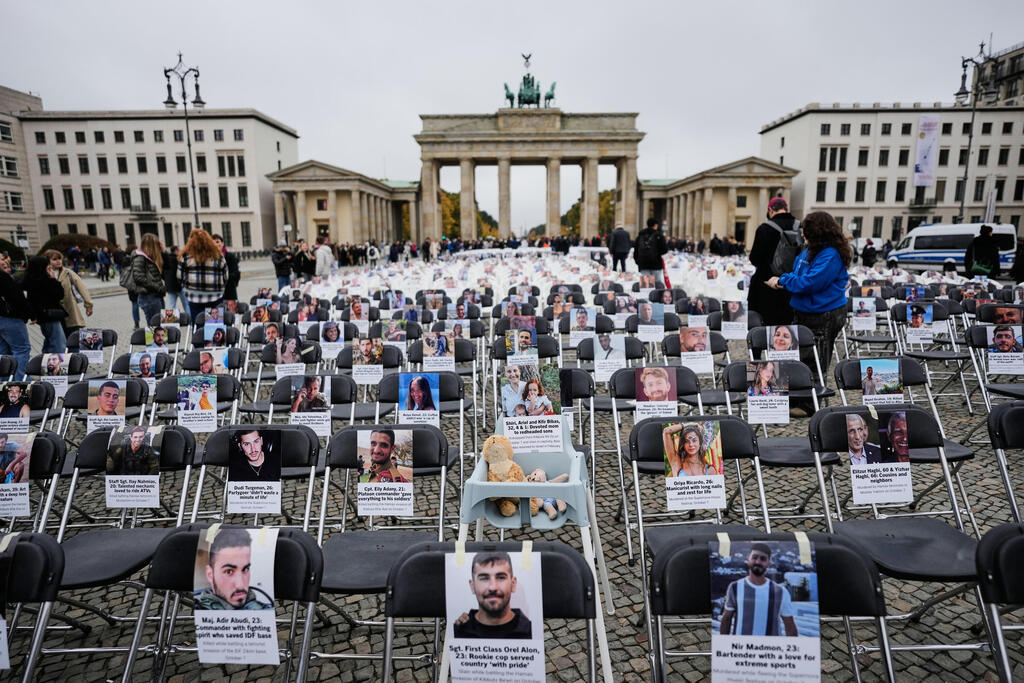
Marking October 7 in Berlin
(Photo: Reuters/Lisi Niesner, AP /Markus Schreiber)
The invitation had declared: “For two years, the resistance has been delivering defeats to Zionism.”
As Berlin’s Brandenburg Gate was lit in blue and white in memory of the victims, just blocks away, young revelers in keffiyehs celebrated what they called “the breaking of Jewish power”—a chilling reminder that, for some, the lessons of history are still far from learned.