


The negotiations in Islamabad got off to a positive start from the American perspective: senior Iranian officials from the regime in Tehran sat down Saturday in Islamabad for direct talks with senior representatives of the U.S. administration, despite previously threatening not to do so as long as, in their view, Washington was not meeting the ceasefire’s preconditions. As an additional act of defiance, Iran also continued to block the Strait of Hormuz, in violation of the ceasefire terms announced by President Donald Trump.
Still, both sides appear to have a strong interest in preserving the fragile ceasefire in the war with Iran, and an even stronger interest in exhausting the diplomatic track. That interest has so far tipped the balance and enabled three rounds of direct talks to take place on Saturday, with another round reportedly set to take place Sunday morning. Both sides made limited moves partially addressing the other’s demands: Iran had called for a complete ceasefire in Lebanon, but Washington asked Israel only to moderate its attacks there and Israel complied. The Israeli Air Force did not carry out strikes in northern Beirut or the Dahieh district through Saturday night, despite earlier warnings by the IDF Arabic-language spokesman.
Iran appeared to accept this partial response to Trump’s demand, particularly as Hezbollah continued firing indiscriminately at the Galilee, weakening Tehran’s position. Iran also showed some flexibility on freedom of navigation in the Strait of Hormuz — one of the key conditions of the ceasefire and one of the two main issues discussed in Islamabad. On Saturday afternoon, two missile destroyers from the USS Abraham Lincoln carrier strike group passed through the strait unimpeded in both directions. Iran did not attempt to block them, despite still having the capability to do so by various means.
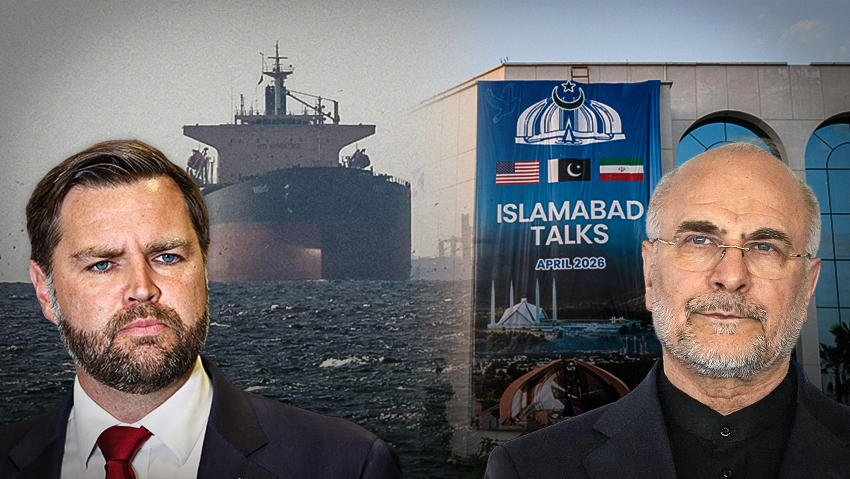
There is no doubt this was a historic event, without precedent since the meeting 49 years ago — less than two years before the 1979 Islamic Revolution — between U.S. President Jimmy Carter and the Shah of Iran, Mohammad Reza Pahlavi. U.S. Vice President J.D. Vance met with Iranian Parliament Speaker Mohammad Bagher Ghalibaf, widely believed to be the second-most powerful figure in Iran’s political hierarchy. However, it is likely that core issues — such as Iran’s nuclear program, missile capabilities and support for proxy groups — were not discussed in detail at the initial meeting. The main topics appear to have been reopening the Strait of Hormuz and determining how to proceed with negotiations.
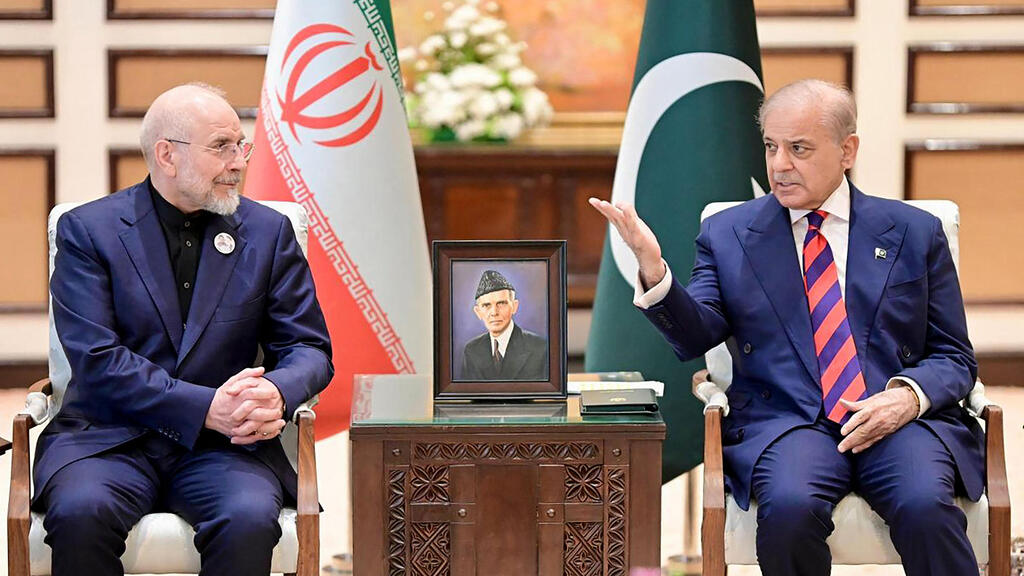
Iranian Parliament Speaker Mohammad Bagher Ghalibaf with Pakistani Prime Minister Shahbaz Sharif
(Photo: AFP/Pakistan's Prime Minister Office)
The United States is demanding that Hormuz be reopened to unrestricted navigation without transit fees, as was the case before the war. Iran, meanwhile, is seeking an arrangement that would effectively make it the gatekeeper of the strait — granting it not only strategic leverage over a route through which about one-fifth of the world’s oil supply passes, but also substantial financial income. Tehran is demanding a system requiring vessels to obtain passage permits from the Islamic Revolutionary Guard Corps and to pay transit fees based on the value of their cargo.
The United States and its allies are, of course, rejecting such an arrangement, but are willing to hear what Iran would want in exchange for returning to previous navigation terms. One Iranian demand is the release of $6 billion frozen in Qatari banks. These funds were originally designated by the previous U.S. administration for humanitarian purposes — including food and medicine — but were re-frozen by President Joe Biden after the Oct. 7, 2023 Hamas attack.
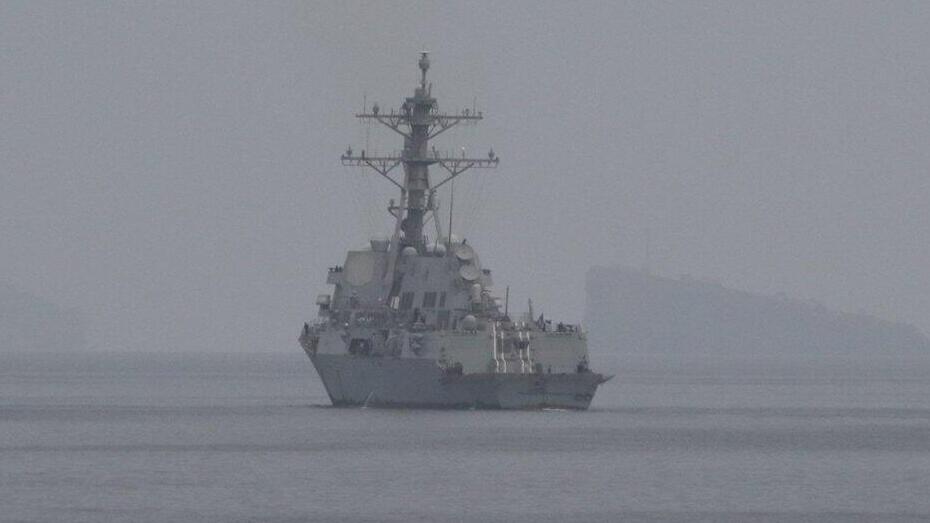
A US warship near the Strait of Hormuz. The US military has begun a mine clearing operation
(Photo: CENTCOM)
Another key issue is ensuring safe navigation — first through the removal of naval mines that Iran claims to have deployed in the strait, and also by protecting vessels from harassment or attacks by Iranian or other actors. Without meeting these conditions, international insurers will not cover large oil tankers carrying cargo worth hundreds of millions of dollars. In this context, the passage of the two U.S. destroyers through Hormuz serves as evidence that the main shipping lanes are not as heavily mined or dangerous as Iran claims, and that clearing the strait may not be as complex or time-consuming as feared. Modern remotely operated underwater vessels could complete the task within one to two weeks. The problem is that such systems are manufactured in Belgium and currently operated by the French Navy, which is unwilling to engage in mine-clearing operations until the war ends.
If at least preliminary agreements are reached on Hormuz, the talks are likely to continue. If not, the United States may walk away from the negotiations. Should talks proceed, decisions will be needed on how, when and at what level they will continue — including the timing of expert-level working meetings following political agreements. This will take time and will almost certainly require extending the ceasefire.
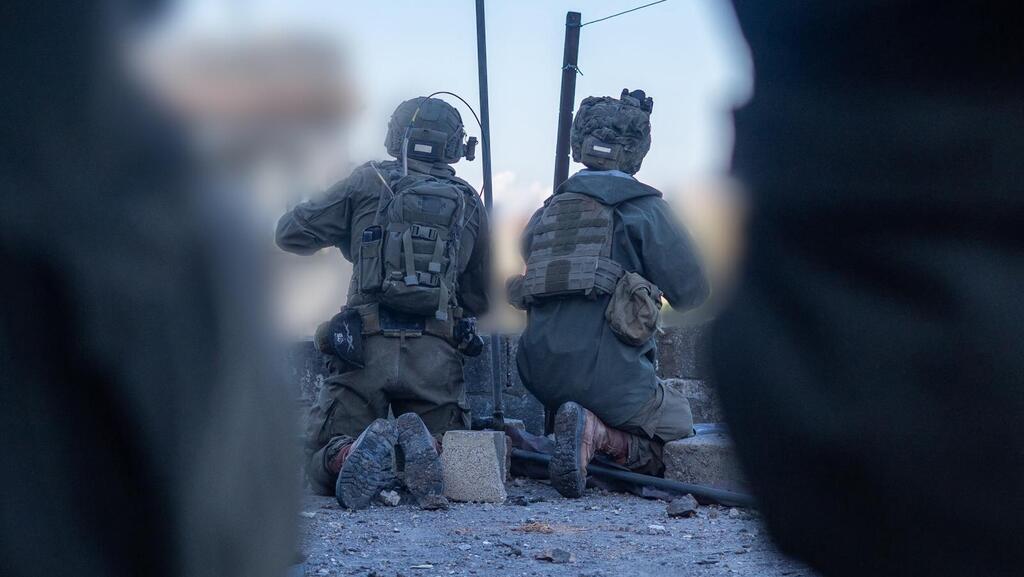
IDF soldiers operating in southern Lebanon
(Photo: IDF Spokesperson's Unit)
From an Israeli perspective, it is still too early to assess whether the negotiations will yield positive or negative outcomes regarding the war with Iran. However, it is likely that, within days, Trump will demand — and Israel will have to agree to — a full ceasefire in Lebanon. Hezbollah likely anticipates this and, as is its pattern, may intensify rocket fire toward northern Israel and IDF forces in southern Lebanon in the coming days. Meanwhile, the IDF is expected to continue both aerial and ground operations to clear areas south of the Litani River, where forces from five divisions are already deployed, with a particular focus on the siege of the town of Bint Jbeil, where dozens of Hezbollah operatives are still entrenched.
In any case, both sides are working — and will continue to work — hard to show they have not yielded to the other’s demands. This creates a kind of “limbo” when it comes to facts on the ground, leaving civilians in all involved countries in a state of uncertainty. It is not only Iranian officials who are issuing statements and leaks disconnected from reality and threats with no intention of carrying them out; both Trump and Prime Minister Benjamin Netanyahu are also making declarations in the present tense as if describing an existing reality, when in fact they reflect little more than their aspirations.
A small piece of advice: when you hear Ghalibaf or Foreign Minister Abbas Araghchi — and, for that matter, Trump or Netanyahu — do not raise expectations, but do not be disappointed either.