

After 668 days in captivity, the hostages in Gaza face immediate risk of death: The condition of the hostages still held in Gaza is worsening to the point of immediate life-threatening danger, according to a new medical report released Monday evening by the Health Task Force of the Hostages and Missing Families Forum. The report states that the hostages are at immediate risk of death due to deliberate and prolonged starvation by Hamas. It notes that the suffering of 20 known living hostages—along with two others feared to be alive but in critical condition out of a group of 50—worsens with each passing day.
The report, published alongside an official position paper from the task force, is based on documentation of hostages Evyatar David and Rom Braslavski showing extreme underweight, testimonies from released hostages, autopsy reports of murdered hostages and medical data from survivors. “The hostages are being subjected to extreme starvation, severely harming their physical and mental health and placing their lives at risk,” the authors write. “Footage of Rom and Evyatar indicates life-threatening danger to them and to all the hostages.”
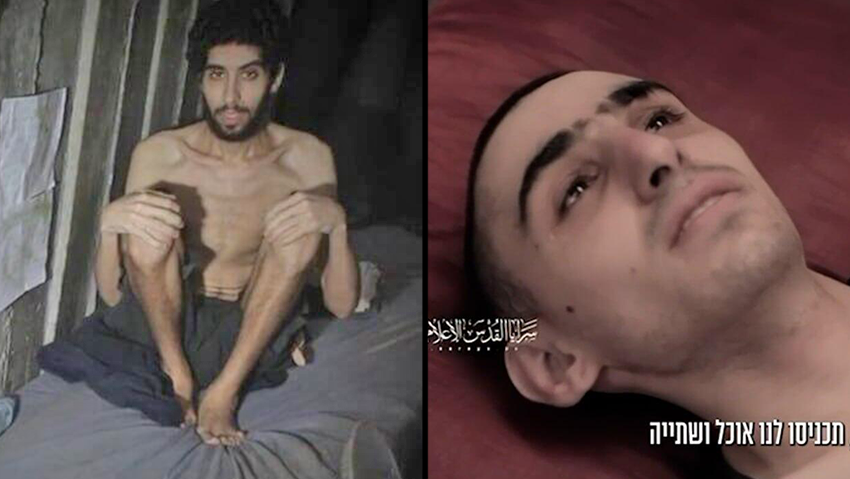
“Some survivors lost as much as half of their body weight, with some measuring body fat percentages below the critical 5% threshold,” according to the reports of health officials, who added: “Their skeletal appearance evokes the horrific results of starvation during the Holocaust.”
The forum emphasized: “We have consistently issued clear warnings about the danger of starvation. No one can claim they didn’t know.”
A ‘starvation menu’: Harrowing testimonies from captivity
The report describes a “fixed menu” for hostages, consisting of bread, rice, lentils, sugar and small amounts of water—sometimes nothing for days. Evyatar David, who weighed around 76 kg when taken captive, is now estimated to weigh just 40 kg–45 kg—a loss of over 40%, classified as severe underweight. Rom Braslavski is estimated to weigh 43 kg–47 kg, also dangerously underweight.
According to testimonies from released hostages, the food provided was extremely minimal—“half a pita a day or less.” Some reported food being distributed as a form of punishment, and a constant sense of hunger that led to physical exhaustion. The estimates were compiled by clinical dietitians and Professor Ronit Endvelt, former head of the Nutrition Division at Israel’s Health Ministry, and were based in part on a video in which Evyatar lists his “meals”: lentils, beans and, at times, entire days without food.
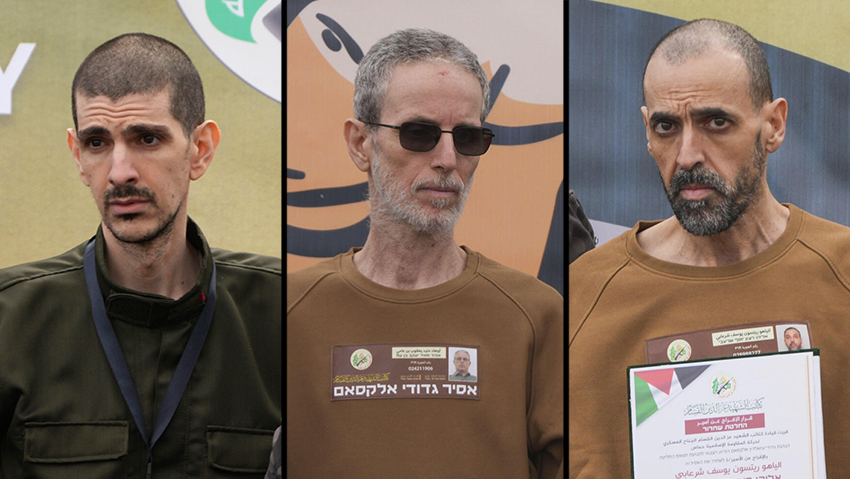
Other released hostages showed signs of starvation
(Photos: Abdel Kareem Hana/AP, Evan Vucci/AP)
Other testimonies, including from survivors like Omer Wenkert and Omer Shem Tov, describe severe hunger, isolation, physical and psychological abuse—including Wenkert being sprayed in the eyes with pesticide. In some cases, hostages were forced to decide among themselves who would receive food and who would go without. This pattern was also evident in videos released in February during the release of Ohad Ben Ami, Or Levy, and Eli Sharabi, who all appeared pale, thin and physically weak.
Ben Ami’s family said he was released weighing just 55 kg, having lost dozens of kilograms. Sharabi described being forced to decide who would eat. Wenkert recounted spending 250 days with Evyatar David and Guy Gilboa Dalal: “The look in Evyatar’s eyes said it all—hunger, weakness and a sense of abandonment.” Shem Tov said he was held in a dark tunnel and sometimes given only one cookie and salty water. His weight dropped from 80 kg to 55 kg.
Multisystem Damage, Imminent Risk of Death
The medical report, signed by Professor Hagai Levine, Dr. Einat Yahane, and Professor Ronit Endvelt, outlines the effects of starvation: the body is forced to break down fat tissue, then muscle—eventually harming vital organs. A body fat percentage below 5% is classified as a medical emergency, posing risks of cardiac arrhythmia, heart damage, nervous system collapse, and severe disruptions in blood pressure and kidney function.
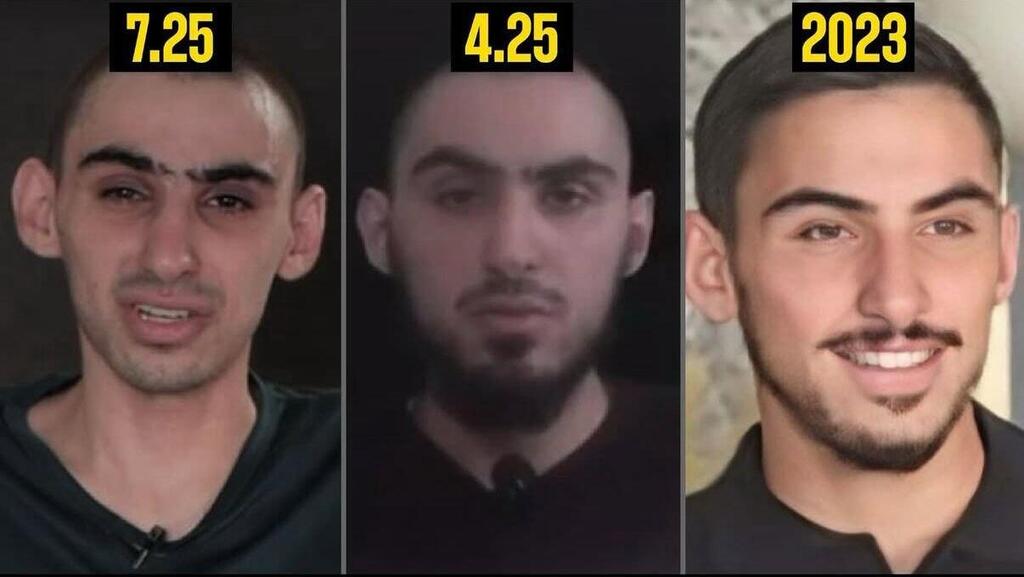
Rom Braslavski is estimated to now weigh 43 kg–47 kg, which is dangerously underweight
(Photo: Hostages and Missing Families Forum)
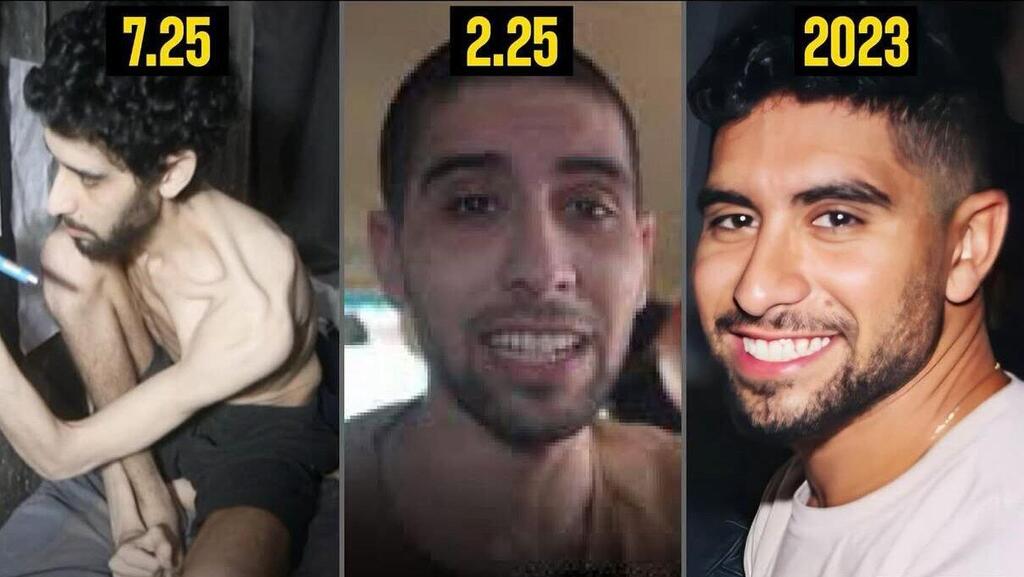
Evyatar David's weight has dropped from 80 kg to 55 kg
(Photos: Hostages and Missing Families Forum, private album, courtesy of the family )
Additional harm includes severe damage to the immune system, digestive system, muscles and bones. Chronic dehydration, severe vitamin deficiencies, poor hygiene conditions and prolonged underground tunnel living increase the risk of infections, parasites like worms and scabies, and diarrhea.
Hostages often remain for months without exposure to sunlight—leading to impaired vision, vitamin D deficiency, and heightened risk of fractures and bone mass deterioration. The report states: “Prolonged starvation causes the body to break down fat, then muscle, and ultimately vital organs, including the heart, to the brink of collapse. Halting the deprivation and gradual refeeding are essential for saving lives and preventing irreversible harm.”
Due to the accumulated damage, the report concludes, the hostages face not only ongoing deterioration but a real danger of sudden multisystem collapse, including heart failure and death within hours.
'Starved brain': Psychological breakdown
Alongside the physical toll, the report highlights deep neurological harm: what it calls a “starved brain,” involving declines in memory, concentration, judgment and impulse control. Nutritional deficiencies—such as in thiamine and iron—affect brain function and lead to irritability, depression, confusion and, in some cases, hallucinations. The report warns of the risk of encephalopathy due to severe thiamine deficiency—a sharp brain injury that may cause irreversible cognitive damage, even after release.
Get the Ynetnews app on your smartphone: Google Play: https://bit.ly/4eJ37pE | Apple App Store: https://bit.ly/3ZL7iNv
Witnessing their captors eat in front of them—sometimes intentionally—is described as a form of deliberate humiliation, intensifying feelings of hunger, shame and helplessness. Symptoms documented among former hostages align with Complex PTSD—a form of prolonged, inescapable trauma accompanied by chronic anxiety, dissociation, emotional numbness, confusion and functional impairment.
Conclusion: Starvation is policy, every say Is a life-or-death threat
The Israeli health system concludes unequivocally that this is not a byproduct of war conditions, but a systematic policy of abuse by Hamas, intended to harm both body and mind. Released hostages reported that it was only in the days leading up to their release that Hamas began feeding them artificially, in an effort to reduce the visible signs of starvation.

Protesters around Hostages Square in Tel Aviv
(Photo: Yair Palti)
Some hostages found murdered in tunnels were discovered severely underweight—evidence of prolonged and deliberate starvation up until their deaths. Professor Hagai Levine, head of the health task force for the Hostages' Families Forum, stated: “The medical evidence is unequivocal. The hostages in Gaza are experiencing extreme starvation and face immediate risk of death due to deliberate deprivation. The outcome of this brutal experiment is predictable: the body and mind will deteriorate until they collapse. Any further delay may cost lives. We must not stand idly by as our brothers disappear.”
The Hostages’ Families Forum's demand is clear: immediate access for medical teams, food and medicine supply—and full release of all hostages, living and deceased. “The current situation is not only a flagrant violation of human rights—it is one of the gravest humanitarian failures of our generation,” the report concludes. “Time is running out.”