


Four days after the ceasefire between Israel and Iran took effect—and as the Islamic Republic held massive funerals for senior officials killed in the war—the Iranian regime continues to aggressively target internal dissent. “Like a wounded animal, Iran is hunting down every perceived threat with lethal force,” said Hadi Ghaemi, director of the Center for Human Rights in Iran (CHRI), who urged international action against these violations.
Funerals for killed Iranian senior officials in Tehran


Across Tehran, checkpoints have appeared and armed military police patrol the streets. According to Amnesty International, more than a thousand people have already been detained, with “hundreds arrested every day.” The organization expressed deep concern over what it described as "hasty and blatantly unfair trials" for detainees, calling the regime’s behavior “a misguided show of strength.” The Wall Street Journal reported searches of vehicles, phones, and computers, and said that the regime quickly announced the execution of at least six men.
Amid fears of civil unrest and rebellion, Iranian sources claim that “Mossad is receiving assistance from operatives inside Iran.” Allegedly, Israeli missile and drone assembly hubs were discovered within Iranian territory and used by Israel during the strikes. Iranian analyst Mohammad Ali Shabani claimed that “90% of Mossad operatives in Iran are Iranian citizens,” adding, “The big question is: who are they? Right now, fingers are pointing everywhere.”
Iranian Nobel Peace Prize laureate and human rights activist Narges Mohammadi warned that “the situation for the Iranian people is more dangerous now than before the war.” A leading opposition figure who was previously jailed and reportedly beaten in Israel’s bombing of Evin Prison, Mohammadi stated, “The regime will do whatever it takes to maintain control and is taking harsh measures.”
Alongside its crackdown on dissent, the regime has intensified enforcement of its strict dress code. A 44-year-old woman who fled Tehran during the war told The Wall Street Journal, “The morality police are back. They even stopped us and questioned us because the socks my companion wore were too sheer.”
The newspaper described the atmosphere in Iran as “paranoia,” especially after the Mossad’s deep infiltration was exposed through high-profile assassinations and commando raids on Iranian soil. As civilians try to return to normal life, the regime continues announcing mass arrests of alleged “agents,” urging citizens to report “any suspicious conversation,” and publishing guides on how to identify spies.
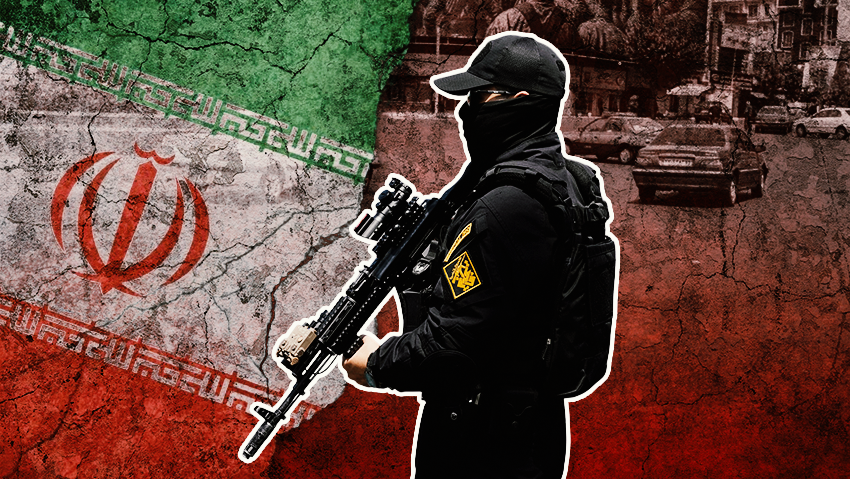
Citizens are being instructed to watch if neighbors leave their homes at odd hours, to observe people wearing masks, hats, or sunglasses, and to be alert to signs like “metallic noises” coming from homes. Allegedly, spies “may live in houses where curtains stay closed even during the day.”
One resident of Tehran, Sorour, told The New York Times that she believes Israel runs “a wide spy network in Iran.” After authorities asked citizens to report suspicious activity, Sorour alerted them to a “safe house” in her neighborhood. “I saw them arrest a few people and collect drones from the house. I saw everything,” she said.
Get the Ynetnews app on your smartphone: Google Play: https://bit.ly/4eJ37pE | Apple App Store: https://bit.ly/3ZL7iNv
A man from Tabriz told the Times that it’s only a matter of time before the regime broadens its repression of political opponents. “Right now, they want to make sure no one mocks the regime or hopes it will change,” he said. “Their biggest fear is that people will see them as weak. Because if people think they’ve lost power—they’ll rebel.”
Internet access in Iran, previously cut to hinder Israeli intelligence, has now been restored. But with sanctions still in place, no functioning air defense, and growing fears of assassination, Iran’s leadership faces the challenge of regaining its footing.
“This was one of the most serious security breaches in the regime’s history, but it’s not yet a turning point,” said Prof. Narges Bajoghli, an expert on revolutions, media, and warfare in global politics. “The leadership survived, the streets stayed quiet, and the system proved once again that it was built not for popularity—but for survival. It can absorb shocks. The regime hasn’t collapsed; it’s adapting. Younger, tougher IRGC personnel are stepping in to replace those killed.”
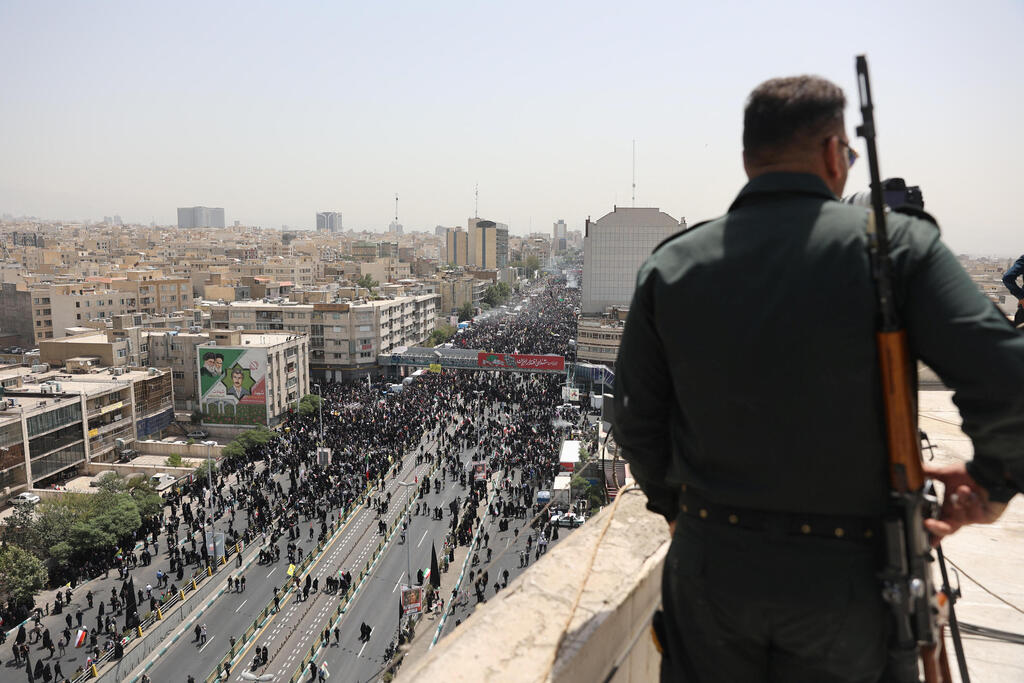
Overlooking the crowds in Tehran
(Photo: Majid Asgaripour/WANA via REUTERS)
Immediately after the ceasefire, the ayatollah regime began reinforcing its control, allocating more resources to suppressing any signs of civil unrest. Iranian officials and activists confirmed that the regime is deploying mass arrests, executions, and security forces—especially in remote Kurdish regions it views as prone to rebellion.
Earlier this week, the Iranian human rights organization HRNA reported that during the Israeli strikes, 705 people were arrested on political or security-related charges. Many were accused of spying for Israel. Last Wednesday, Iranian state media reported that three of the detainees were executed in Urmia, near the Turkish border.