


The Israeli Air Force on Wednesday completed its planned strikes in Iran against military industries and nuclear-related industries, according to an IDF military official, who said nearly all sites designated in advance as “vital and strategic” targets had been put out of operation.
The senior official said the damage inflicted on Iran’s military industries and nuclear infrastructure was expected to prevent the government in Tehran from restoring its ballistic and nuclear capabilities for a long time.
US strike on weapons depot in Isfahan, Iran


Meanwhile, the IDF prepared for missile barrages from Iran that, the official said, were launched in an attempt to disrupt Passover eve for families in Israel.
As Iran fired what the official described as an unusually large number of ballistic missiles, and rockets were launched from Lebanon, the Israeli Air Force continued its hunt for missiles and launchers across Iran while also striking numerous targets and regime symbols in Tehran.
In southern Lebanon, several brigade combat teams under four divisions — the 36th, 91st, 162nd and 146th — deployed on the eve of the holiday along what the General Staff called the “yellow line,” a temporary demarcation modeled on the similarly named Gaza ceasefire line.
The line was described by the military as a temporary route linking commanding terrain meant to prevent direct fire on Israeli communities along the border.
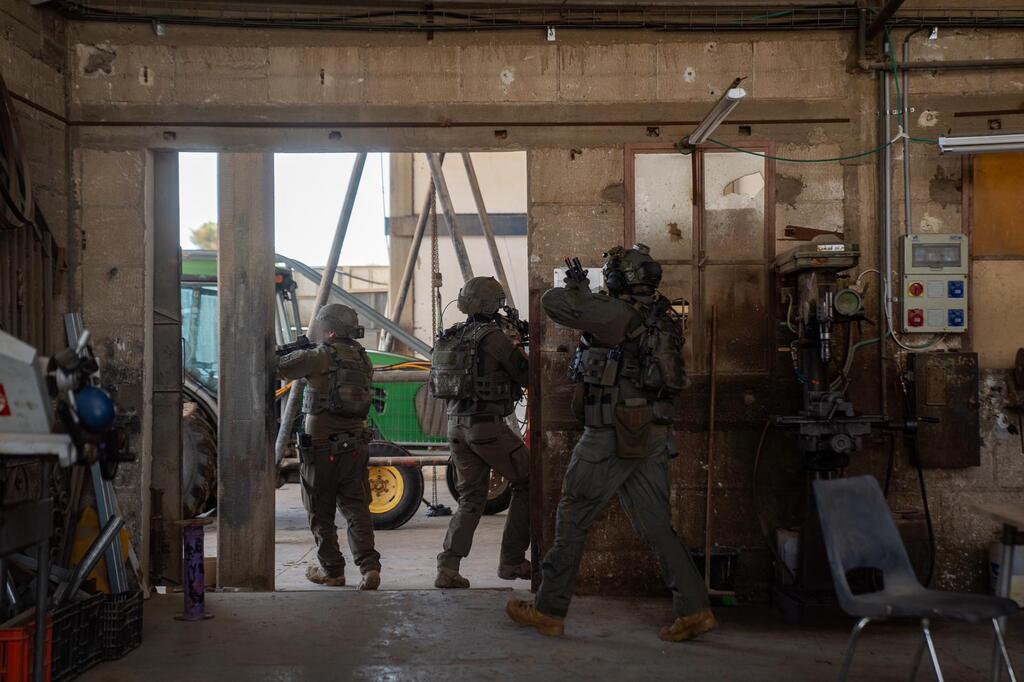
From those positions, the forces are expected to continue advancing in an effort to push Hezbollah’s direct-fire capabilities farther away and reduce mortar and anti-tank missile fire targeting Israeli territory and troops in the area.
The line, in its eastern section, reaches the bend of the Litani River. It begins in the east near the town of Khiam, northeast of the Israeli border town of Metula, passes through Taybeh near the Litani channel, and extends to Bint Jbeil.
The military said many Hezbollah terrorists had been seen preparing to fight in Bint Jbeil, and that IDF forces were encircling the town to prevent them from fleeing and to strike them with precise, intelligence-based fire. As a result, the military expects the Bint Jbeil cauldron to become a focal point of the fighting.
From Bint Jbeil, the yellow line in its current form continues to what the military referred to as the “Shiite ridge” and ends in the west near Ras al-Bayada.
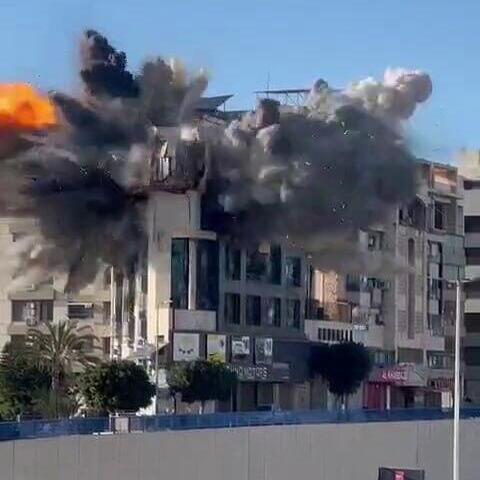
Israeli strike on Hezbollah site in Beirut
Dozens more Hezbollah terrorists were eliminated over the past 24 hours, and the Israeli navy killed Hajj Yusuf Ismail Hashem, one of the Iran-backed terrorist group’s top military figures and commander of its so-called Southern Front.
Alongside those achievements, the official said the military is still struggling to suppress mortar and rocket fire into Israel and at troops operating inside Lebanon, as most of the Air Force’s resources, including attack and surveillance drones, are currently concentrated on the Iranian theater.
Hezbollah appears to have taken advantage of that constraint, scattering mortar positions and individual launchers across the dense, rugged wadis south and north of the Litani River while also firing from civilian homes in southern Lebanon.
The wide dispersal has forced IDF troops to move methodically, locating and striking launchers one by one, many of them only after they have fired.
The official said Northern Command and the Air Force had developed a new method to speed the detection and targeting of launchers and mortar positions, and that the effect was already evident on the ground Wednesday. Rocket fire from Lebanon had decreased, the official said, but had not stopped.