

More alerts in the Galilee and drone attacks continued alongside a series of IDF strikes on 100 Hezbollah targets. The United States extended the “ceasefire” to advance negotiations, and for the first time a “security track” will open in the talks. U.S. officials said that they are trying to create military coordination between Israel and the State of Lebanon, similar to what exists with the Palestinian Authority. In Jerusalem, officials are speaking about an opportunity, and in any case remain dependent on President Donald Trump.
Also on Friday, hours after the United States announced an extension of the so-called ceasefire between Israel and Hezbollah by 45 days, attacks by the Shiite terror organization on northern communities continued, alongside Israeli Air Force strikes in southern Lebanon. The strikes triggered heavy explosions that were also heard in the northern cities.
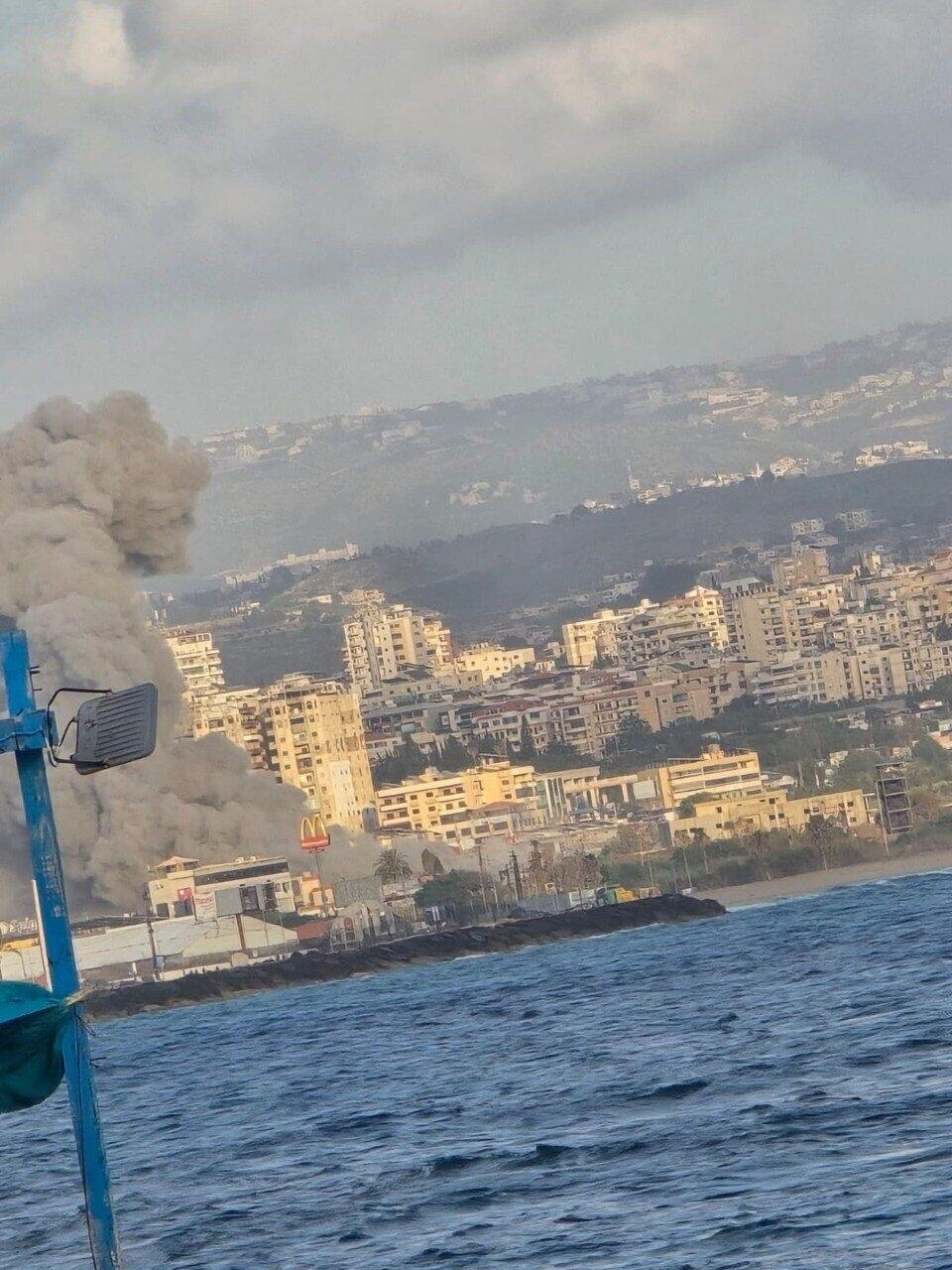
The IDF said later that over the weekend it struck 100 targets in southern Lebanon, including observation posts, terror infrastructure and a Hezbollah weapons depot. In the al-Khoush area near Tyre, a smoke plume was documented after one of the strikes, not far from a McDonald’s sign.
Meanwhile, Hezbollah attacks also continued. Over the past 24 hours, the organization launched FPV drones and mortar fire in several incidents, which the army said landed near areas where Israeli forces are operating in southern Lebanon.
On Saturday evening, the death of Captain Maoz Israel Recanati, 24, from Itamar, a platoon commander in the IDF Golani Brigade’s 12th Battalion, was cleared for publication. He was killed by a FPV drone strike in southern Lebanon.
Hezbollah also carried out cross-border attacks. At 15:38 an alert sounded in Metula and one UAV was intercepted. At 18:44, additional alerts were activated in several communities in the western Galilee due to a false identification. At 19:50, alerts sounded again in the western Galilee following the interception of two UAVs launched toward forces in southern Lebanon.
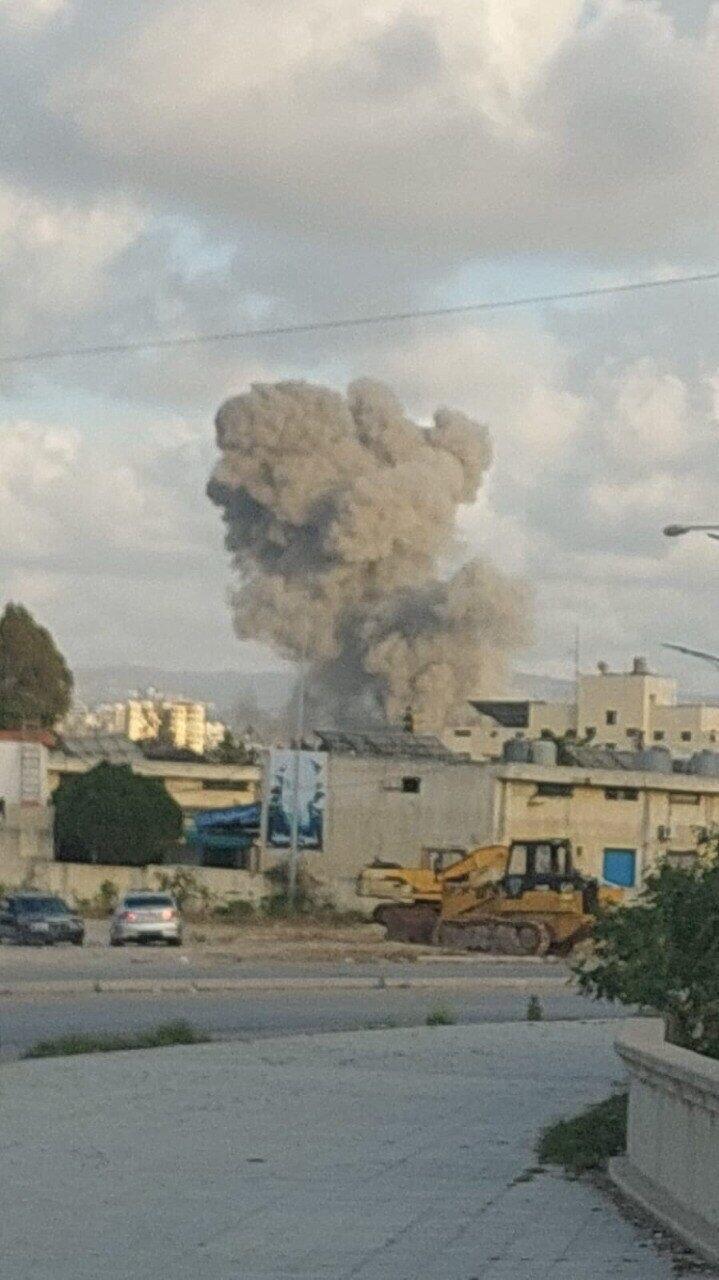
Attacks in al-Khoush area
The U.S. Department of State announced on Friday the extension of the ceasefire by an additional 45 days. The announcement was again delivered to Israeli citizens by Washington rather than by Israel’s political leadership. A source told Lebanon’s MTV that a de facto ceasefire between Hezbollah and Israel could take effect at midnight on Saturday, “in the hope it will be fully implemented within 24 to 48 hours.”
The extension was announced at the end of the fourth round of talks held between Israeli and Lebanese representatives at the U.S. Department of State. According to the announcement, the goal is “to allow further progress.” The State Department is expected to host additional talks on June 2 and June 3, while a “security track” will open at the Pentagon on May 29 with military delegations from both countries in an effort to improve military coordination between them.
The State Department statement again highlights the sharp gap between the diplomatic level and the situation on the ground. While Washington speaks about diplomatic progress and new coordination mechanisms, fighting continues at high intensity in the northern arena between Israel and Hezbollah.
Documentation of IDF attacks in the Tyre area
(Photo: IDF Spokesperson)


On the diplomatic level, the U.S. move reflects an attempt to create a framework of “gradual stability,” even if it is not fully enforced. However, the fact that the announcement to the Israeli public is again delivered through Washington rather than Jerusalem indicates continued Israeli reliance on the American mediator and only partial coordination between the sides.
On the Lebanese side, the talks in Washington mark a cautious shift with recognition of a formal diplomatic track between the countries. At the same time, Hezbollah continues to make clear that any arrangement will be judged “according to the reality on the ground,” wording that leaves room for continued fighting and even the undermining of diplomatic understandings.
On Saturday evening, Hezbollah issued a statement saying: “We completely reject any dictate, pressure or external guidance, American or otherwise, that seeks to impose by force on Lebanon a fate that harms its sovereignty, independence and dignity and contradicts the most basic national principles on which all Lebanese must agree.”
The situation sharpens the central question: is this a ceasefire in practice or a mechanism that manages the intensity of the conflict? Strategically, the American move may be trying to create two parallel tracks, diplomatic and security, based on the assumption that a full ceasefire cannot currently be imposed.
However, the existence of a “security track” at the Pentagon may also indicate another direction: an attempt to redefine the boundaries of Israel’s freedom of action in Lebanon through prior coordination rather than deterrence alone.
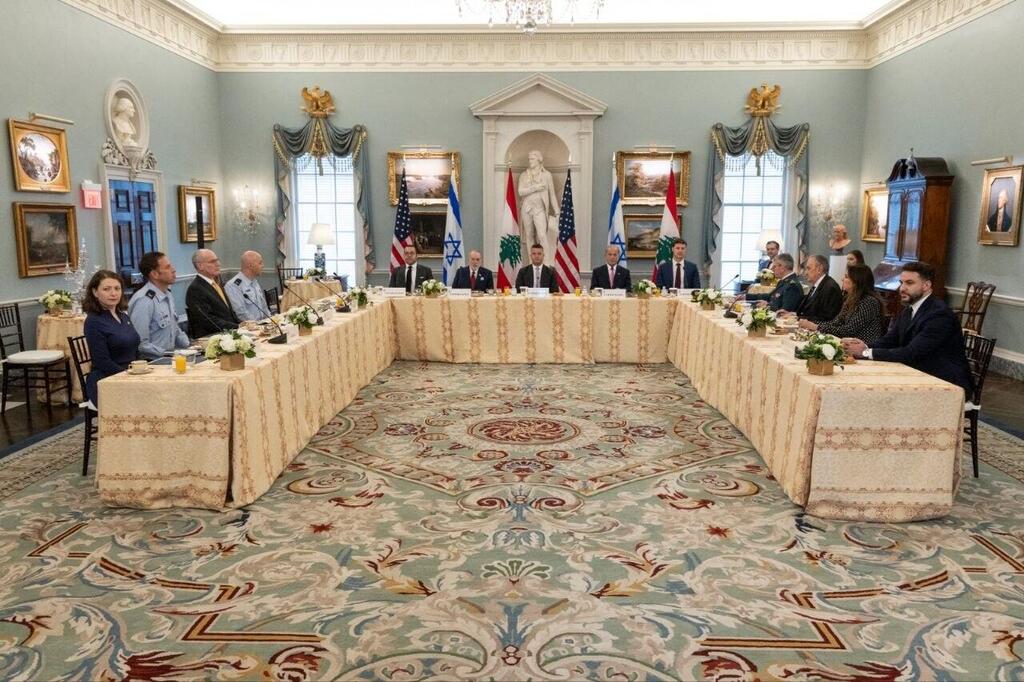
Opening of negotiations between Israel and Lebanon, mediated by the US
(Photo: Shmulik Almani, Embassy of Israel)
In this sense, the current extension is not only technical but also political. It reflects an American effort to manage the conflict rather than necessarily resolve it, while leaving limited but continuous room for action for both sides.
In the long term, the U.S. appear to be trying to create a reality in which Israel and the Lebanese government gradually converge, with the Lebanese Army taking responsibility for areas from which the IDF may withdraw in the future after they are cleared of terror infrastructure. In Washington’s view, the closer Israel and Lebanon become, the better it is for the fight against Hezbollah.
Israel is “going along” with the process and does not want to appear as the party undermining it, but there are no illusions. The Lebanese Army, composed of personnel with ties to Hezbollah, is unlikely to disarm Hezbollah, particularly given that about 40% of Lebanon’s population is Shiite. Israeli officials acknowledge that this is an opportunity that has never existed before and that the Lebanese government should be strengthened, while Israeli forces continue to clear areas south of the Litani River.
This time, the Americans also extended the ceasefire for a very long period, apparently in an effort to isolate Hezbollah in the eyes of the Lebanese public and increase public pressure on it to agree to disarm.
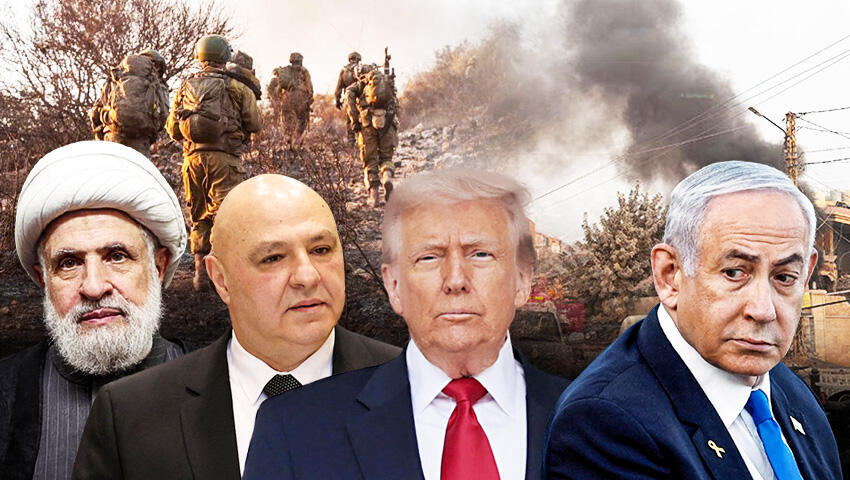
Benjamin Netanyahu, Donald Trump, Joseph Aoun, Naim Qassem
(Photo: ANWAR AMRO / AFP, REUTERS/Amir Cohen, REUTERS/Jessica Koscielniak, רויטרס)
U.S. sources cited by MTV Lebanon said: “Washington believes the current negotiations have revealed, for the first time, an unspoken convergence between Lebanon, Israel and the United States around a single strategic goal: establishing the authority of the Lebanese state in southern Lebanon and addressing the issue of Hezbollah’s weapons, even if political calculations and implementation mechanisms differ between the sides. Washington is not currently trying to impose a final peace but to manage escalation and prevent a major explosion while it waits to see whether the talks can reach a broader understanding including borders, security, peace and Hezbollah’s role.”
Israel believes the agreement does not prevent it from striking any military activity related to Hezbollah, any transfer of weapons or equipment or any action against the security zone in southern Lebanon.
Sky News Arabia reported on Saturday, citing sources, that Lebanon is conducting intensive contacts in coordination with the United States to reach a comprehensive ceasefire with Israel. The sources claimed a comprehensive ceasefire could be announced on Saturday night, but said there is still no Israeli agreement.
Lebanese media reported that the U.S. and Israel have demanded additional steps from the Lebanese government, including the establishment of a special Lebanese Army unit funded and trained by Washington to disarm Hezbollah. Israel is also reportedly seeking the repeal of Lebanon’s boycott law to allow a legal framework for direct relations between the countries.
From the perspective of Lebanese sources aligned with Hezbollah, the security arrangement is intended to turn the Lebanese state into a partner in the fight against Hezbollah, similar to the security coordination model between the Palestinian Authority and Israel.
Israel’s ambassador to Washington, Yechiel Leiter, said on Friday: “The peace talks were candid and constructive and are expected to advance along two tracks, diplomatic and security. There will be ups and downs, but the potential for success is significant. What will remain at the center of our attention throughout the negotiations is the safety of our citizens and soldiers.”
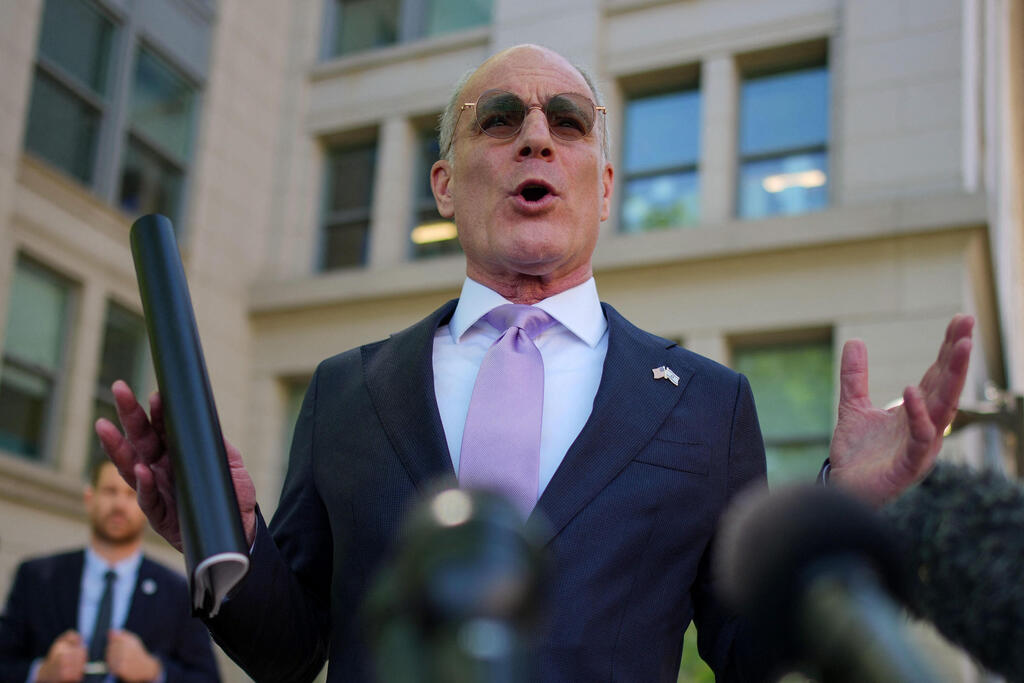
Yechiel Leiter
(Photo: Andrew Harnik / GETTY IMAGES NORTH AMERICA / AFP)
The Lebanese delegation said at the end of the talks: “The launch of an official diplomatic track reflects Lebanon’s constructive engagement and improves the chances of reaching a stable peace solution. Lebanon will continue its constructive engagement in negotiations while preserving its sovereignty and protecting the safety of its citizens. Our goal is to turn the current ceasefire into a comprehensive and lasting agreement that preserves the dignity, security and future of the Lebanese people. Our priorities are restoring sovereignty, returning displaced persons, reconstruction, releasing prisoners and returning remains.”
Hezbollah has not committed to complying with the ceasefire extension. A senior Hezbollah source quoted by Al Arabi said: “Our position regarding any agreement to strengthen the ceasefire with Israel will be assessed based on facts.”
In an official statement published on Saturday evening, Hezbollah said: “Statements by enemy leaders regarding settlement projects on Lebanese territory confirm the enemy’s unwavering ambitions for our land and natural resources. They seek to deprive Lebanon of its power and resources and direct negotiations only serve to strengthen and expand Israeli gains at Lebanon’s expense.”
The organization added: “We call on the Lebanese authorities to stop unnecessary concessions, prioritize the national interest and abandon the illusion of reaching a peace agreement with an occupying enemy. After every round of negotiations, the enemy responds with escalated attacks. Many Lebanese now see the extension of the ceasefire as only extending their suffering and providing cover for aggression against them and their country. We call on the Lebanese authorities to cooperate within a national consensus to achieve national principles, ensure the full withdrawal of the enemy from all Lebanese territory, stop aggression permanently, release our prisoners, return our people immediately to their villages and towns and rebuild without restrictions, conditions or obstacles of any kind. Hezbollah affirms that the occupation will never become established on our land.”
The negotiations in Washington, held on Thursday and Friday, included for the first time senior Israeli military representatives. On the Lebanese side, participants included current and former Lebanon’s ambassador to the United States. On the American side, participants included U.S. Ambassador to Israel, U.S. Ambassador to Lebanon and adviser to the U.S. Secretary of State.