

Mojtaba Khamenei, the son of Ayatollah Ali Khamenei, who was killed by Israel in the opening strike of Operation Roaring Lion, is the leading candidate to succeed his father as Iran’s supreme leader, The New York Times reported overnight Tuesday into Wednesday. The report came hours after ynet revealed that senior Israeli officials assess that Khamenei’s son is expected to be chosen for the role.
The opposition outlet Iran International reported that the decision has already been made, though that claim has not been independently confirmed and no official announcement has yet been issued by Iran.
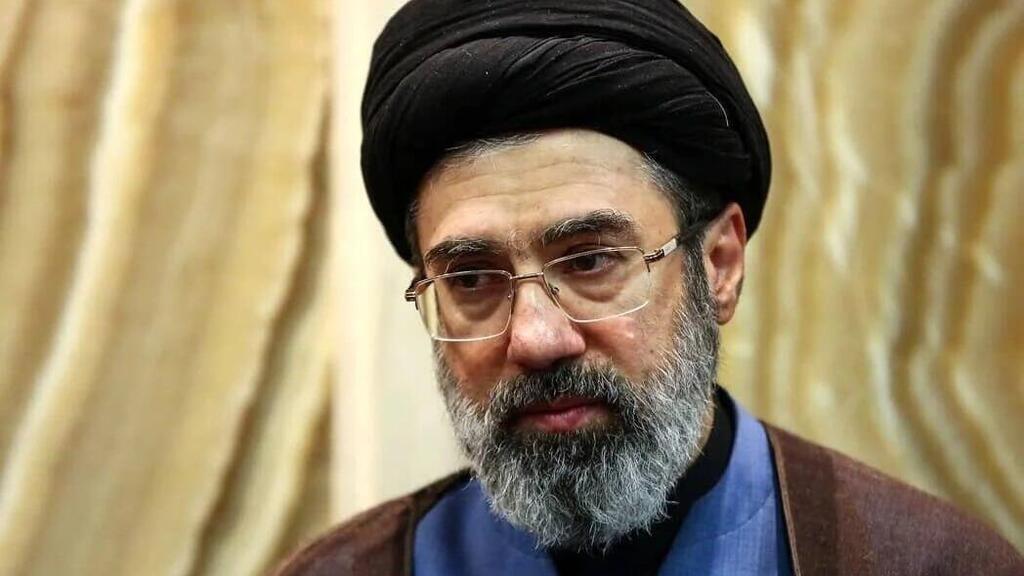
Three Iranian sources familiar with the discussions surrounding the selection of Khamenei’s successor told the Times that the 88 Shiite clerics who serve on the Assembly of Experts — the body tasked with making the decision — are considering announcing Mojtaba as supreme leader as early as Wednesday morning. Some, however, have expressed concern that such an announcement could make him a target for assassination by Israel or the United States.
According to the report, Assembly members held two virtual meetings Tuesday, one in the morning and one in the evening. Israel struck a building in Qom on Tuesday that belonged to the Assembly of Experts, but according to the Iranian news agency Fars, which is affiliated with the Islamic Revolutionary Guard Corps, the building was empty at the time.
Ali Vaez, an Iran expert at Johns Hopkins University, told the Times that Mojtaba’s selection would not be surprising and would reflect the significant influence of the Revolutionary Guards in decision-making processes. “He has been groomed for succession for a long time,” Vaez said, “but in the past two years he seemed to disappear from the radar. If he is chosen, it suggests that the hard-line faction of the Revolutionary Guards is now in control.” The three sources who spoke to the newspaper said the Revolutionary Guards — with whom Mojtaba has cultivated close ties over the years — pushed for his selection, arguing that he possesses the necessary skills to lead Iran during the current crisis facing the ayatollah regime.
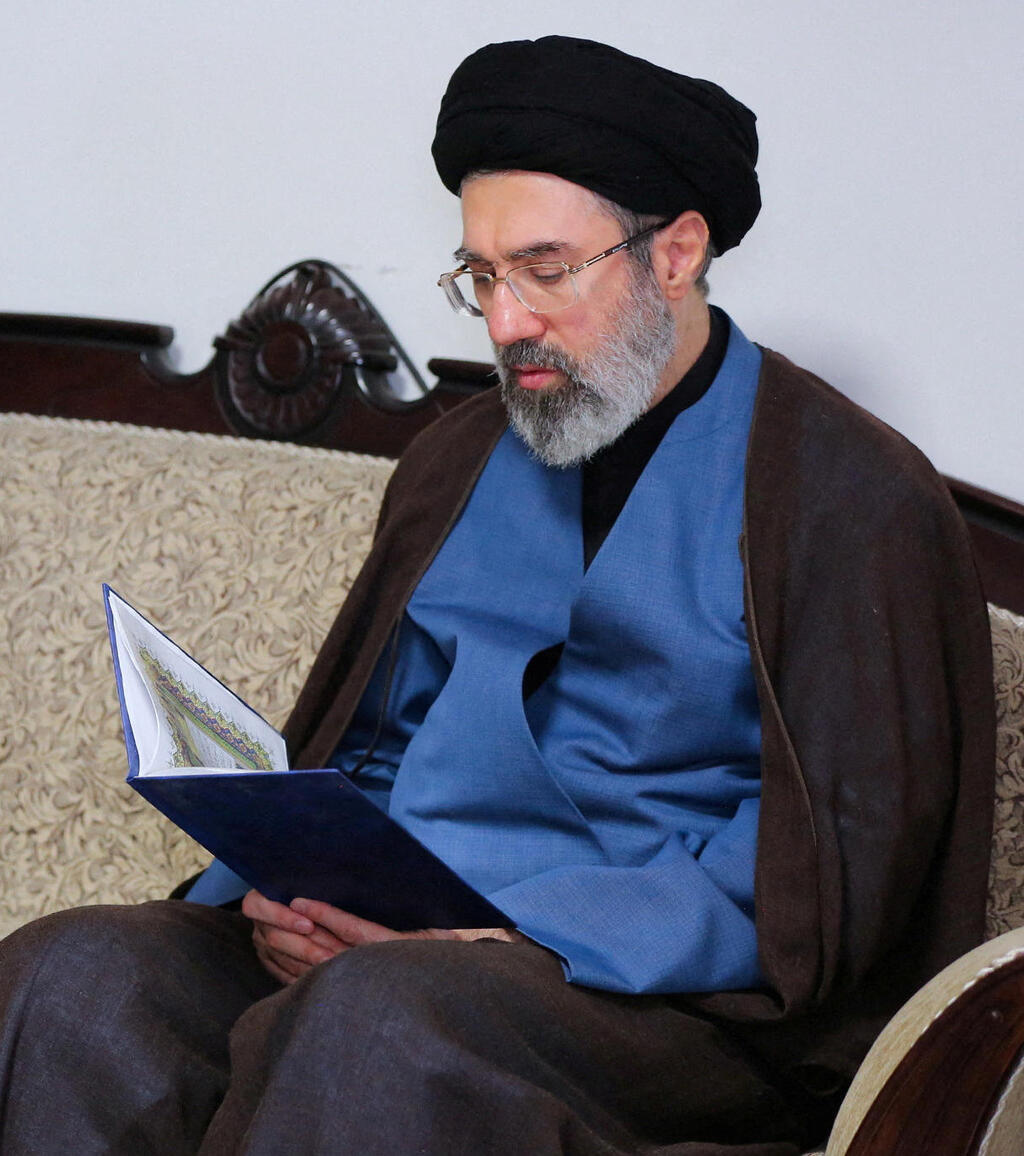
A mid-ranking cleric who teaches Shiite theology at a seminary in Qom
(Photo: Office of the Iranian Supreme Leader/WANA)
Mojtaba Khamenei, 56, is the second son of the slain supreme leader and is considered a member of the hard-line conservative camp, like his father. He has expressed support for suppressing regime opponents within Iran and for pursuing a hawkish and aggressive policy toward external enemies. A mid-ranking cleric who teaches Shiite theology at a seminary in Qom, the center of Iran’s religious life, he has never held an official position in the regime but is widely seen as wielding considerable influence and, as noted, has maintained close ties with the Revolutionary Guards. Analysts outside Iran have previously described him as a kind of “gatekeeper” in his father’s inner circle. In 2019, the United States imposed sanctions on him, explaining that although he held no formal post, he nonetheless “represented” the supreme leader.
According to Iranian authorities, Israel’s opening strike on Saturday killed, alongside Mojtaba’s father, his wife Zahra Adel, his son and his mother Khojasteh Bagherzadeh.
“Mojtaba is the smartest choice right now because he is deeply involved in managing and coordinating the security and military apparatus,” Mehdi Rahmati, an Iranian analyst speaking to the Times from Tehran, said. “He has already been responsible for this until now.” At the same time, Rahmati said his selection would anger regime opponents and critics inside Iran. “Part of the public will react negatively and harshly to this decision, and it will lead to a backlash.” He noted that while regime supporters would see the choice of Khamenei’s son as a continuation of his father’s hard-line conservative path, opponents would also view it as a continuation of the same repressive line under which thousands of protesters were killed during the mass demonstrations in January.
Attack on the building of the Assembly of Experts during meeting to appoint Khameini successor


The Times reported that two other prominent candidates were in the running: Alireza Arafi, an ayatollah appointed to the temporary leadership council that assumed the supreme leader’s powers until a successor is chosen, and Hassan Khomeini, the grandson of Ayatollah Ruhollah Khomeini, the leader of the 1979 Islamic Revolution. Khomeini is associated with the reformist camp within the regime, supporting the principles of the Islamic Republic but considered more moderate. The Times noted that Arafi is also regarded as a relatively more moderate candidate.
Although Mojtaba Khamenei’s expected selection is widely seen as a direct continuation of the hard-line approach led by his father, who refused any meaningful compromise with the United States in negotiations, some argue that the son may prove more moderate. “He is very progressive and will work to sideline the extremists,” Abdolreza Davari, an Iranian politician close to Mojtaba, told the newspaper in a text message sent before the war began. “See his appointment as a kind of shedding of skin.”
If confirmed, Mojtaba’s appointment would mark only the second time the Islamic Republic has selected a supreme leader. The previous instance was in 1989, after the death at age 86 of the revolution’s founder and first supreme leader, Ayatollah Ruhollah Khomeini. Ali Khamenei, who was 50 when chosen, was killed at 86. Iranian authorities appear to be moving swiftly to appoint a new supreme leader in order to project stability and regime continuity despite ongoing Israeli and American strikes.