

United Nations sanctions on Iran will be reimposed Saturday, Britain’s UN envoy said Friday, after a Russian and Chinese resolution to delay them failed. Tehran warned the West would bear responsibility for any fallout.
Western powers’ decision to restore sanctions is expected to heighten tensions with Tehran, which has threatened a harsh response and warned of escalation.
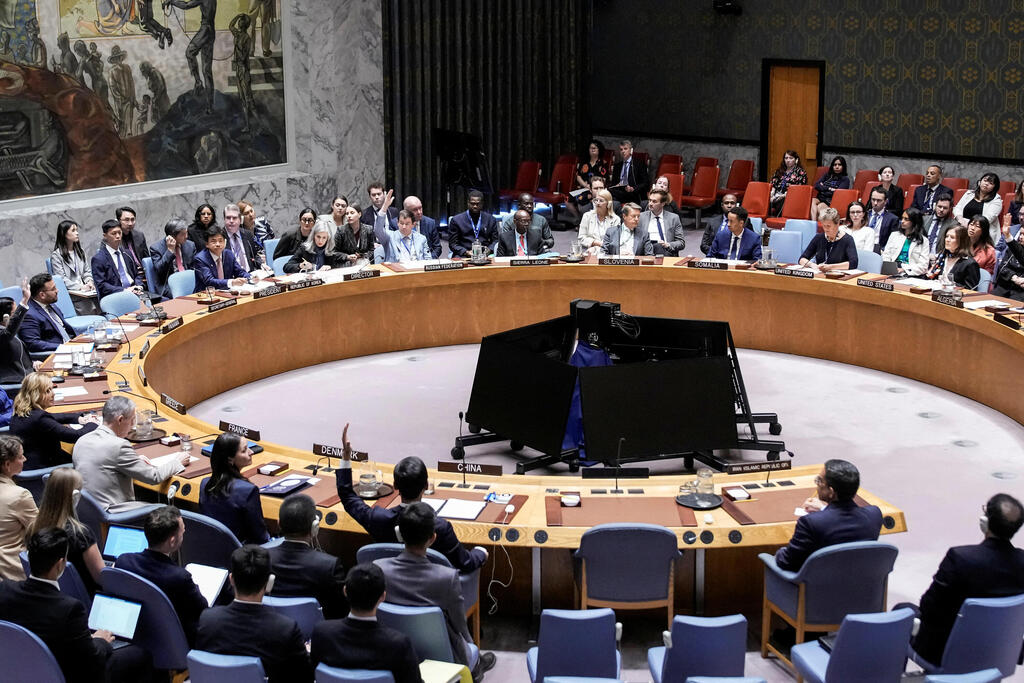
The Russian and Chinese attempt to postpone the measures collapsed at the 15-member Security Council after only four countries backed their draft resolution.
“This council does not have the necessary assurance that there is a clear path to a swift diplomatic solution,” Britain’s envoy Barbara Wood said after the vote.
“This council fulfilled the required steps of the snapback process under Resolution 2231, therefore UN sanctions targeting Iranian proliferation will be reimposed this weekend,” she said.
Iranian President Masoud Pezeshkian told reporters that Iran would not quit the Non-Proliferation Treaty in response to the sanctions’ return.
“Iran will never seek nuclear weapons ... We are fully prepared to be transparent about our highly enriched uranium,” he said.
All UN sanctions are scheduled to return at 8 p.m. EDT Saturday (0000 GMT), after European powers — known as the E3 — triggered a 30-day process accusing Tehran of violating the 2015 deal designed to block it from developing nuclear weapons. Iran denies seeking them.
Diplomats had already warned the Russian and Chinese resolution — which would have delayed sanctions for six months — was unlikely to pass, after last-ditch talks between Iran and Britain, France and Germany broke down. Nine countries voted against the resolution, while two abstained.
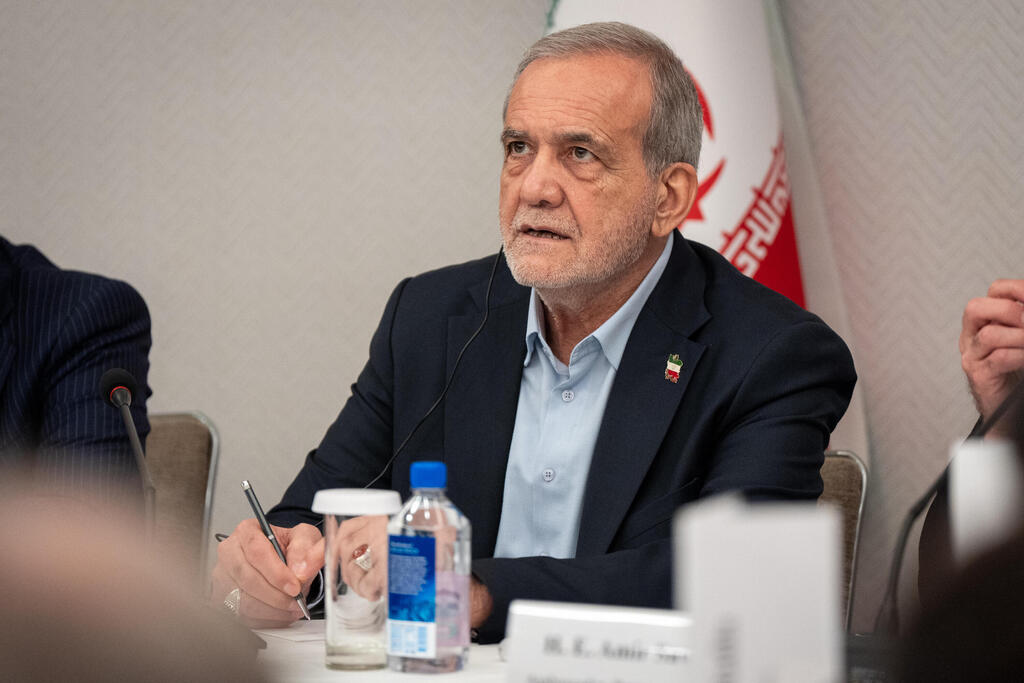
Iranian President Masoud Pezeshkian
(Photo: AP Photo/Angelina Katsanis)
In response to what it called the “irresponsible” reinstatement of sanctions, Iran recalled its ambassadors to Germany, France and the United Kingdom for consultations, state media reported.
Russia’s deputy UN envoy accused Western powers of “burying diplomacy.”
“The U.S. has betrayed diplomacy, but it is the E3 which have buried it,” Iran’s UN envoy Abbas Araqchi said, calling the snapback “legally void, politically reckless and procedurally flawed.”
“Diplomacy will never die, but it will be more difficult and more complicated than before,” he told reporters.
European powers had offered to delay sanctions for up to six months if Iran restored access for UN inspectors, addressed concerns over its enriched uranium stockpile and engaged with the United States.
The U.S. representative said Iran had failed to meet those conditions, making a return of sanctions inevitable, though she left the door open for talks. France also stressed that sanctions’ return did not mark the end of diplomacy.
UN sanctions will take effect immediately Saturday, while European Union sanctions will return next week.

Drought in Iran
(Photo: Vahid Salemi/AP)
Iran’s economy is already under heavy pressure from sanctions reimposed since 2018, when then-President Donald Trump pulled the U.S. out of the deal.
The restored sanctions will reinstate an arms embargo, bans on uranium enrichment and reprocessing, restrictions on ballistic missile activity, global asset freezes and travel bans on Iranian individuals and entities, as well as new measures on the energy sector.
Addressing the General Assembly earlier Friday, Prime Minister Benjamin Netanyahu — whose country struck Iran’s nuclear sites in June alongside the United States — urged the world not to let Iran rebuild.
“We lifted a dark cloud that could have claimed millions of lives, but we must remain vigilant,” Netanyahu said.
“We must not allow Iran to rebuild its military nuclear capacities or its stockpile of enriched uranium. These stockpiles must be eliminated, and tomorrow Security Council sanctions on Iran must be snapped back,” he said.