


The growing tensions between Israel and Turkey, which have taken on added significance in recent days amid military activity in Syria, have raised anew a question that has become increasingly relevant for Israel's defense establishment in recent years: How powerful is the Turkish military? The answer begins with striking numbers, but certainly does not end there.
Turkey is not merely a major NATO member. It is a regional military power whose influence stretches from the Black and Aegean seas through Syria and Iraq to the Caucasus and North Africa. NATO itself described Turkey ahead of the alliance's summit in Ankara in July as the country with the "alliance's second-largest army," after the United States. Its location between Europe, Asia and the Middle East, as well as its control of the Bosporus and Dardanelles straits, gives that power even greater strategic significance.
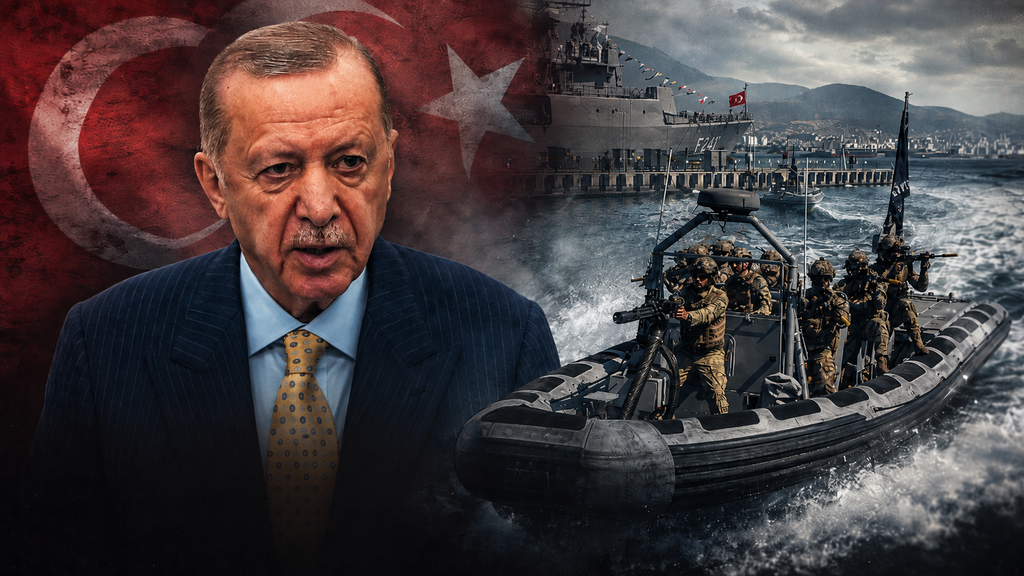
According to Global Firepower data for 2026, which is based in part on estimates, Turkey has about 481,000 active-duty military personnel, 380,000 reservists and another 150,000 members of paramilitary forces. Combined, the three categories account for more than 1 million people. By the number of active-duty personnel, Turkey ranks 10th worldwide according to the index.
More than 2,280 tanks and nearly 100,000 vehicles
The ground force is the backbone of the Turkish military. According to Global Firepower, its arsenal includes about 2,284 tanks and roughly 98,000 vehicles of various types. Alongside them, Turkey maintains a large artillery force: more than 1,000 self-propelled artillery systems, 635 towed guns and 237 multiple rocket launchers. The figures represent estimated inventories and not necessarily the number of systems available for operational use at any given time.
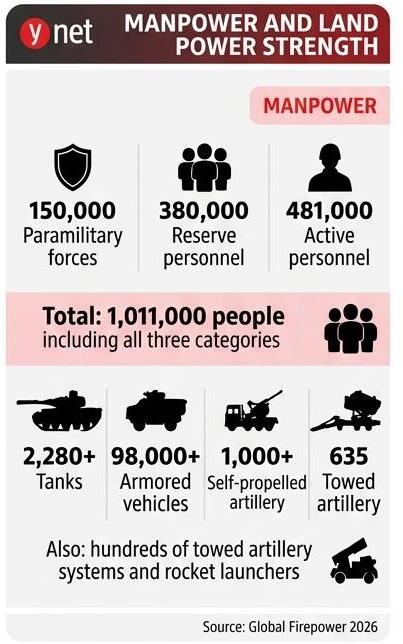
Turkish soldiers during a military exercise
(Photo: Burak Kara/Getty Images)
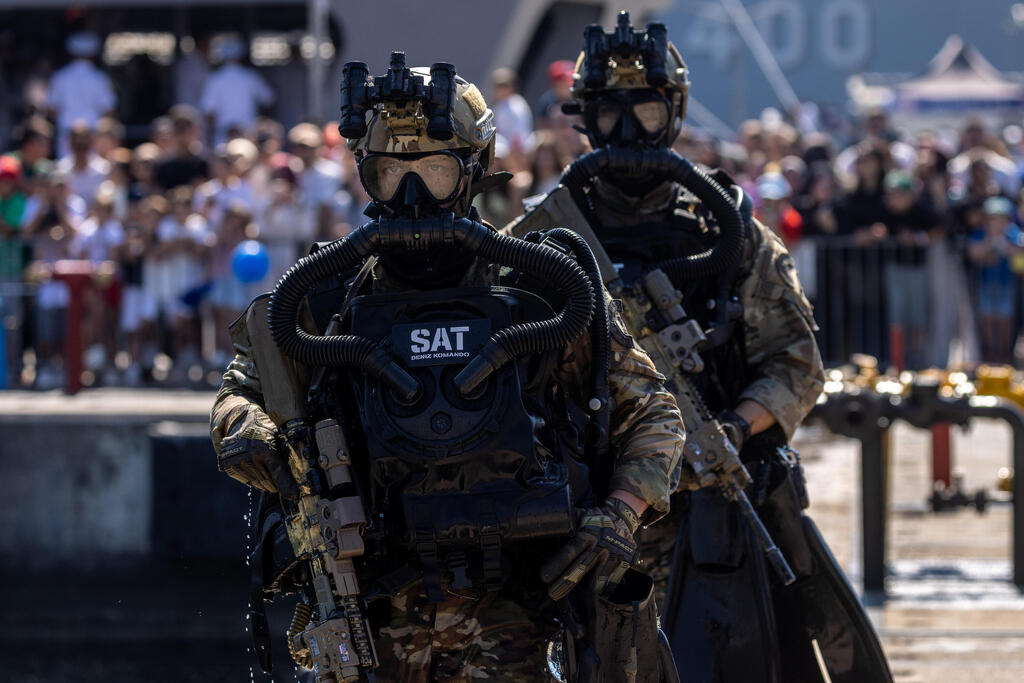
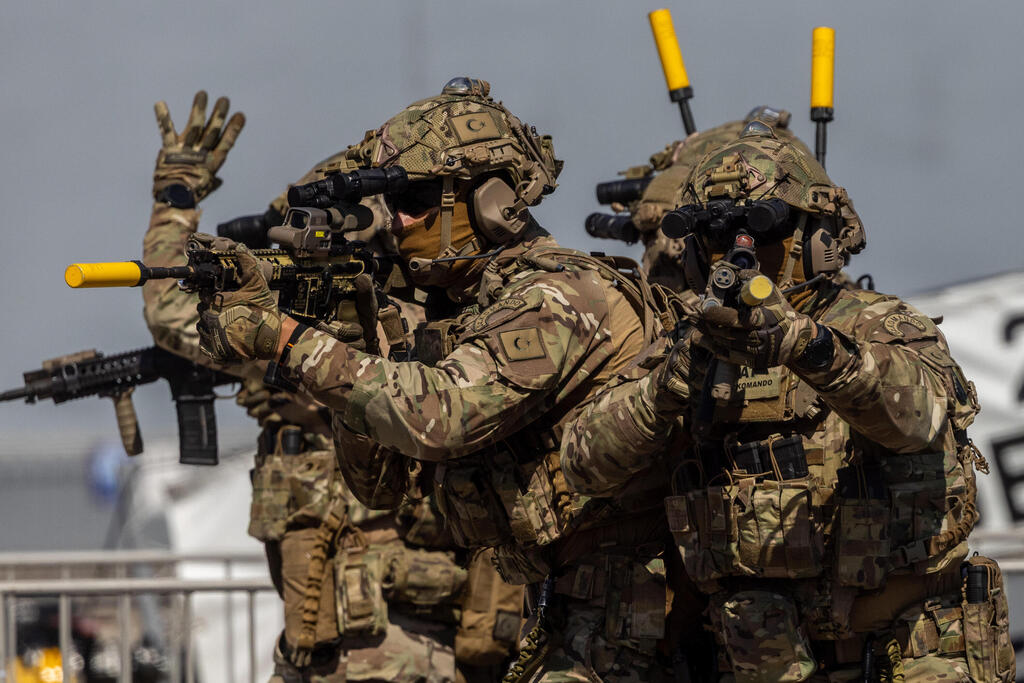
Turkish soldiers take part in a military exercise.
(Photo: Burak Kara/Getty Images)
Turkey's equipment is a mix of older Western systems and newer generations of domestically produced platforms. For decades, Ankara relied heavily on American and European weapons, but in recent years it has invested enormous sums in an effort to reduce that dependence, from tanks and armored vehicles to missiles, air defense systems, military electronics and unmanned systems.
The result is a military that seeks not only to be large but also to be capable of maintaining and upgrading a growing share of its systems on its own.
More than 1,100 aircraft and the F-35 dream
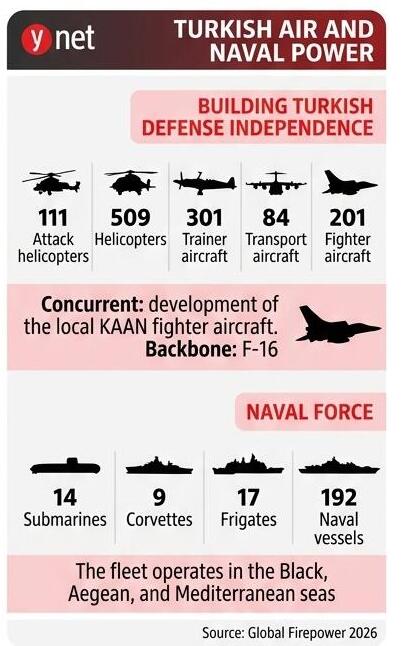
According to Global Firepower estimates, the Turkish military has about 1,101 aircraft. The figure includes 201 fighter aircraft, 84 transport planes, 301 training aircraft and 509 helicopters, including 111 attack helicopters. Here, too, the figure represents the total inventory and not necessarily actual operational readiness. The site estimates, for example, that about 141 of the 201 fighter aircraft would be available under its assumed readiness scenario.
The backbone of Turkey's fighter fleet remains its F-16s, but Ankara is pursuing two tracks simultaneously: an effort to rejoin the American F-35 fighter jet program, from which it was removed following its purchase of the Russian S-400 system, and the development of its own indigenous fighter jet, the KAAN. The KAAN made its first flight in 2024 and is one of the Turkish defense industry's flagship projects. Ankara sees it as a key component of its plan to reduce dependence on foreign fighter aircraft, although the domestic project still relies on American components, most notably General Electric engines.
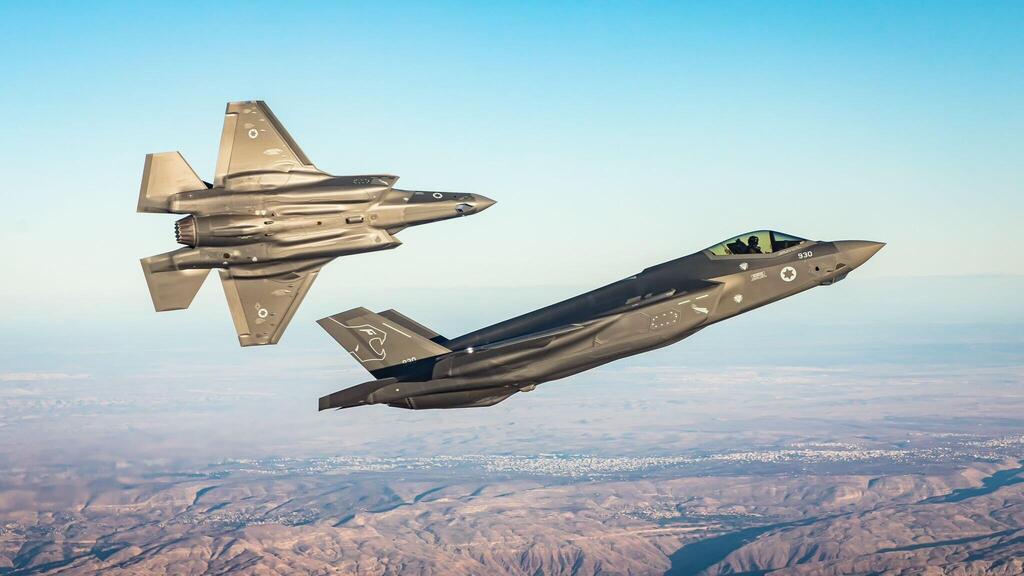
F-35 fighter jet in service with the IDF. Will Turkey get one too?
(Photo: IDF Spokesperson's Unit)
At the same time, Turkey continues to press Washington to return to the F-35 program. U.S. President Donald Trump expressed openness at the NATO summit in Ankara to allowing the sale of the aircraft to Turkey, but the path remains fraught with legal and political obstacles, including over the S-400 issue. Israel strongly opposes the move out of concern that it could undermine its qualitative military edge in the region, and Prime Minister Benjamin Netanyahu has publicly voiced his opposition.
The force that changed the battlefield: Drones
If there is one field in which Turkey has quickly become a global name, it is unmanned aerial vehicles. Turkish company Baykar, the manufacturer of the Bayraktar family, turned the TB2 into one of the world's best-known drones following its use in a series of conflicts and later developed more advanced systems, including the TB3.
Turkish drones have become not only an operational tool but also an export engine and a diplomatic asset. Turkey markets its systems to dozens of countries and has emerged in this field as a significant competitor to Israeli defense industries in the global market. According to Reuters, Turkish defense industry exports reached about $10 billion in 2025, triple the 2021 figure, and Ankara is now seeking further expansion in European and global markets.
17 frigates, 14 submarines and a ship turned drone carrier
The sea is also a central component of Turkey's power projection strategy. According to Global Firepower, the navy has 192 vessels, including 17 frigates, nine corvettes and 14 submarines. Turkey operates its naval forces across three main theaters — the Black Sea, Aegean Sea and Mediterranean — and its location allows it to control the only maritime passage between the Black Sea and the Mediterranean.
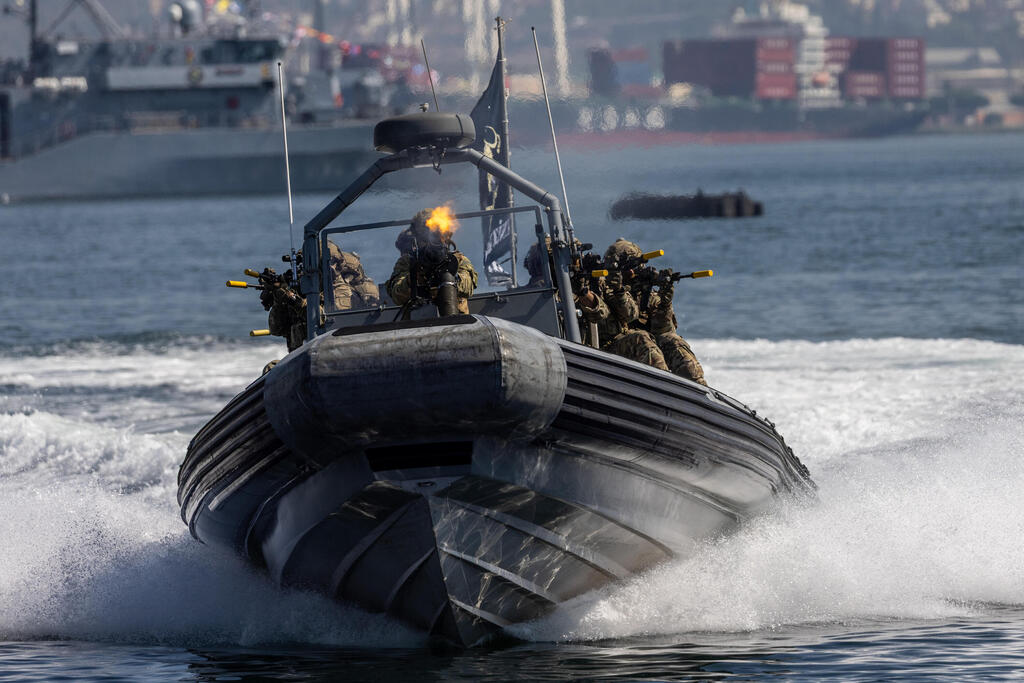
Turkish Navy. Operating across three seas
(Photo: Burak Kara/Getty Images)
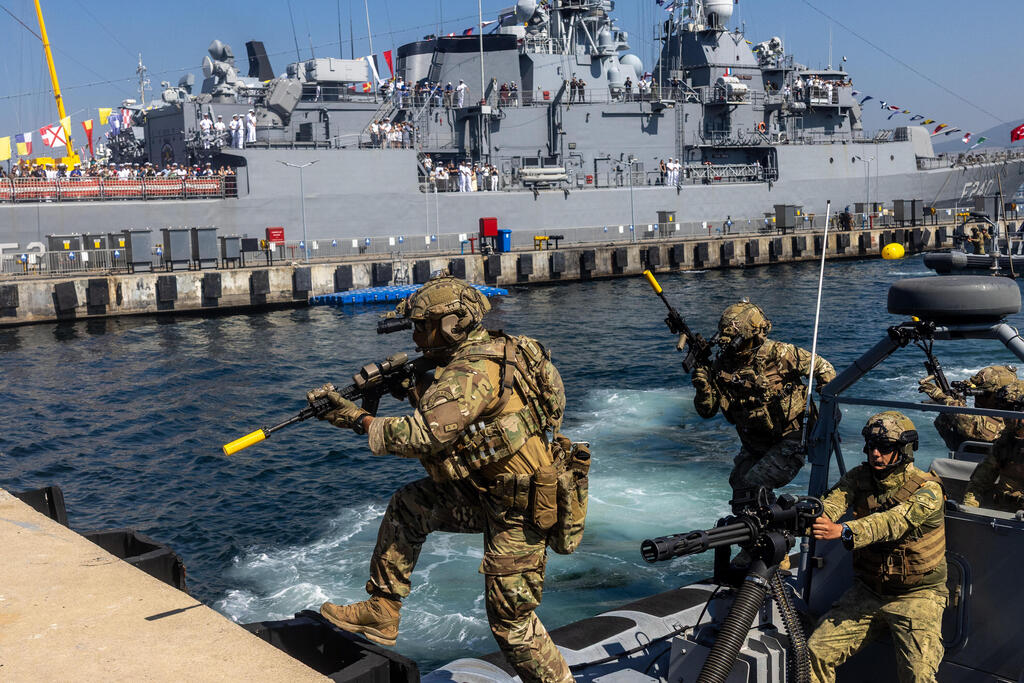
(Photo: Burak Kara/Getty Images)
One of the navy's most prominent platforms is the TCG Anadolu, a multipurpose amphibious assault ship and the largest vessel in the Turkish fleet. After Turkey was removed from the F-35 program, it developed, among other things, a concept under which the ship could serve as a naval base for operating unmanned aircraft.
During the EFES-2026 exercise held in May, a Bayraktar TB3 was operated from the ship as part of a combat scenario. Earlier, during a NATO exercise in the Baltic Sea, a TB3 took off autonomously from Anadolu's short deck and struck maritime targets. Through this, Turkey is seeking to develop a relatively new model of naval power: a large ship that extends its operational reach through an array of armed drones.
4,500 companies and more than 1,400 projects
One of the deepest changes in Turkey's balance of power is not in the number of soldiers or tanks but in the factories behind them. For years, Turkey was a major customer for foreign weapons systems. Today, it is seeking to become a manufacturer and exporter in its own right.
According to data published this month by Anadolu Agency, more than 4,500 companies now operate in Turkey's defense industry, compared with just 56 in 2002, while the number of defense projects has surpassed 1,400. According to the same data, the share of locally produced components and systems has risen from about 20% two decades ago to more than 85% today.
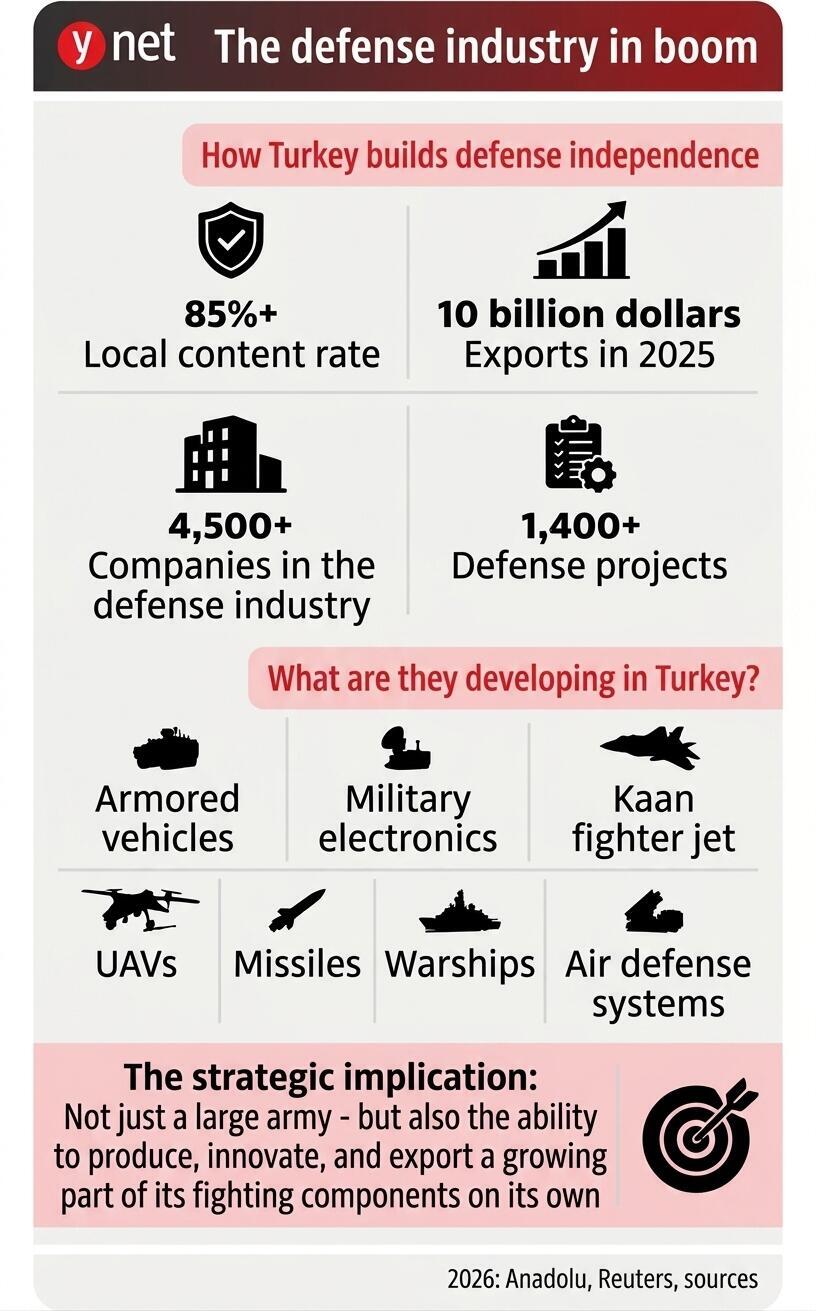
The strategic significance is substantial: Turkey is able to produce at home an increasing share of the drones, missiles, armored vehicles, warships and electronic systems it uses while also generating revenue and political influence through their export.
And how much does it spend on defense?
Turkish defense spending has been rising sharply, although the scale varies considerably depending on the definition and source. In a NATO report on 2025 defense spending, Turkey's expenditure was estimated at about $32.6 billion at that year's prices and exchange rates, up from about $28.3 billion in 2024. NATO estimated that spending amounted to about 2.33% of GDP. The figures for 2024 and 2025 were identified in the report as estimates.
Other estimates put Turkey's defense budget higher. Global Firepower, for example, estimates 2026 spending at about $51.4 billion. The discrepancy is due in part to differences in definitions, budget years and calculation methods, meaning comparisons between sources should be made cautiously.
Mass, geography, experience and industry
So what makes the Turkish military particularly powerful? First and foremost, mass. Hundreds of thousands of soldiers, hundreds of thousands of reservists, thousands of armored vehicles and the ability to mobilize manpower on a scale that few countries in the region can approach. The second advantage is geography: Turkey sits at the intersection of Europe, Asia and the Middle East and controls the Bosporus and Dardanelles straits. It borders, among others, Syria, Iraq, Iran, Georgia and Bulgaria and lies within close reach of the Caucasus, Balkans and eastern Mediterranean.
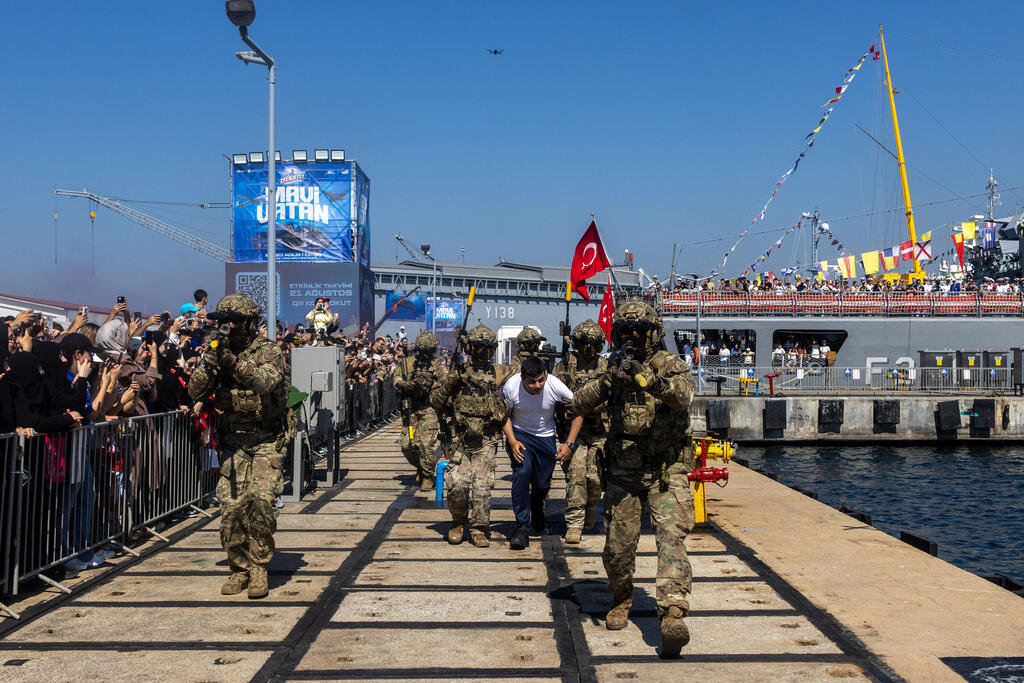
Turkey in 2026 is much more than a 'large military'
(Photo: Burak Kara/Getty Images)
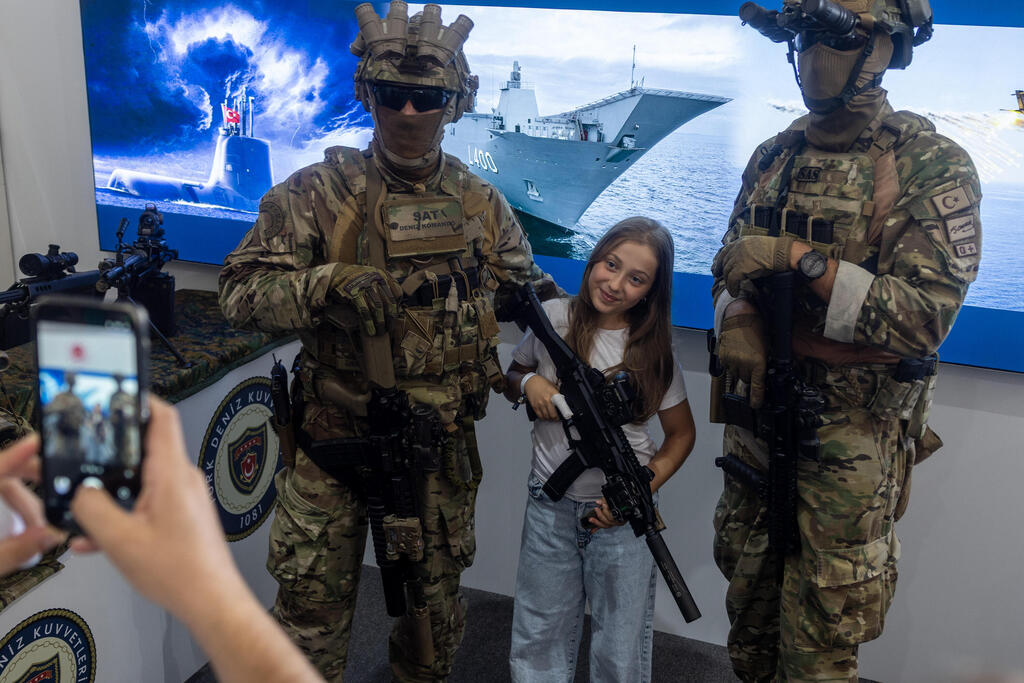
(Photo: Burak Kara/Getty Images)
The third advantage is operational experience. The Turkish military has spent years fighting the Kurdistan Workers' Party, carried out a series of operations beyond the country's borders, maintains forces and conducts operations in northern Syria and Iraq and has been involved, directly or indirectly, in additional theaters. The fourth is the defense industry. Unlike a large military that is entirely dependent on external supplies, Turkey is now able to produce an increasing share of its own weapons systems. That does not eliminate its dependence on foreign technology in certain areas, but it gives Ankara significantly greater freedom of action than it had in the past.
The fifth advantage is NATO. Turkey has been a member of the alliance since 1952, hosts NATO Allied Land Command in Izmir and is a key component of the alliance's southern flank. Membership provides it with joint training, common military standards, intelligence sharing and cooperation with some of the world's most advanced militaries.
Still, numbers alone can be misleading. The Turkish military has equipment from different generations, some of it old, and not every tank, aircraft or vessel listed in its inventory is fully operational. In modern warfare, the question is not simply how many platforms exist, but how many are available, how well protected they are, what intelligence is available to them and how effectively they can operate together on a single network with the air force, navy, drones, artillery and air defense systems.
But even with that caveat, the picture is clear: Turkey in 2026 is much more than a "large military." It is a regional military power with enormous manpower, thousands of combat platforms, significant air and naval forces, global leadership in drones and a rapidly growing defense industry. As relations with Israel grow more strained and Turkish influence in Syria expands, that power is becoming for Jerusalem less of a theoretical statistic and more of a strategic consideration that is increasingly difficult to ignore.