

U.S. President Donald Trump said Monday a naval blockade on ships entering or exiting Iranian ports would take effect at 10 a.m. ET, as his administration considers additional steps, including possible limited military strikes, following the collapse of talks with Tehran.
The move is part of a broader pressure campaign, with Israeli officials assessing Washington is unlikely to resume full-scale fighting before a two-week ceasefire expires on April 21. They described the blockade as a strategic signal aimed at forcing Iran back to negotiations under less favorable conditions.
Trump warns it makes 'no difference' to him if Iran and US reach deal
(Video: Fox News)


According to officials cited by The Wall Street Journal, Trump and his advisers are weighing options including limited strikes on Iranian targets alongside the naval blockade. A wider bombing campaign remains less likely, due to concerns about further destabilizing the region and Trump’s stated opposition to prolonged wars.
In a Fox News interview Sunday, Trump said he could resume bombing Iran if no agreement is reached and suggested potential strikes on critical infrastructure.
“I would hate to do it, but it’s their water, their desalination plants, their electric generating plants, which are very easy to hit,” he said.
U.S. Central Command said it is preparing to fully enforce the blockade on vessels entering or leaving Iranian ports and coastal areas. The measure is expected to focus specifically on Iranian ports, rather than all regional shipping.
Israeli officials said the goal is to increase economic pressure, particularly by threatening Iran’s oil exports and access through the Strait of Hormuz, a critical global shipping route.
“The goal is to create stronger economic pressure on Iran and bring them back to negotiations with more realistic positions,” an Israeli official familiar with the matter said.
At the same time, diplomatic efforts continue. A senior Pakistani Foreign Ministry official told the Qatari newspaper Al-Araby Al-Jadeed that Islamabad is working to persuade the United States to return to talks. The official said recent discussions involving Pakistani, Iranian and American representatives were held in a positive atmosphere, suggesting both sides remain open to dialogue.
Pakistan’s foreign minister, Ishaq Dar, has also held talks with counterparts in Saudi Arabia, Turkey and Egypt to coordinate efforts to preserve the ceasefire and reduce tensions.
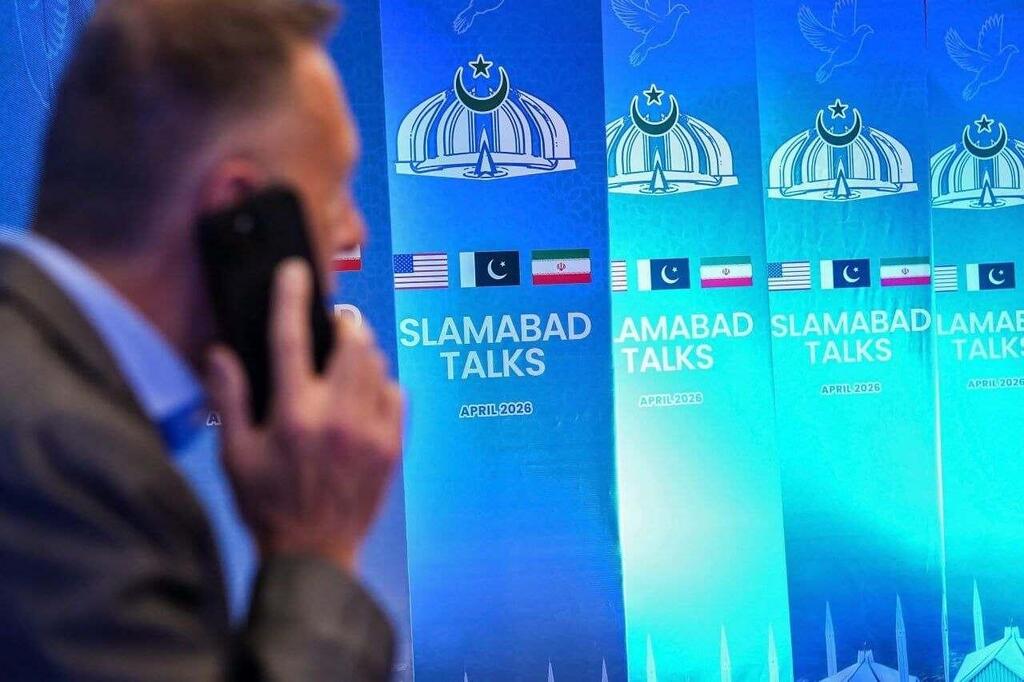
Iran reacted sharply to the blockade announcement. Defense Ministry spokesperson Reza Talaei said the Strait of Hormuz would “remain under Iran’s control,” adding that the country is stronger and more resilient than before. Foreign Minister Abbas Araghchi accused Washington of abandoning good-faith negotiations, writing on X that “goodwill begets goodwill, hostility begets hostility.”
U.S. officials said Trump’s demands in any renewed talks include unrestricted access through the Strait of Hormuz, a halt to uranium enrichment, dismantling of enrichment facilities and an end to support for regional allies such as Hezbollah in Lebanon and the Houthis in Yemen.
Officials and analysts say each option carries significant risks. A broader war could strain U.S. military resources and draw domestic criticism, while limited action could be seen as a victory for Tehran if it preserves its strategic position.
Some analysts support the blockade as an effective pressure tool, noting Iran relies heavily on oil and gas revenues. Others warn it may not force concessions, pointing to Tehran’s resilience under decades of sanctions and the risks to U.S. naval forces operating in the narrow strait.
Asked about the economic impact ahead of U.S. midterm elections, Trump acknowledged fuel prices could remain high, saying they “could be the same or maybe a little bit higher.”
Israeli officials said Trump remains determined to secure a concrete outcome and is unlikely to be deterred by domestic political pressure, even as concerns grow over rising energy prices and broader economic fallout.
Prime Minister Benjamin Netanyahu has convened senior ministers to discuss possible scenarios, including renewed fighting or a potential Iranian response, as Israel prepares for further developments.