


"The strategic waterway is more important to us than dozens of nuclear bombs." That is how Mohsen Rezaee, an adviser to Iran's supreme leader, described the Strait of Hormuz today (Sunday), as the waterway has become the central flashpoint between Iran and the United States. Only last night, Iranian officials announced that the strait would remain closed "until the end of American intervention in the region." Ebrahim Rezaei, spokesman for the Iranian parliament's National Security and Foreign Policy Committee, wrote on X: "We seized the Strait of Hormuz by force and we will hold it by force."
Mohsen Rezaee added: "We will defend the Strait of Hormuz because this strategic waterway is one of the components of Iran's deterrence. It plays a decisive role in safeguarding our national security and interests."
Documentation of the U.S. strikes in Iran


Meanwhile, following the overnight blockade, which remained in effect today, Iran's Tasnim news agency reported that "only 11 commercial vessels crossed the Strait of Hormuz over the past 24 hours."
The announcement that the strait would be closed led to overnight clashes. Hours later, Iran said it had attacked another vessel in the Strait of Hormuz, prompting the United States to strike 140 targets in Iran. Iran's Islamic Revolutionary Guard Corps said that in response to the U.S. strikes, it attacked multiple American targets in the Gulf, in what appeared to mark a widening of the conflict.
In a statement issued after the wave of strikes, the U.S. military said it had hit 140 Iranian military targets with precision weapons launched from the air and sea. The targets included missile and drone launch sites, naval assets, weapons depots and communications and surveillance facilities.
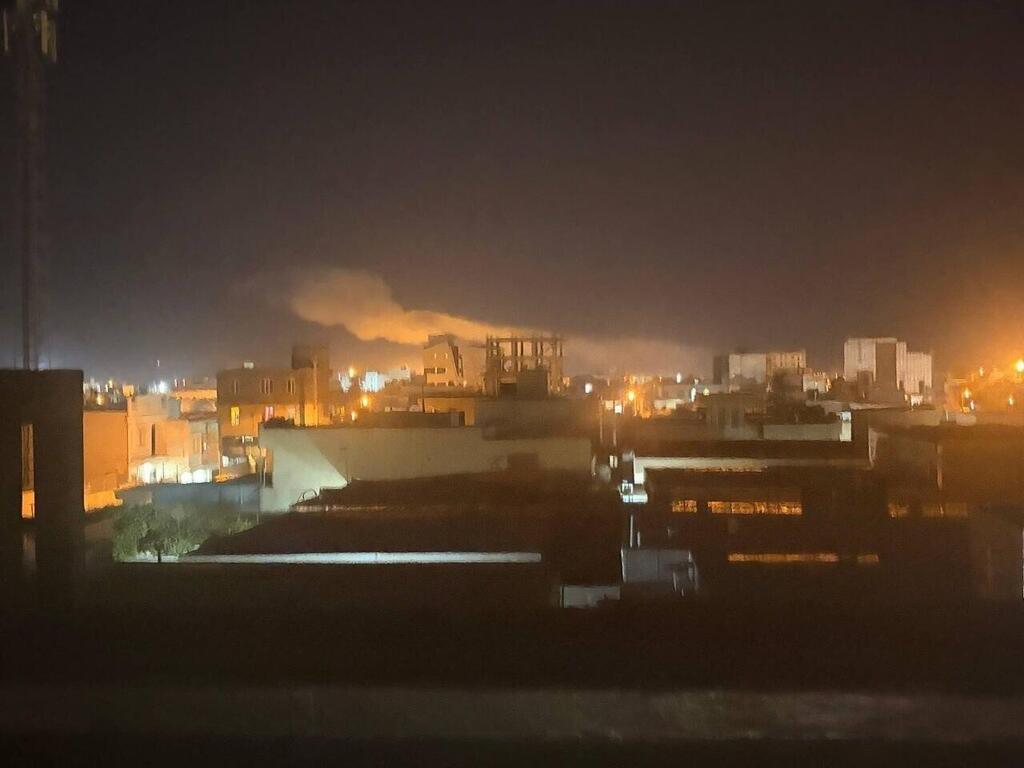
The operation marked the largest number of targets the United States has struck in a single night over the past week. According to U.S. Central Command (CENTCOM), more than 300 targets have been hit over the past week "to degrade Iran’s ability to attack civilian mariners and commercial ships freely transiting the strait." The U.S. military said that since May, 800 vessels have passed through the strait with American assistance, transporting 400 million barrels of oil. Iranian officials, meanwhile, said the United States struck seven military bases in Bushehr, five in Deir and four in Asaluyeh.
Iran, for its part, expanded the scope of its attacks. Since hostilities resumed, it has launched strikes against at least six countries, claiming the targets were U.S. military bases. Saudi Arabia has not been targeted, but Jordan, Bahrain, Qatar, the United Arab Emirates, Kuwait and Oman were under continuous air raid alerts overnight and into the morning. All condemned the attacks on their territory, despite Iran's claim that the strikes were aimed at American targets.
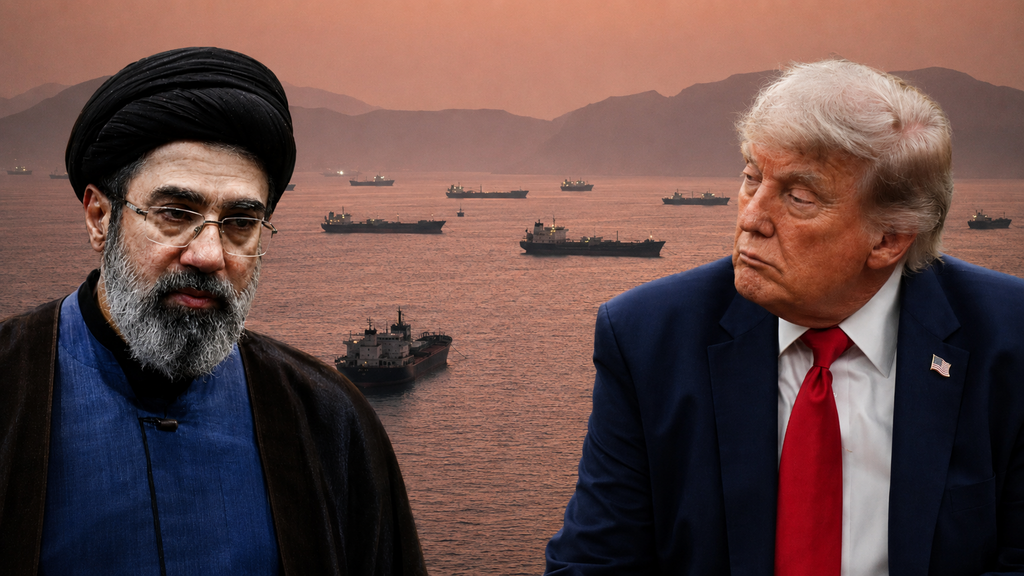
Mojtaba Khamenei and Donald Trump
(Photo: AFP)
Jordan said the attacks constituted "a violation of the country's sovereignty and a threat to their security, stability and territorial integrity." Qatar said the strikes were "a violation of international law, the UN Charter and the principles of good neighborliness," adding that it reserves the right to respond. Bahrain's Defense Force General Command said that "Iran continues its systematic aggression through missile and drone attacks targeting civilians in Bahrain."
Meanwhile, Oman's Maritime Security Center said this afternoon that it had responded to a distress call from a Cyprus-flagged vessel in the Strait of Hormuz, off the coast of Musandam Governorate. According to the center, 23 crew members were rescued, while the search continues for one missing crew member.