

“Iran is strengthening. Trump needs a temporary agreement to reopen the Strait of Hormuz. This is a victory for the axis of resistance,” said Ali Akbar Velayati, adviser to Iran’s supreme leader, on Saturday morning.
It is likely that before February 28, Donald Trump did not imagine that after more than three months of ongoing confrontation, at varying levels of intensity, the Iranians would still feel free to make such statements.
Gallery
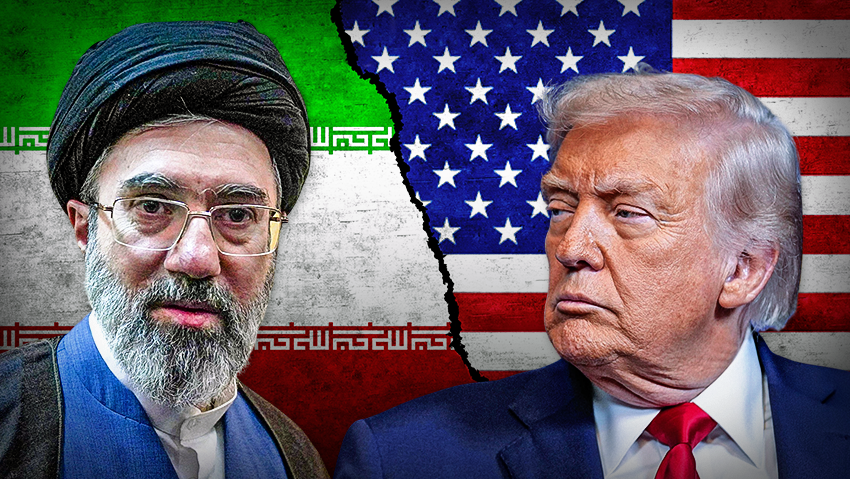
'Iran is strengthening. Trump needs a temporary agreement to reopen the Strait of Hormuz'
(Photo: Hamed Jafarnejad/ISNA/WANA (West Asia News Agency) via REUTERS, shutterstock, AP/Alex Brandon)
The negotiations between the United States and Iran have become stuck in a complex deadlock over Tehran’s demand to receive billions of dollars immediately. For Trump, who is already struggling to hide his desire to end the confrontation, this is a politically explosive obstacle that risks portraying him as repeating the same “stupid deals,” in his own words, made by his predecessors. While senior officials in Washington insist that no funds will be transferred upfront, Iranian officials say the release of frozen assets is a red line for any agreement.
One of the central sticking points is Iran’s insistence on receiving about 12 billion dollars in advance, plus another 24 billion dollars during the 60 days of negotiations that would follow the signing of a preliminary deal, out of roughly 100 billion dollars in Iranian assets frozen worldwide due to U.S. sanctions. Senior Iranian officials argue this is not an American “incentive” but money that belongs to them by right, and view it as a necessary condition for proving Washington’s seriousness, after past grievances.
Trump now finds himself in a political bind. Agreeing to release funds upfront would inevitably draw uncomfortable comparisons to the very policies he has long criticized. He has repeatedly attacked the Obama administration over the 1.7 billion dollars in cash transferred to Tehran in 2016 during the implementation of the nuclear deal, and also criticized the Biden administration in 2023 over the release of 6 billion dollars as part of a prisoner exchange agreement.
US President Donald Trump on the situation with Iran
(Video: The White House)


During the 2016 presidential debate, Trump told Hillary Clinton that the Obama administration had made Iran “very powerful with the dumbest deal perhaps I’ve ever seen in the history of deal-making…with the 1.7 billion dollars in cash, which is enough to fill up this room.” Now he finds himself in a similar situation, or perhaps a worse one, facing a regime in economic crisis whose top priority is access to cash.
Just last week, Trump again launched a social media offensive targeting his two predecessors, Joe Biden and Obama. In one post he wrote: “Don’t forget the one who funded Iran and caused this war. Obama!” In another, he argued that Biden and Obama entered negotiations from a position of weakness after being threatened, while he entered from strength after threatening to “blow everything up.” In his view, when he threatens, the other side comes to the table.
As contained exchanges of fire continue around the Strait of Hormuz, Trump continues to alternate between threats of renewed war and repeated claims that a breakthrough deal is close and that Iran is desperate to reach it.
“Twenty four billion dollars is not much for America if he wants to reach an agreement with Iran,” Gen. Mohsen Rezaei, a senior adviser to Iran’s top official told CNN on Friday. “This is our own, not America’s money.”
In its analysis of Trump’s political dilemma, The Wall Street Journal noted that the Obama administration’s decision to fly 400 million dollars in cash to Tehran as part of a 1.7 billion dollars settlement during the 2015 nuclear agreement became an embarrassing flashpoint for a deal already under heavy criticism. When Trump withdrew from the agreement in 2018, he said it created a legal pathway to nuclear weapons for Iran, ignored missiles and support for terrorism, and “enriched the Iranian regime and enabled its behavior.”
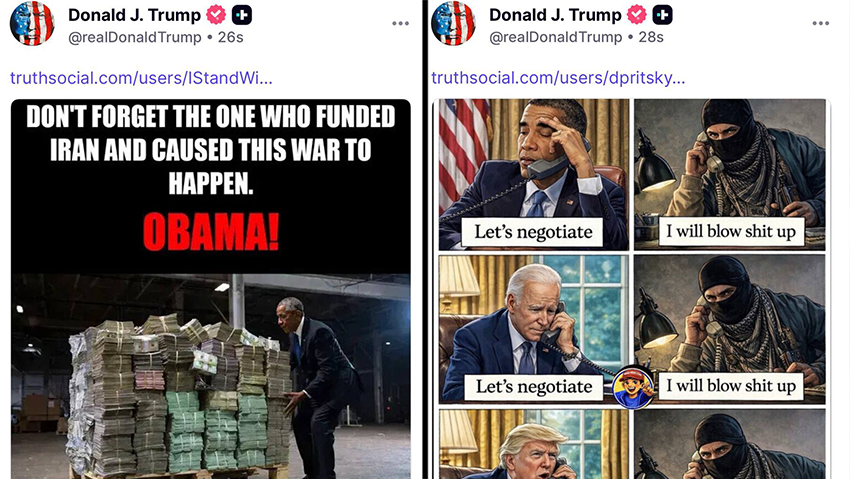
Trump's posts in Truth Social
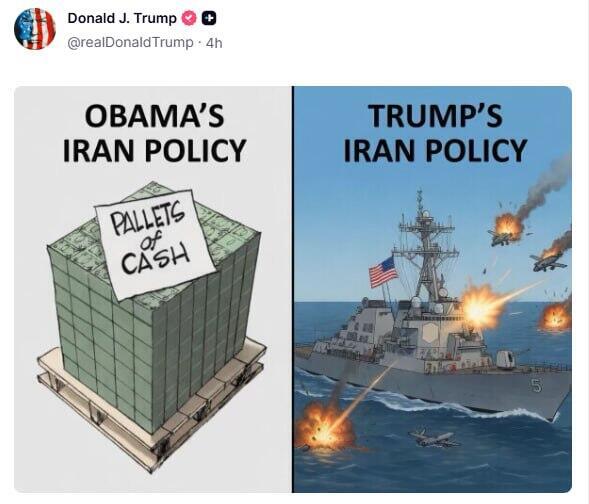
(Photo: Screenshots from Truth Social)
In 2023, the Biden administration allowed Iran access to 6 billion dollars in assets as part of a prisoner swap, drawing strong Republican criticism. The funds were later informally frozen again after October 7.
From Iran’s perspective, any U.S. concession on this issue would prove the regime has turned the outcome of the conflict into a diplomatic gain, as its leaders have claimed. “In Tehran’s calculus, unfrozen assets are not sweeteners — they are the down payment needed to prove that diplomacy is worth the political risk,” said Ali Vaez, senior adviser at the International Crisis Group, a Brussels-based think tank. “It’s an issue on which Iran is likely to negotiate hardest because it goes to the heart of trust, reciprocity and domestic credibility.”
The Wall Street Journal detailed the structure of Iranian assets held around the world. Releasing all 100 billion dollars in frozen Iranian funds would provide a significant boost to the country’s economy, though less than a full lifting of sanctions, which would generate export revenue, enable foreign investment and provide access to technology.
The assets consist of different types of funds held outside Iran, mainly in China, including oil revenues accumulated over years that cannot be transferred into Iran’s sanctioned banking system for fear of U.S. penalties.
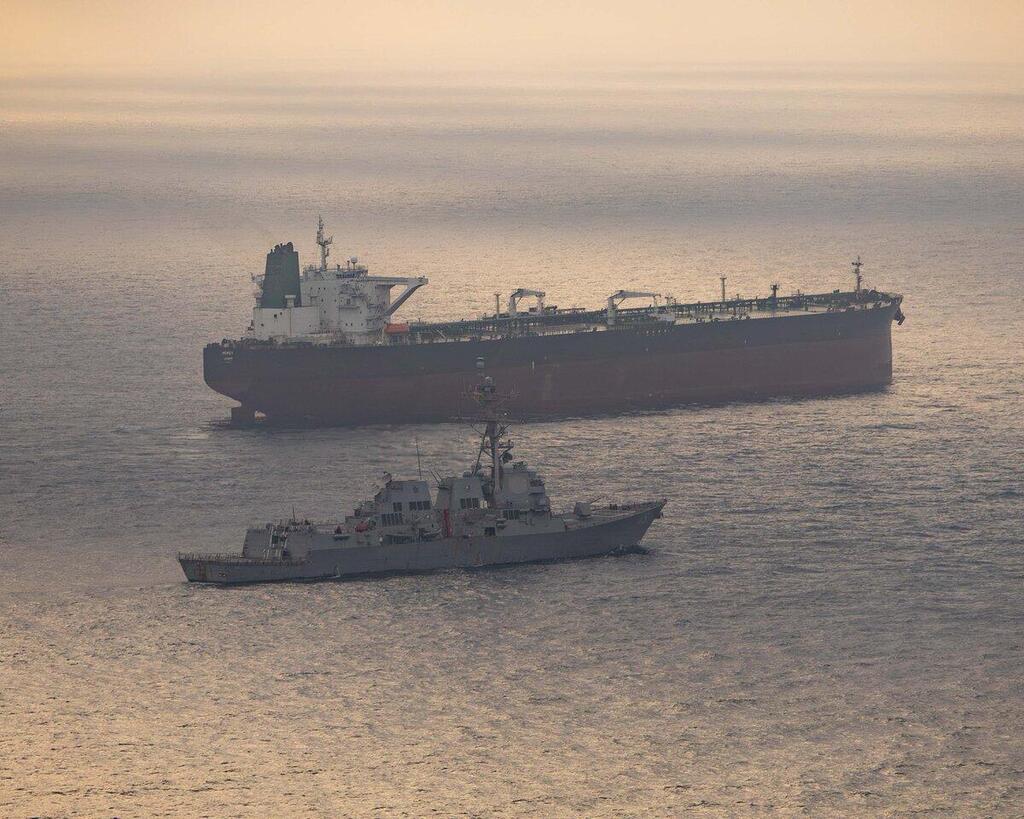
U.S. Navy destroyer transited the Strait of Hormuz
(Photo: CENTCOM)
There are also restricted funds earmarked for specific uses. These include 6 billion dollars in Iranian revenues transferred to Qatar in 2023 under the Biden administration for humanitarian purchases, mainly agricultural goods and medicine. About 1 billion dollars in Iranian revenues in Oman has also been informally frozen following the October 7 Hamas attack. In addition, Iran holds roughly 15 billion dollars in Iraqi banks derived from electricity and natural gas exports to Iraq.
Richard Nephew, a former U.S. State Department sanctions official, told the Journal that the simplest option for the Trump administration would be to quietly allow Iran to begin using some frozen humanitarian funds. “The fastest thing they could do is to quietly remove sanctions on Iranian pots of money being held in Qatar, Oman and Iraq because it’s a relatively small, discrete amount of money that is more controllable given where it’s located.”
The administration would need to assure the banks involved that they would not face sanctions, and Tehran would likely object to the limited access to funds. However, the White House could argue it is not directly transferring money to Iran and could point out that it was the Biden administration that initially made those funds accessible.
Another option, Nephew said, would be to grant a sanctions waiver on Iranian oil sales to China. Such a move could release frozen Iranian funds held in China and allow Tehran to legally export oil, increasing revenue and contributing to global oil market stability. Iranian media have reported that Tehran is pressing for such a waiver, but for the Trump administration it would be too visible and significant a concession.