


The U.S. Air Force has awarded Boeing and Applied Research Associates (ARA) a contract to develop a new generation of bunker-busting bombs, designed to be smaller, lighter and more lethal than the current Massive Ordnance Penetrator (MOP).
The agreement, signed last week, calls for a prototype within 24 months. The new weapon, officially named the Next Generation Penetrator (NGP), is expected to strike fortified targets at greater depths while being compatible with future B-21 Raider stealth bombers.
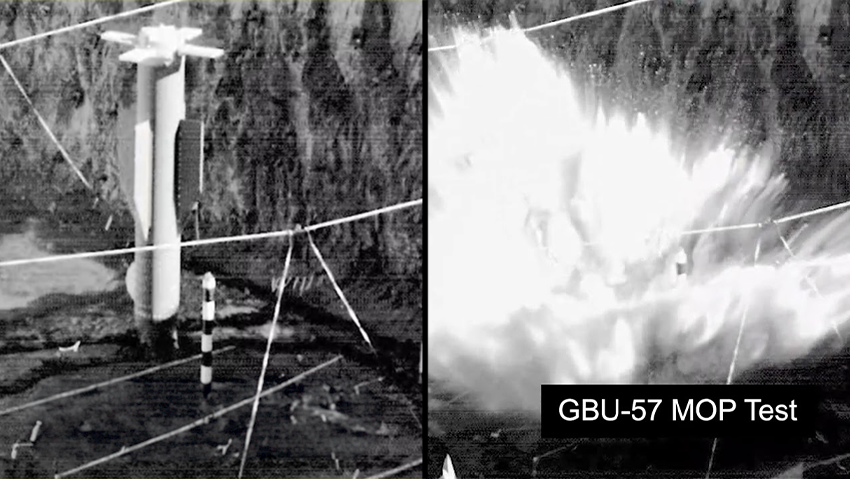
Test of the giant MOP bomb, five years before it was dropped on Iran’s nuclear sites
(Video: US military)


Boeing will design the new tail kit and provide integration support, while ARA will serve as lead designer and build scaled and full-size models for testing. The deal is part of a broader $107 million framework awarded to four contractors, with the Air Force planning to spend $120.8 million in 2025 and another $73.7 million in 2026. Testing and development are expected to continue through 2027.
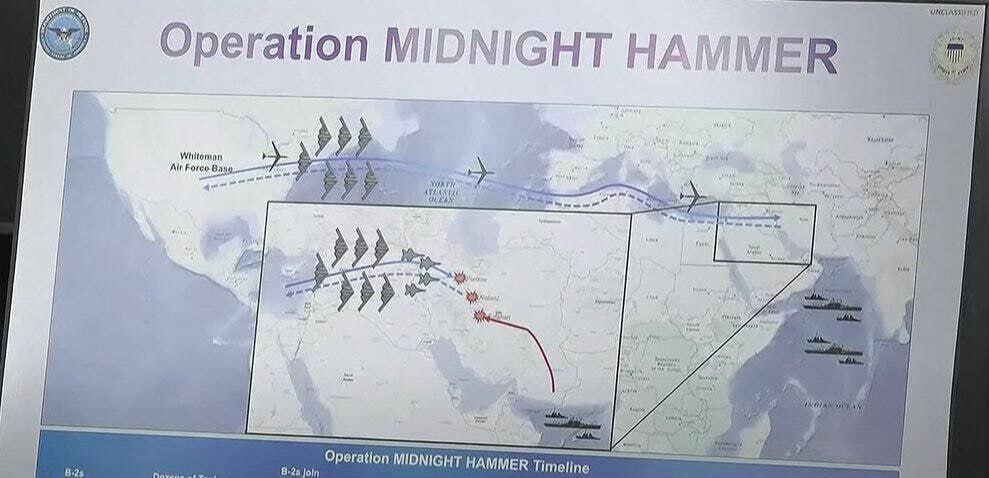
The decision to accelerate the program follows June’s Operation Midnight Hammer, in which six B-2 bombers dropped 12 MOPs on Iran’s underground nuclear facility at Fordow, while a seventh bomber targeted Natanz with two additional bombs. It was the first operational use of the MOP, previously tested only in live-fire trials, and it exposed significant limitations.

(Photo: US Department of War)
Reports said six bombs were required at Fordow for a single strike point, with later bombs boring progressively deeper after earlier detonations to reach the facility’s core.
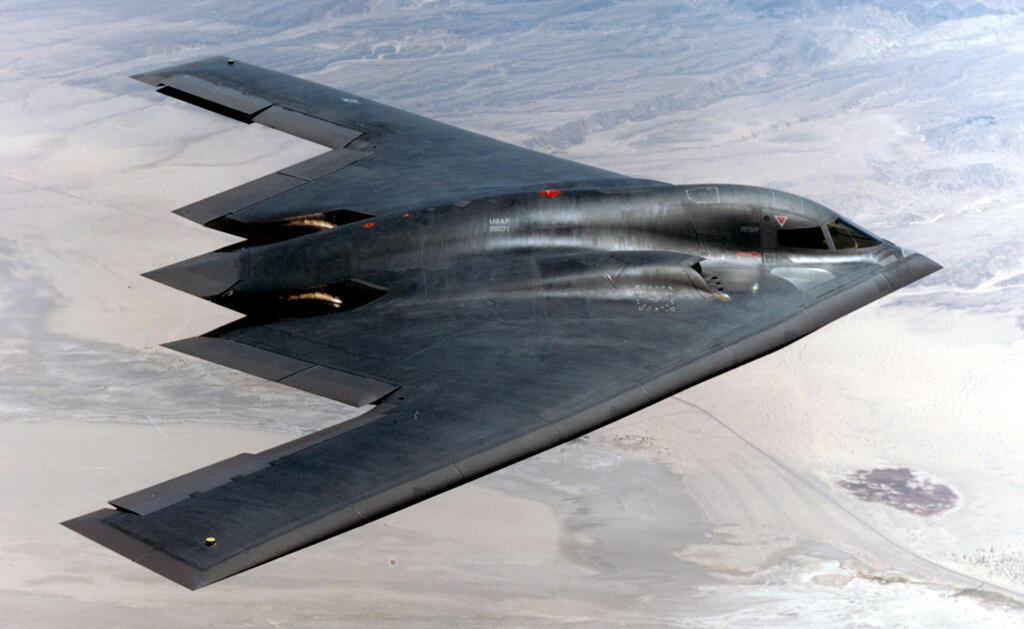
The MOP currently weighs more than 13.5 tons, measures 6.2 meters long and 80 centimeters wide, and can penetrate 60 meters (200 feet) of reinforced concrete or rock before detonation. Only the B-2 bomber can carry it, with two weapons per sortie, requiring aircraft to fly close to targets.
A B-2 bomber
Air Force officials said a smaller, more versatile penetrator would allow use from a wider range of platforms, including long-range strike aircraft, reducing the number of bombers needed for future missions.
The Massive Ordnance Penetrator (MOP), first developed by Boeing and the Defense Threat Reduction Agency (DTRA), remains the world’s largest operational bunker-busting bomb. Equipped with GPS and inertial navigation systems and a “smart fuse” capable of adjusting detonation by depth, it can “count floors” and identify internal spaces to strike underground facilities such as laboratories and halls. But during the June strike on Iran’s Fordow nuclear site, several bombs were required on the same location to ensure penetration to the facility’s core.
Operation Midnight Hammer
Earlier penetrators such as the GBU-28 and GBU-37 weighed just 2.27 tons, while the MOP is more than six times heavier at 13.5 tons. In its February 2024 request to industry, the Air Force outlined requirements for the new Next Generation Penetrator: a maximum weight of 10 tons—3.5 tons lighter than the current MOP—accuracy within 2.2 meters even under disrupted or denied GPS conditions, and improved penetration and fragmentation effects.
The lighter design is intended to expand compatibility with more aircraft and increase range. Officials are also weighing the addition of a rocket motor to boost penetration and allow launches from greater distances, reducing exposure to advanced air defenses. Contractors were asked to deliver about ten scaled prototypes and three to five full-scale models within 18 to 24 months—an ambitious timeline meant to accelerate testing and development.

Slide showing the future NGP bunker-busting bomb under development by the US military
(Credit: US Air Force)
The Air Force also called for advanced navigation, control and guidance systems capable of sustaining high precision even in contested environments—surpassing the current JDAMs, which reach five meters of accuracy in ideal conditions but can miss by tens of meters without GPS. A new generation of smart fuses is also expected to refine the “floor-counting” feature first introduced with the MOP.
In the meantime, the Air Force plans to continue expanding its inventory of existing MOPs to maintain operational capability until the new bomb enters service. “Now that we know it worked, I’m certain our adversaries are already looking for ways to adapt,” Air Force Chief of Staff Gen. David Allvin told the Senate in June following the Iran strike. “We are preparing for the next steps to stay ahead of them.”