


It is now clear that something is not working in the mechanism that was supposed to bring calm to the northern border. The pilot program in southern Lebanon, designed to pave the way for Hezbollah’s disarmament south of the Litani River, an IDF withdrawal and the transfer of responsibility to the Lebanese army, is not progressing as expected.
Israel’s defense establishment has identified significant difficulties facing the Lebanese army, which is not operating in accordance with the targets set for it. Because of a legal limitation, its soldiers avoid searches inside homes and terror infrastructure in villages, preferring to focus only on open and public areas.
Beyond the difficulties on the ground, the root of the problem lies at the diplomatic level. So far, no agreement has been reached on who will supervise the Lebanese army’s work, what criteria it will be required to meet and what exact conditions the IDF will need to approve before beginning a withdrawal.
About two months ago, ynet and Yedioth Ahronoth reported on a proposal under which Italian military forces would supervise the process, but that plan has yet to get off the ground.
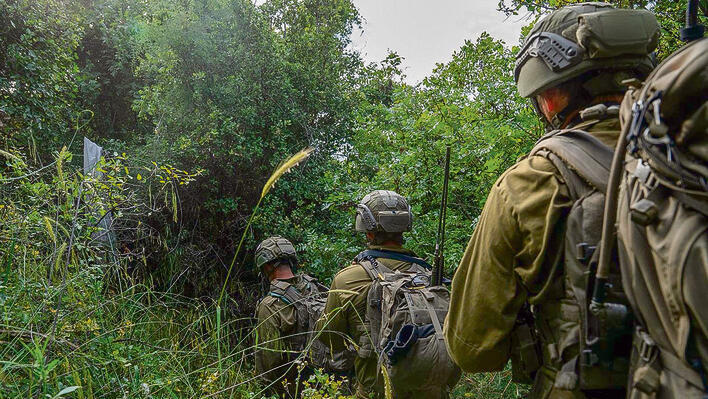
The deadlock has two sides. On the one hand, it gives the IDF vital room to complete its mission on the Ali Taher ridge, where dozens of Hezbollah terrorists are currently trapped. It also allows the forces to improve their holding model, establish better command infrastructure and continue clearing the area and denying Hezbollah the infrastructure it developed over the years.
On the other hand, a prolonged stay in southern Lebanon raises familiar concerns, foremost among them a return to the difficult and bloody days of the past.
Meanwhile, the fighting on the Ali Taher ridge is progressing well and creating considerable tension within Hezbollah. That was evident overnight, when the terror organization launched two explosive drones toward forces operating in the area. The incident ended without casualties after one drone was intercepted and the other fell.
A study published by the Alma Research and Education Center, which researches security challenges in northern Israel, points to a significant change in Hezbollah’s operational pattern as the organization adapts to the new reality.
After the threat of an invasion of the Galilee suffered a severe blow and Radwan Force infrastructure was destroyed, the organization abandoned broad operational plans and shifted to decentralized guerrilla activity by small cells, in a format similar to that now familiar from the Gaza Strip.
Strike in al-Mansouri, southern Lebanon


Security officials say Hezbollah continues to gather intelligence on IDF troops, study how they operate, map locations and identify methods of operation in preparation for a scenario in which fighting resumes in the form of infiltrations, ambushes, explosive-drone launches and the laying of explosive devices.
To pull the pilot program out of the deadlock, Israel is trying to apply American pressure on the Lebanese government and army, based on the assessment that completion of the IDF’s operation on the Ali Taher ridge, together with diplomatic contacts mediated by the United States, will force the sides to move forward, formulate an agreed enforcement force and set clear criteria.
Northern Command is preparing the area for the holiday period and the onset of winter. The preparations include driving drills, opening routes and combat training for extreme weather conditions.
At the tactical level, the main focus is on dealing with the threat posed by explosive drones.
“We will come to the next round better prepared when it comes to the drone threat,” a security official told ynet.
In the absence of a broad technological solution, troops are being trained in protective procedures, the deployment of defensive nets and interception methods, alongside several new systems that have already become operational in the field.
It is important to note that the work carried out by the IDF in the current maneuver, which began with Operation Roaring Lion, has been highly significant and has struck nearly all of Hezbollah’s systems.
Ultimately, the situation on the northern border remains a direct result of the balance with Iran.

Prime Minister Benjamin Netanyahu meets at his office with US Ambassador to Lebanon Michel Issa and US Ambassador to Israel Mike Huckabee, who are leading talks between Israel and Lebanon
(Photo: GPO)
Israel’s defense establishment assesses that if the situation between Washington and Tehran escalates further and Israel is drawn into it, that will have an immediate impact on the Lebanese arena as well.
The Middle East pressure cooker is once again approaching boiling point just as the already tense holiday period begins, with the confrontation between the United States and Iran escalating again and putting Israel’s defense establishment on the highest level of alert.
All this is taking place against the backdrop of an escalation across the various arenas, from aggressive activity in Gaza and the West Bank to increased pressure in Lebanon. At the same time, Prime Minister Benjamin Netanyahu has been holding tense talks with the U.S. ambassadors to Israel and Lebanon over the southern Lebanon pilot plan, which, as noted, is not progressing as expected.