


“During Operation Roaring Lion, more than once, electronic warfare systems prevented pilot rescue incidents deep inside enemy territory. After we saw what happened to the Americans and what such an event requires, we understood the significance was enormous. My greatest fear is that an aircraft will go down. These systems simply saved lives,” Lt. Col. M., head of the Electronic Warfare Branch at the Defense Ministry’s Directorate of Defense Research and Development, revealed.
On Wednesday evening, Lt. Col. M. and his team, the defense establishment’s electronic warfare personnel, will receive the Israel Defense Prize. The award recognizes the development of systems that have changed the face of the modern battlefield, the product of unprecedented cooperation among the Defense Ministry’s R&D directorate, the Air Force, Military Intelligence, Unit 8200, Mossad and defense giants Elbit Systems, Elisra and Rafael.
For years, war was commonly understood in terms of four arenas: air, sea, land and, more recently, cyber. But Israel’s security leadership now defines the electromagnetic spectrum as the fifth arena. Whoever controls it holds the key to aerial superiority.
“In the operations in Iran, we operated in arenas saturated with threats and some of the world’s most advanced air defense systems,” Lt. Col. M. said in a special interview with ynet and Yedioth Ahronoth. “The role of our systems was to ‘open the skies’ — to create complete freedom of action for the Air Force over Iran, and to make sure the aircrews returned home safely. Electronic warfare is no longer a combat support tool — it is what generates the operation.”
Gallery
Lt. Col. M
(Photo: Ben Rushkowitz, Spokesperson and Public Relations Division at the Ministry of Defense)
Indeed, the extraordinary achievements of the Air Force over the Middle East in operations Rising Lion and Roaring Lion, as well as in the latest strikes this week, have been taken for granted. Hundreds of dangerous strike sorties at enormous distances passed without any known mishap. But behind the scenes, in an invisible dimension of combat, a nerve-racking battle of minds was taking place.
During those operations, pilots were sent to especially dangerous targets, missions defined by the Air Force’s top command as tasks that had to be completed at almost any cost because of their strategic importance. Israel’s electronic warfare systems, which combine advanced algorithms and artificial intelligence, took command of the cockpit in place of the pilot. They reduced the pilot’s cognitive load, neutralized enemy radars and allowed fourth-generation aircraft to operate with fifth-generation capabilities.
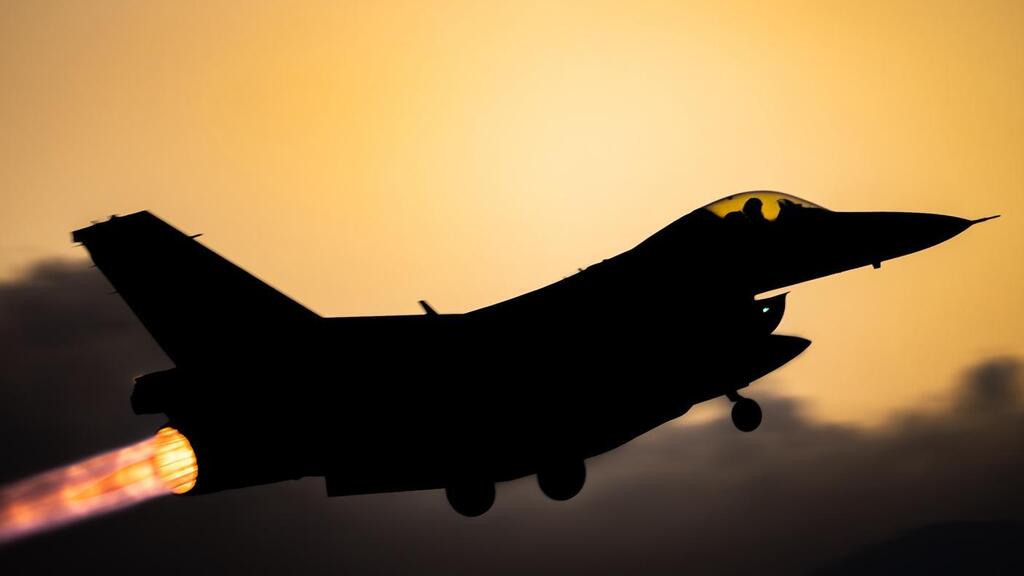
Air Force jet during Operation Roaring Lion
(Photo: IDF Spokesperson's Unit)
Behind those systems are dozens of leading researchers whose mission is defined as “obtaining the secret.” It is an intelligence and technological hunt for the enemy’s most sensitive capabilities. The Iranian enemy is not standing still. Iran is a technological power that develops radars, detection systems and surface-to-air missiles on its own, and it learns at a dizzying pace.
“The Iranians’ missile array personnel are very aware of our capabilities,” Lt. Col. M. explained. “The Iranians analyze every round of our strikes and prepare.”
Investment in force buildup to create the IDF’s next surprises is part of Defense Ministry Director General Maj. Gen. (res.) Amir Baram’s strategy. To win this intense arms race, Israel is now making a global leap forward: Electronic warfare officials reveal that, in the future, a first-of-its-kind cognitive electronic warfare system will enter operational use. It will develop independent recognition capabilities and, using artificial intelligence, identify and carry out actions. The system will interpret the threat in real time and neutralize it without involving the pilot.
“This is a capability only superpowers have,” Lt. Col. M. said.
The shadow operatives of electronic warfare know the quiet is temporary.
“The Iranians will come to the next round stronger and with a knife between their teeth,” Lt. Col. M. said. “They understood very well what happened to them in the skies, but we are already working on the next surprise.