

Prime Minister Benjamin Netanyahu’s announcement recognizing Somaliland as an independent state is seen as a historic, potentially transformative moment in the small Horn of Africa territory. But even as celebrations took place in the capital, Hargeisa, the move appeared to draw a cool response in the United States.
“Does anyone know what Somaliland is, really?” President Donald Trump asked overnight Friday into Saturday in a phone interview with the New York Post, signaling he was not prepared to recognize the breakaway entity seeking to secede from Somalia. “We’ll study it,” he said.
Gallery
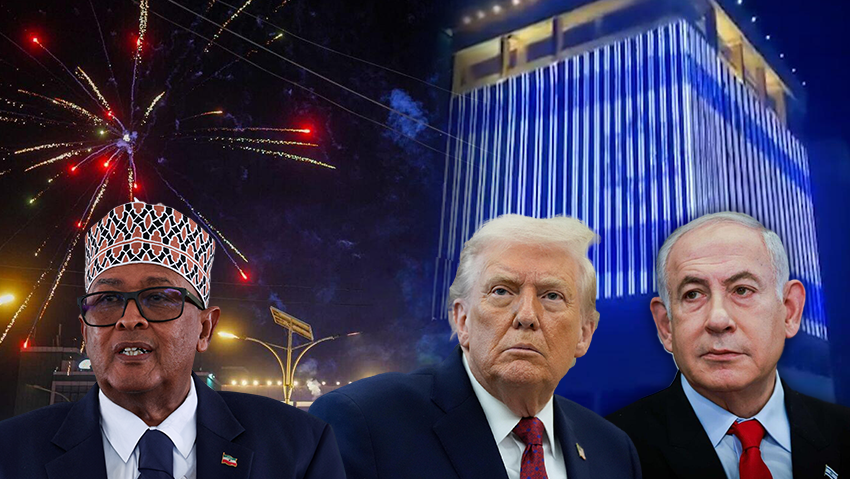
Prime Minister Benjamin Netanyahu, US President Donald Trump and Somaliland President Abdullahi
(Photo: Chaim Goldberg Flash90, REUTERS/Monicah Mwangi/File Photo, AP Photo/Alex Brando)
Celebrations in the capital Hargeisa: crowds in the streets and Israeli flags


Speaking to the New York Post, Trump made clear he was in no hurry to follow Israel’s lead and recognize Somaliland, which has already announced its intention to join the Abraham Accords brokered during Trump’s first term, an initiative he often cites with pride.
“Everything is under study,” Trump said. “We’ll study it. I study a lot of things and always make great decisions and they turn out to be correct.”
According to the newspaper, Trump was unimpressed by Israel’s announcement. The interview took place while he was at his golf course in Palm Beach, Florida, where he was heard asking aloud, “Does anyone know what Somaliland is, really?” Asked about Somaliland’s proposal to host a US naval base on its territory, not far from Yemen, Trump replied: “Big deal.”
The United States, like Israel, has strong strategic interest in Somaliland due to its long coastline and location in the Horn of Africa, close to Yemen. One reason Israel has taken a keen interest in Somaliland is its proximity to areas controlled by Yemen’s Houthi rebels, who continue to pose a significant threat to regional shipping routes even after the Gaza war and a cease-fire with Israel. Strengthening ties with Somaliland is viewed in Israel as a potential force multiplier against the Houthis.
Somaliland lies near the Bab el-Mandeb Strait, a key global shipping lane. Amid clashes between Israel and the Houthis following the war in Gaza, and against the backdrop of a US operation against the Houthis this year, waters near Yemen have become a danger zone for commercial vessels. Iran-backed forces have disrupted global trade, an estimated 12 percent of which passes through the area. Somaliland’s Port of Berbera, about 250 kilometers south of Yemen, is considered strategically significant in this context.
Somalia’s information minister, Daud Aweis, told Saudi-owned Al Hadath on Saturday that his country would take diplomatic steps against Israel’s recognition of Somaliland.
“We want to ensure peace and stability in the region. The door to dialogue among Somalis is always open,” he said. “We will never accept the partition of Somalia. Somalia’s unity is not negotiable.” He called on the international community to support Somalia’s territorial integrity.
Somalia’s ambassador to Cairo, Ali Abdi Awari, called for an emergency meeting of the Arab League to reject Israel’s move.
Mutual recognition, Turkish anger
Israel’s recognition is seen as historic in Somaliland, a Muslim-majority territory of about six million people. In response, Somaliland also recognized Israel. Fireworks were recorded in Hargeisa after the announcement, and a large Israeli flag was projected onto a building in the city.
Until now, no UN member state had recognized Somaliland as an independent country, making Israel the first to do so. Taiwan has recognized Somaliland but is not a UN member.
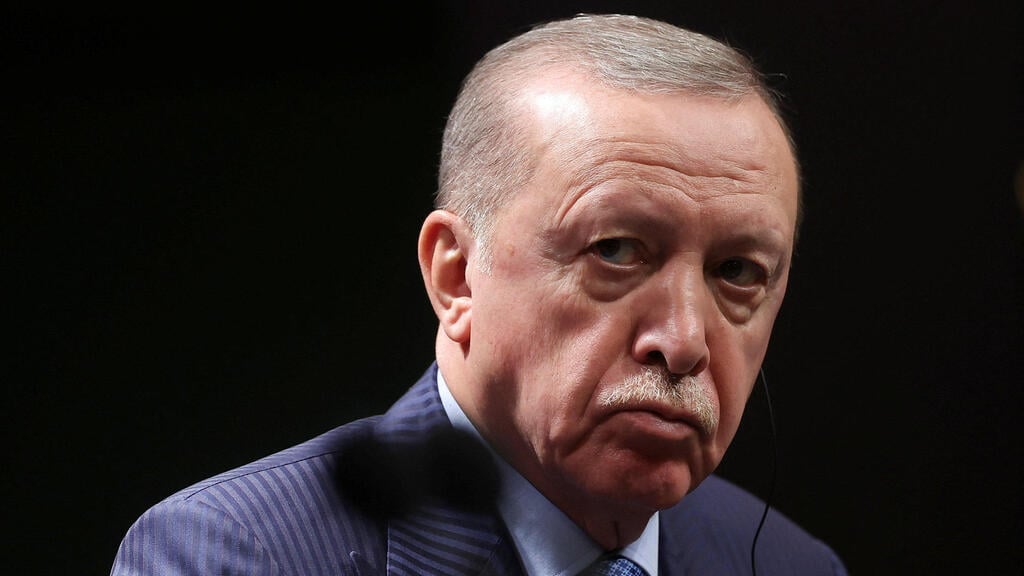
Turkish President Erdogan
(Photo: REUTERS/Umit Bektas)
Somalia, which views Somaliland as part of its territory, quickly condemned Israel’s recognition in a joint statement with the foreign ministers of Turkey, Egypt and Djibouti. The four countries rejected the move and reaffirmed their support for Somalia’s unity, sovereignty and territorial integrity. Saudi Arabia later joined the condemnations, followed by the African Union.
For Turkey, the move was seen as a provocation against Israel at a time of already rising tensions between Jerusalem and Ankara. Turkey maintains extensive political, military and economic ties with Somalia, providing aid that also secures it a foothold in the Horn of Africa, including a maritime presence.
Turkey’s Foreign Ministry later issued its own condemnation, calling Israel’s recognition a “clear intervention” in Somalia’s internal affairs and accusing Netanyahu’s government of pursuing destabilizing and illegal policies aimed at regional and global disruption.
In Somaliland, however, the move has been widely welcomed. A Somaliland news source told ynet that both ruling and opposition parties supported Israel’s recognition. “At the popular level, celebrations are taking place across the country,” the source said.
China’s role, US divisions
Somaliland President Abdirahman Mohamed Abdullahi told Britain’s Guardian in May that senior US officials, including military figures and the top US official for the Horn of Africa, Brian Cushman, had visited the territory. He said recognition of Somaliland was “a matter of time. Not if, but when and who will lead the recognition.”
According to the Guardian, the US base Camp Lemonnier in neighboring Djibouti is considered a “key base,” and Washington is concerned about China’s growing influence in Africa. Even so, Trump appears reluctant to commit publicly to Somaliland or to confront China’s regional ambitions. Asked about the proposal for a US naval base in Somaliland, he again dismissed it as “big deal.”
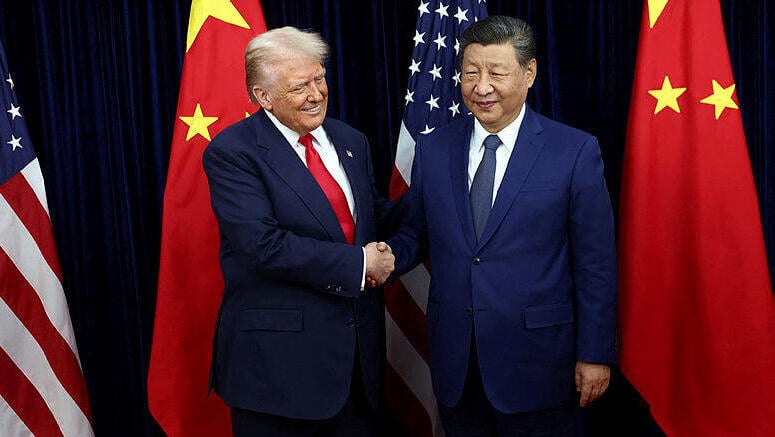
Chinese President Xi and US President Trump
(Photo: EVELYN HOCKSTEIN \ REUTERS)
Project 2025, a policy blueprint drafted by conservative leaders as a possible framework for a second Trump term, states that recognizing Somaliland could help counter the “declining position of the United States in Djibouti,” though Trump has previously distanced himself from the document.
In August, Republican Sen. Ted Cruz urged Trump to recognize Somaliland, citing its support for the Abraham Accords and its ties with Israel. Still, the US administration remains divided, with some officials warning such a move could jeopardize cooperation with Somalia.
Mossad involvement, Gaza relocation idea
Somaliland was recently mentioned as a possible destination for Palestinians from Gaza under Israel’s policy of “voluntary migration,” inspired by comments Trump made during his first meeting with Netanyahu in his current term. Officials in Somaliland said they would be willing to accept “a million Gazans,” though not formally, and the idea now appears off the table.
Israel’s recognition followed years of covert engagement led by the Mossad, which maintains behind-the-scenes ties with countries lacking formal diplomatic relations with Israel. According to Israeli officials, longstanding personal ties between Mossad chiefs and Somaliland leaders laid the groundwork for the recognition.
The agreement was preceded by months of intensive, secret contacts coordinated by Foreign Minister Gideon Saar. The initial meeting took place in April, in a third country, between Saar and Somaliland’s president and his delegation, followed by reciprocal visits by senior officials.
Netanyahu’s office announced the recognition before the prime minister addressed a deadly attack in northern Israel that killed two people. About 15 minutes later, Netanyahu issued condolences, saying that despite numerous counterterrorism successes in the past year, Israel still faces occasional deadly attacks.
In a statement, Netanyahu said he, Saar and Somaliland’s president had signed a joint declaration. “This declaration is in the spirit of the Abraham Accords initiated by President Trump,” the statement said. Netanyahu praised Somaliland’s leadership and invited its president to pay an official visit to Israel.
Somaliland’s president thanked Netanyahu for what he called a historic declaration and praised his efforts in fighting terrorism and advancing regional peace. Israel said it plans to immediately expand cooperation with Somaliland in agriculture, health, technology and the economy.
Somaliland broke away from Somalia in 1991 amid the civil war that left Somalia a failed state. It has since functioned as a de facto sovereign entity but has not been recognized by the international community. Ethiopia maintains commercial and diplomatic ties with Somaliland but has not formally recognized it.
Somaliland, whose population is predominantly Muslim, is home to about six million people. Somalia continues to claim the territory as its own, while Somaliland’s president has described international recognition as a top priority.
From Israel’s perspective, the move recognizes an existing reality. Somaliland has operated as a state-like entity for more than three decades, with civilian rule, elected institutions, relative security and peaceful transfers of power. Israeli officials say the recognition could strengthen regional stability in an otherwise volatile area.
“This is not an act of defiance,” Israeli sources said, “but an opportunity to increase stability.”
First published: 10:07, 12.27.25