


Israel’s ambassador to the United Arab Emirates, Yossi Shelley, was summoned Friday for a reprimand and clarification meeting with Emirati Minister of State for International Cooperation Reem bint Ibrahim Al Hashimy, following Israel’s airstrike in Doha that targeted Hamas’s senior leadership. However, most of the conversation focused on the sensitive issue of potential West Bank annexation.
After a series of both public and private warnings, Al Hashimy reiterated that if Israel were to annex territory in the West Bank, it would seriously jeopardize the UAE’s ability to maintain ties with Israel.

According to sources familiar with the meeting, Al Hashimy emphasized that Abu Dhabi could not tolerate Israeli annexation, stating, “Do not take us for granted, and do not assume we will absorb everything without response.” That message was reportedly the core of the discussion.
The minister also condemned the strike in Qatar, which took place while Hamas’s negotiating team was deliberating over a comprehensive deal proposal from U.S. President Donald Trump. She objected not only to the timing but to what she described as a violation of Qatar’s sovereignty.
In an official statement, the UAE Foreign Ministry said that Al Hashimy had summoned the Israeli deputy head of mission, David Ohad Horsandi, to “strongly condemn and denounce the blatant and cowardly Israeli attack that targeted the State of Qatar, as well as the hostile statements made by the Israeli Prime Minister, Benjamin Netanyahu.” The statement added that “this reckless aggression constitutes a flagrant violation of Qatar’s sovereignty, a grave breach of international law and the UN Charter, and an irresponsible escalation that threatens regional and international peace and security.”
The day after the strike—whose full impact remains unclear—UAE President Mohammed bin Zayed visited Qatar in what was seen as a gesture of solidarity and diplomatic support.
Shelley, for his part, said that after 700 days of war and with hostages still in captivity, there is never a convenient time for such actions. He echoed Netanyahu’s message that the Hamas leaders targeted in the unprecedented strike were those who initiated, orchestrated and celebrated the October 7 massacre.
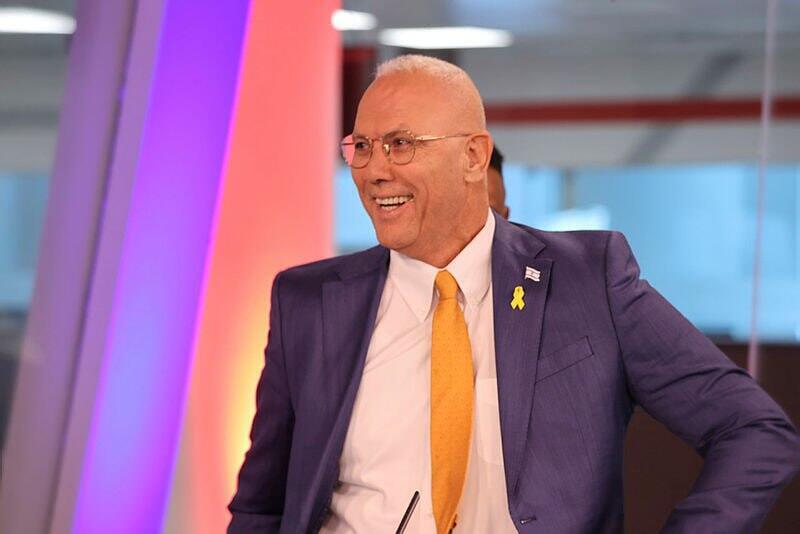
Yossi Shelley
(Photo: Yariv Katz)
The overarching message from the Emiratis was clear: they are deeply concerned about Israel’s actions. Nonetheless, the dominant issue in the conversation was annexation.
The Emirati concerns about annexation did not emerge in a vacuum. For weeks, Israel has been engaged in intense internal discussions about possible responses to France’s growing recognition of a Palestinian state—discussions that have included potential annexation of the West Bank, or parts of it.
Earlier this month, the UAE issued a public warning against such a move, calling it a red line that would severely damage the spirit of the Abraham Accords, which normalized relations between the two countries.
That statement—delivered to Reuters by Lana Nusseibeh, assistant minister for political affairs and special envoy to the UAE foreign minister—followed a series of behind-the-scenes warnings sent from Abu Dhabi to Israel. The public declaration came after Emirati officials reportedly grew frustrated with Netanyahu’s lack of response to private communications on the matter. Israeli officials were reportedly surprised by the public warning, calling it unusual and unprecedented.