

Swedish activist Greta Thunberg, who rose to prominence as an environmental campaigner before expanding her activism to other causes associated with Europe's political left, including strongly anti-Israel positions, joined student protesters in France on Tuesday as demonstrations that began in mid-September entered their fourth week. Dozens of schools have been set on fire during the unrest, and more than 6,800 people, most of them teenagers, have been arrested.
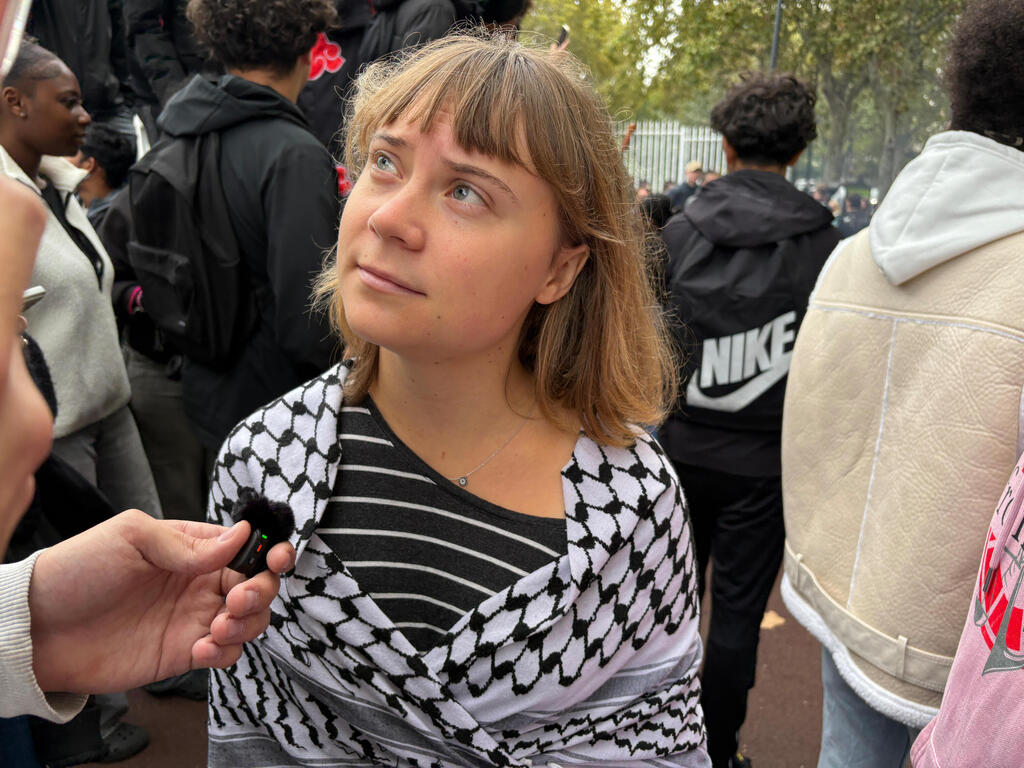
Wearing a Palestinian keffiyeh, as she frequently does, Thunberg joined demonstrators outside a high school in a working-class suburb of Paris ahead of another day of protests over what students describe as deteriorating conditions in French schools.
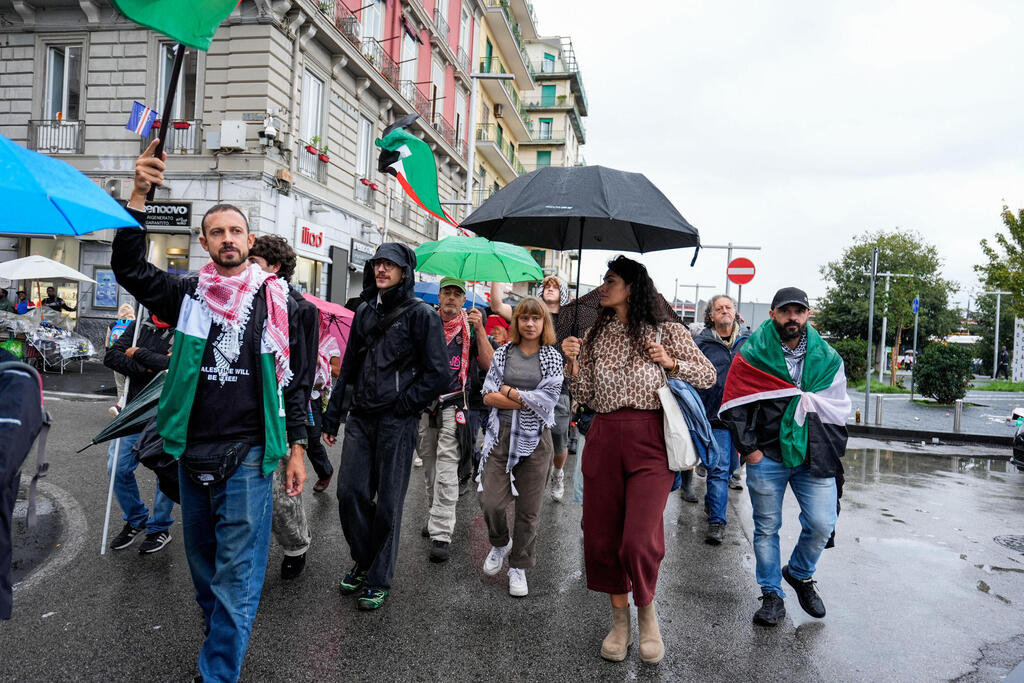
Greta and her companions march through a suburb of Paris
(Photo: REUTERS/Matteo Ciambelli)
The nationwide protest movement is led primarily by students from working-class and immigrant neighborhoods, who accuse the government of neglecting their schools, leaving them with overcrowded classrooms, teacher shortages and poor sanitation.
Over the past two weeks, students have repeatedly blocked school entrances, frequently clashing with police. Officers have used stun grenades and tear gas, while protesters have thrown stones, bottles and other objects.
More than 1,000 police officers, educators and students have been injured in the unrest. Several protesters have suffered serious injuries, including a teenager who lost sight in one eye after being struck by a rubber bullet and another whose hand was amputated after he picked up a police stun grenade.
Protesters, their parents and supporters have accused police of using disproportionate force. Opponents of the demonstrations, however, argue that the unrest is not a genuine protest over school conditions but a political show of force by the left, particularly given the explicit support protesters have received from Jean-Luc Mélenchon's radical-left party, La France Insoumise (LFI), or France Unbowed.
Some critics portray the protesters as immigrants and members of minority communities, including Muslims, challenging public order and the French state. They accuse Mélenchon and his allies of deliberately fomenting chaos ahead of next year's presidential election, in which polls suggest he will reach the decisive second round before losing to far-right leader Marine Le Pen.
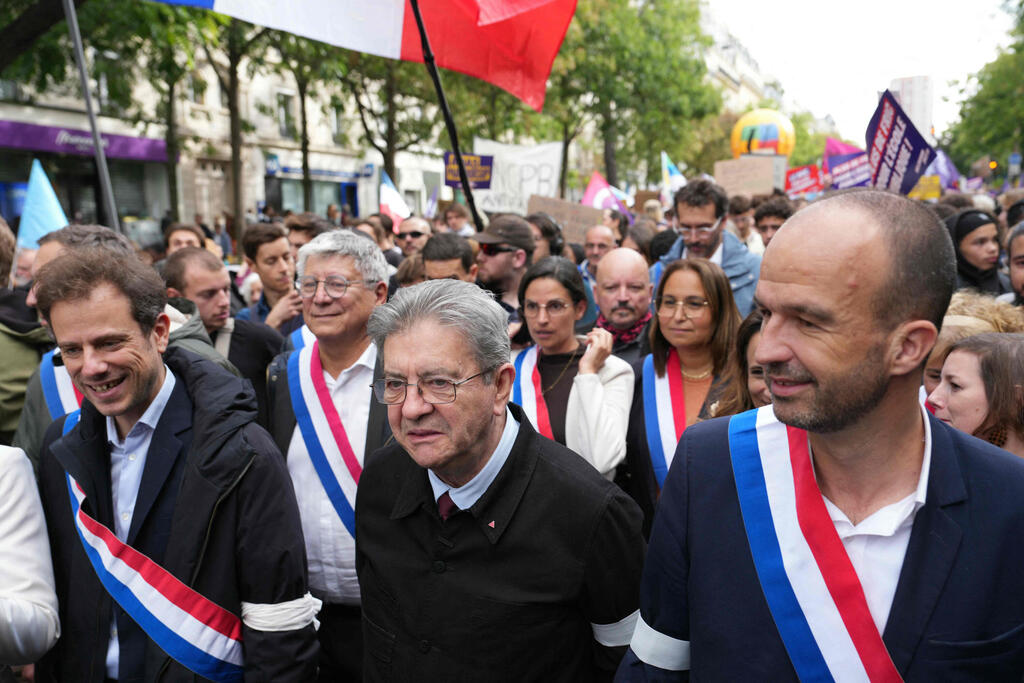
Far-left leader Jean-Luc Mélenchon marches with protesters in the Paris area today
(Photo: Dimitar DILKOFF / AFP)
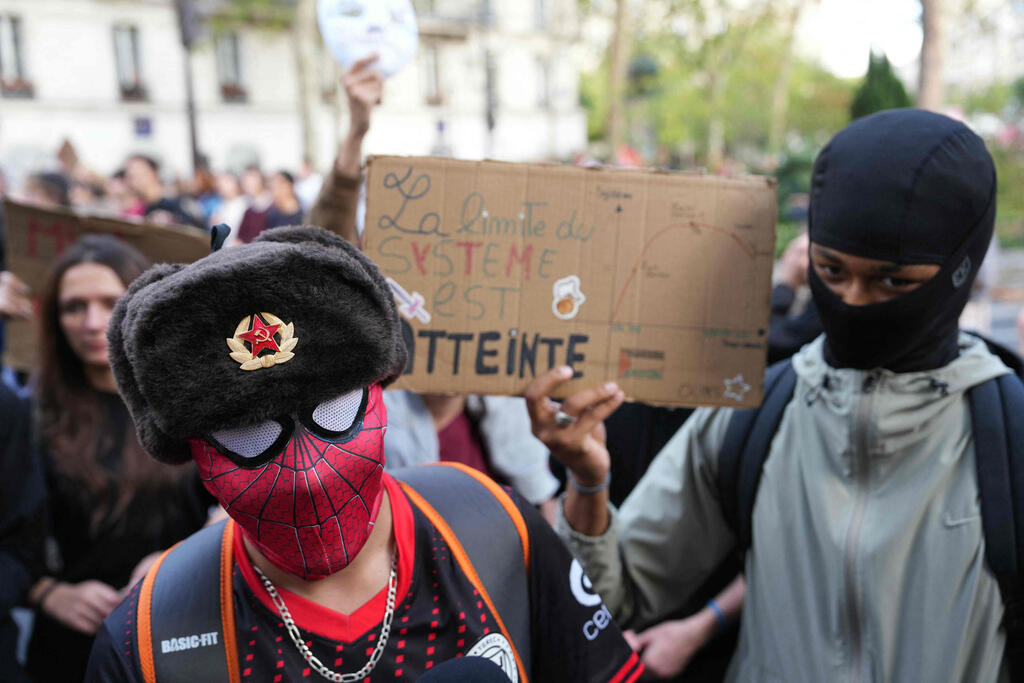
(Photo: Dimitar DILKOFF / AFP)
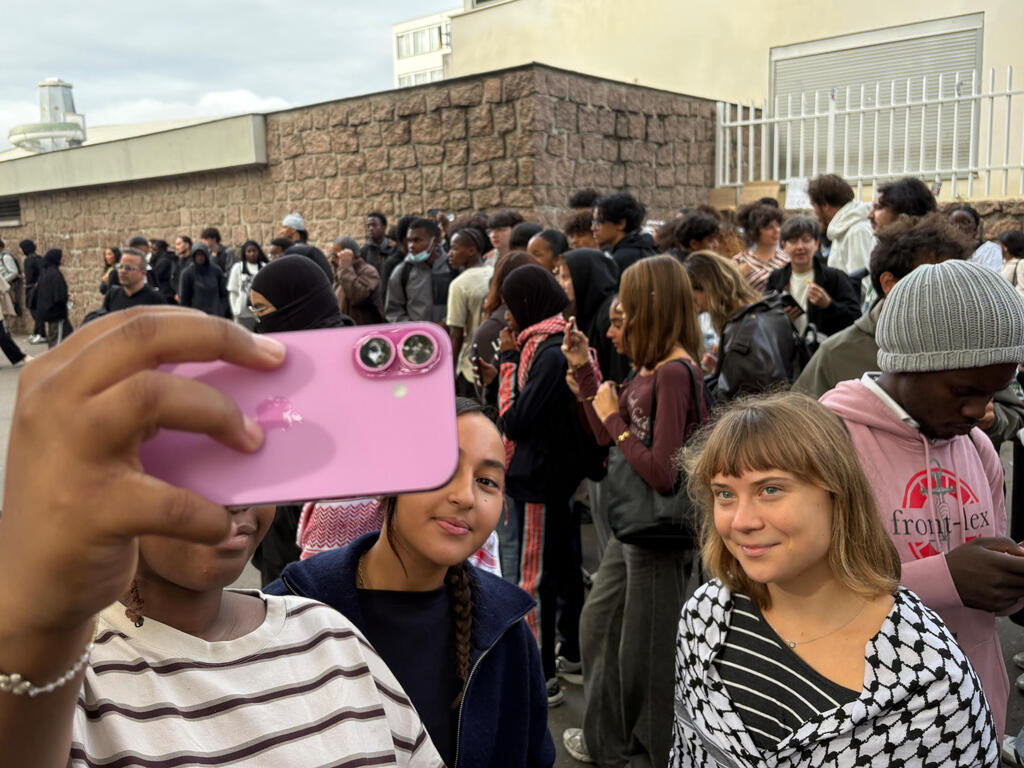
Greta poses with fans during protest
(Photo: John Leicester/AP)
Students gathered again Tuesday morning outside several schools in Paris and other French cities, carrying placards and megaphones.
Thunberg arrived at Lycée Paul Éluard in Saint-Denis, a suburb north of Paris and one of the schools where the protest movement initially gained momentum. "We are inspired by young people demanding their fundamental rights," she told reporters outside the school. "Whether it is inadequate funding for schools, the climate crisis or crises of social injustice, it is time for young people to take the initiative and reclaim their future."
Large crowds also marched Tuesday in Nantes in western France, Strasbourg in the east and Marseille in the south. Some demonstrators carried signs reading, "Tear gas doesn't make us cry as much as the state of the national education system." French broadcaster BFM TV aired footage showing clashes between black-clad individuals and police in Strasbourg and Nantes, with clouds of tear gas filling some streets.
In the Paris area, teenagers blocked entrances to several schools before dawn. In Marseille, students slowly pushed large wheeled garbage containers into position outside their high school, blocking access.
In Lyon, local authorities asked organizers to cancel a march after a group of what they described as "hostile individuals" moved ahead of the main procession, vandalized shops and a gas station, and clashed with police.
Authorities did not identify those involved. However, French street demonstrations are often joined by individuals known as "casseurs," rioters who seek confrontations with police and engage in property destruction.
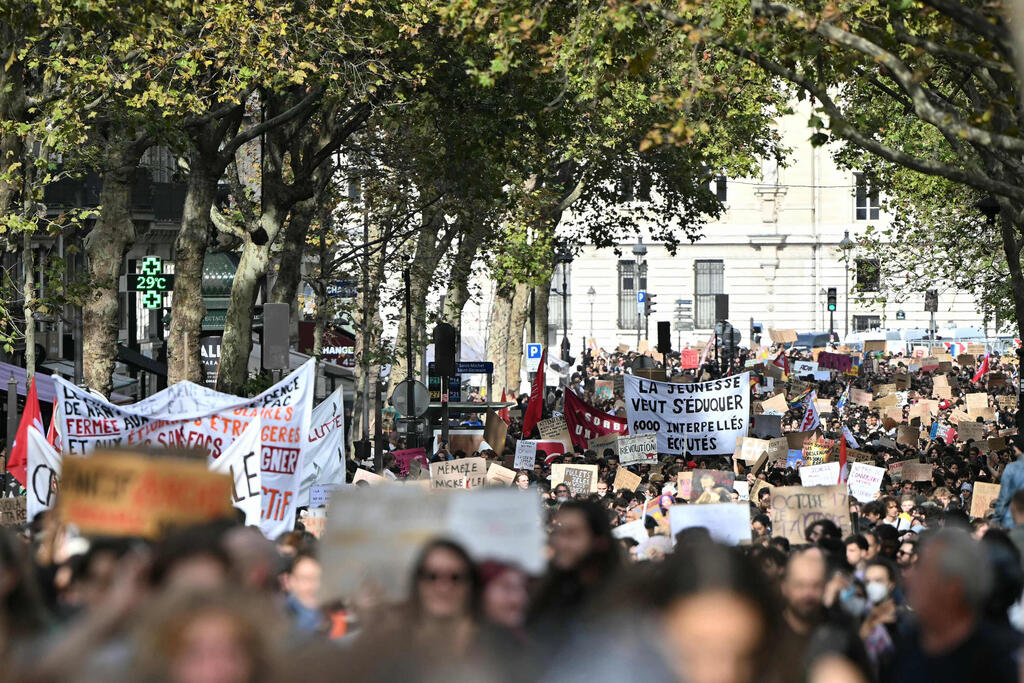
(Photo: LOU BENOIST / AFP)
France's Education Ministry said 214 schools remained closed Tuesday because of the protests, down from 800 during last Tuesday's main day of demonstrations. According to the ministry, 94.2% of high schools were open.
The cash-strapped French government has promised to address students' concerns, but its room for maneuver is limited as worries over the national debt and budget deficit have driven government borrowing costs to their highest level in years.
In response to allegations of excessive police force, the government suspended police use of stun grenades last week. The move, however, did little to calm the political dispute.
"Police officers are running out of breath chasing young people to beat and injure them," Mélenchon wrote Tuesday in a social media post. "The only ones who are not running out of breath are the young people protesting courageously."
Mélenchon accused the media of failing to fulfill its responsibilities by allegedly not showing the true extent of police violence. He again called on adults to stand alongside the students and protect them.
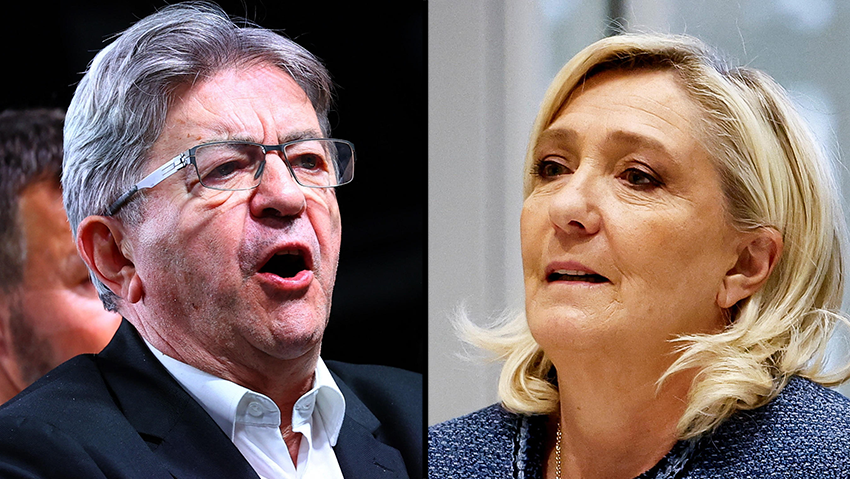
Le Pen and Mélenchon
(Photo: REUTERS/Fabrizio Bensch/Abdul Saboor)
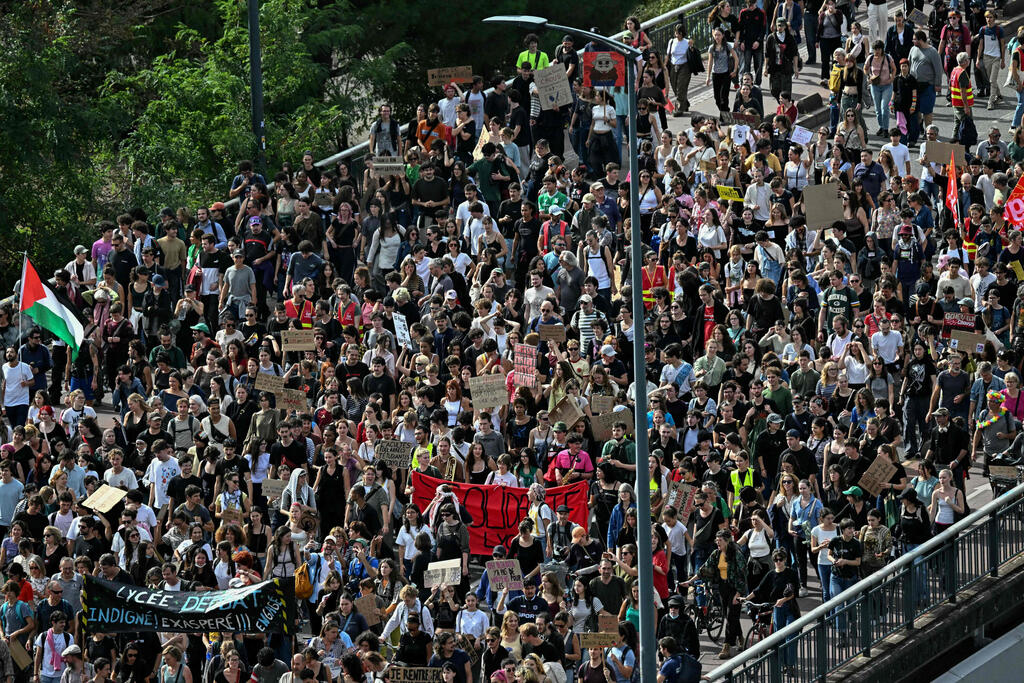
(Photo: Lionel BONAVENTURE / AFP)
Le Pen, who leads the presidential race according to polls, condemned violence by protesters and called for those responsible for vandalizing schools, or their parents if they are minors, to pay for repairs. The government has already introduced legislation that would allow such payments to be required, and the bill is currently making its way through parliament.
Meanwhile, French Foreign Minister Jean-Noël Barrot warned Tuesday that foreign actors were attempting to interfere in France's presidential election, scheduled for April and May next year, specifically mentioning billionaire Elon Musk and an "Israeli company."
Barrot warned that foreign actors were "exploiting our divisions" and cynically using immigration, secularism and the Israeli-Palestinian conflict as weapons to inflame hatred and tensions. He specifically cited an Israeli company that he said had created fake French social media accounts "to stage artificial confrontations around the Palestinian issue."
Barrot appeared to be referring to the Israeli company BlackCore, which French authorities accused in June of operating fake accounts to conduct a smear campaign against candidates from Mélenchon's party during municipal elections held in March. France also sought Israel's assistance at the time in investigating the matter.
Barrot additionally denounced what he described as "extensive online harassment campaigns by Elon Musk against European leaders," aimed at influencing national debates by exploiting the viral reach of his social media platform.
Musk has publicly supported far-right political forces in Europe, including Germany's Alternative for Germany (AfD) party, and has sharply criticized European governments over their permissive immigration policies.
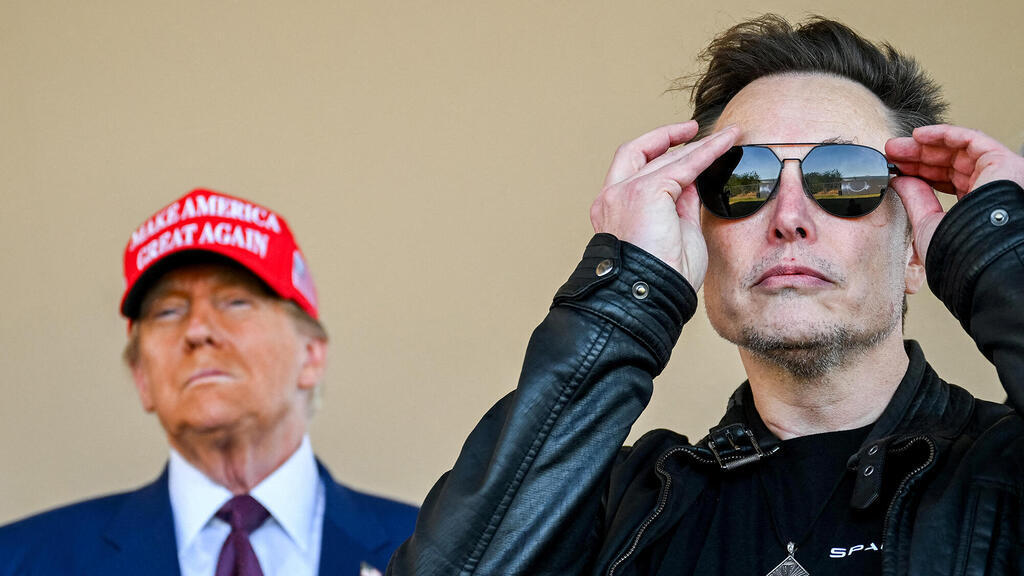
Donald Trump and Elon Musk
(Photo: Brandon Bell/Reuters)
In his warning Tuesday, Barrot also condemned what he described as the exploitation of France's student protests by "hostile narratives originating in Russia and China, as well as Iran and the MAGA movement."
His reference to President Donald Trump's MAGA movement appeared to be an indirect criticism of the U.S. president, who commented on the French student demonstrations last week on his Truth Social platform.
"What is happening in France is nothing but mass immigration that has gotten completely out of control," Trump wrote. "This has nothing to do with schools. It is about Islam trying to take over a country that was once great!"
Addressing the alleged attempts at foreign interference, Barrot said: "We see them, we denounce them, and we stop them with zero tolerance." "We will not tolerate any foreign interference, no matter where it comes from. This is a matter of sovereignty."