


The Middle East enters 2026 in a tense holding pattern, with no lasting arrangements in place across multiple fronts and the prospect of the next confrontation between Israel and the Iranian axis appearing increasingly inevitable. As adversaries attempt to export their internal crises—from hunger in Yemen to unrest in the streets of Tehran—into a unified front against Israel, the Israel Defense Forces is preparing to the fullest for the possibility of renewed escalation.
These are significant weeks of learning and drawing lessons in Israel; for more than two years, the IDF has operated on the ground in Gaza, Lebanon and Syria, and has deployed the Israeli Air Force in operations that until recently would have seemed imaginary. But almost under the radar, the Navy's capabilities have also been immeasurably improved in the war, and the defense establishment is already marking the sea as an arena that will occupy a central and decisive place in the next campaign.
A Navy missile ship intercepted 5 drones launched from Iran
(Photo: IDF Spoke person)


A senior security source explained that “the maritime arena is a strategic asset for two key reasons. One is the gas platforms. Israel’s energy sector relies on gas produced from offshore platforms, which requires constant protection. One of the Navy’s missions is to defend these platforms in Israel’s economic waters—whether against ballistic threats, drones or any other approaching danger.”
The second reason, the source said, is safeguarding freedom of navigation. “About 97%–98% of goods arriving in Israel come by sea. The Houthis identified this vulnerability and made attacking ships bound for or cooperating with Israel a goal during the war.”
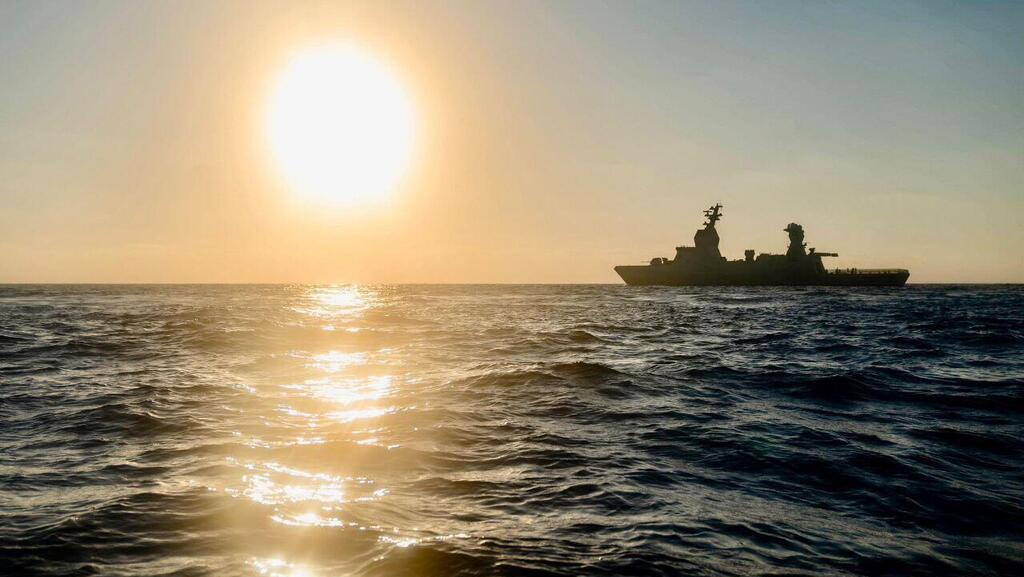
“The Navy ensures that harbors keep operating and ships continue to arrive,” he said. “Even if it means sending forces deep into the Mediterranean to support a vessel critical to ongoing operations. Just as the maritime domain is important to us, it is important to our enemies. The Navy is responsible for that too. Sometimes it requires control of the enemy’s maritime space to create leverage.”
3,000 kilometers and beyond
The naval theater, the senior official explained, enables support both to the Air Force and to ground forces. For example, a missile boat near the Gaza Strip can assist troops on land, take part in strike efforts, and simultaneously support aerial detection. Naval support can be so integrated that a ship can aid a battalion commander in real time during maneuvers.
According to the source, the duration of the Gaza war and operational needs significantly enhanced these capabilities. And it wasn’t limited to nearby waters—“the Navy operated in combat arenas and cooperated with foreign navies,” he said. “There were phases when distances between vessels exceeded 3,000 kilometers.”
The intense fighting over the past two years has revealed new capabilities of the various forces. But ultimately, this involves the use of advanced weapons that require maintenance and care. Now, in the "waiting period" of ceasefires and the uncertainty surrounding the various arenas, the IDF is busy with reconstruction. The forces are taking the uncertainty and using it to increase technical proficiency, the accuracy of combat plans, and the drawing of lessons.
We already saw the significant leap in the use of Israel's naval capabilities in the last war. The Navy's forces assisted, for example, in ground combat in various theaters, and in detecting and intercepting unmanned aerial vehicles at sea. The three fleets of the Navy - Fleet 3, which operates submarines, Fleet 7, which operates submarines, and Fleet 13, which operates commandos - were responsible for a variety of missions. Fleet 3 has ships with different platforms operating on board, with each platform having its own unique features: defense, attack, command and control - or both. Today, some of the vessels even have a kind of "naval Iron Dome," which allows soldiers to intercept threats that are on their way to Israel.
The Houthis are training: 'This will definitely happen'
Although weakened, threats against Israel have not disappeared, and various fronts are already preparing for the next campaign. In Yemen, civil war has resurfaced, and the Houthis are watching from the sidelines as Saudi Arabia and the United Arab Emirates struggle for influence, which culminated in Riyadh's bombing last week of territory controlled by the Southern Transitional Council.
Riots in Iran: Fire burns at police station in Azna
(Video: Iran International)
The Houthis, who are based in the more northwestern regions of the country, claim that Saudi Arabia and the UAE "are dividing up influence and wealth, under American and British patronage, while the Yemeni people face a tragic reality of collapse and deterioration in services." The messages sent by the Houthis include the claim that Israel is behind the destruction of Yemen, through Saudi Arabia and the Emirates. However, it should be noted that the situation of civilians in the areas under Houthi control is only getting worse. The Houthis justify the exploitation of state resources for their own needs by the need to prepare for war.
The Houthis, they claim, are "training for the coming rounds," which will "certainly" come, if you ask their leader, Abd al-Malik Badr al-Din al-Houthi. They are holding exercises, training new operatives for their ranks in military courses, and examining regional developments - even those that have nothing to do with them - and threatening to intervene. There is still no permanent solution to the Houthis, and in the meantime they are maintaining their ability to attack.
Iran’s unrest challenges the regime
Iran’s regime continues issuing threats against Israel, even as internal tensions escalate. This past week, mass protests and strikes broke out across Iran over the worsening economy. Demonstrations began in Tehran and spread nationwide. President Masoud Pezhkian urged his government to “listen to the legitimate demands of the protesters.”

Iran anti-regime protests at Azna Police Station
State-linked news agencies, however, blamed various media and Israel for attempts to sow chaos, claiming the public remains “indifferent,” in their words, to so-called Israeli agitation against the regime.
Meanwhile, declarations boosting the capabilities of the Iranian military and the Islamic Revolutionary Guard Corps (IRGC) persist, alongside continued missile production and training—raising speculation about another potential round of confrontation.
Iranian Parliament Speaker Mohammad Bagher Ghalibaf said Tuesday that “Iran asks no permission from anyone to defend itself. The response of the Iranian people to any ‘adventure’ will be extensive, uncompromisin, and unpredictable. Iran’s decisions and actions to protect its interests and itself will not be predictable or resemble the past.” IRGC spokesman Mohammad Ali Naeini echoed these remarks on Lebanon’s Al-Mayadeen network, asserting that Israel must remember the blows it took in the last war before contemplating another.
Separately, Iran’s military warned that it “will not allow any harm to the country or the security of the Iranian people,” saying that any further mistakes by enemies would be met with “stronger and more crushing” responses. A senior adviser to Iran’s supreme leader, Ali Shamkhani, stated that Iran’s missile and defense capabilities “cannot be subdued,” and that “any aggression will be met with a severe and immediate response beyond the imagination of its planners.”
Hezbollah, Hamas and other fronts
Lebanon remains volatile. Hezbollah continues to refuse to disarm so long as Israel does not “fulfill its commitments”—a complete withdrawal from Lebanese territory, cessation of attacks, and release of Lebanese detainees. The group insists it will not discuss any matter until its demands are met, after which talks could occur only within the framework of a Lebanese national security strategy free of external pressure. Hezbollah accuses those calling for its disarmament of advancing an Israeli agenda and, in doing so, charges Israel with interfering in Lebanese affairs.
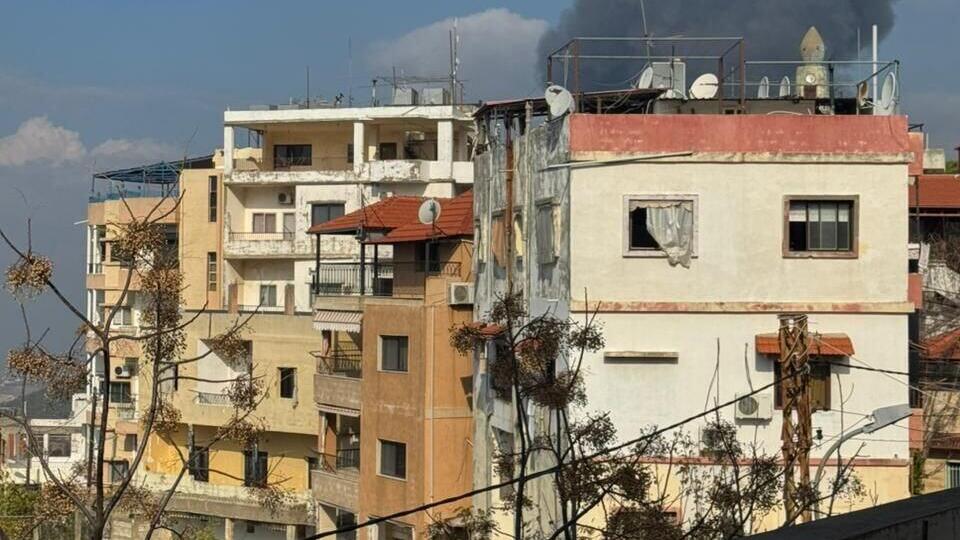
Attacks in the Al-Harmel region in Lebanon (Al-Baqa'a)
Beirut’s government continues its effort to centralize arms under state control. Next week the cabinet is expected to convene a session in which the army commander will declare the completion of the first phase of this plan. The ceasefire supervision committee, which has been meeting with civilian representatives from both Israel and Lebanon, will meet again—with only military delegates present.
In the meantime, Israeli strikes continue almost daily as Hezbollah attempts to reestablish positions along the border, smuggle funds and weapons, and strengthen its force—even as Lebanon grapples with deep economic, social and political crises needing financial support that has yet to materialize.
Syria remains unsettled
No long-term solution has emerged in Syria. Despite recent reports, a security agreement is not in sight. The IDF operates in Syrian territory, and pro-regime media amplify this reality. But aside from Israel’s presence, Syria’s internal situation is highly unstable.
Violent clashes erupt intermittently across Syria—sometimes the familiar tensions in As-Suwayda with Druze communities, and at other times increased friction with the Alawite minority along the coast. Issues with the Syrian Democratic Forces (SDF) also remain unresolved despite the March 10 agreement last year to integrate them into state institutions.
These internal conflicts compound the stalemate in the Gaza Strip and the stalled second phase of the former U.S. President Donald Trump’s plan.