



After launches from Iran toward the United Arab Emirates — and the messages Tehran relayed to the United States — officials in Israel are struggling to understand the moves being made by U.S. President Donald Trump, especially his decision to temporarily suspend the operation in the Strait of Hormuz that was meant to break the Iranian blockade.
Still, some believe he will ultimately be forced to use military force — or that Israel will. “In my view, the chances of a strike are higher than the chances of success in negotiations,” said an Israeli official familiar with the details.
Gallery
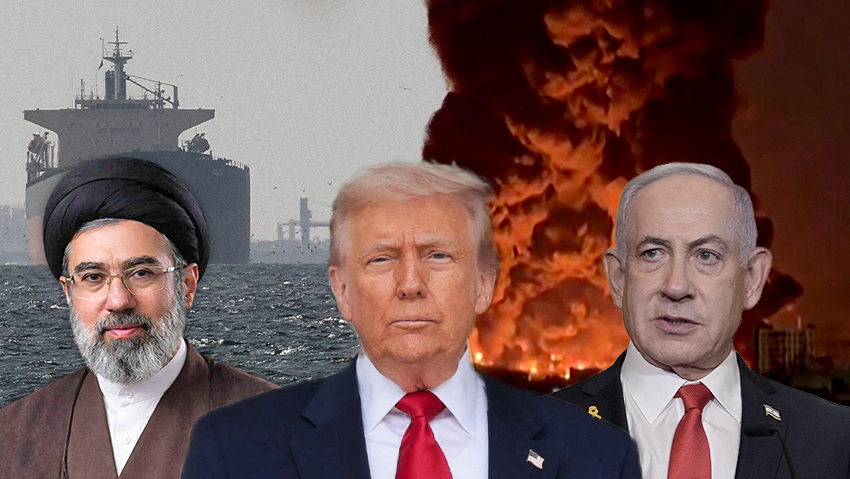
Escalation or agreement? Trump will decide the campaign — and the rest will fall in line
(Photo: AFP - SOURCE: UGC / UNKNOWN, REUTERS/Jessica Koscielniak/Stringer, Oliver CONTRERAS/AFP)
The official stressed that “it must not be forgotten that apart from the United States, all the partners in the region, including Israel, are very interested in a significant strike that would badly weaken the regime and perhaps, over time, even lead to its fall.” According to the official, “Trump is exhausting the negotiations until the moment he understands he has no choice but to hit the Iranians.”
Meanwhile, two U.S. officials and two other sources familiar with the matter told Axios that the White House believes it is nearing an agreement with Iran on a one-page memorandum of understanding to end the war and set a framework for more detailed negotiations on the nuclear issue. According to the report, the United States expects to receive Iran’s response to several points raised in the coming 48 hours.
Among other things, the agreement would include an Iranian commitment to freeze nuclear weapons enrichment, U.S. agreement to lift sanctions and release billions of dollars in frozen Iranian funds, and both sides removing restrictions on passage through the Strait of Hormuz.
It was also reported that many of the terms in the memorandum would be conditional on reaching a final agreement, leaving open the possibility of renewed war — or a prolonged situation in which there is no direct confrontation but nothing is resolved. Under the memorandum, alongside an immediate end to the fighting, a 30-day period would be declared during which the sides would enter negotiations on the details. Still, some in the United States remain skeptical about the possibility of reaching an agreement with Iran.
Like the talks with Hamas
Trump’s statement about a temporary halt to the Hormuz operation came after Iran attacked the UAE and directed threats at the United States. Still, both sides understand that this is part of Iran’s negotiating tactics. The Islamic Republic carried out the attacks, understood there could be a military response and immediately conveyed messages that “there is still something to talk about,” while also sending a new draft agreement. In effect, Iran is buying time for the situation to “cool down,” along with the American response that was expected to follow.
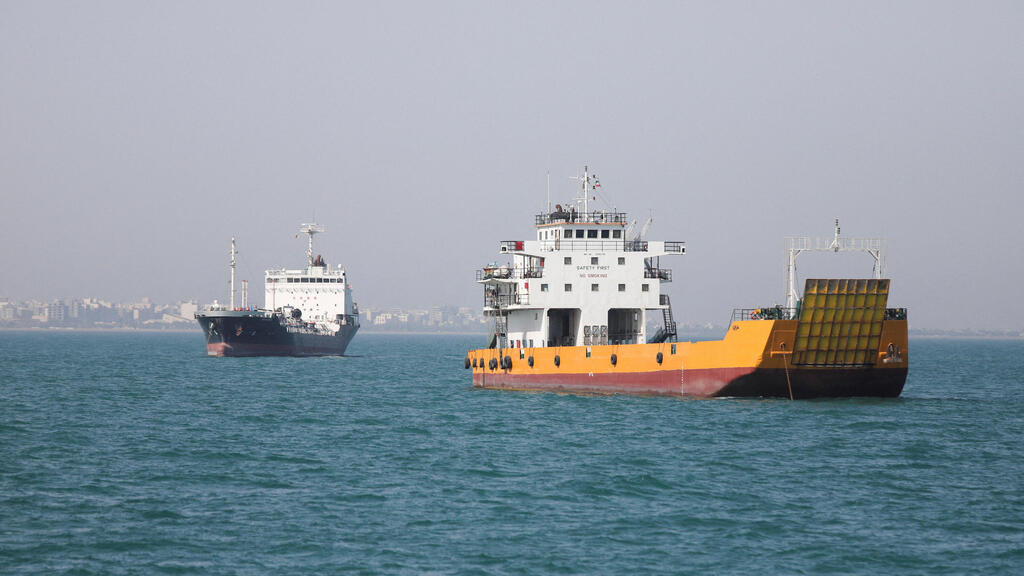
Ships in the Strait of Hormuz
(Photo: Amirhosein Khorgooi/ISNA/WANA (West Asia News Agency) via REUTERS)
Some in Israel see similarities between the U.S.-Iran dialogue and Hamas’ conduct in Gaza. Hamas attacks to a certain extent, then pressures mediators to negotiate as if there is something to discuss. The upcoming dialogue with Iran is expected to follow a similar pattern, with Tehran “harassing” through occasional pinpoint fire. In effect, Iran has become its own proxy — but it must not be forgotten that it has not stopped for a moment its activity in other proxy arenas, such as Sudan, Libya and Algeria, where it is still trying to expand its influence.
The central question now is why Trump, who projected strength toward Iran throughout, is suddenly projecting weakness. Some argue this is a tactic of deception and lull, and that once the conclusion is reached that there is no chance of an agreement, the United States will strike Iran at a time and place of its choosing. For now, however, it projects weakness and is leading Iran to boast that “the United States failed and Trump retreated.”
At the same time, Israel’s influence over the arena appears to have been completely stripped away. Only Trump decides whether the campaign against Iran escalates or calms down. Israel may be coordinated with and updated by the United States, but in the end, it seems to have little influence beyond aligning itself with Trump. An Israeli official said this is the price of having a superpower fighting near you: “Your ability to influence is limited, and in the end you have to accept the decision of the U.S. president.”
For now, it appears the U.S. president does not really want to renew the fighting, in part because of the effects on the American economy and the decline in public support for him. Still, if Trump feels he has no options left, he is expected to renew the fighting. For now, Trump believes he has time to achieve what he wants, but he must contend with divisions within the Iranian leadership. In fact, it is far from certain that the draft the Iranians sent to the United States is acceptable to the Revolutionary Guards, who appear to be the ones managing the situation.
Meanwhile, Gulf states fear the latest developments will lead Iran to believe that further escalation will pay off because Trump wants the war to end, even at the cost of U.S. allies being attacked again. European countries are also closely monitoring developments.
Mahdi Ghuloom, a fellow at a Dubai research institute, told The Wall Street Journal that “Iran seems ready for the cease-fire to be broken down, and the U.S. is not, so it is a unilateral cease-fire at this point.”
Dania Thafer, director of the Gulf International Forum, added that from the perspective of Gulf states, “it looks like the U.S. is not prioritizing their security and basically threw the Gulf states under the bus.” She said, “If the U.S. doesn’t respond, then the Iranians will conclude that the U.S. doesn’t want to go back to war—and this affects deterrence.”
Jason Greenblatt, who served as Trump’s Middle East envoy during his first term, believes that “Iran’s attacks show they are testing the limits.” He said, “The question is how far they will push before triggering a U.S. response. That is a risky game with a president who has clear expectations and enforces them.”
Iranian Foreign Minister Abbas Araghchi, for his part, reiterated that Tehran is seeking a “fair and comprehensive agreement.”