

Russian President Vladimir Putin spoke by phone with Prime Minister Benjamin Netanyahu for the third time in two and a half months, stressing Syria’s territorial integrity and discussing Iran’s nuclear program, the Kremlin said on Monday.
During the call, Putin reaffirmed Russia's "undisputed" support for resolving conflicts exclusively through diplomatic means, and underscored the importance of preserving Syria’s sovereignty. He also stressed the need to uphold the rights and interests of all ethnic and religious groups within Russia to foster internal stability.
Gallery
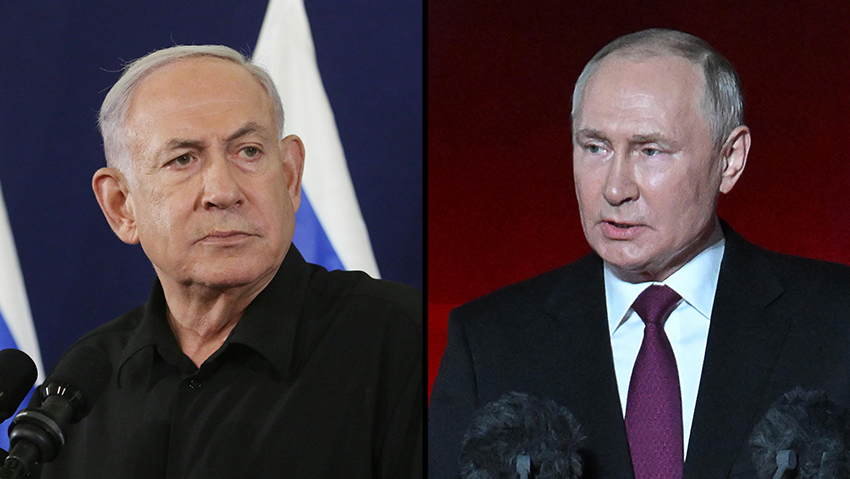
Prime Minister Benjamin Netanyahu, Russian President Vladimir Putin
(Photo: Dana Kopel, Gavriil GRIGOROV / POOL / AFP)
Russian officials said the two leaders agreed to maintain ongoing dialogue on pressing bilateral and global issues, including Iran’s nuclear program. In light of escalating Israeli-Iranian tensions, Moscow offered its support in seeking a mutually agreed diplomatic resolution.
The call comes as Iran's decision to suspend cooperation with the International Atomic Energy Agency (IAEA) drew concern. Tehran confirmed that IAEA officials would visit in the coming weeks to discuss relations, though nuclear site inspections remain off the agenda.
Get the Ynetnews app on your smartphone: Google Play: https://bit.ly/4eJ37pE | Apple App Store: https://bit.ly/3ZL7iNv
Cooperation was suspended after Tehran accused the IAEA of allegedly providing Israel with a pretext to strike its nuclear facilities during Operation Rising Lion, which began one day after the agency’s Board of Governors passed a historic resolution accusing Iran of violating its nuclear monitoring obligations under the Nuclear Non-Proliferation Treaty (NPT).
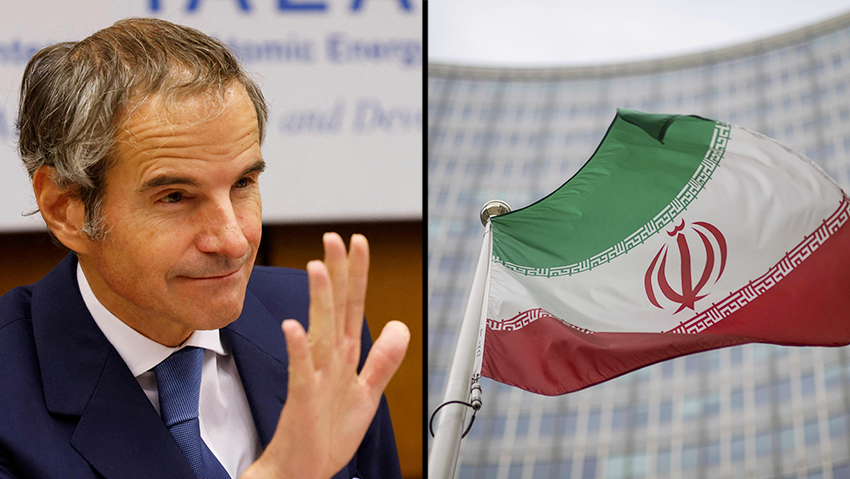
IAEA chief Rafael Grossi
(Photo: REUTERS/Leonhard Foeger, AP)
Under the treaty, Iran is obligated to allow IAEA oversight of its nuclear sites and has previously threatened to withdraw from the agreement if those facilities are attacked.
Also, reports emerged of a meeting between Syrian and Israeli delegations, brokered by U.S. mediation, though no agreement has yet been reached. U.S. envoy to Syria Tom Barrack called the initiative a success in opening lines of communication and reducing regional escalation.