

These days, "The Wanderer" is living in a safe house. Once a teenage lone wolf who survived through street crime, he is now guarded like a priceless diamond in a vault — around the clock, seven days a week — by detectives from Lahav 433's Etgar unit.
"The Wanderer" is the codename of a Bedouin criminal in his 30s. While serving time in one of Israel's toughest prisons, with six months left on a sentence for extortion by threats and weapons offenses, he decided there was only one way out of a life lived under constant danger.
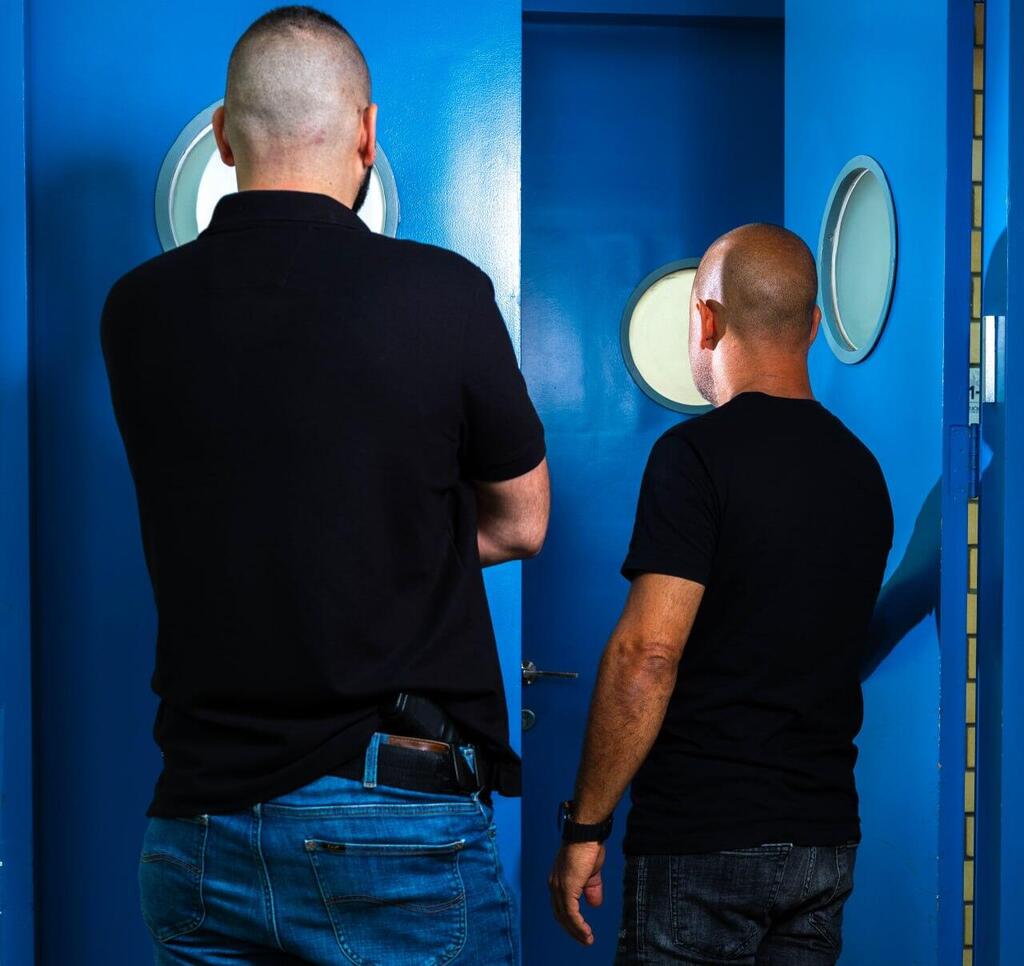
"I was surprised," said D., an undercover agent handler in Lahav 433's agents division, recalling the intelligence briefing he received from the Etgar unit. "They told us about a man in prison who had already served five and a half years, with six months remaining, and who had the potential to become an undercover agent."
D., 50, a married father of four, has spent 28 years in police intelligence and detective work. Yet neither he nor his colleagues had ever succeeded in recruiting a Bedouin criminal as a police agent. Loyalty to family, tribe and Bedouin society had always outweighed every other consideration — until "The Wanderer."
A cold, calculated decision
The head of Lahav 433's agents division, identified only as Superintendent H., said identifying a criminal ready to become an undercover agent is the hardest part of the job.
"It is a life-changing decision with no way back," he said. "We immediately analyzed the candidate, built a psychological profile and examined his personality and character."
The deeper investigators looked, the more they realized he was a true "lone wolf." As a teenager, he left his family and tribe to live in a nearby city. He grew up on the streets, remained independent and never joined organized crime groups for protection.
"He is a very violent person, emotionally detached and doesn't form close relationships — not even with the family he left behind at a young age," H. said.
"He has courage," H. added. "He learned to survive alone, sleeping on park benches or beaches and committing crimes to earn money. He raised himself and got through dozens of situations the streets and crime threw at him. He has no friends, trusts no one and sees only his own interests in every relationship."
"The Wanderer" was serving his third prison sentence after convictions for weapons offenses, extortion, violence and drug crimes. With each stint behind bars, he expanded his network of criminal contacts.
Before becoming an undercover agent, he was known as a middleman connecting buyers with weapons smugglers operating through the Jordanian and Egyptian borders.
"He had a reputation as someone who could obtain a pistol, an assault rifle or virtually any weapon," H. said. "We concluded he was an ideal candidate to become the first Bedouin undercover agent recruited by the Israeli Police in the fight against illegal weapons."
D. arrived at his first meeting with "The Wanderer" filled with adrenaline.
"I knew every detail of his life story," he said. "I knew his strengths and weaknesses. I was as excited as someone going on a first date. Every word — his and mine — mattered."
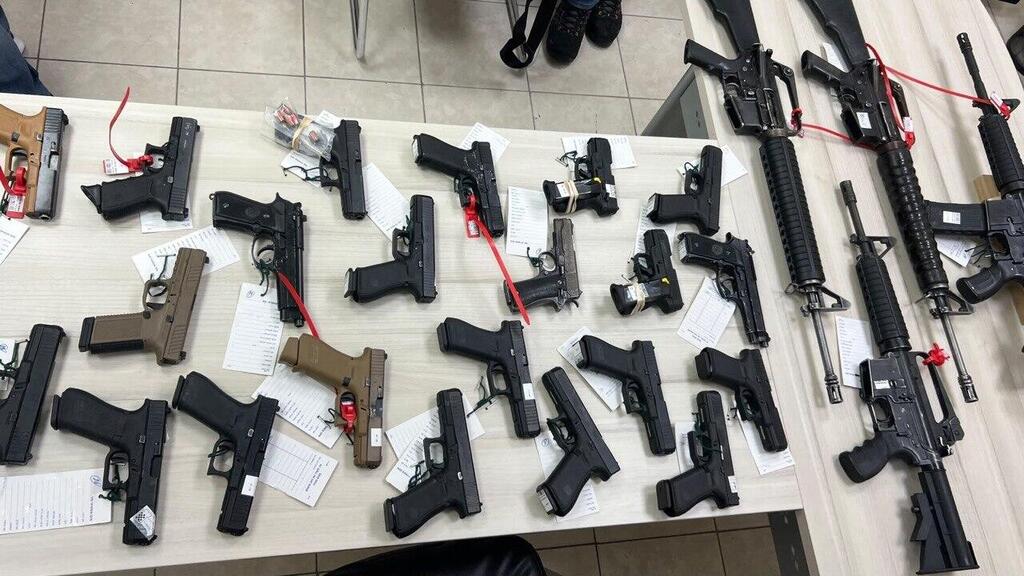
The weapons sold to the "The Wanderer"
(Photo: Police Spokesperson)
An undercover handler becomes the agent's closest confidant once recruitment is approved.
"He becomes his wife, father, older brother, psychologist and emotional support," H. said. "He's there for him 24 hours a day. Eventually, he becomes the only person the agent trusts enough to call at any hour over even the smallest issue."
According to D., it was immediately clear that "The Wanderer" was tired of prison.
"His decision was cold and calculated, made at the expense of the criminals he'd done business with," D. said. "For him, becoming an undercover agent was his runway to a new life. His dream is to live overseas. He doesn't want to end up with a bullet in his head because of some criminal dispute."
The first meeting led to many more, during which police psychologists and other professionals assessed whether he had the personality and mental resilience required for undercover work.
During his final six months in prison, officers focused primarily on one quality: trustworthiness.
Once approved, he was given the codename "The Wanderer," becoming the first Bedouin undercover agent in Israeli Police history.
To avoid raising suspicion, he continued serving his sentence as usual while secretly training for his new role. Meetings with his handlers were conducted under various covers to prevent fellow inmates from suspecting anything.
The tempting offer
When "The Wanderer" was released from prison in mid-2025, he was already prepared for his new life.
He needed no fabricated cover story — his own life provided the perfect one.
He was already well known among Bedouin criminals as well as Jewish and Arab criminals from East Jerusalem. No one suspected him when he returned to the illegal weapons trade, seeking to buy firearms.
Lahav 433's Etgar unit is responsible for combating both vehicle theft and illegal weapons trafficking.
In Israel, one source of illegal weapons is theft from Israel Defense Forces bases, but the main supply route is smuggling across the Jordanian and Egyptian borders. From there, weapons flow primarily to criminals in Arab communities, though Jewish organized crime groups also obtain them.
Police and the military periodically intercept smuggling operations, but many shipments still get through.
Authorities estimate there are hundreds of thousands of illegal firearms in Israel, fueling an industry that generates enormous profits for smugglers, many of them from the Bedouin community.
A smuggler may pay about 5,000 shekels for a Glock pistol at the border and sell it for between 25,000 and 40,000 shekels. Assault rifles purchased for roughly 8,000 to 9,000 shekels can sell for 50,000 to 60,000 shekels.
Police say the chances of being caught remain relatively low and argue that lenient court sentences weaken deterrence.
No one was surprised when "The Wanderer" began receiving offers to buy weapons almost immediately after his release.
Drawing on his experience, he vetted sellers, negotiated prices and arranged meetings throughout the Negev. Under the close supervision of his handlers, he completed his first undercover purchase, paying about 25,000 shekels in cash for a handgun.
Every transaction carried enormous pressure.
"The agent knows large police forces are operating nearby," D. said. "If he activates the agreed emergency code indicating his life is in danger, they will storm in from every direction to rescue him. But once that happens, his cover is blown."
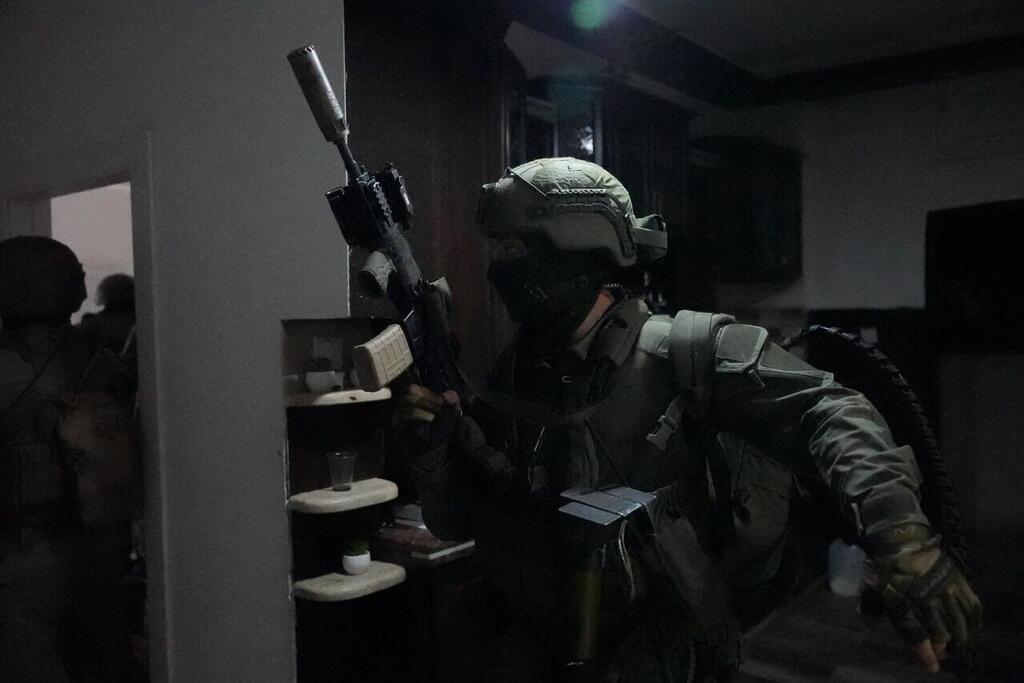
The raid on the suspects' homes
(Photo: Police Spokesperson)
The operation relied on covert technology that allowed handlers to monitor and communicate with him during missions.
"The knowledge that his handler is nearby gives him confidence," D. said. "But ultimately he's alone. He has to stay sharp, think creatively and respond correctly to every development. Criminals constantly test the person in front of them because they always suspect he might be a police agent."
Every transaction was documented using covert technology and closely supervised by prosecutors to ensure the operation stayed within legal boundaries while gathering admissible evidence.
Following his first successful deal, more opportunities quickly followed.
"His reputation kept growing," D. said. "Smugglers started approaching him on their own because they had weapons they wanted to unload."
At one meeting, he expected to buy a single handgun.
"Instead, they showed up with a heavy sack containing dozens of pistols and suggested, 'Let's make one price for everything.'"
Because he had no authority to expand the scope of the operation on his own, he asked for a few days to think about it.
"It was very tempting to buy all the pistols in one deal," H. said. "But it would have looked suspicious. He arrived with cash to buy one handgun, exactly as we instructed him. So he politely declined."
The deal that nearly exposed him
At one point, "The Wanderer" was offered an M16 rifle in an East Jerusalem village.
The meeting was especially challenging because of the area's dense construction and maze of narrow streets.
He arrived late at night and was repeatedly instructed by phone to move from one meeting point to another.
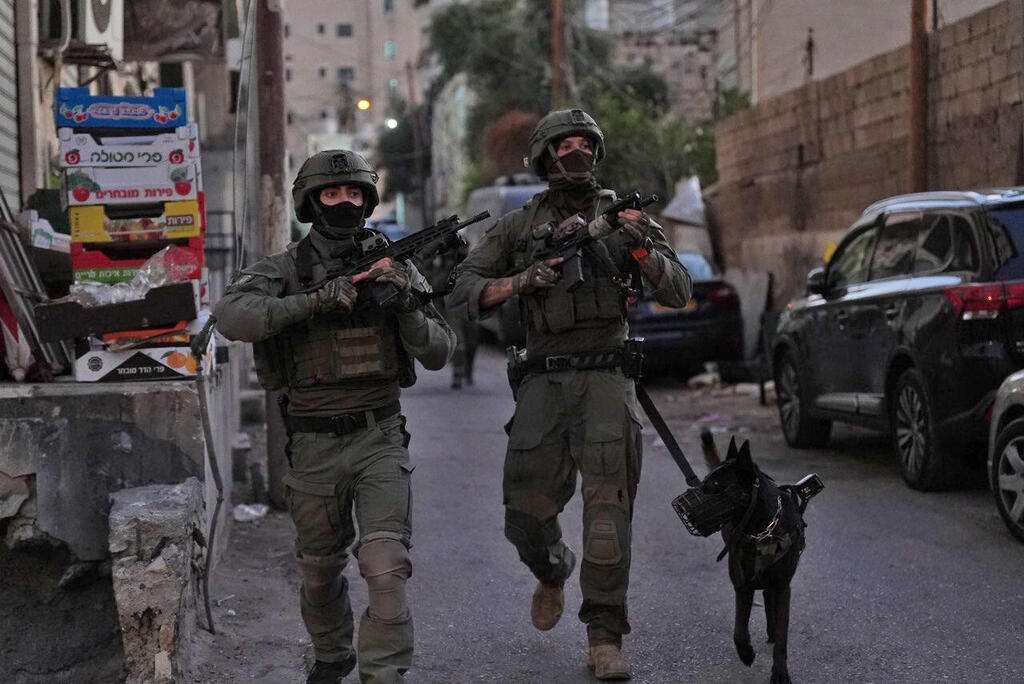
The raid on the suspects' homes
(Photo: Police Spokesperson)
"The criminals wanted to make sure no police were following him and that he had come alone," D. said.
After another tense hour, he finally met the suspects.
Then disaster struck.
All police communications and surveillance systems monitoring him suddenly failed.
"We entered emergency mode," H. recalled. "D. and I looked at each other and asked, 'What do we do now?'"
"There was enormous concern for his safety. This wasn't his natural environment — he usually operated in the Negev. But we decided to trust him. Every minute felt endless. Every worst-case scenario ran through my head. The undercover teams were on full alert."
Inside, "The Wanderer" faced intense questioning from numerous criminals.
About an hour later, fearing his cover was about to be blown, he activated the emergency code signaling he was in mortal danger.
"We had no technological systems functioning and no idea what was happening," H. and D. recalled. "We had only seconds to decide whether to sacrifice the operation, send in the teams and carry out a noisy rescue. It could easily have turned into a gunfight."
"Nothing in all my years on the job prepared me for that moment," H. said. "I was afraid I'd sent someone into an operation and he'd come back in a body bag."
D. made a split-second decision.
A female Arabic-speaking police officer who regularly assisted with operations called "The Wanderer," pretending to be his partner asking when he would be home.
"We could hear he was under tremendous stress," D. said. "She slipped our agreed code into the conversation, telling him, in effect, 'We're with you. Everything is OK.' That calmed him and restored his confidence."
As a Bedouin from southern Israel operating in East Jerusalem, he feared he was being lured into an ambush. The criminals had moved him from one location to another before bringing him into their hideout.
"They wanted to find out exactly who this man was who wanted to buy an M16," D. said.
The operation ultimately ended successfully.
"In the Negev, unlike East Jerusalem, he was completely at home," H. said. "Sometimes they even offered to make him a partner in smuggling operations. But despite the temptation, we stuck to the original plan: he bought from smugglers and 'sold' to buyers. Naturally, every weapon he purchased was handed over to us as evidence and never sold to anyone."
A lifelong commitment
D. jokes that "The Wanderer" has become his second wife — sometimes even his first — given how much time they spend together and how he has become the person the agent turns to for every problem.
After nearly a year of undercover work, preparations began to end the operation.
"We were afraid his cover would be blown," D. said. "People in the field were beginning to connect the dots. We had already accumulated extraordinary evidence against major weapons traffickers."
Two weeks ago, before dawn, hundreds of Lahav 433 detectives and Border Police officers raided the homes of suspects from whom "The Wanderer" had purchased weapons.
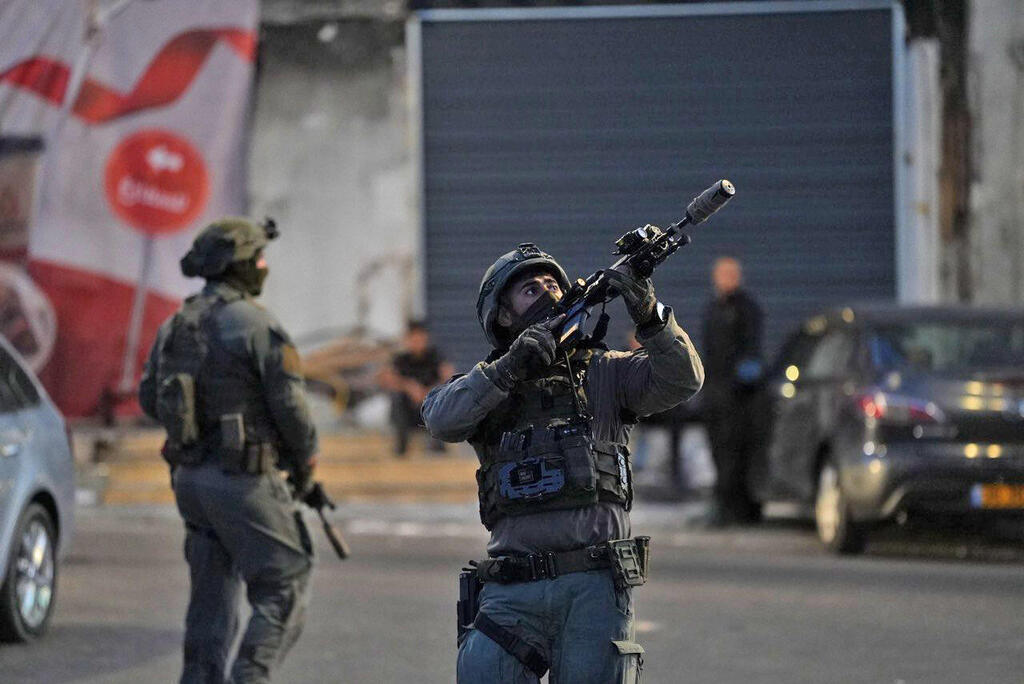
Lahav 433 detectives and Border Police officers raided the homes of suspects from whom 'The Wanderer' had purchased weapons
(Photo: Police Spokesperson)
Suspects in Rahat, Tel Sheva, Bir Hadaj, Arad, Dimona, Eilat and East Jerusalem were pulled from their beds, handcuffed and informed they were under arrest on suspicion of illegal weapons trafficking.
Police said 27 Arab and Jewish suspects remain in custody and are expected to be indicted.
Over the course of the operation, "The Wanderer" purchased 25 handguns, paying an average of 25,000 shekels in cash for each one. He also bought four M16 rifles at roughly 50,000 shekels apiece.
Weapons traffickers, particularly in the Bedouin community, believed police could never infiltrate their ranks with an undercover agent.
That morning, they discovered otherwise.
"So did he," D. said.
"When I told him the big day had arrived, he was completely shocked. It took him several hours to process that this chapter of his life was over and that he was now moving into a safe house, surrounded by detectives protecting him 24 hours a day. He understood he would never again be able to move around freely."
D. said he tries to take him out occasionally when the isolation becomes overwhelming or when his mood declines.
"We've built a complete support system for him," H. said. "Once he finishes testifying in court, he'll have the opportunity to build a new, normal life. I hope he starts a successful new chapter. Like every undercover agent recruited by the police, he knows we'll be there for him for the rest of his life."