


Prime Minister Benjamin Netanyahu will lead a ministerial panel tasked with defining the mandate of an inquiry into the Oct. 7 Hamas attack, the government said Thursday, as his coalition moves to block the establishment of a state commission of inquiry led by senior judges.
According to a notice sent to ministers, the ministerial committee will convene on Monday. Netanyahu’s decision comes amid mounting public pressure, including from families of hostages and victims, to establish a state commission of inquiry whose members would be appointed by Supreme Court Chief Justice Yitzhak Amit.
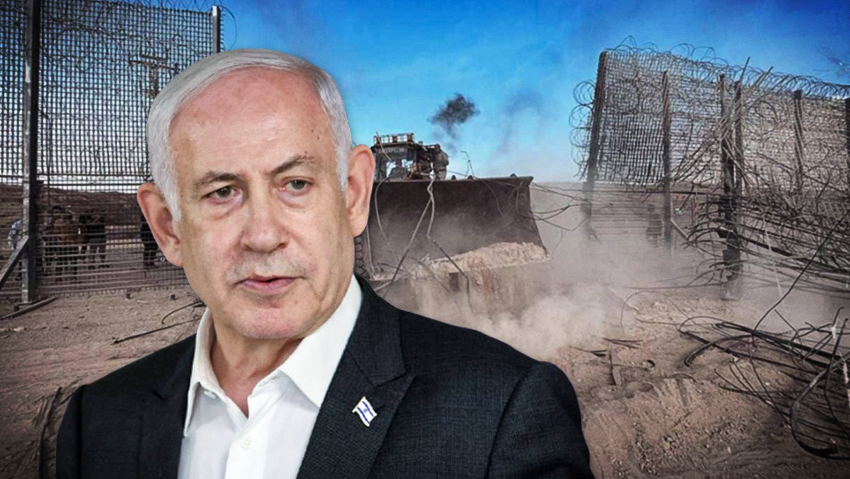
Prime Minister Benjamin Netanyahu
(Photo: Reuters)
Instead, Netanyahu has opted to advance legislation creating a politically appointed inquiry committee, in which Knesset Speaker Amir Ohana, a close ally, would play a central role in selecting its members. Under the proposed framework, the committee would consist of six members, who would choose a chair from among themselves.
An initial effort would be made to agree on all six members with the support of 80 lawmakers. If no agreement is reached within 14 days, the coalition would appoint three members and the opposition three. If the opposition refuses to cooperate, Ohana would appoint its representatives on its behalf.
In an apparent attempt to soften opposition from both political rivals and large segments of the public, coalition sources said Netanyahu is open to modifying the proposal during Knesset committee deliberations. According to those sources, Netanyahu would consider allowing Chief Justic Amit — rather than the Knesset speaker — to appoint the opposition’s three representatives if the opposition declines to participate.
The bill, sponsored by Likud lawmaker Ariel Kallner and designed to bypass the creation of a state commission of inquiry into the failures surrounding the Oct. 7 massacre, is expected to be brought before the Ministerial Committee for Legislation on Sunday. The coalition plans to advance it to a preliminary vote in the Knesset plenum next Wednesday.
Despite the push to fast-track the legislation, senior members of the ultra-Orthodox United Torah Judaism party said they would not support the bill in its second and third readings unless a controversial bill granting exemptions from military service to yeshiva students is passed first.
Given the sensitivity of the issue and the deep public divide — including among bereaved families — Netanyahu chose to personally lead discussions on defining the mandate of the non-state inquiry. Several ministers have argued that the committee should have the authority to summon witnesses with compulsory attendance and to determine confidentiality rules, given that sensitive and classified information is expected to be presented.
During ministerial consultations, proposals were raised to allow the inquiry to examine events without a time limit. Some ministers argued the investigation should go back to Israel’s 2005 withdrawal from Gaza, while others said it should extend as far back as the 1993 Oslo Accords, a series of interim peace agreements between Israel and the Palestinians. Several ministers are also expected to demand scrutiny of the impact of anti-government protests, media coverage, military refusals to serve and the role of the Supreme Court.
Some Likud ministers involved in shaping the mandate have said the inquiry should thoroughly examine what went wrong but avoid issuing personal conclusions against individuals.
Earlier this week, dozens of former hostages, relatives of hostages and families of victims sent a letter to Netanyahu demanding the immediate establishment of a state commission of inquiry. Among the signatories were former captives Yarden Bibas, Arbel Yehoud, Ohad and Raz Ben Ami, Ariel and Sharon Cunio, Louis Har, Gadi Mozes and Amit Soussana.