


After nine consecutive nights of exchanges of fire in the Middle East, and as a major escalation appears closer than ever, mediators are trying a new ceasefire initiative. A senior Iranian official told Reuters that the mediators had proposed a 10-day pause in attacks, in an effort to find ways to revive the memorandum of understanding between Iran and the United States.
U.S. Secretary of State Marco Rubio said overnight that the United States is “open to a diplomatic solution,” and Iran also did not rule out negotiations.
Gallery
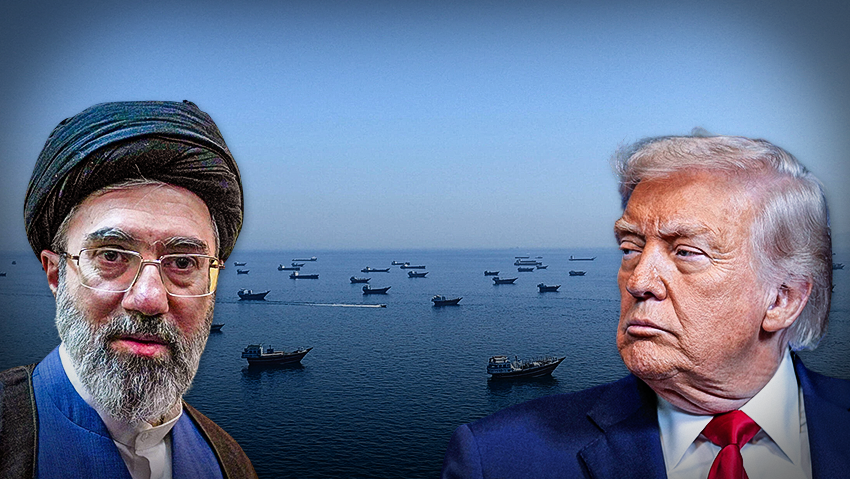
(Photos: Hamed Jafarnejad/ISNA/WANA (West Asia News Agency) via Reuters, Alex Brandon/AP, Reuters/Stringer)
Foreign Ministry spokesperson Esmaeil Baghaei was asked earlier whether the door to talks with the United States had closed, and replied: “Tehran advances both war and diplomacy, in accordance with its national interests. The dichotomy of ‘either war or diplomacy’ is not acceptable to me. Diplomacy is a tool through which we advance our national interests, just as war is also such a tool.”
The United States continued striking Iran overnight for the ninth consecutive night. The Iranians responded with fire toward Bahrain and Kuwait. At the same time, the Revolutionary Guards announced that two oil tankers had “exploded” and been rendered inoperable after trying to pass through the southern route in the Strait of Hormuz, a route not approved by Iran.
US attacks on Iran in recent nights
(Video: CENTCOM)


According to the Revolutionary Guards, the vessels had been encouraged by the U.S. military to use that passage. The United Kingdom Maritime Trade Operations agency effectively confirmed the incident, saying one of the ships was hit off the coast of Oman and that the crew abandoned it safely. According to the agency, the fire that broke out on the vessel has not yet been extinguished, and the tanker is drifting at sea.
Meanwhile, Iranian reports said one person was killed and several others were wounded in strikes in Tabriz, with additional strikes reported in Bushehr and Urmia.
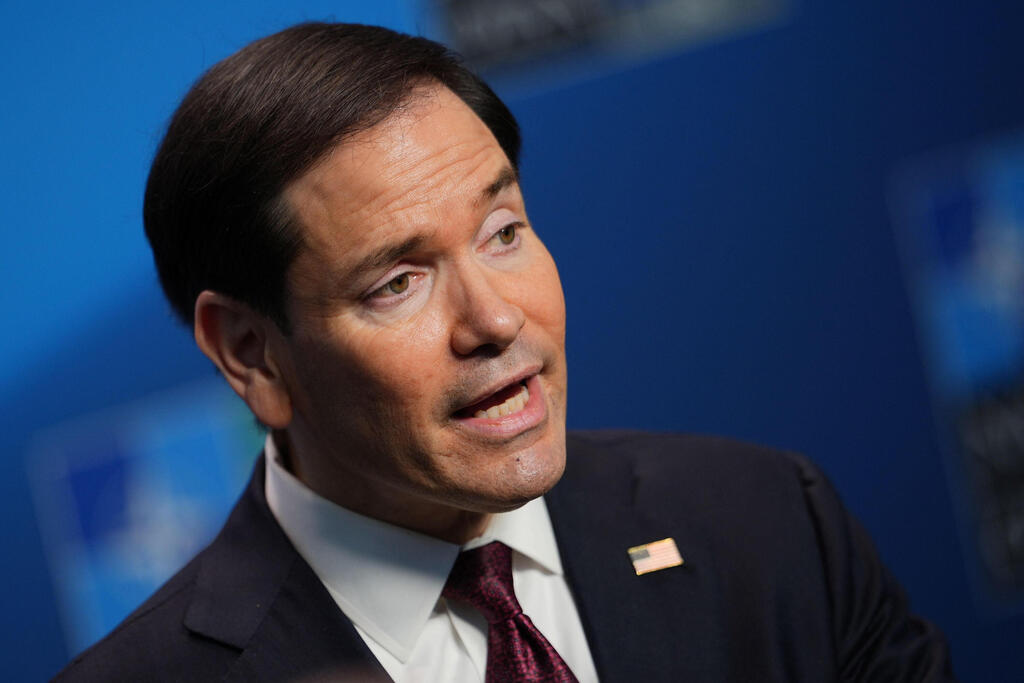
US Secretary of State Marco Rubio says the US is 'open to a diplomatic solution'
(Photo: Julia Demaree Nikhinson / POOL / AFP)
Despite Rubio’s statement that the United States is prepared for a diplomatic solution, a U.S. official familiar with the administration’s internal discussions told The Washington Post that “the United States is preparing for a broader war.” The official also said the Pentagon is increasing the number of military aircraft in the region, as was clearly seen in the arrival of refueling planes and fighter jets in Israel.
However, the same official warned that any expansion of the U.S. operation would be limited because of depleted stocks of air defense systems and long-range munitions, as well as constraints on the ability to send additional forces and aircraft to the region because of damage caused by the fighting.
“We simply don’t have enough to sustain the operations safely, and I don’t think the White House is aware of that,” the official said.
Military experts said that beyond the erosion of U.S. equipment and ammunition stocks, the U.S. military is not prepared for the possibility of a ground operation inside Iran, an option U.S. President Donald Trump refused to rule out last week. In a brief telephone interview with NewsNation, published Sunday, Trump said he “really doesn’t care” about Iran’s announcement that it no longer intends to honor the memorandum of understanding reached a month ago.
At the same time, the Islamic Republic sent public and combative messages. Iranian military spokesperson Mohammad Akrami Nia said, “Rationality dictates that the war continue to the point that will lead to complete deterrence for the Iranian nation. Otherwise, the enemy will invade Iranian soil again.”
He added a threat: “No country can use the Strait of Hormuz to transfer equipment and ammunition and then use that same equipment against Iran. Any country that joins the Americans will face problems passing through the Strait of Hormuz. Certain countries have fully aligned themselves with the Americans in recent years while at the same time benefiting from the Strait of Hormuz.”