


After eight consecutive nights, the exchange of fire in the Gulf has begun to resemble a routine.
The U.S. military issues a statement at the start of each wave of strikes in Iran and another when the operation ends. Iran responds by launching missiles and drones toward neighboring countries and renewing its threats. The pattern continued overnight and into Sunday morning, when warning sirens sounded in Kuwait.
Bridges in Iran were attacked by the US to cut off supplies


But a series of developments in recent days has prompted assessments that the United States is raising its level of readiness for another escalation with Iran, potentially including a return to full-scale war.
The deployment of additional American forces to the region, the arrival of refueling aircraft and fighter jets, tougher travel warnings for countries across the Middle East and reports of operational adjustments based on lessons from the latest conflict all point to significant preparations.
The prevailing assessment is that any escalation initiated by Washington before the U.S. midterm elections would probably be controlled. But managing a limited confrontation with Iran is far from simple.
These are the developments suggesting the fighting could intensify.
Footage of US strikes
(Photo: CENTCOM)
US troops killed in Jordan
They were the first U.S. military fatalities since the fighting resumed.
American officials told The New York Times that dozens of soldiers had been wounded in Jordan in recent days. Washington said the eighth consecutive night of strikes in Iran was carried out in response, but President Donald Trump may not consider that retaliation sufficient.
The Wall Street Journal reported that the soldiers were killed at Muwaffaq Salti Air Base, where a THAAD missile defense system was struck in March.
Gallery
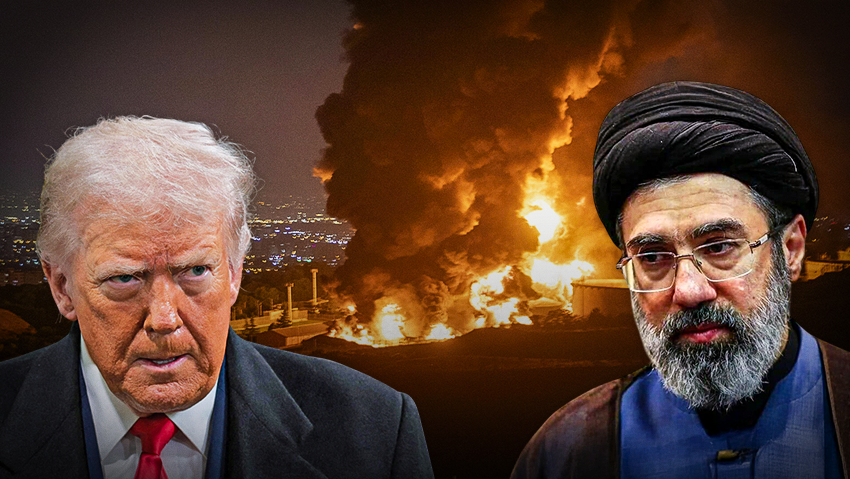
After eight consecutive nights, the exchange of fire in the Gulf has begun to resemble a routine
(Photo: Anna Moneymaker / AFP, Stringer / Getty Images)
U.S. officials familiar with the matter said Iran had adapted to American defense systems and was firing extremely fast missiles capable of maneuvering as they approached the ground.
Iran’s ability to strike sensitive targets has also raised concerns that the regime may be receiving assistance from China or Russia in target acquisition, according to the report.
American patience appears to be wearing thin. Attacks on U.S. bases in the Middle East and the killing of American troops are strengthening hawkish voices in the administration who argue that the time has come to finish the job.
Meanwhile, reports in the United States indicate that the Pentagon is drawing lessons from the latest confrontation with Iran.
The U.S. military is reportedly expanding its use of drones and other unmanned systems as part of an effort to overcome Iranian air defenses and improve the effectiveness of future strikes.
Refueling aircraft return, fighter jets arrive
American crews initially sought to remain at Ben Gurion Airport because of its proximity to Tel Aviv, its nightlife and the coast. But as the IDF confirmed, the tanker aircraft will instead be stationed at Israeli Air Force bases.
Transportation is being arranged from bases in southern Israel to Tel Aviv for the crews during their free time.
In addition to dozens of refueling aircraft, the first of which have already arrived, fighter jets are also being transferred to Israel.
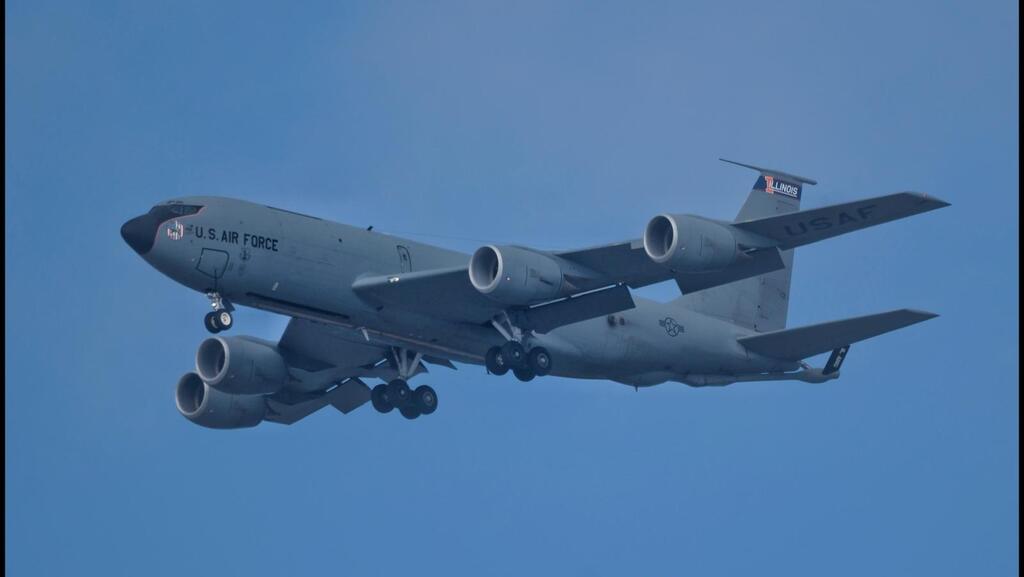
American refueling aircraft preparing to land at Ben Gurion Airport
(Photo: Danny Sadeh)
According to The Wall Street Journal, the United States sent F-16 fighter jets from Spangdahlem Air Base in Germany, while stealth F-35 aircraft were moved from Britain to the region.
The aircraft could be used, among other missions, to strike Iranian radar systems supporting surface-to-air missile launches, the report said.
Travel warnings expand
Between Friday night and Saturday morning, the United States issued a travel warning covering Israel and Arab countries across the Middle East.
“Due to heightened tensions in the Middle East and the risk of unpredictable escalation, the State Department urges U.S. citizens to reconsider all travel to the region,” the warning said.
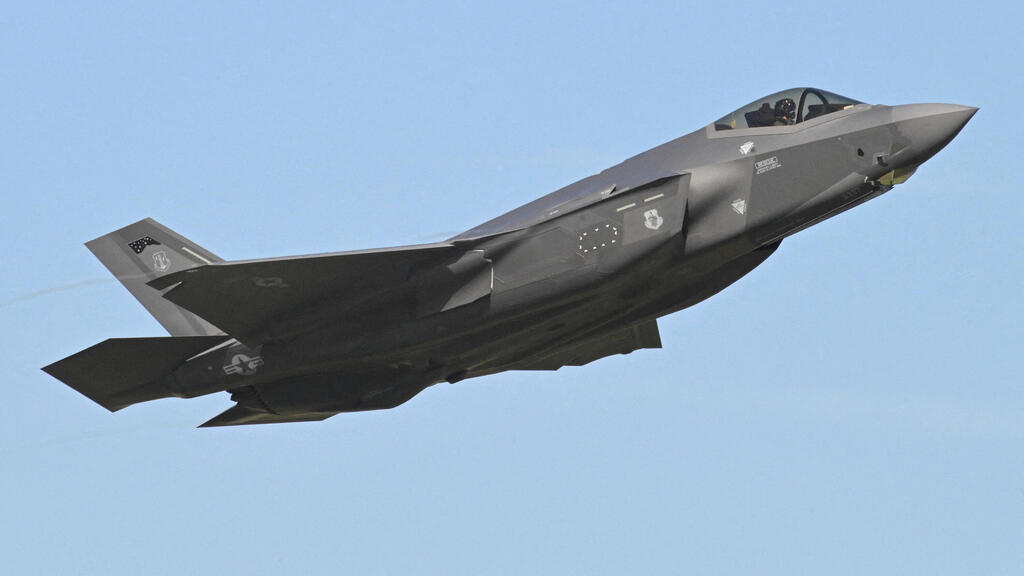
F-35 aircraft were moved from Britain to the region
(Photo: REUTERS/Jana Rodenbusch/File Photo)
Following the regional advisories, the State Department issued a worldwide alert Saturday, calling on Americans to exercise increased caution.
“The security environment remains complex, with the potential for unpredictable escalation,” the notice said. “U.S. diplomatic facilities have already been targeted, and travelers may face disruptions caused by flight cancellations and periodic airspace closures.”
The World Cup factor
The timing of the shift in American preparations has not escaped the attention of security officials.
The World Cup hosted by the United States ends Sunday evening. Some analysts had believed the tournament influenced the timing of any large-scale military moves, and its conclusion is now viewed as removing a possible constraint.
The end of the tournament also marks the conclusion of celebrations surrounding 250 years of American independence and Trump’s 80th birthday.
A memorandum of understanding with Iran, which has since effectively collapsed, was signed before those events.
A mysterious B-2 post
On Saturday, White House deputy chief of staff Dan Scavino posted footage of a B-2 bomber.

The post by Dan Scavino
A day before the launch of Operation Lion’s Roar, he similarly posted an image of the bombers that later dropped dozens of heavy bombs on underground ballistic missile positions in Iran during the second day of that war.
The latest post has fueled speculation that another major operation could be approaching.
Another war is not inevitable
Despite the accumulation of warning signs, Israeli officials are not rushing to conclude that another war is unavoidable, particularly one that would necessarily include Israel.
The prevailing assessment within Israel’s defense establishment is that Iran does not currently want to open a direct front against Israel, in part because of the damage it suffered during the previous confrontation.
Officials familiar with the matter emphasize, however, that this remains only an assessment and that conditions in the Middle East can change quickly.
Another issue occupying Israel’s political and military leadership is the country’s possible involvement in a renewed U.S. campaign.
According to Israeli officials, Washington has so far preferred to conduct the operation independently, even when Israel expressed willingness to assist or participate in operational activity.
Footage from Kuwait: Massive smoke cloud after oil facility strike
(Video: Reuters)
The Americans have blocked Israeli involvement despite intensive coordination between the two militaries. Washington has sought to minimize the risk of expanding the conflict and prevent Iran from portraying the fighting as a joint American-Israeli war.
That approach is not necessarily permanent.
Should the Pentagon conclude that Israeli capabilities are essential to achieving its operational goals, whether because of the Israeli Air Force’s experience or Israel’s unique intelligence and military assets, the decision could change rapidly.
Even if Israel does not actively participate in an American operation, it would not necessarily remain outside the line of fire.
Israeli defense officials are preparing for the possibility that Iran could retaliate against Israel even if it was not directly involved in U.S. strikes.
A major Israeli attack in Lebanon could also prompt an Iranian strike against Israel, making Israeli entry into the wider conflict almost unavoidable.
Despite the growing number of signs indicating American preparations, Israeli officials remain cautious about declaring that another escalation is certain.
At this stage, Washington appears to be preparing and building operational options. But a shift in any of several variables, including an American decision, a change in intelligence assessments or an unexpected Iranian move, could quickly overturn the assumption that Israel will remain outside the confrontation.
“Israel may have to join the war,” a senior Israeli official said. “The memorandum of understanding is dead, and they are attacking neighboring countries. Israel must prepare for them to try to hit us. But if they do, they will pay a very heavy price. We will not stop as we did last time.”