

One resident told Ynet that the officers began with an apology, admitting the military had failed. "We are sorry that we failed to protect you," they said.
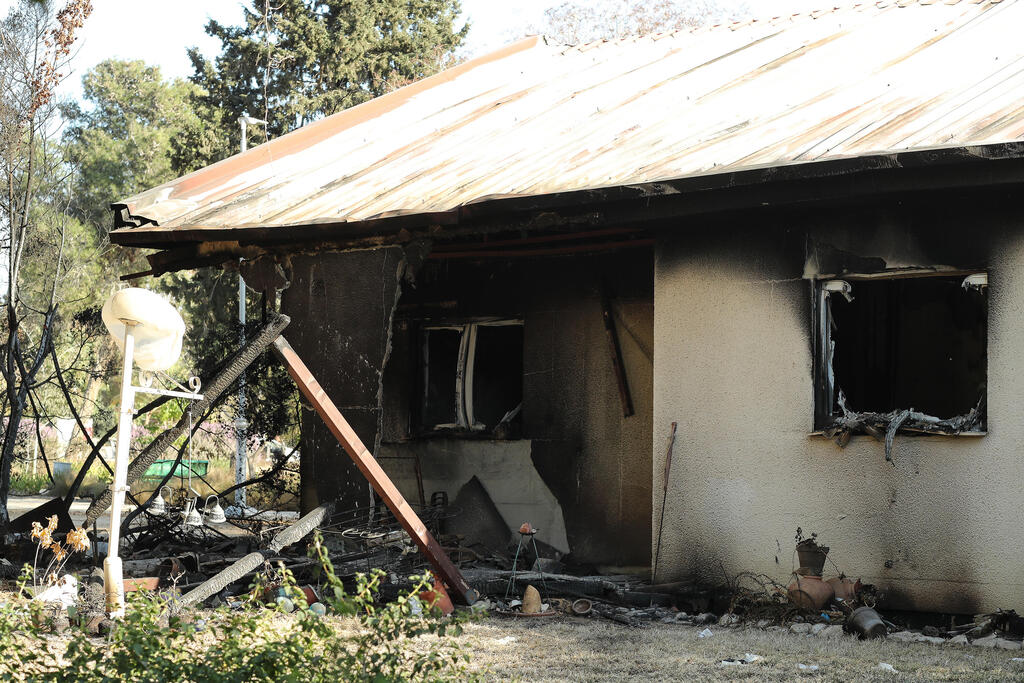
Nahal Oz was home to 500 residents before the attack, in which 15 were murdered and eight others abducted. Not all residents attended the briefing, but those who did were presented with the investigation’s conclusions and had the opportunity to ask questions.
"They went through the findings thoroughly, and it appears the investigation was conducted professionally and with sensitivity," one resident said. However, he noted disappointment that the probe focused only on the attack itself and not on the failures leading up to it.
The briefing was led by Maj. Gen. Dan Goldfuss, commander of the IDF Northern Corps and the Multi-Domain Joint Maneuver Array, alongside Col. (Res.) Yaron Sitbon and senior officers from the Air Force and Home Front Command.
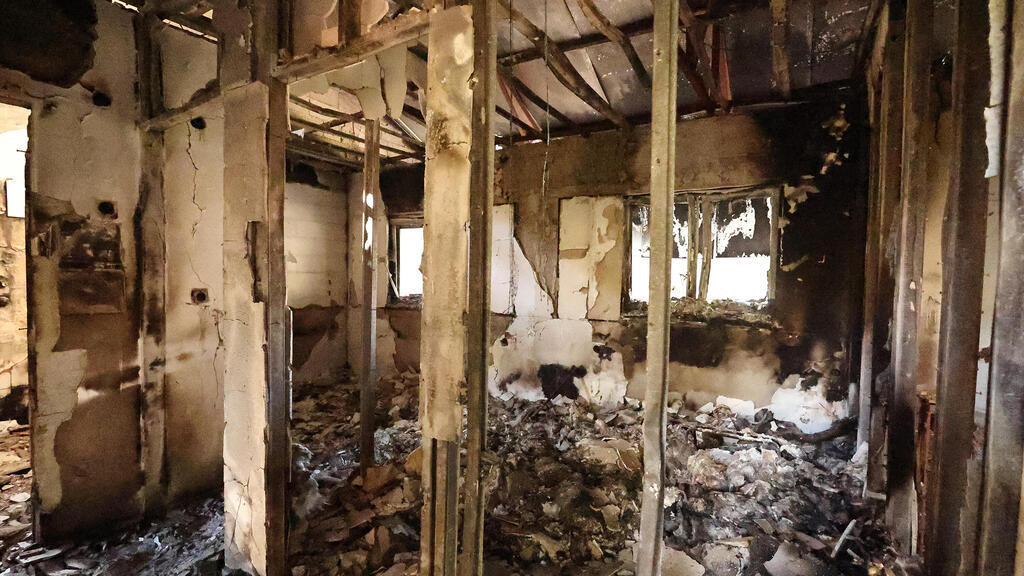
Aftermath of the Hamas massacre at Nahal Oz
(Photo: GPO)
According to the findings, approximately 180 Hamas terrorists infiltrated the kibbutz in three waves. The local security team fought back, but its leader, Ilan Fiorentino, was killed early in the attack. Three other kibbutz members—Tsahi Idan, Omri Miran and Tanzanian agricultural student Joshua Mollel—were also murdered, with Mollel killed in captivity. Idan was supposed to be released in the first phase of the hostage deal.
The first wave of terrorists entered the kibbutz around 7 a.m. through the back gate. Three hours later, another group attacked from the north, followed by a third wave an hour later. Eleven special forces soldiers engaged the terrorists, preventing an even greater massacre. One soldier was killed and four others wounded. At noon, an elite Maglan unit attempted to reach the kibbutz but encountered heavy resistance along the access road, managing to enter only at 1:15 p.m.
Get the Ynetnews app on your smartphone: Google Play: https://bit.ly/4eJ37pE | Apple App Store: https://bit.ly/3ZL7iNv
Residents questioned why the security team had not been equipped with long rifles, which had been taken away by the IDF before the attack. "We were told that was the order, but no documentation supports it," they said. They have agreed to meet with Goldfuss again at the kibbutz to discuss future security measures. "We felt he was very committed to Nahal Oz," residents said.
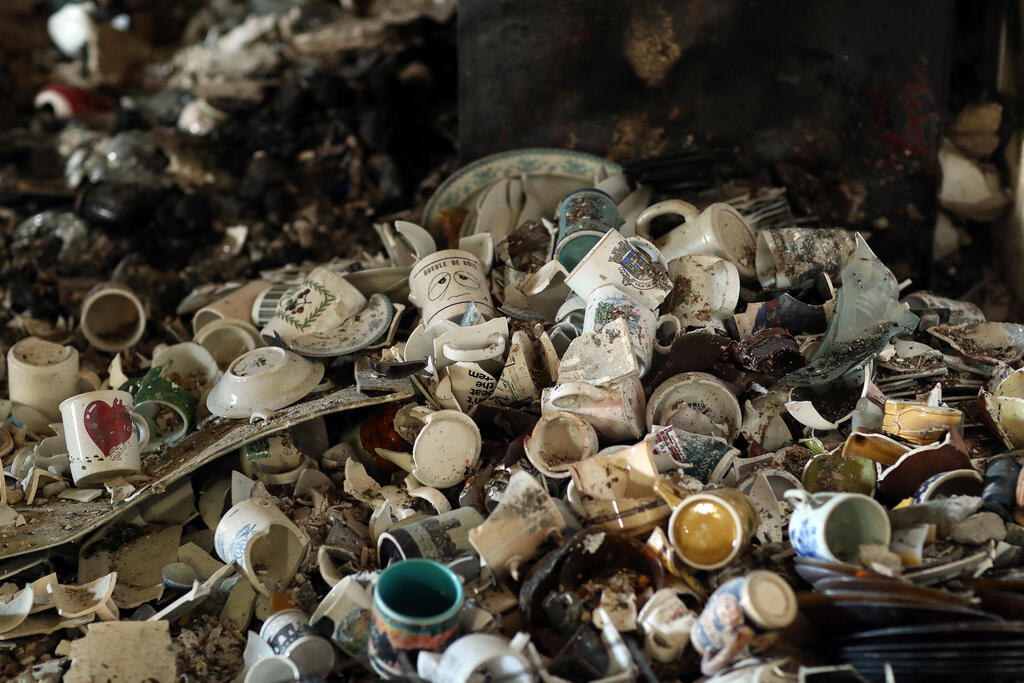
Aftermath of the Hamas massacre at Nahal Oz
(Photo: GPO)
The IDF officers told residents that the military had not anticipated a full-scale war, which delayed its response to Nahal Oz and other communities under attack. The probe reviewed the battles that took place in each home.
Residents also learned that a Golani Brigade infantry force had been engaged in combat outside the kibbutz from early morning, preventing terrorists from entering during the first wave. However, they were later redeployed to more intense battle zones. "They blocked many of the terrorists, and we are grateful to them," one resident said.
Residents expressed surprise at the level of transparency in the investigation, which included IDF communication recordings. One resident whose home was invaded said the presentation was an important step in his ability to return home. "It highlighted what was missing and what was not done. The military fully acknowledged its failures. They stood before us in shame," he said.
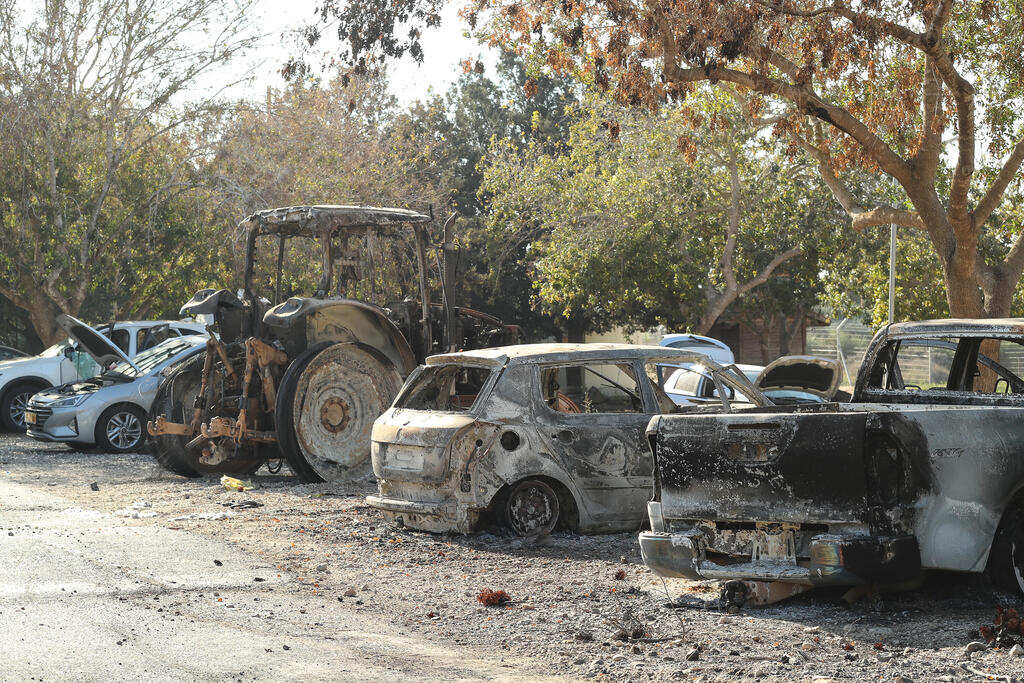
Aftermath of the Hamas massacre at Nahal Oz
(Photo: GPO)
"It was difficult to see commanders who fought bravely—Goldfuss himself led troops in Gaza—stand before us looking so small, while the government has never even acknowledged us or visited to see how we are living. This government went missing not just on October 7, but for months afterward," he said.
He also noted the lack of strategic explanations. "We see the security failures, but we were not given answers about how the enemy across the border was able to amass strength using funds we provided. This is why a national commission of inquiry is necessary. These are the critical questions we still don’t have answers to," he said.
"The day of the massacre is an open wound in our hearts," the kibbutz said in a statement. "The investigation findings are devastating and bring us back to that day. The kibbutz will rise again—it may not be the same, but it will thrive."