

After a week of intensive bombing, IDF Chief of Staff Lt. Gen. Eyal Zamir and U.S. Central Command (CENTCOM) head Adm. Brad Cooper both spoke Thursday about moving to the “next phase” of the war against Iran.
In the first phase, Israel and the United States focused primarily on regime targets and on degrading Iran’s launch capabilities — mainly through intensive hunting of missile launchers and missiles themselves.
Israeli Air Force hunts down Iranian ballistic missile launchers
(Video: IDF)


Now, thousands of new targets have been added to the list: Iran’s military industry. The success of these operations, along with efforts to undermine the foundations of the regime, will largely determine how significant the war’s achievements ultimately prove to be.
The Israeli and American objective is to dismantle Iran’s entire chain of capabilities — from the production stage to the finished weapon. In the case of ballistic missiles, for example, the aim is to strike the entire process: from manufacturing plants, to missile storage depots, to the launchers themselves, as well as the commanders and soldiers who ultimately operate them.
The IDF and the U.S. military intend to apply this approach to Iran’s broader military capabilities in the near future, including by using American bombers capable of penetrating targets buried deep underground.
ynet military analyst Ron Ben-Yishai wrote Thursday that the goal is to “grind down” Iran’s largest and most powerful military industries — an area where the United States holds a clear quantitative advantage. A single B-52 bomber, he noted, can deliver roughly the same strike power in one sortie as an entire squadron of Israeli Air Force F-16I “Sufa” fighter jets.
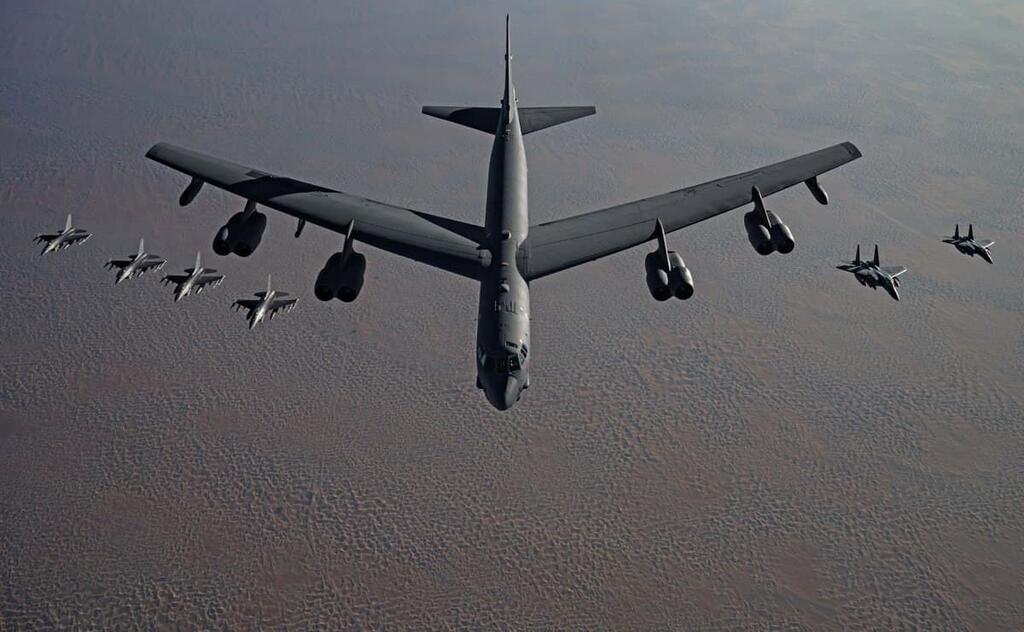
According to Ben-Yishai, attacks on the military industries could also help accelerate the regime’s economic collapse. However, Israeli military intelligence acknowledges that an internal collapse of the regime could take years — though possibly less, provided sanctions on Tehran are not lifted. For now, however, Iranians are not taking to the streets in large numbers, largely because doing so is dangerous.
What exactly is Iran’s military industry?
Danny Citrinowicz, a research fellow in the Iran Program at the Institute for National Security Studies (INSS) in Tel Aviv and a former head of the Iran branch in Israeli military intelligence’s research division, explains that the system operates as a multi-layered “value chain.”
“The value chain is built around three main components,” he said. “First are the materials used to manufacture drones, missiles and launchers. Second are the assembly plants themselves. Third is the operational deployment.”
So far, he said, most of the strikes have targeted the operational deployment stage — an attempt to hit what are often called Iran’s “missile cities,” large underground complexes used to store and launch missiles.
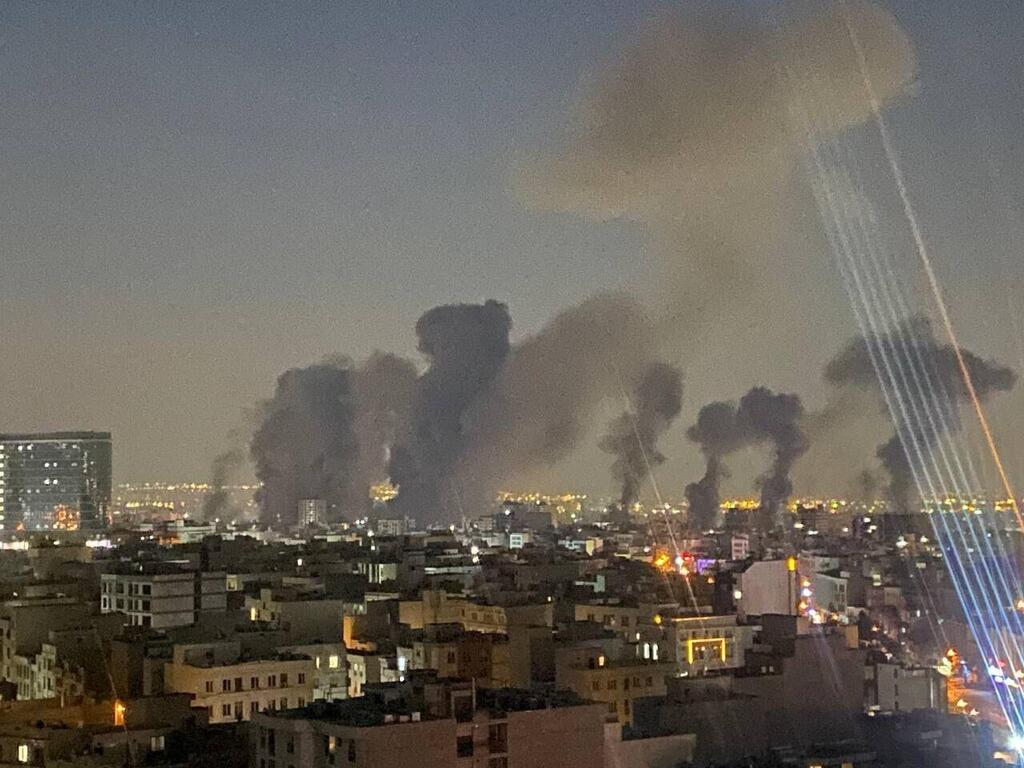
Israeli airstrikes across Tehran, overnight Friday
“The value chain is critical both for missile production and for producing the launchers, which are actually the main issue — even more than the missiles themselves,” he said.
In the next phase, he said, the focus is expected to shift toward assembly plants, many of which are also underground, as well as the broader industrial supply chain.
“That includes every factory ultimately tied to Iran’s missile project — from explosives production, to seals, even aluminum, all the components that make up a missile,” he said. “But it’s important to remember this is a very broad system, and it will be difficult to hit all of it.”
According to Citrinowicz, engines are a particularly critical component.
“There was a report about a strike on factories producing engines for drones,” he said. “But in practice it will be very difficult to reach every component. And even if you hit every component, you can’t erase the knowledge — as we’ve seen in previous operations.”
He added that Iran also has technological backing from Russia, China and North Korea, both in its missile programs and in its nuclear efforts.
“That’s why we need to be very cautious when talking about eliminating capabilities,” he said. “It’s more accurate to talk about delivering a severe blow that delays them or significantly sets them back.”
Citrinowicz said the strikes are also likely to include factories officially defined as civilian facilities, because in practice many are dual-use — producing materials that can serve both civilian and military purposes.
“A factory that manufactures engines for lawnmowers, for example, can also produce engines for drones,” he said. “There are quite a few dual-use components that need to be targeted. That in itself is a significant development.”
He added that although such attacks would deal a severe economic blow to Iran, the country would likely be able to rebuild its military industry over time — even under sanctions and without outside assistance — as long as the current regime remains in power. “They are highly motivated to rebuild these capabilities at any cost,” he said.