


With President Isaac Herzog set to formally task Gadi Eisenkot with forming Israel's next government, the political system is entering a period of intense activity. After a lengthy election campaign, and despite continued uncertainty over whether a government can be formed and what it might look like, the coming week should begin to provide answers to some of the questions hanging over Israeli politics. Early developments could offer clues about the country's future direction.
The first and most significant milestone will come Sunday, when Herzog is expected to follow through on his announcement and formally grant Eisenkot the mandate to form a government. Although the Yashar! chairman has secured 67 parliamentary endorsements, his chances of completing the task remain uncertain. Herzog held consultations with party representatives to assess the depth of opposition between and within the political blocs before deciding that Eisenkot had the strongest prospects. Nevertheless, Eisenkot remains far from assembling a government.
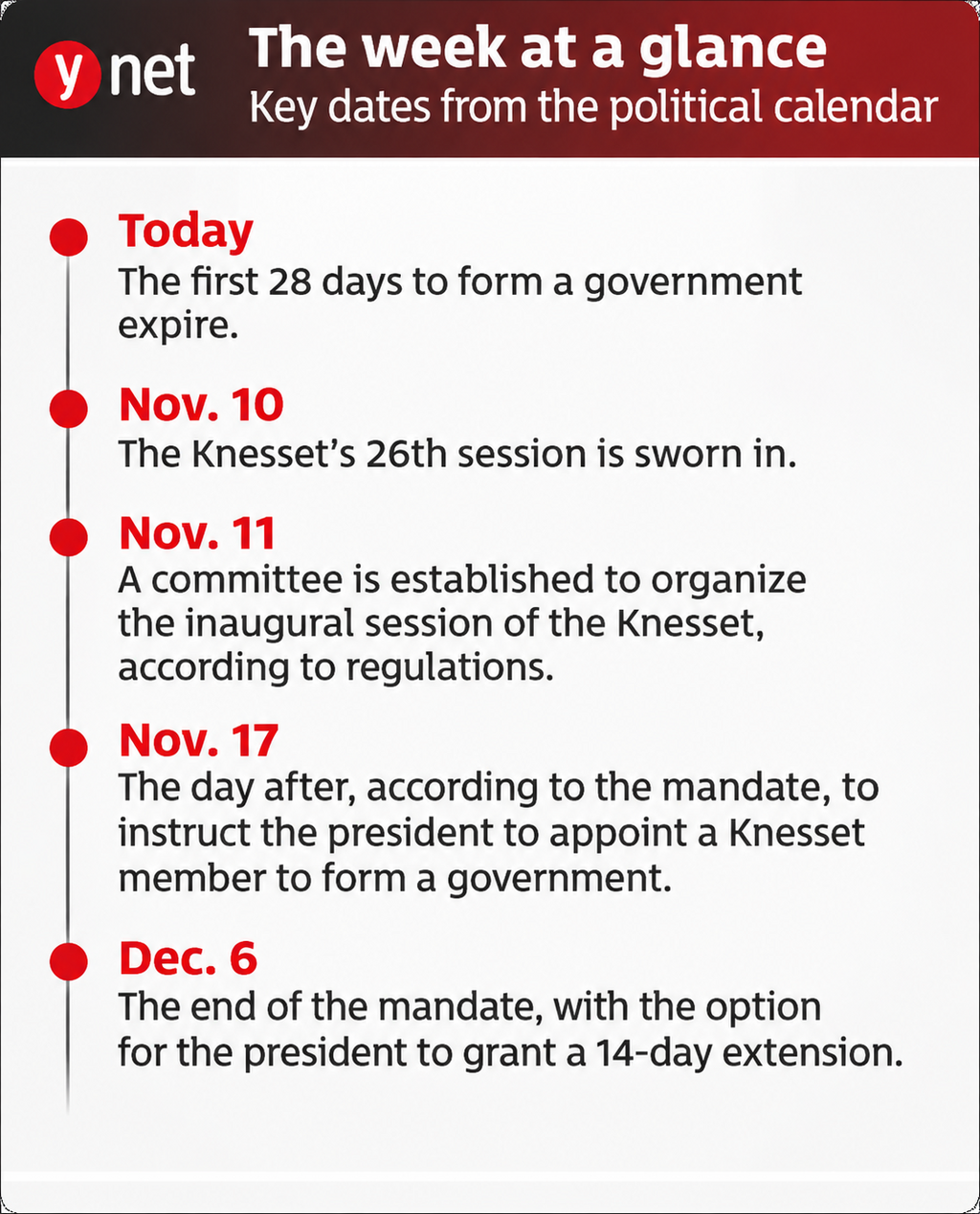
Once he receives the mandate, Eisenkot will have 28 days to form a coalition. If he fails, he can ask Herzog for an additional 14 days. At that stage, the president could intervene and attempt to facilitate the formation of a national unity government.
If Eisenkot ultimately fails, the mandate is expected to pass to Prime Minister Benjamin Netanyahu for another 28 days. Netanyahu's prospects of forming a government are considered even weaker. If he, too, fails to announce that he has succeeded, the mandate is expected to pass to the Knesset, where any lawmaker who secures the support of 61 members could form a government. Political figures believe that if Herzog were to consider granting Netanyahu a pardon as a means of resolving the political deadlock, it would happen during this final stage, when the mandate rests with the Knesset.
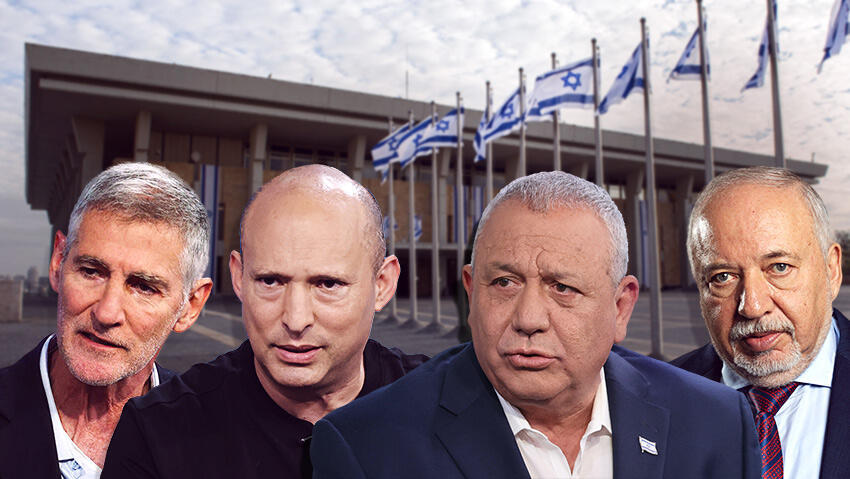
Over the weekend, divisions within the bloc seeking to replace Netanyahu became more pronounced. Eisenkot wants to swear in a 48-member government consisting exclusively of the four parties in his bloc, with the Arab parties and United Torah Judaism abstaining from the confidence vote. United Torah Judaism had declined to recommend Netanyahu for the mandate, but the Haredi parties would still demand commitments on a compromise over military conscription in exchange for abstaining.
Yisrael Beytenu chairman Avigdor Liberman opposes Eisenkot's proposal because it would produce a government dependent on the Arab parties. At the same time, Liberman has lifted his previous boycott of the Haredi parties and is pushing for a 61-seat coalition consisting of the anti-Netanyahu bloc together with United Torah Judaism and Shas. The chances of Shas abandoning Netanyahu, however, are considered virtually nonexistent.
Immediately after receiving the mandate, Eisenkot is expected to begin efforts to take control of the Knesset's legislative agenda. The 26th Knesset will be sworn in on Tuesday, and the Arrangements Committee is expected to be established that day or the following day, headed by a Yashar! representative following Eisenkot's receipt of the mandate.
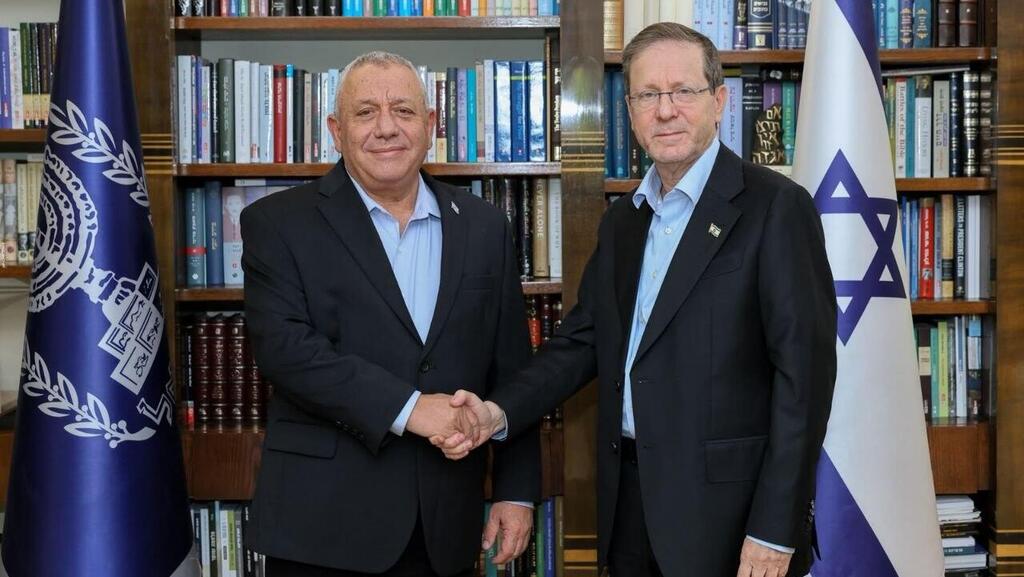
President Isaac Herzog meets with Gadi Eisemkot
(Photo: Arnon Bosni)
The Arrangements Committee is a temporary parliamentary body with extensive powers, including the authority to establish temporary and special committees to advance legislation until a government is formed.
Once the committee is established, temporary Foreign Affairs and Defense and Finance committees will also be formed. The bloc seeking to replace Netanyahu wants to use the period in which Eisenkot holds the mandate to establish additional special committees, including ones that would advance legislation creating a state commission of inquiry into the October 7 massacre and repealing laws associated with the judicial overhaul passed by the previous Knesset.
A vote to replace the Knesset speaker is also expected next week. Incumbent Speaker Amir Ohana has announced that if 61 signatures are submitted, he will allow the election of a replacement within a week. Parties in the anti-Netanyahu bloc and the Arab parties have already submitted their requests, bringing the total number of signatures supporting the replacement of the speaker to more than 61.