


Prime Minister Benjamin Netanyahu has become politically "toxic" in Washington, with Democrats unwilling to work with him and Republicans increasingly associating him with the unpopular war against Iran, former U.S. ambassador to Israel Dan Shapiro warned Friday in an interview with ynet. He said Israel's deteriorating standing in the United States could become impossible to reverse without a change in leadership and policy.
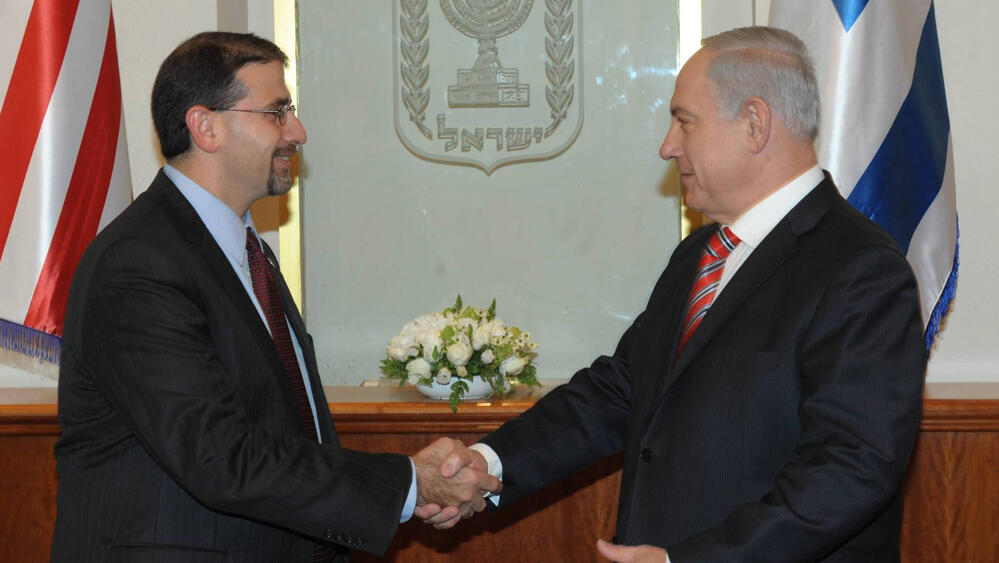
Shapiro, who served as ambassador under President Barack Obama and later as deputy assistant secretary of defense for Middle East policy during the Biden administration, also warned that Israel must prepare for the end of the $3.8 billion in annual American military assistance it has long received. "Israel needs to get used to it," he said. "Democrats have room to maneuver, and almost all of them want to end it."
‘Netanyahu is toxic to all Democrats’
Shapiro's comments follow a sweeping Democratic victory in Tuesday's U.S. midterm elections, in which the party secured control of both the House of Representatives and the Senate. Democrats flipped seats in traditionally Republican districts, delivering a major setback to President Donald Trump and giving the party significant power to constrain his administration during the remaining two years of his presidency.
Shapiro argued that Netanyahu's position has become particularly damaging because the prime minister faces hostility not only from Democrats but also from Republicans increasingly frustrated by the economic and political costs of the war with Iran. "The problem is that if Israel's government remains under Netanyahu, nobody in the Democratic Party will be willing to reopen relations," he said. "Netanyahu is toxic to all Democrats, and they now have an overwhelming majority in Congress."
"But he also has a problem among Republicans. He is identified with the war against Iran. Americans hate the war and the enormous costs it has imposed," Shapiro continued. He warned that without a new Israeli leadership unburdened by Netanyahu's political history, reversing the country's declining standing in Washington would be extremely difficult. "If Israel doesn't have new faces and a new voice, without all the history Netanyahu brings with him, I don't see any chance of stopping the deterioration of Israel's standing in the United States."
The end of US military aid
Shapiro also addressed the announcement that American military assistance to Israel, currently worth approximately $3.8 billion annually, would be terminated. He said he considers the end of assistance inevitable, regardless of the precise timetable, and argued that Israeli and American defense industries would have to adapt to the new reality.
"Everyone agrees that aid to Israel is ending, whether immediately, within a year or within several years," he said. "Israel will make adjustments and use its own money to obtain what it needs, and American companies that sell to Israel will also have to adapt."
US President Donald Trump discusses the decision to end American military assistance to Israel
(Video: FOX News)


But ending direct assistance would not necessarily mean ending defense cooperation. Shapiro said Israel could continue purchasing American weapons with its own funds, although those transactions would remain subject to U.S. law and potentially stricter political conditions. "If Israel wants to continue buying weapons from the United States, it will be able to use them only within the limits of American law," he said, adding that the restrictions could also depend on Israel's political leadership and policies.
Shapiro stressed that many Democrats still consider Israel's security an American strategic interest and recognize its need to defend itself. However, he said the relationship would increasingly operate under different rules. "Many in the Democratic Party still see an American interest in Israel's security and believe in its ability to defend itself," he said. "Its enemies are also America's enemies, but we will have to cooperate differently. Without aid. There will also be conditions on arms sales."
Those conditions, he explained, would be intended to ensure that American weapons are not used in ways that conflict with U.S. law, values or interests. "How do we make sure things don't happen that the United States disagrees with? How do we protect American values and interests and American law?" he asked. "The goal is to prevent the killing of innocent civilians."
A new government is only the first step
Shapiro argued that a political transition in Israel would be the most important initial step toward repairing relations with Washington, although it would not be sufficient on its own. "The first and most important step toward improving relations is a new government that brings new faces to represent Israel," he said. "Another election is bad. A unity government is bad."
Beyond replacing Netanyahu, he called for changes in Israeli policy in the West Bank, including action against settler violence and an end to settlement expansion. He also identified progress on Trump's Gaza plan as an essential component of rebuilding trust. "These are necessary things, but the first step is a different prime minister," he said.
Shapiro said demands for American pressure over settler violence and what he described as Jewish terrorism in the West Bank have become a consensus position among Democrats. The central question, in his view, is not whether Washington should use its leverage but how. "Many want to apply pressure and use the leverage the United States has to change the approach to violence and Jewish terrorism in the West Bank," he said. "That's a consensus in the Democratic Party."
He added that most Democrats would still prefer to pursue those objectives within a cooperative relationship with Israel rather than through outright confrontation. The challenge, he said, would be determining whether American pressure could be applied through friendly dialogue while ensuring that U.S. policies and legal restrictions were respected.
Why Shapiro says Israel should not fear the Democratic left
Despite his stark warnings, Shapiro rejected the suggestion that Israel should be primarily concerned about the rise of more radical Democratic lawmakers, including Abdul El-Sayed, a sharp critic of Israel. According to Shapiro, lawmakers who oppose Israel's existence remain a minority within the Democratic Party, and their ability to influence its broader agenda will depend heavily on the policies pursued by Israel's next government.
"Those who oppose Israel's existence are a minority, but their ability to influence the majority is in Israel's hands," he said. "It depends on the choices its leaders make and the leadership that is elected." He argued that different Israeli policies could open the door to dialogue with the majority of Democrats who still support maintaining relations with Israel.
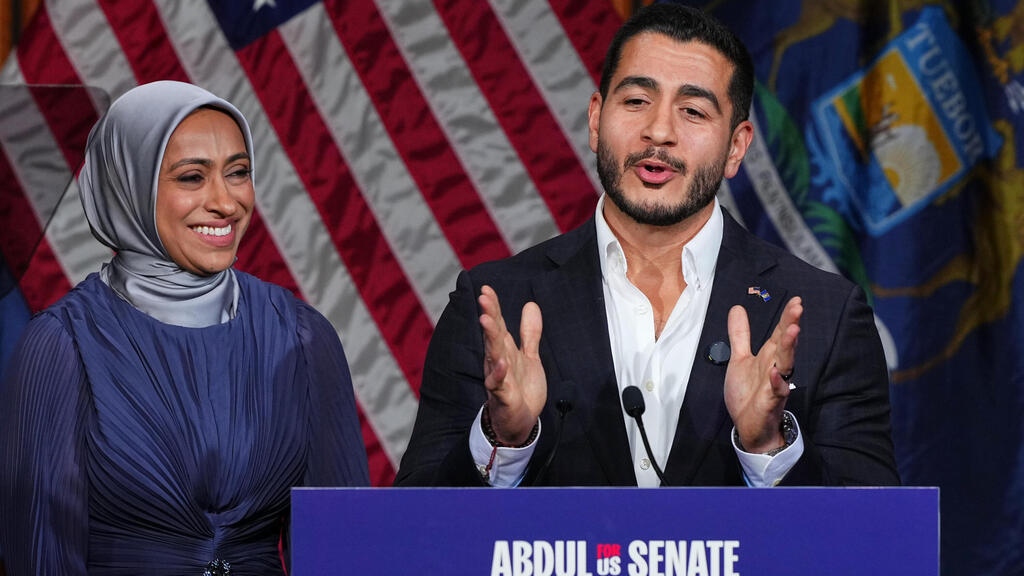
Abdul El-Sayed
(Photo: AP Photo/Julia Demaree Nikhinson)
Shapiro described El-Sayed as holding one of the most negative positions toward Israel in the party but emphasized that he represents only one voice within a much larger congressional caucus. "El-Sayed holds the most negative position toward Israel, but he is one senator, not the entire party," he said. "He will be more persuasive if Israel has the same leadership and the same policies, but less persuasive if things change."
The former ambassador also argued that the size of the Democrats' congressional majority could help moderate the party's approach to Israel. House Democratic leader Hakeem Jeffries, he said, would have greater flexibility because he would not need to rely exclusively on the party's most outspoken critics of Israel to advance legislation.
"The strong statements against Israel are not the majority position," Shapiro said. "Because Democrats have a large majority, Jeffries will have more flexibility, and they won't be able to dictate his policies. He doesn't have to depend only on radical votes."
Shapiro acknowledged that the party's progressive wing would retain influence but rejected the assumption that it would determine U.S. policy toward Israel on its own. "We don't need to be worried about the radicals. They will have a voice and influence, but they won't determine policy alone. Not now," he said.
For Israel, he concluded, the new political reality in Washington represents not only a serious challenge but also an opportunity. Whether relations continue to deteriorate or begin to recover will depend substantially on the decisions made in Jerusalem. "Here Israel has an opportunity to shape reality, not just react to it," he said.