

Iran’s Supreme Leader Ayatollah Ali Khamenei struck a defiant tone Friday as nationwide protests entered their second week, saying the Islamic Republic would not retreat from its principles despite mounting unrest and a particularly intense night of demonstrations across Tehran and other cities.
“The Islamic Republic will not retreat one millimeter from its principles,” Khamenei said, according to state media, after protesters again set fire to government buildings and symbols of the regime in multiple locations.
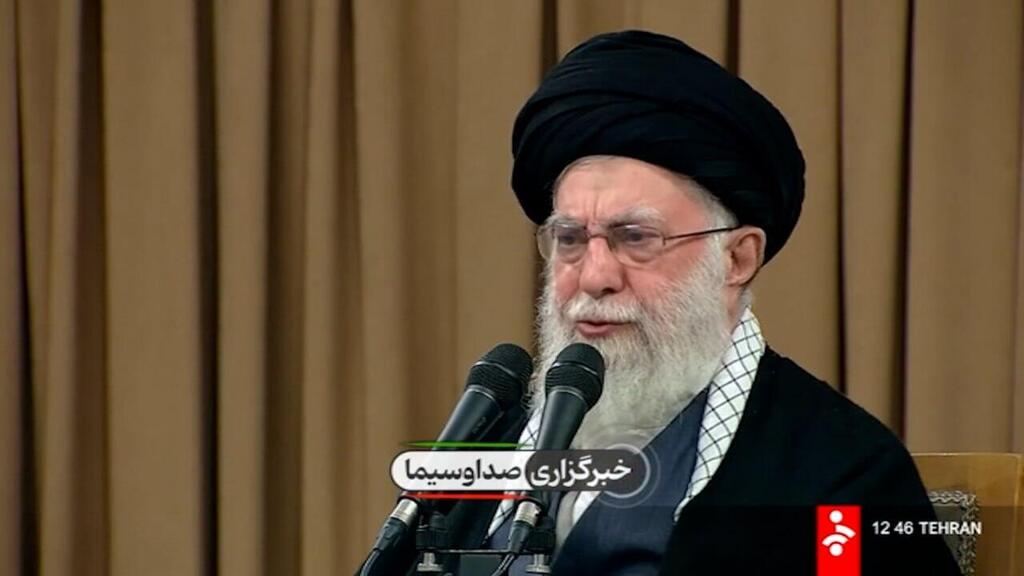
Addressing a gathering Friday morning, Khamenei called on young Iranians to remain united and vigilant. “Dear youth, preserve readiness and unity. A united nation will overcome any enemy,” he said. He also dismissed repeated warnings from U.S. President Donald Trump, saying Iran urged Trump to “focus on his country’s internal problems.”
Khamenei accused the United States of past violence against Iranians and warned foreign powers against interference. “Iran will not tolerate the presence of agents on its soil,” he said, adding that “the hands of America are stained with the blood of more than 1,000 Iranian leaders and innocent citizens.”
His remarks came as Iran remained largely cut off from the internet and phone services for more than half a day after authorities shut down communications in an apparent attempt to contain the protests. Flights from Dubai and Istanbul to Tehran and other Iranian cities were also canceled following the unrest.
In Israel, security officials are closely monitoring developments in Iran while avoiding any visible involvement. Israeli intelligence assessments indicate the protests are expanding both geographically and in the number of participants, but that Iran’s leadership is trying to contain the unrest without deploying its heaviest force. Officials believe the restraint reflects concern that a violent crackdown could further inflame public anger and provoke a response from Trump, who has warned of consequences if protesters are killed.
Protests in Iran


Israeli officials assess that the protests do not yet pose an immediate threat to the regime’s survival, but caution that the situation remains volatile. As unrest grows, so does concern in Israel over potential miscalculation, including the possibility that Iran could suspect Israel of exploiting the turmoil and respond with preemptive action. Israeli officials say messages have been conveyed emphasizing that Israel has no intention of intervening. While Iran has conducted military exercises, Israel has not detected imminent attack preparations, according to officials.
Iranian state television described the protests as an “anti-revolutionary plot to create chaos and insecurity,” claiming that only dozens or at most several hundred people gathered in parts of Tehran, contradicting widespread video footage. State media acknowledged extensive damage, reporting violence against public and private property, including vehicles, ambulances, emergency services, buses, metro stations, mosques, banks and shops.
A senior Iranian government official told The New York Times that officials have been urgently exchanging calls and messages, unsure how to halt the growing unrest. The official said the Revolutionary Guard, which typically focuses on external threats rather than internal security, is likely to take over handling the protests.
Videos circulating on social media showed government buildings and symbols of the regime set ablaze across the country, including in Tehran. Protests were largely calm in the early evening but escalated after nightfall, with demonstrators torching cars, buildings and street fixtures. Fires were reported near Kaj Square in Tehran, where thousands were seen in the streets. In Karaj, west of the capital, footage showed protesters fleeing after gunfire was heard.
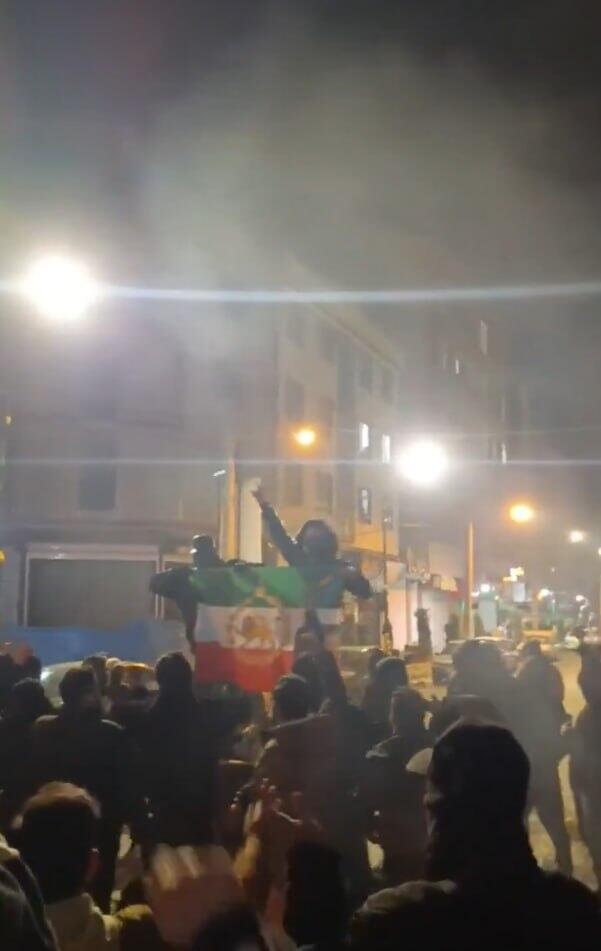
Protesters waving the old Persian flag in Tehran
The demonstrations intensified after Reza Pahlavi, the exiled crown prince and son of the shah overthrown in Iran’s 1979 Islamic Revolution, called on the public to take to the streets. Protesters were heard chanting, “This is the final battle, Pahlavi will return.” In some cities, demonstrators shouted “Long live the shah,” including in Khomein, the birthplace of Ayatollah Ruhollah Khomeini, founder of the Islamic Republic.
In a message posted Friday on X, Pahlavi praised protesters and urged more people to join. “I am proud of each and every one of you who took to the streets across Iran on Thursday night,” he wrote, claiming that large crowds forced security forces to retreat. He called on demonstrators to return to the streets despite the communications blackout.
The protests began nearly two weeks ago over economic hardship and the sharp decline of Iran’s currency, the rial. What started in Tehran’s Grand Bazaar spread to cities nationwide, with a marked escalation Thursday night. The London-based opposition outlet Iran International claimed that millions took part in demonstrations across the country.
The Norway-based group Iran Human Rights said at least 42 protesters have been killed during 12 days of unrest, with hundreds wounded and more than 2,270 people arrested. Iranian authorities and state media have reported at least 21 deaths, including members of the security forces.
Iranian President Masoud Pezeshkian said Thursday night that authorities should exercise restraint and avoid violence against demonstrators.