

U.S. Vice President JD Vance told The Washington Post during a flight back from an event in Wisconsin that even if Trump decides to strike Iran, there is “no chance” such action would lead to a prolonged U.S. war lasting years.
Vance said he did not know what Trump would ultimately decide but described options ranging from military strikes “to ensure Iran isn’t going to get a nuclear weapon” to resolving the issue through diplomacy.
Following the Geneva talks, a U.S. official said the discussions had been “positive,” adding that certain details were clarified during the second round. The next round is planned for Wednesday in Vienna at the technical level, without U.S. envoys Steve Witkoff and Jared Kushner or Iranian Foreign Minister Abbas Araghchi, the official said. “We continue working to produce an agreement,” the official added.
MSNBC reported that Oman’s foreign minister, Badr Albusaidi, who has mediated the talks, is scheduled to meet Friday in Washington with Vance and other U.S. officials in an effort to prevent a U.S. strike on Iran.
Araghchi also struck an optimistic tone after the Geneva round, saying, “We managed to achieve some positive things on sanctions and nuclear issues.” He said technical-level discussions would begin Monday and that negotiations on a potential agreement could continue next week. “Holding the technical round on Monday demonstrates the seriousness of both sides regarding the diplomatic process,” he said, adding that documents must be prepared before a fourth round of talks. He described the latest round as “the best and most serious,” while acknowledging that differences remain on some issues.
Meanwhile, the United States continues to bolster its military presence in the Middle East. The aircraft carrier USS Gerald R. Ford is expected to arrive near Haifa on Friday. The carrier’s air wing includes about 75 aircraft, including F-35C fighters as well as F-16 and F/A-18 jets. The vessel can generate up to 150 combat sorties per day, compared with about 120 on older carriers such as the USS Abraham Lincoln.
Vance said that if Trump opts for military action, it would not resemble the prolonged Middle East conflicts he has criticized in the past. “The idea that we’re going to be in a Middle Eastern war for years with no end in sight — there is no chance that will happen,” he told the Post.
He cited last year’s limited U.S. strike on Iranian nuclear facilities, dubbed Operation Midnight Hammer, and last month’s operation to capture Venezuelan President Nicolas Maduro as examples of clearly defined missions.

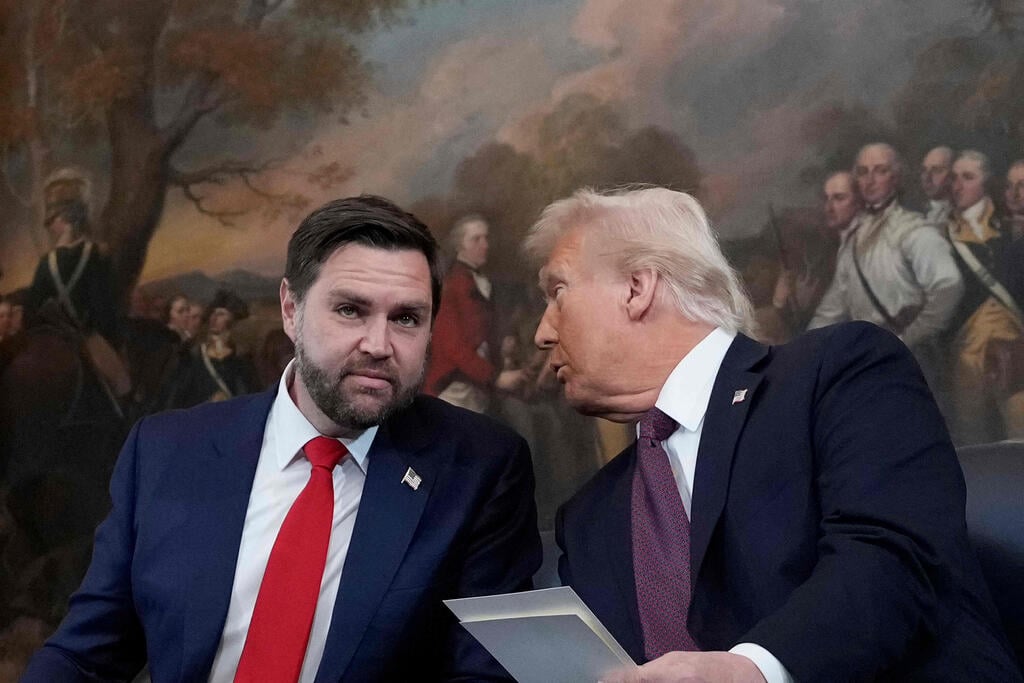
JD Vance
(Photo: Jacquelyn Martin/AP)
A 41-year-old Marine Corps veteran who served in Iraq, Vance has previously said he was misled about the reasons for U.S. involvement in that war. He told the Post he remains “skeptic of foreign military interventions,” a description he said also applies to Trump. “I think we all prefer the diplomatic option,” he said. “But it really depends on what the Iranians do and what they say.”
Trump has publicly said he favors regime change in Iran, telling reporters this month that it “would be the best thing that could happen.”
Asked whether, as a former Senate critic of the Iraq war, he imagined being part of an administration contemplating regime change abroad, Vance laughed. “Life has all kinds of crazy twists and turns,” he said. “But I think Donald Trump is an ‘America First’ president, and he pursues policies that work for the American people. I do think we have to avoid repeating the mistakes of the past. I also think that we have to avoid overlearning the lessons of the past. Just because one president screwed up a military conflict doesn’t mean we can never engage in military conflict again. We’ve got to be careful about it, but I think the president is being careful.”
In recent days, U.S. media have reported that Caine warned Trump about the potential costs of a prolonged campaign against Iran. The Wall Street Journal reported that despite optimistic public statements, the Geneva talks ended with significant gaps between the two sides on key issues.
U.S. envoys Witkoff and Kushner have said Iran must dismantle its three main nuclear sites — Fordow, Natanz and Isfahan — and, according to officials, demanded that Tehran transfer all remaining enriched uranium to the United States. Washington is also insisting that any nuclear agreement be permanent.
Iranian media and sources familiar with the talks have said Tehran rejected the idea of transferring its uranium stockpile abroad and opposes halting uranium enrichment, dismantling nuclear facilities or accepting permanent limits on its nuclear program.
Meanwhile, Reuters reported, citing three sources, that Trump's claim that Iran will soon have a missile that can hit the United States is not backed by U.S. intelligence reports, and appears to be exaggerated.
In his State of the Union address to Congress on Tuesday, Trump began making his case to the American public for why the U.S. could launch strikes against Iran, saying Tehran was working on missiles that will soon reach the United States.
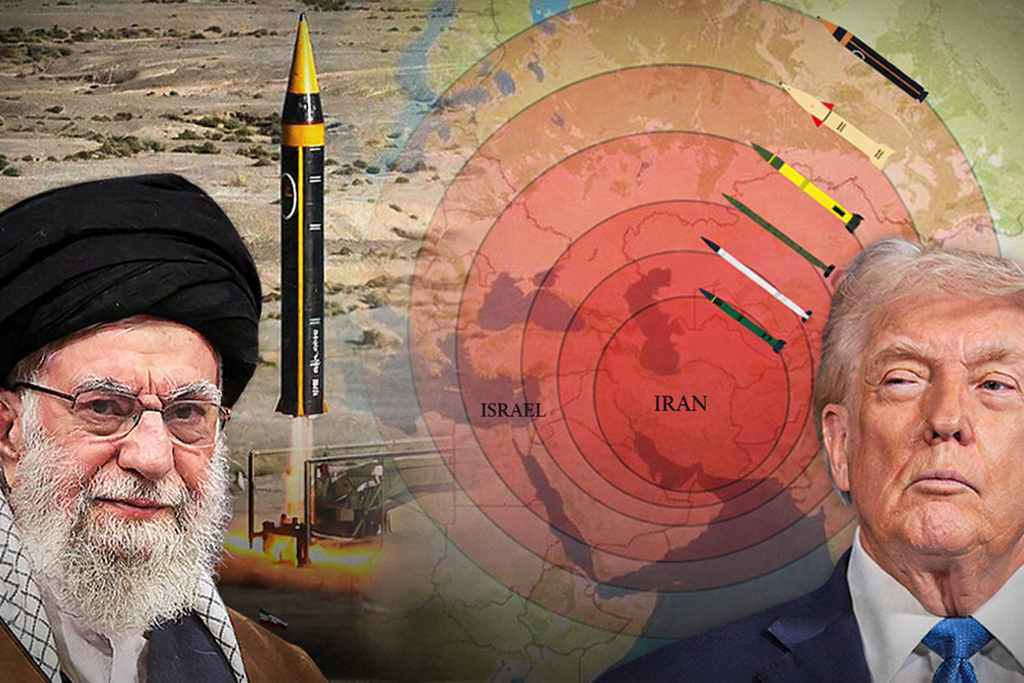
(Photo: REUTERS/Jonathan Ernst, KHAMENEI.IR/AFP)
But there have been no changes, two sources said, to an unclassified 2025 U.S. Defense Intelligence Agency assessment that Iran could take until 2035 to develop a "militarily viable intercontinental ballistic missile" (ICBM) from its existing satellite-lofting space-launch vehicles (SLV).
"President Trump is absolutely right to highlight the grave concern posed by Iran, a country that chants 'death to America,' possessing intercontinental ballistic missiles," said White House spokesperson Anna Kelly.
One source said that even if China or North Korea - which closely cooperate with Iran - provided technological assistance, Iran would probably take up to eight years at the earliest to produce "something that is actually ICBM level and operational."
The sources, who spoke on condition of anonymity in order to discuss sensitive intelligence, said they were unaware of any U.S. intelligence assessments that Iran was developing a missile that could soon range the U.S. homeland but did not rule out the possibility of a new intelligence report they were unaware of.
The New York Times first reported that U.S. intelligence agencies believe Iran is probably years away from having missiles that can hit the United States.
Rubio says Iran on 'pathway' to weapons that can reach US
Trump's claim about Iran's missile capability came as representatives from the U.S. and Iran negotiate over Tehran's nuclear program, with no signs of a breakthrough that could avert potential U.S. strikes amid a massive military buildup in the region.
The U.S. president has done little to explain publicly why he might be leading the U.S. into its most aggressive action against the Islamic Republic since its 1979 revolution.
In his address on Tuesday, Trump pointed to Tehran's support for terrorist groups, its killing of protesters and the country's missile and nuclear programs as threats to the region and the United States.
Without providing evidence, Trump said that Tehran was beginning to rebuild the nuclear program that he claimed had been "obliterated" by U.S. airstrikes last June on three major sites involved with uranium enrichment.
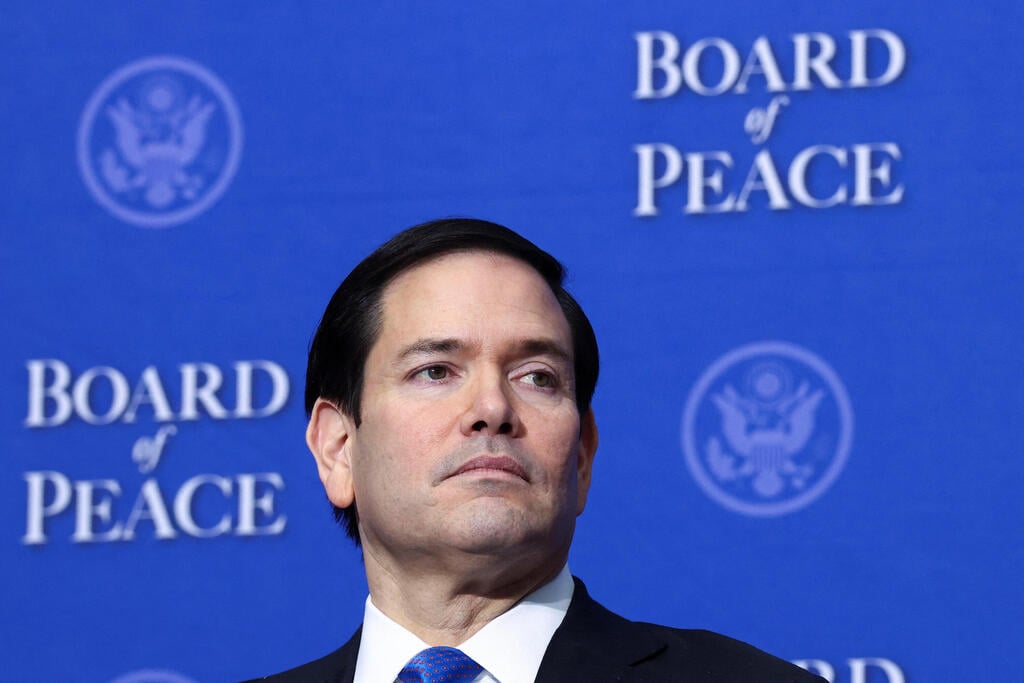
US Secretary of State Marco Rubio
(Photo: REUTERS/Kevin Lamarque)
U.S. Secretary of State Marco Rubio on Wednesday referred to Iran's ballistic missile program in less definitive terms than Trump, saying that Tehran is "on a pathway to one day being able to develop weapons that could reach the continental U.S."
Iran denies seeking a nuclear arsenal, saying its enrichment of uranium — a process that produces fuel for power plants and nuclear warheads depending on its duration — is strictly for civilian uses.
In an interview with India Today TV released on Wednesday, Iranian Foreign Minister Abbas Araghchi denied that Iran was expanding its missile capabilities.
"We are not developing long-range missiles. We have limited range to below 2000 kilometers intentionally," he said. "We don't want it to be a global threat. We only have (them) to defend ourselves. Our missiles build deterrence."
Weapons program shuttered in 2003, according to IAEA
The U.S. intelligence community and the International Atomic Energy Agency (IAEA), the UN nuclear watchdog, have said that Iran shuttered a nuclear weapons development program in 2003.
But according to the IAEA, Tehran has in recent years continued enriching uranium, including to near weapons-grade.
Trump has threatened to attack Iran if it executes people arrested during nationwide anti-government protests in January or fails to agree a deal on its nuclear program in talks with the U.S.
Iran has the largest ballistic missile force in the Middle East, with its missiles able to strike Israel, U.S. bases in the region and parts of Europe.
It has also developed so-called space-launch vehicles that have put satellites into orbit and that experts say could be modified into ICBMs that could loft nuclear warheads.
While SLVs loft satellites, ICBMs release re-entry vehicles that protect warheads from the high temperatures and forces produced by hurtling down through the Earth's atmosphere.
But David Albright, a former UN nuclear inspector, said Iran was a long way away from being able to mount atop a missile a nuclear warhead-carrying re-entry vehicle that could survive the extreme heat and forces of plunging through Earth's atmosphere.
"Iran can launch a very long-range missile because of its space launch program," said Albright, the president of the Institute for Science and International Security think tank. "But it needs lots of work to develop an adequate RV (re-entry vehicle)."
Albright and other experts noted that Israeli airstrikes last year and in 2024 had badly damaged key facilities where Tehran produces liquid- and solid-fuel ballistic missiles.
Hours after a third round of talks between the U.S. and Iran concluded in Geneva, ABC News reported late Thursday that the commander of U.S. Central Command, Adm. Brad Cooper, briefed Trump on military options regarding Iran.
The report, citing a person close to the president and another familiar with the briefing, said Chairman of the Joint Chiefs of Staff Gen. Dan Caine also took part. Sources told ABC that a joint U.S.-Israeli operation against Iran remains under consideration.