


President Donald Trump on Wednesday blamed the Republican Party's sweeping midterm election defeat partly on the war with Iran and its impact on fuel prices, while insisting that his absence from the ballot was a major reason Democrats captured control of both the Senate and the House of Representatives. Trump also warned that he would use his presidential veto to block Democratic legislation, sharing an image of a red baseball cap bearing the word "VETO."
"Iran was a piece of it," Trump said in a telephone interview with The Wall Street Journal when asked whether the war had contributed to Republicans' poor election performance. However, he defended his decision to launch the military campaign, saying he had done the right thing and would make the same decision again. According to the newspaper, Trump viewed the surge in oil and gasoline prices, rather than the war itself, as the most politically damaging consequence.
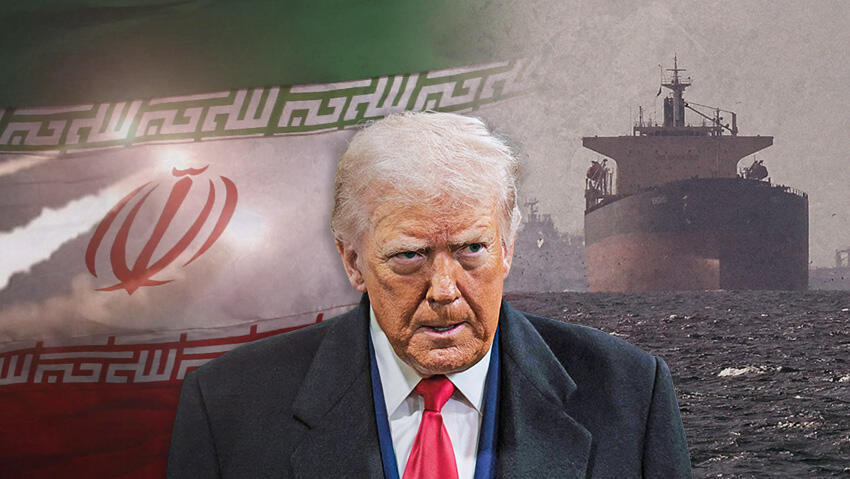
(Photo: Anna Moneymaker/AFP, shutterstock, REUTERS/Stringer)
In a separate interview with CBS News, Trump congratulated Democrats on their victories. "My message is, congratulations to the Democrats," he said, expressing his willingness to work with the opposition for the good of the country. He also indicated that he did not expect to make changes to his Cabinet following the defeat.
Nevertheless, Trump maintained that many Republican candidates had lost because he was not personally running. "I feel that I wasn't on the ballot," he told CBS. "If I was, we would have won." The argument contrasted sharply with his repeated appeals throughout the midterm campaign, when he urged Republican voters to imagine that his name was on the ballot and vote as though they were voting for him.
Trump also told The New York Times that he was willing to accept the election results and expected to reach agreements with Democrats. Asked about his endorsement of Republican Sen. Darline Graham, who lost her South Carolina race to Democrat Annie Andrews, he expressed surprise at the outcome and questioned how her late brother, longtime Sen. Lindsey Graham, might have performed had he been the candidate. Trump said he did not regret supporting her.
Trump's veto warning to Democrats
The Democrats completed a sweeping "blue wave" in Tuesday's midterm elections, capturing Republican-held Senate seats and congressional districts across traditionally conservative parts of the country. Their control of both chambers will allow them to significantly restrict Trump's legislative agenda during the remaining two years of his presidency, potentially turning him into a lame-duck president with limited ability to pass major legislation.
Trump, however, signaled that he had no intention of allowing Democrats to dictate policy. "I have the ultimate power — it's called 'veto,'" he told CBS News in an interview conducted before polls closed Tuesday. He suggested that repeatedly rejecting Democratic legislation could eventually force the opposition into negotiations. The president reinforced that message after the election by posting the image of the red "VETO" cap and warning that he would reject Democratic proposals he considered extreme.
In the final month of the campaign, Trump embarked on an intensive effort to prevent Republicans from losing control of the Senate, holding rallies in traditionally conservative states where he had won commanding victories in the 2024 presidential election. The fact that he was forced to campaign so aggressively in Republican strongholds underscored his party's increasingly defensive position. His central message was a warning that the "radical left" could take control of Washington and consolidate its power ahead of the 2028 presidential election.
Trump argued that Democrats could cement their influence through changes to the Supreme Court and by granting statehood to Washington, D.C., and Puerto Rico, measures he said could strengthen the party's position in the Senate for years to come. But the warnings failed to resonate sufficiently with voters increasingly concerned about the cost of living, inflation and gasoline prices, which have remained elevated during the war with Iran.
Fuel prices and inflation overshadow Trump's message
Throughout the campaign, Trump repeatedly defended the economic consequences of the Iran war, describing higher fuel prices as a small price to pay for preventing Tehran from obtaining nuclear weapons. He also continued to portray the U.S. economy in overwhelmingly positive terms, even as inflation remained a major concern for American households.
In an interview with Fox News on Election Day, Trump declared that "inflation is solved," despite consumer prices continuing to rise at a rate above the Federal Reserve's 2% target. Annual inflation was projected to reach approximately 3.7% in 2026, underscoring the gap between the president's optimistic economic messaging and the financial pressures facing voters.
The election results suggested that Trump's warnings about Democratic control of Congress had failed to outweigh economic concerns, particularly the consequences of the war with Iran. Although Trump acknowledged that the conflict had contributed to the Republican losses, he continued to defend his decision to launch it and made clear that he intended to use the powers of the presidency to resist Democratic efforts to reverse his policies.