

As polls close across the United States in Tuesday's midterm elections, the countdown to a possible renewed war with Iran is beginning again. President Donald Trump has repeatedly signaled that he would not resume military action before the vote, but the U.S. military has spent the intervening months reinforcing its presence in the Middle East, preparing attack plans and positioning forces for a possible return to combat.
According to a report published Tuesday by The New York Times, U.S. Central Command has prepared plans that could allow American forces to strike Iran as early as Wednesday, immediately after the elections, with three aircraft carriers deployed in the region. The existence of those plans does not mean Trump has decided to attack. Diplomats are still trying to reach an agreement with Tehran, and the president has previously called off operations that appeared close to being launched.
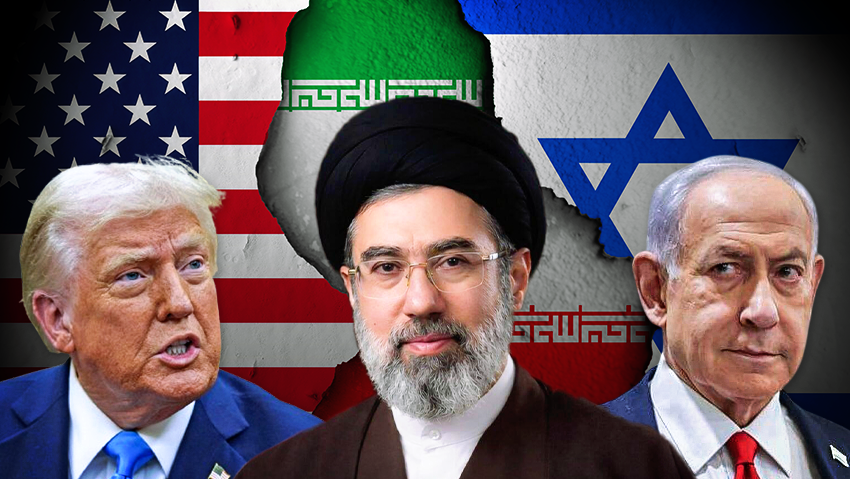
But if negotiations collapse, the next confrontation could erupt at an exceptionally sensitive moment for both Washington and Jerusalem. Trump is awaiting an election that could weaken his standing in Congress, while Israel is struggling to form a government following an inconclusive election, confronting allegations of foreign interference in the vote and absorbing Trump's unexpected announcement that American military assistance will end.
Trump's window for war opens as Washington awaits election results
The American military buildup has accelerated in recent weeks, with additional refueling aircraft, cargo planes and surveillance assets arriving in the region. The combination of operational preparations and ongoing diplomatic negotiations closely resembles the period preceding the previous round of fighting with Iran.
Trump has recently emphasized that Iran does not want nuclear weapons and would prefer an agreement. Reports have suggested some movement in negotiations, but no breakthrough capable of resolving the dispute. For now, the president retains the option of ordering strikes or continuing to pursue a diplomatic settlement.
The political environment in Washington could become more difficult if Democrats gain control of both the House of Representatives and the Senate. Even with Republicans controlling Congress, Trump has struggled to secure broad support for the war. In June, four Republican senators joined a vote calling for an end to the fighting.
Democratic lawmakers have promised to challenge any renewed military campaign, but their ability to intervene would face significant limitations. The newly elected Congress will not take office until January 3, leaving Trump several weeks to act under the current congressional balance of power. The president also retains substantial authority over military operations and foreign policy, making it difficult for lawmakers to halt fighting once it begins.
War preparations as Israel struggles to form a government
Israel also is preparing for the possibility of renewed hostilities. The IDF is maintaining what military officials have described as maximum readiness for both defensive and offensive operations, while Chief of Staff Lt. Gen. Eyal Zamir continues security consultations. According to reports, Zamir opposed launching an operation before the U.S. elections.
Netanyahu has not convened the security Cabinet or the full government over the latest developments and has not appeared publicly since Israel's elections last week.
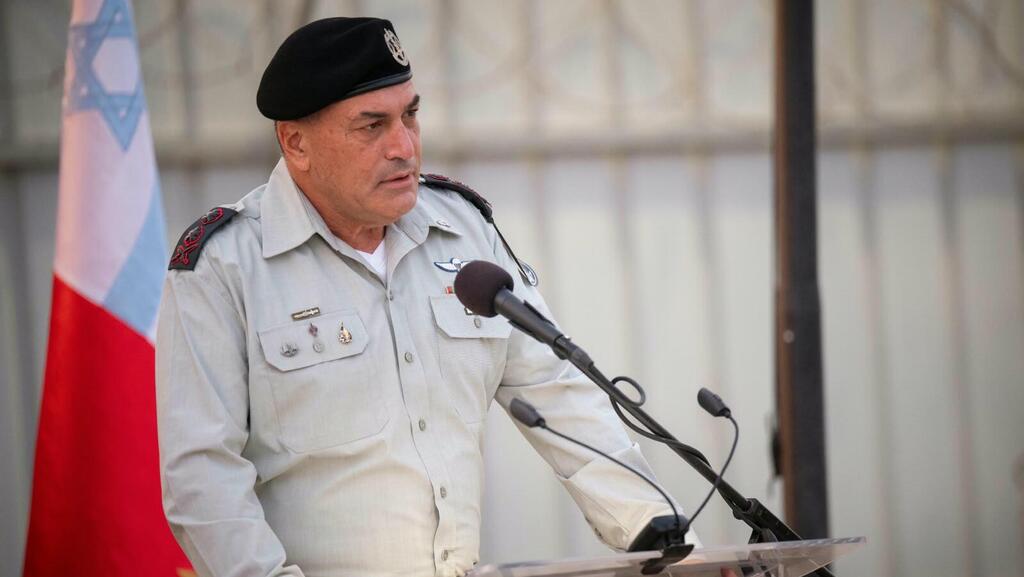
IDF Chief of Staff Lt. Gen. Eyal Zamir
(Photo: IDF)
Beginning Wednesday, representatives of the parties elected to the 26th Knesset will meet President Isaac Herzog to recommend who should be entrusted with forming the next government. Yashar! chairman Gadi Eisenkot is expected to receive more recommendations than Netanyahu, although his political bloc has yet to explain how it intends to establish a government without the support of Arab parties or United Torah Judaism.
Opposition leaders have nevertheless said they intend to use their parliamentary strength to advance measures even before a new government is formed. These include replacing Knesset Speaker Amir Ohana, appointing a new state comptroller and repealing legislation they describe as anti-democratic.
A renewed war is not expected to halt the consultations at the President's Residence. Officials are preparing alternative secure locations if necessary, while the Knesset has previously continued operating under emergency arrangements during wartime. Political efforts to change the balance of power could therefore proceed even as the military confrontation unfolds.
Election interference allegations fuel another crisis
Complicating matters further is an intensifying dispute over allegations of foreign interference in Israel's elections. Shin Bet chief David Zini is reportedly at odds with Attorney General Gali Baharav-Miara over the powers investigators should be permitted to use when examining suspicions that money from Qatar and Turkey financed improper attempts to influence voters.
According to reports, Zini has sought authorization to question senior Arab political figures, including Ra'am chairman Mansour Abbas, Balad leader Sami Abu Shehadeh and Ta'al leader Ahmad Tibi, along with another senior Arab lawmaker whose name cannot be published. Baharav-Miara has insisted that investigators present evidence establishing the grounds for such questioning before granting approval.

Shin Bet Chief David Zini
(Photo: Shalev Shalom)
Zini also reportedly has sought to classify the entire investigation as a potential national security case, allowing the Shin Bet to use expanded investigative powers. The attorney general has objected, arguing that such measures cannot be authorized without evidence supporting suspicions of security offenses.
Crucially, Central Elections Committee Chairman Justice Noam Sohlberg and the Shin Bet have indicated that the allegations do not concern falsification of the election results and are not expected to alter them.
Despite that distinction, coalition lawmakers have demanded a delay in publication of the official results, while opposition politicians have accused them of attempting to undermine the legitimacy of Arab voters.
Sohlberg has maintained that the results will be published as scheduled, although legal appeals could follow. Baharav-Miara has publicly warned against investigating citizens or elected officials without evidence. Eisenkot also has cautioned against using the authority of state institutions for political purposes.
The dispute has created another flashpoint at a time when Israel's leadership is facing the possibility of a major security emergency.
A new war amid a deepening US-Israel rift
The domestic turmoil coincides with a particularly difficult period in Israel's relationship with Washington. According to The New York Times, Israel recently passed intelligence to the United States warning that Iran might use chemical weapons against its adversaries.
The information divided American officials. Some regarded the threat as serious, while others questioned the intelligence and suspected Netanyahu's government was attempting to persuade Trump to resume major combat operations. The newspaper also cited analysts who suggested Netanyahu could seek to use a security emergency to encourage opposition leaders to join his government. These assessments remain disputed interpretations rather than established findings.
Trump: Netanyahu and I agreed to end US aid to Israel by the end of 2026
(Video: Fox News )


On Tuesday, Trump added another source of uncertainty by announcing that the United States would end its approximately $4 billion in annual military assistance to Israel at the close of 2026, despite an existing funding agreement scheduled to run through 2028. Trump said the decision had been discussed with Netanyahu, although the precise arrangements for implementing the change remain unclear.
The announcement also carried a domestic political message. In his Fox News interview, Trump complained that Democrats were using American assistance to Israel as an example of unfair government spending, even though much of that funding is used to purchase American-made weapons and equipment.
Trump specifically linked the issue to the Senate race in Michigan, where Republican Mike Rogers is competing against progressive Democrat Abdul El-Sayed, a vocal critic of Israel. CNN also reported assessments that the timing of the announcement was intended to benefit Rogers.
Trump's campaign subsequently highlighted the decision on X under the slogan "America First."
The development illustrates the extent to which support for Israel has become politically contentious in the United States. A new war with Iran would begin against that backdrop, with Netanyahu facing uncertainty over his political future and Trump seeking to reconcile military objectives with domestic electoral pressures.
Iran's demands and Qatar's efforts to prevent renewed fighting
Despite the military preparations, mediators are continuing efforts to avert another escalation. Qatar has been working to narrow the differences between Washington and Tehran, although Iranian officials have publicly played down suggestions of meaningful progress.
Iranian military officials have outlined extensive conditions for ending the conflict. They include a cessation of fighting on all fronts, particularly in Lebanon and Gaza; the complete lifting of sanctions; the release of frozen Iranian assets; compensation for wartime damage; and recognition of Iranian sovereignty over the Strait of Hormuz.
Tehran is also demanding that the American security framework in the Persian Gulf be replaced with a regional arrangement it calls the "Hormuz mechanism," alongside guarantees against future military action and broader regional security agreements.

Strait of Hormuz
(Photo: Reuters/Stringer)
Washington rejects Iranian sovereignty over the Strait of Hormuz and is demanding the surrender of enriched uranium and an end to nuclear activities on Iranian territory. These remain major obstacles to an agreement.
Iranian Foreign Ministry spokesman Esmaeil Baghaei said that restoring regional security would be impossible unless Tehran's conditions were met. He described an end to the fighting across all fronts, including Lebanon, as a fundamental requirement and said Iran was fully prepared to defend itself against further attacks.
Mohsen Rezaei, secretary of Iran's Supreme National Security Council, also dismissed the American response to Tehran's demands as insufficient. He insisted that Washington provide explicit commitments to Iran's conditions before the Strait of Hormuz could reopen.
Qatari Foreign Ministry spokesman Majed al-Ansari, meanwhile, said efforts to bridge the differences were continuing. Mediators remain in contact with both sides, even as the threat of military escalation hangs over the negotiations.
The Qatari newspaper Al-Araby Al-Jadeed reported that a possible arrangement under discussion would involve Iran announcing a concession related to its nuclear program while Washington simultaneously announces the release of some frozen Iranian assets. According to the report, negotiations are continuing over how such an agreement would be presented.
For now, diplomacy and military preparations are proceeding simultaneously. Trump has not announced a final decision, but the conclusion of the U.S. midterms removes the electoral deadline that had restrained the possibility of renewed attacks.
Whether the next development comes from the negotiating table or the battlefield, it could arrive while Israel is still determining who will lead its next government and while relations between Jerusalem and Washington are undergoing one of their most consequential tests in years.