


Israel reportedly launched a new wave of airstrikes across Iran on Monday, targeting strategic and symbolic sites including the Fordow nuclear facility, a state television technical building and Tehran’s notorious Evin Prison, according to Iranian media and regional reports.
The strikes come more than a day after the United States carried out its own unprecedented assault on Iran’s nuclear infrastructure. Following the U.S. attack, Rafael Grossi, head of the International Atomic Energy Agency (IAEA), said “very significant damage” is expected at the Fordow site, which is built deep into a mountain near Qom and is one of Iran’s most heavily fortified nuclear facilities. Grossi also warned Iran that any transfer of nuclear material between safeguarded facilities must be reported to the IAEA.
Gallery
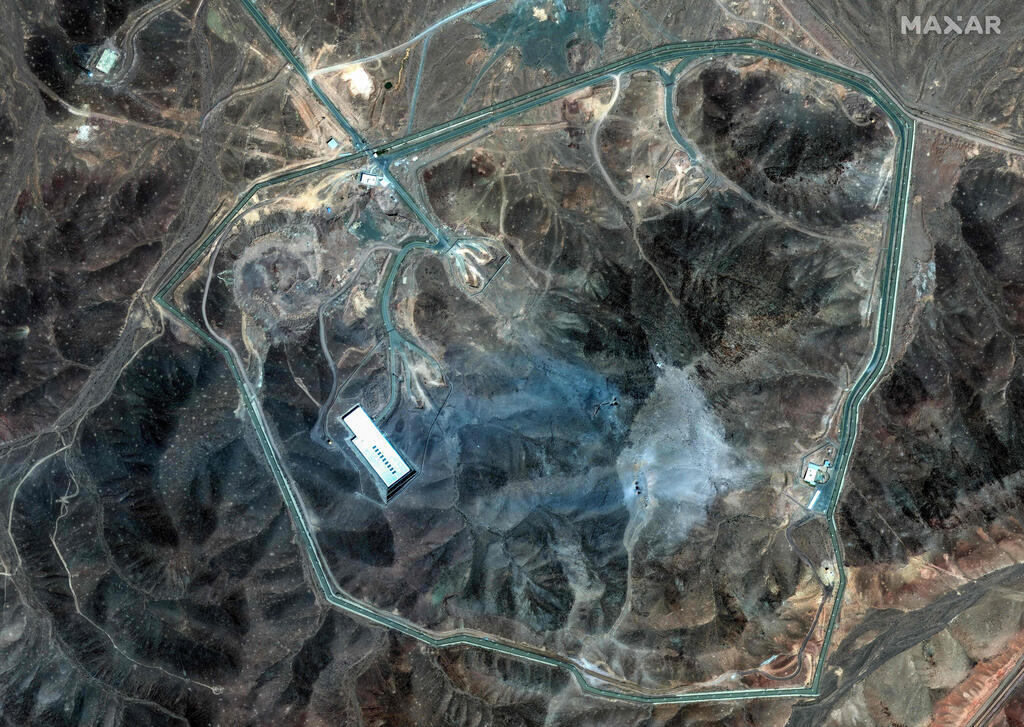
Iran's nuclear facility in Fordow after US strikes
(Photo: AFP PHOTO/ SATELLITE IMAGE ©2025 MAXAR TECHNOLOGIES)
Israeli airstrikes also reportedly hit targets in Tehran and Karaj, with Reuters reporting “loud explosions” in the capital. Iran’s ILNA news agency confirmed that a technical building belonging to the state broadcaster was struck as the feed was cut.
Additionally, Iran claimed Israeli warplanes hit Evin Prison, a site long associated with the detention of political prisoners and Western-linked detainees. Originally constructed in 1971 under the Shah’s regime, Evin continued to serve as a detention center for dissidents after the 1979 Islamic Revolution. Though nominally run by Iran’s prison authority, several units inside the facility are reportedly operated by the Islamic Revolutionary Guard Corps (IRGC), which answers directly to Supreme Leader Ayatollah Ali Khamenei.
Israeli warplanes hit the entrace to Tehran's Evin Prison


Evin Prison has been under U.S. and EU sanctions for documented human rights abuses. It drew renewed attention after the 2009 post-election protests in Iran, when many demonstrators were detained there. Despite parliamentary efforts to reform the prison, including the installation of CCTV cameras, rights groups say conditions have remained harsh.
Earlier, Iran launched consecutive missile barrages at Israel on Monday. The last salvo followed more than 30 minutes of earlier fire that had stretched from the northern border to the southern Negev, marking one of the most intense and widespread assaults of the war.
According to the IDF, five separate barrages of missiles were launched from Iran, each consisting of several projectiles. The military said that most of the missiles were intercepted by air defenses.
Iranian missile crashes in northern Israel
The Magen David Adom national emergency medical service reported receiving initial calls about missile impacts in the Lachish region of central Israel, in the Upper Galilee in the north and in the Negev desert in the south. There were no reports of injuries connected to missile fire, though 10 people were reportedly hurt while running for shelter.
The Home Front Command has authorized residents across the country to exit protected spaces and urged the public to remain alert and continue following official instructions.
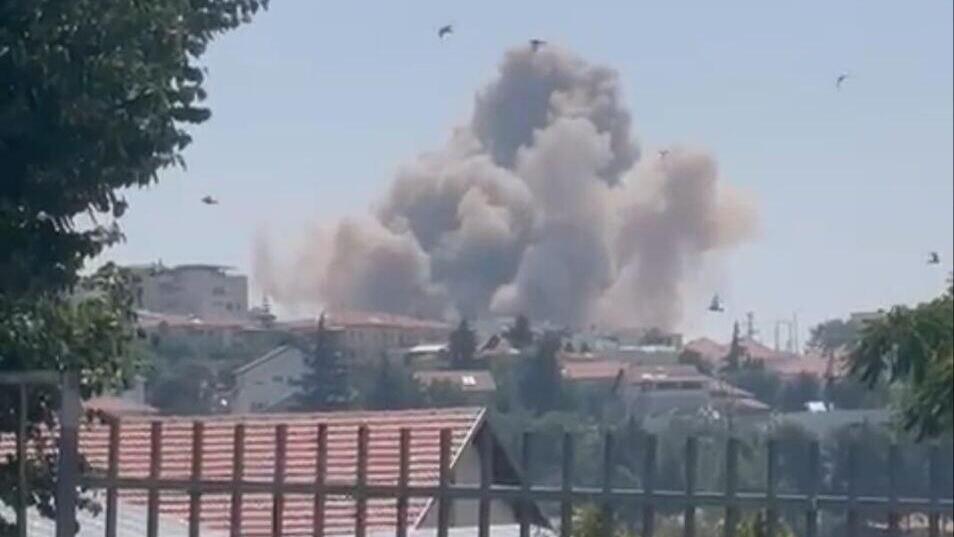
Missile impact in northern Israel
Separately, sirens sounded in Kibbutz Nahal Oz near the Gaza Strip border, which the IDF ruled to be a false alarm.
Earlier, the military said that Israeli drones destroyed 15 Iranian fighter jets and helicopters in coordinated overnight strikes on six separate airfields across western, eastern and central Iran.
According to the IDF, the targets included Iranian regime aircraft stationed at the bases, among them F-14 and F-5 fighter jets and AH-1 attack helicopters. An aerial refueling aircraft was also hit. The strikes damaged runways, underground hangars and additional infrastructure, the military said.
Israeli Air Force drones attack 6 Iranian airfields
(Video: IDF)
The unmanned aerial vehicles, operated by the Israeli Air Force, were used to disable aircraft reportedly designated for use against Israeli operations in Iranian airspace. “The Air Force disrupted the takeoff capabilities at these airports and impaired the Iranian military’s ability to launch aerial operations from them,” the IDF said in a statement.
The operation came amid continued Israeli airstrikes on Iranian military assets. Around 20 Israeli fighter jets launched more than 30 precision munitions overnight targeting military installations in western Iran and the capital, Tehran.
In Kermanshah, aircraft struck missile storage and launch sites, satellites and radar installations. In central Tehran, a 3rd Khordad surface-to-air missile launcher was destroyed. The IDF reported that it carried out an additional round of strikes in Kermanshah Monday morning, with over 15 Israeli fighter jets striking missile launch and storage sites.
Iranian air defenses triggered over Tehran
The air defense system destroyed in the heart of the Iranian capital is considered significant due to the sensitive asset it was meant to protect. The Israeli Air Force had been tracking the system for an extended period, and the exact location of the battery, which had been concealed in a storage facility and not yet deployed, was confirmed overnight.
The battery is considered one of the most advanced in Iran’s air defense arsenal. Looking ahead, the continued targeting of Iranian air defense radars is aimed at preserving the aerial superiority already achieved over Iranian airspace, in anticipation of a possible conclusion to Operation Rising Lion in the coming days.
Get the Ynetnews app on your smartphone: Google Play: https://bit.ly/4eJ37pE | Apple App Store: https://bit.ly/3ZL7iNv
Iran’s Tasnim news agency reported that 10 Islamic Revolutionary Guard Corps soldiers were killed in a separate Israeli strike in Yazd Province in central Iran on Sunday.
Alleged Israeli drone downed in western Iran
Meanwhile, Iranian state media released footage allegedly showing a downed Israeli drone, identified as a Hermes UAV, in Khorramabad in western Iran. The IDF later confirmed the loss of a remotely piloted aircraft during an operational mission over Iranian territory. The military emphasized there was “no risk of information leakage” from the drone.
Tensions remained high as a ballistic missile was launched from Iran toward central Israel overnight. The IDF said it intercepted the missile successfully. No injuries or damage were reported, according to the Magen David Adom national emergency service.