


U.S. President Donald Trump told aides in closed-door talks that he would consider ending the ceasefire with Iran and returning to combat if Tehran kills American troops, the Wall Street Journal reported overnight between Wednesday and Thursday, citing U.S. officials. The officials stressed that for now the pause is holding, despite frequent exchanges of fire in the Gulf, including mutual strikes between the U.S. and Iran, which has also attacked its neighbors.
On Wednesday evening, while signing an executive order easing the firing of federal employees, Trump said of talks with Iran that they are “going very well” and that a deal could happen over the weekend. He stressed: “They've already agreed they're not going to have a nuclear weapon.” He claimed that says the Strait of Hormuz will reopen “immediately upon signing” an agreement with Tehran" and also addressed the exchange of fire: “You know, there's a reason for everything. And we hit them pretty hard the night before, and actually last night.” Regarding the ceasefire, he said: “In this part of the world, a ceasefire means people are shooting at each other a little less.”
Gallery
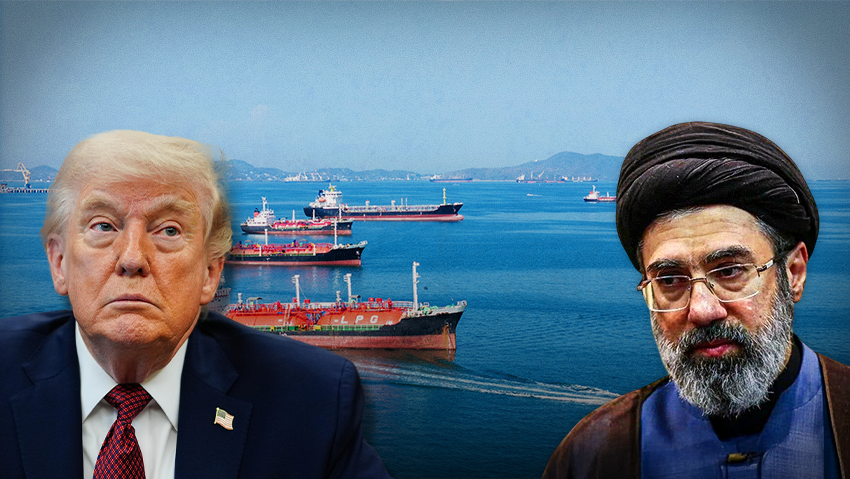
U.S. President Donald Trump would consider ending the ceasefire with Iran if Tehran kills American troops
(Photo: Anna Moneymaker / AFP, CENTCOM, shutterstock)
However, American officials said the repeated attacks have increased pressure on Trump and raised doubts about the long-term viability of the ceasefire. A White House official stressed that Trump prefers to handle Iran’s nuclear program through diplomacy but has been clear about his red lines.
Meanwhile, overnight the House of Representatives approved a resolution requiring Trump to withdraw U.S. forces from the Iran region or obtain congressional approval to continue the military campaign. The vote passed 215 to 208, after four Republican lawmakers joined Democrats in supporting the move.
The resolution has no binding legal force that would lead to an immediate withdrawal of forces, since such legislation requires either the president’s signature or a two-thirds majority in both chambers of Congress to override a veto. Still, U.S. media noted the move is intended to increase political pressure on the president, amid a war now in its fourth month despite the ceasefire.
In Tehran, officials insist on financial compensation in the initial stage of any agreement.
In recent days it has not even been clear whether the sides are continuing negotiations. Trump says talks are ongoing and this week claimed the ceasefire could be extended next week, without specifying whether he meant a full framework agreement or only an extension of the truce. Tehran, however, has recently denied that talks are taking place at all, saying there are “no exchanges of messages with the United States.” The Iranian news agency Tasnim, which is close to the regime, also reported that “Iran has suspended exchanges of messages via intermediaries,” blaming alleged Israeli violations in Lebanon.

In Tehran, officials insist on financial compensation in the initial stage of any agreement.
(Photo: Majid Asgaripour/WANA (West Asia News Agency) via REUTERS)
On the negotiations, CNN reported overnight that one of the main remaining points of contention is Iran’s demand for compensation funds following the war. A U.S. official said Trump is determined to secure a deal that would be seen as superior to the agreement reached under former president Barack Obama.
According to the report, Iran has told mediators it wants frozen funds released in some form once the sides sign an initial memorandum of understanding. The U.S. official said Tehran is seeking payment at the earliest stage of the deal and is unwilling to delay the issue to a later phase. Senior officials in the Trump administration, however, are concerned that early financial concessions could reduce the economic pressure on Iran, weakening or even eliminating Washington’s main leverage over Tehran.