



Heavy Israeli airstrikes pounded Gaza City on Monday night after consecutive days of demolishing high-rise buildings and as hundreds of thousands of residents continued fleeing southward, Palestinian media reported. Minutes later, witnesses said Israeli tanks appeared on al-Jalaa Street in the city center, sparking a mass flight of civilians from the area.
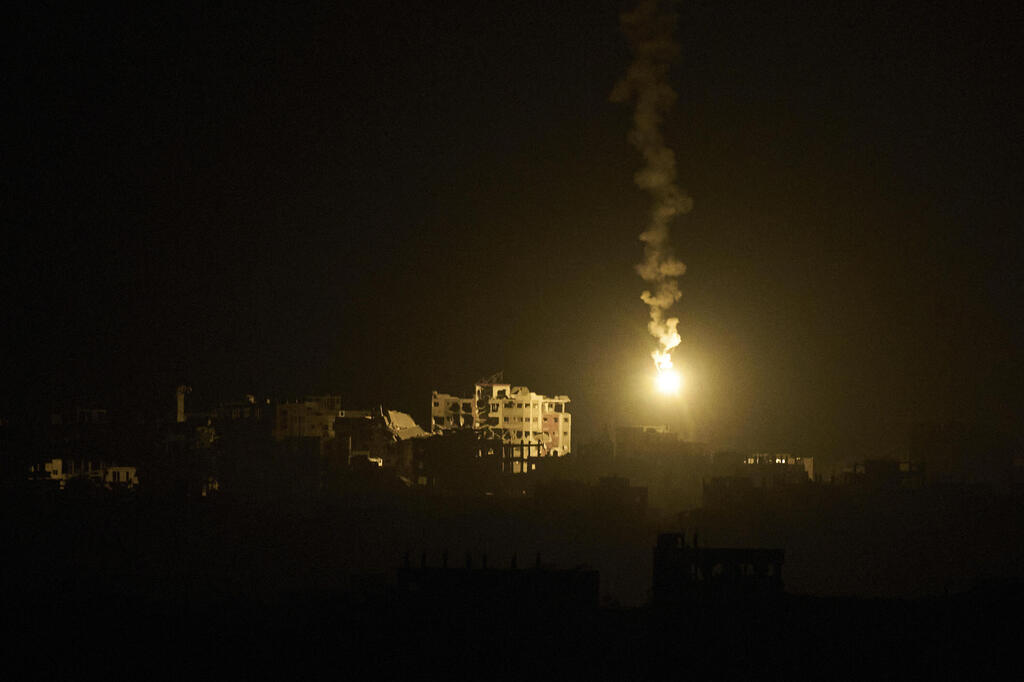
Palestinians described a “belt of fire” stretching across the city’s northwest, with footage circulating online showing Israeli forces firing illumination rounds and carrying out artillery barrages in northern Gaza. According to Gaza-based media, 37 strikes were launched within 20 minutes, some from combat helicopters. Around 10 p.m., loud blasts from the bombardment were felt in central Israel and the Sharon region.
Heavy Israeli airstrikes in northwestern Gaza City


Palestinian reports said the strikes focused on three main areas: Sheikh Radwan, al-Karama and Tel al-Hawa along the coast. Residents said the military was using “booby-trapped robots” in some neighborhoods while Apache helicopters hovered over the city, firing repeatedly.
Displacement accelerated overnight as thousands fled northwest Gaza toward the coast and further south. “The road south is very crowded, traffic is slow, many families are struggling to find transport and prices have surged sharply,” residents reported.
Fatma, a woman displaced from Gaza City, criticized Arab leaders for holding summits without stopping the fighting. “While Arab leaders meet in luxury, the occupation continues to bomb Gaza relentlessly, ignoring summits and condemnations. Gaza is bleeding, in pain, exhausted — where are you to stand with us in deeds, not words?” she said.
Anas, another displaced resident, described it as “a hellish night — every kind of bombardment, every kind of weapon fire from the Israeli army on Gaza City.”
Gallery
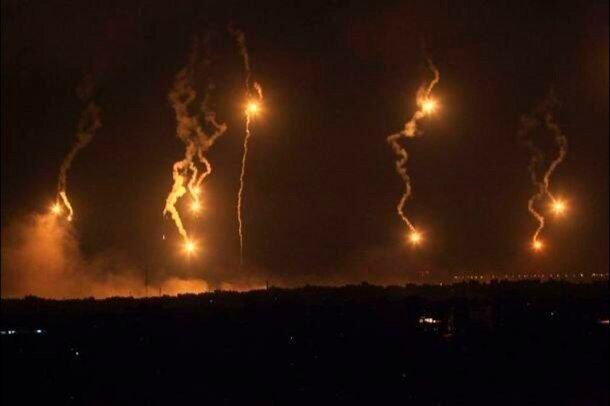
Israeli forces fire illumination flares over northern Gaza during overnight operations, Sept. 15, 2025
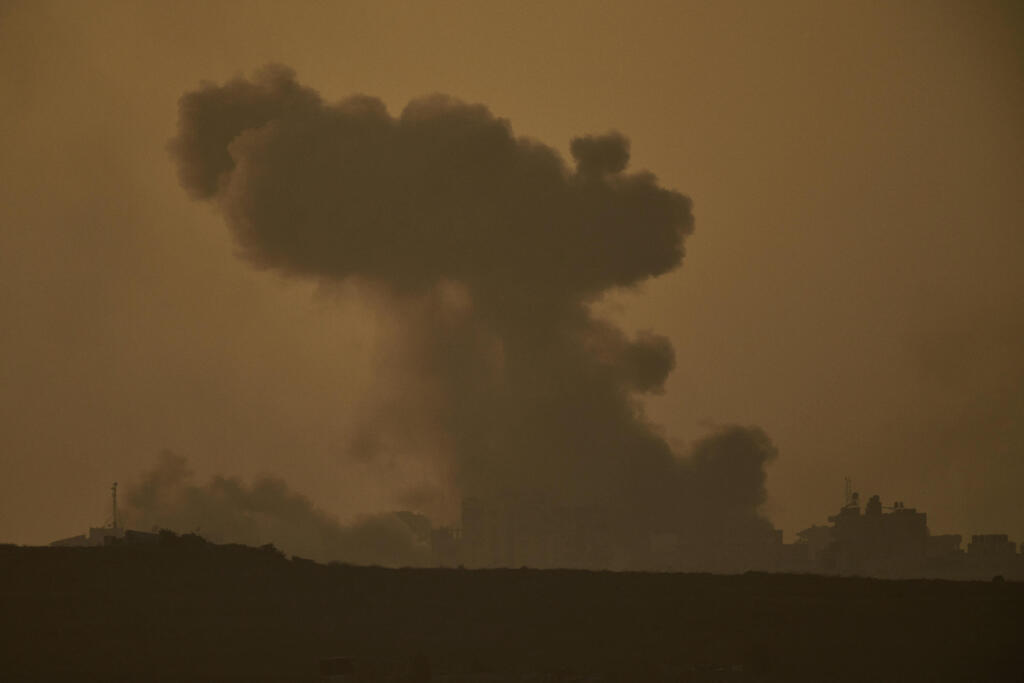
(Photo: AP/Leo Correa)
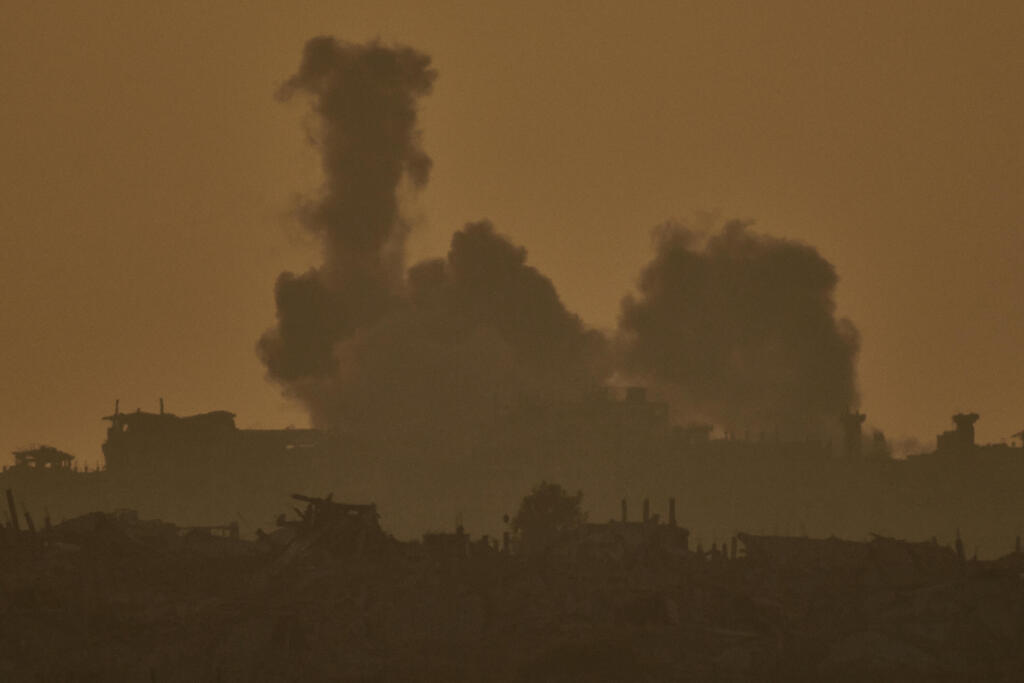
(Photo: AP/Leo Correa)
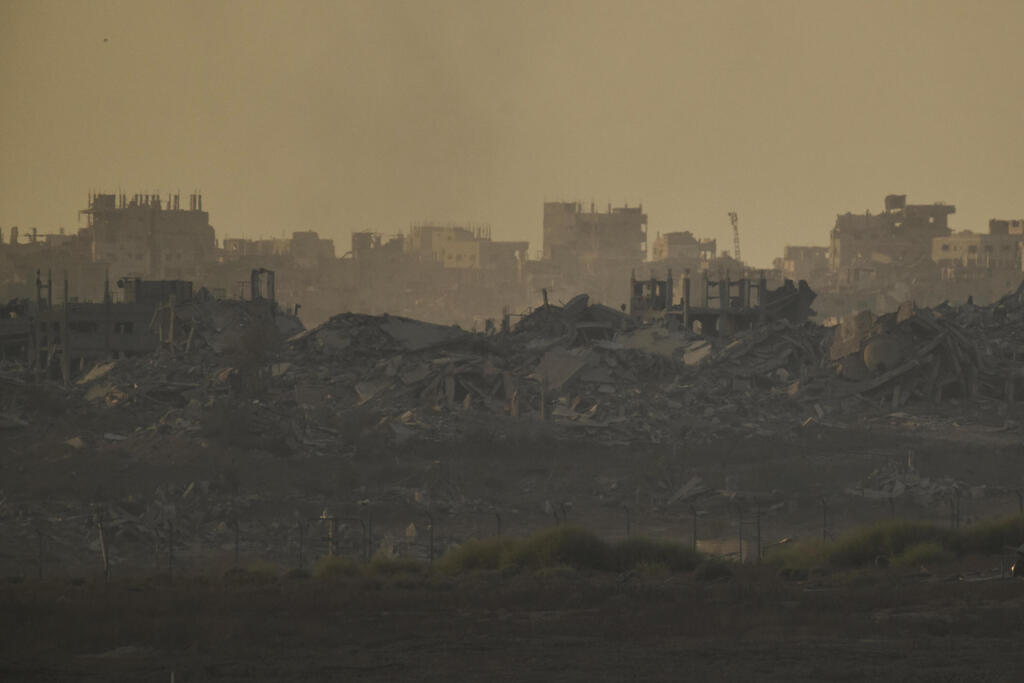
(Photo: AP/Leo Correa)
(Photo: AP/Leo Correa)
The escalation came as a stormy meeting in the Prime Minister’s Office in Jerusalem exposed sharp divisions between the political leadership and top military commanders over the looming operation in Gaza and stalled negotiations for a hostage deal.
According to sources familiar with the discussions, Prime Minister Benjamin Netanyahu opened the meeting with a scolding, waving newspaper clippings quoting senior officers — including remarks attributed to IDF Chief of Staff Lt. Gen. Eyal Zamir — voicing reservations about the ground maneuver. “What is this? Stop briefing against the operation,” Netanyahu said. “This is not an army with a state, but a state with an army.” He did not name Zamir directly.
National Security Minister Itamar Ben-Gvir pressed Zamir for a response. “I don’t know of any briefings,” the army chief replied.
Zamir went on to voice strong concerns about the risks the operation could pose to the 48 hostages still held in Gaza, warning their danger would increase during the assault. While pledging that the military would try to minimize the risks, he urged urgent diplomatic efforts. Turning to Mossad chief David Barnea and Strategic Affairs Minister Ron Dermer, Zamir demanded: “Why isn’t the negotiating team traveling the world right now to force a deal? Why are we always dependent on others? Why is [Barnea] sitting here? Go bring a deal!”
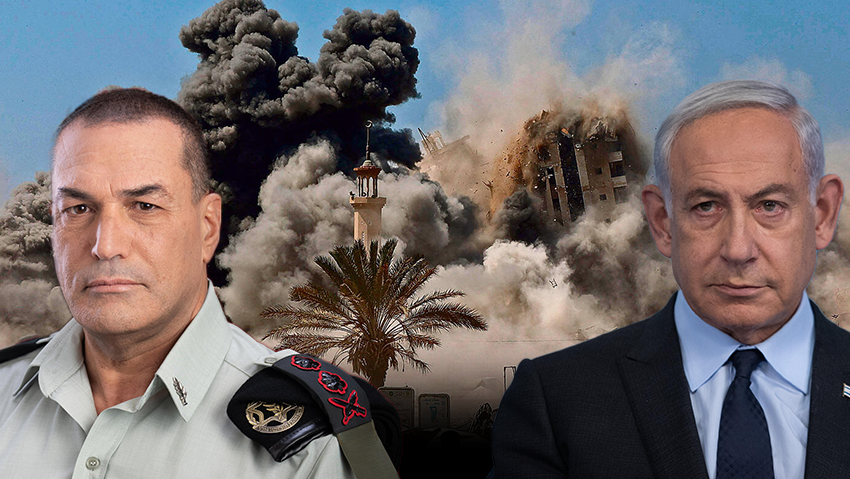
IDF Chief of Staff Lt. Gen. Eyal Zamir, Prime Minister Benjamin Netanyahu
(Photo: IDF, Alex Kolomoisky, OMAR AL-QATTAA)
He then raised his voice at Netanyahu, saying: “Exhaust the talks for a deal!”
Dermer shot back that Zamir’s assessments were wrong. “You’re talking about things you don’t understand. You don’t understand diplomacy. In the end, everything happened despite your instructions. Only because we didn’t listen to you is there a deal on the table.” Zamir retorted: “So take it!”
Dermer said Hamas remained interested in negotiations despite Israel’s attempted strike on its leadership in Qatar and insisted that Doha still wanted to mediate.
During the meeting, Zamir also estimated that an assault to capture Gaza City could result in dozens of Israeli soldiers being killed, though he avoided giving precise figures. Netanyahu countered that most assessments showed a ground offensive would intensify pressure on Hamas and could bring the war closer to a decisive outcome.
IDF airstrike on Gaza City high-rise building
Following reports of the heated exchange, a political official defended Netanyahu, saying: “Thanks to the prime minister’s correct decisions, 207 hostages have already been freed, and he is determined to bring them all home. During last night’s meeting, he emphasized that briefings and leaks from security discussions endanger our forces and harm the effort to free the hostages, and must stop immediately.”
On Tuesday morning, the Hostages and Missing Families Forum requested an urgent meeting with Zamir after his warnings to the Knesset Intelligence Subcommittee about the risks of the planned operation, dubbed Operation Gideon's Chariots II. In a letter, the families expressed deep fears for their loved ones, warning that the assault could result in the deaths of living hostages or the loss of remains of those already killed.
First published: 22:02, 09.15.25