


The announcements by Britain, Canada and Australia recognizing a Palestinian state Sunday are only the opening salvo of a planned wave of recognitions starting Monday alongside the U.N. General Assembly — and on Sunday night Portugal joined them, announcing its recognition as well.
Meanwhile France, which is driving the recognition initiative together with Saudi Arabia, is planning another wave and is counting on the possibility that Israel might decide to annex parts of Judea and Samaria — though Jerusalem has not yet made a decision and, as Prime Minister Benjamin Netanyahu said, that decision will be taken later.
Gallery

The prime ministers of the four countries that recognized a Palestinian state on Sunday
(Photos: AAP/Lukas Coch via Reuters, Andrej Ivanov/Getty Images North America/AFP, Justin Tallis/AFP, Phil Noble/Reuters, Luis Vieira/AP )
So what is the practical meaning of the recognition, was the move welcomed inside Britain, Canada and Australia, and who will be next? Ynet sorts it out.
How many countries have already recognized a Palestinian state?
With today’s decisions by four countries, the number of states that have announced recognition of a Palestinian state now stands at 152.
Who will be next?
Later this week another six to eight countries are expected to recognize a Palestinian state during the U.N. General Assembly. Those are expected to include France, Belgium, Malta, San Marino, Andorra and Luxembourg. Two other countries are uncertain: New Zealand-which usually follows Australia’s lead, and Finland.
What is the practical meaning of recognition?
In principle, recognition now has more symbolic than practical effect. In the records of countries that have already recognized a Palestinian state the name has been changed to “Palestine,” but for the time being no embassies from Canada, Australia or Britain are expected to open in Ramallah.
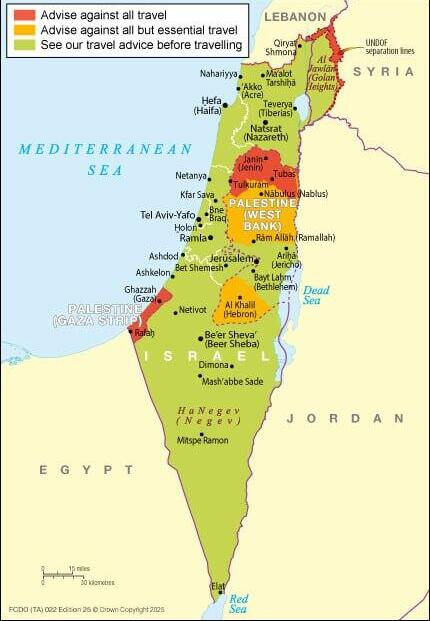
Britain's new Israel map
Beyond that, despite the declarations, the State of Palestine — as defined at the U.N. — will not automatically become a full U.N. member. To gain full membership, the Palestinians must obtain at least nine positive votes in the Security Council and avoid a veto from any of the permanent members. The U.S. would almost certainly veto any such attempt if the Palestinians try.
Are more countries expected to recognize?
Under French President Emmanuel Macron’s initiative, France plans to try to recruit additional countries — with an emphasis on East Asia. The French intend to bring Japan, South Korea and Singapore on board. The French believe that, if Israel annexes Judea and Samaria or parts of them, Germany might also join if it finds Israel’s actions intolerable. Germany has said it will not accept annexation and has even hinted that that could push it toward recognition.
How does Israel plan to respond?
Jerusalem has not yet made a final decision on how to respond. Several options remain on the table, foremost among them annexation of the Jordan Valley — a move that Netanyahu’s close associate Ron Dermer said could pass with relative ease in the U.S., even among some Democrats. The range of possible Israeli responses stretches from total restraint — which seems unlikely — up to full annexation of Judea and Samaria, which also seems unlikely. Netanyahu does not want to jeopardize the Abraham Accords, and Trump is unlikely to let him destroy that legacy.
When will there be a response?
Despite calls from Yesha Council figures and ministers Itamar Ben-Gvir and Bezalel Smotrich for an immediate reply, Prime Minister Netanyahu removed the option of an immediate response from the table today. “The answer to the latest attempt to force a terrorist state on us, in the heart of our country, will be given after I return from the U.S. Wait,” he said in a video message.
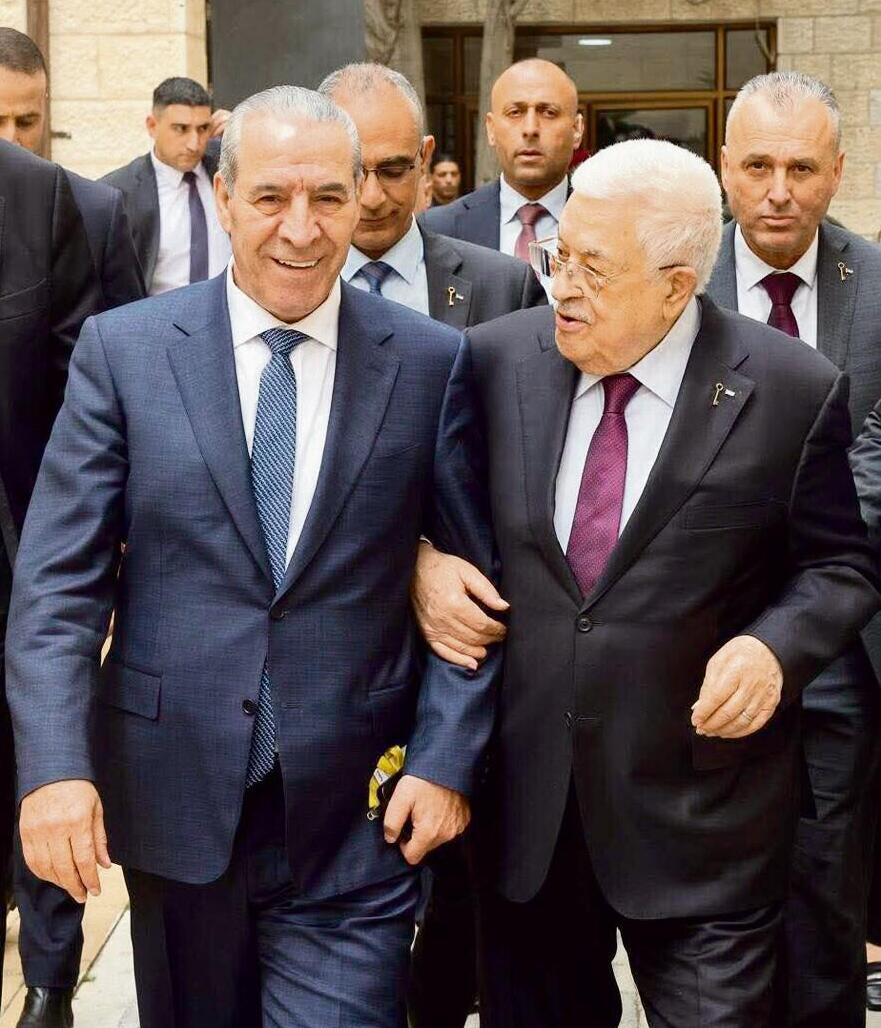
Hussein al-Sheikh and his political godfather Mahmoud Abbas
Was the step welcomed in Canada, Australia and Britain?
No. In Britain the left welcomed Prime Minister Keir Starmer’s move, but Nigel Farage, leader of the right-wing Reform UK, called it “a reward for Hamas terrorists.” Conservative Party leader and opposition figure Rishi Sunak’s successor Kemi Badenoch called the move “a disaster, simply a disaster. A reward for terror, with no conditions set for Hamas. It leaves the hostages to perish in Gaza.” A pre-announcement poll in Britain found nine out of 10 Britons oppose unconditional recognition.
In Australia Prime Minister Anthony Albanese (Labor) was attacked mainly from the right. Opposition leader and Liberal Party head Susan Ley said recognition should follow a peace process — not occur amid conflict. “The Albanese government offered an empty gesture of false hope to the Palestinian people — and a chilling concession to the Israeli people, rewarding Hamas terrorists who still aspire to Israel’s destruction,” she said.
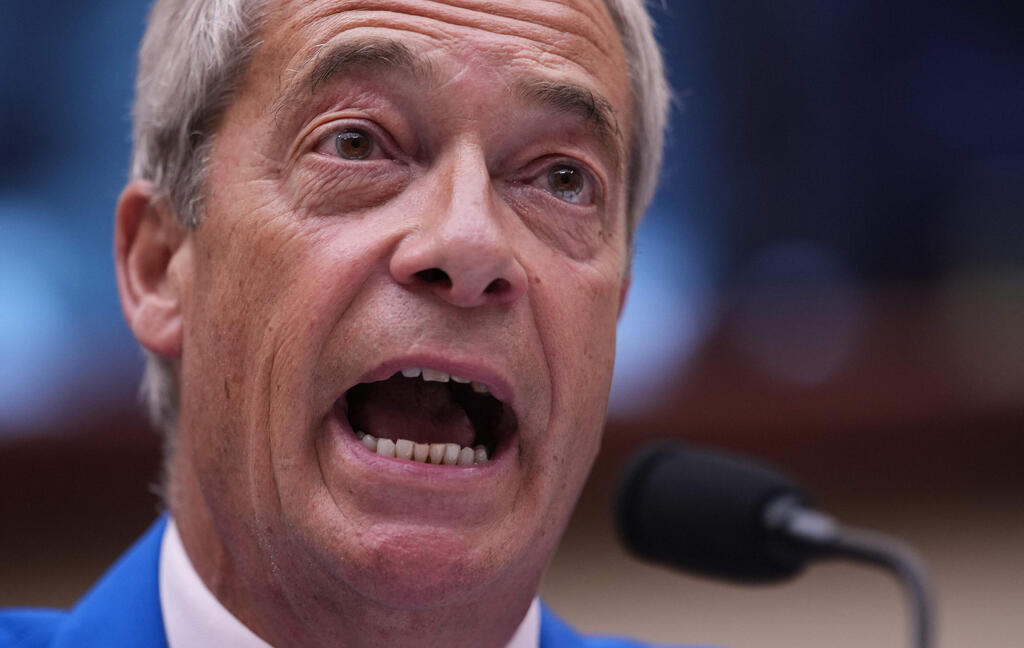
t Nigel Farage, leader of the right-wing Reform UK
(Photo: Kevin Dietsch / Getty Images North America/ AFP)
In Canada not everyone welcomed Prime Minister Mark Carney’s decision. “He recognizes a Hamas state in an effort to distract from crime, debt, immigration and lost jobs,” Conservative opposition leader Pierre Poilievre wrote. “Carney’s priority is the creation of a Hamas state that will reward terrorists for rape of civilians, kidnapping, repression of Palestinians and starting wars. Conservatives support Israel’s right to exist and defend itself, and would support living alongside a future demilitarized, democratic and peaceful Palestinian state.”
What did Mahmoud Abbas give in return?
Australia and Canada said they required reforms from the Palestinian Authority as preconditions for their recognition. After Ramallah agreed, Canberra and Ottawa moved forward. According to Australia’s statement, Abbas was required to acknowledge Israel’s right to exist and to commit to holding democratic Palestinian Authority elections by 2026. He was also to commit to economic, governance and educational reforms. Australia made clear that Hamas would have no role in the future Palestinian state.

French President Emmanuel Macron
(Photo: Sarah Meyssonnier/Reuters)
Canada likewise cited reforms the PA agreed to, but did not detail them. Last week Canadian Foreign Minister Anita Anand said Ottawa demands the release of all hostages, the demilitarization of Hamas so it will play no role in future governance, and unspecified democratic reforms. Both countries said any further upgrade in relations — such as opening embassies — will depend on the PA carrying out the promised reforms.
How did the Palestinians react?
In Ramallah the Palestinian leadership welcomed the recognition by Britain, Australia and Canada, and Hamas also reacted positively. A PA official even called the decision “a Palestinian Balfour Declaration.” Jamal Nazzal, a Fatah spokesman, told Ynet: “We are against Hamas and against what happened on Oct. 7. But they [Israel] say there is no difference between Fatah and Hamas because they don’t want peace. We call for a Palestinian state alongside Israel, not instead of Israel. This is a blow to Hamas’ plan.”
Nazzal added that even if Israel tries to weaken the PA in response to the international recognition, Fatah’s stance is to “maintain a political, peaceful and stable path while preserving Palestinian sovereignty and the legal meaning of the ’67 borders.’”
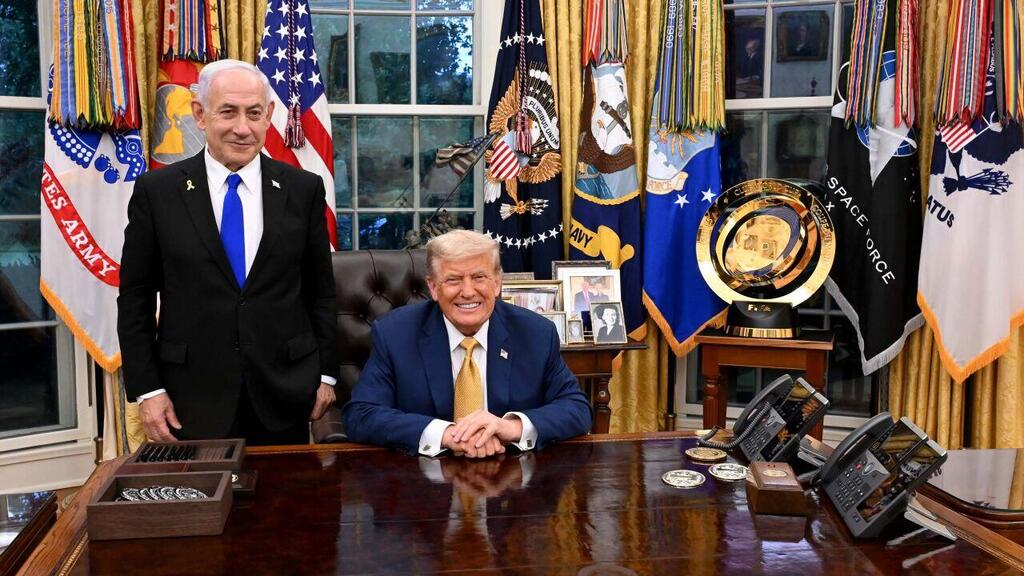
Benjamin Netanyahu meets with US President Donald Trump at the White House
(Photo: Avi Ohayon/GPO)
Nasser al-Khaim, a senior PLO official close to Abbas, said that although Israel typically responds to recognition moves with military steps and settlement expansion, Israel has “suffered an unprecedented failure on the international and Arab stage.”
“The historical reality remains — there is no alternative but political solution,” he said. “Right-wing ministers can install a thousand iron gates at the entrances to the towns and villages in the West Bank.”
Are special measures expected vis-à-vis France, the initiative’s leader?
Israel has already sent messages to the French that it will take harsh diplomatic steps. One option under consideration is closing the French consulate in Jerusalem, which handles ties with the Palestinians. The French said they would not tolerate such a step. French media also discussed possible reciprocal actions such as expulsions of Israeli diplomats and curbing Mossad’s representation in Paris.
A senior French diplomat told the media Sunday night: “We have conveyed to Israel messages that it would be unwise to respond harshly. With all due respect, Israel is a small country and France is a powerhouse. Our capacity to hurt you is greater than your capacity to hurt us. Anyone who thinks Trump will let Netanyahu run wild and decide on annexation and destroy the Abraham Accords is mistaken. Trump does not work for Bibi.”
How will the U.S. behave?
The biggest question mark is what green light Trump will give. Netanyahu is expected to raise the issue with the U.S. president during their meeting on the sidelines of the U.N. General Assembly. If the U.S. president vetoes annexation, Netanyahu will find it very hard to proceed. But Trump could give a green light for strong diplomatic steps against France, since the Americans dislike Macron and would not shed a tear if Israel punished the French — a move that could spark a series of reciprocal diplomatic blows. In any case, the dilemma is difficult.