

A day after Prime Minister Benjamin Netanyahu, a delegation of senior Saudi officials arrived at the White House on Wednesday morning with a message for U.S. President Donald Trump. Saudi Defense Minister Khalid bin Salman, who according to CNN arrived in Washington for an unplanned visit, conveyed to Trump and Vice President JD Vance a message from his brother, Crown Prince Mohammed bin Salman, that Saudi Arabia is interested in reducing escalation with Iran. According to people familiar with the talks, bin Salman told the president that continuing the fighting carries significant risks.
According to Israeli officials who spoke with the American network, when Netanyahu entered through the same door the previous day, he presented Trump with the opposite message and expressed doubt that diplomatic efforts with Iran would produce results. Instead, the officials said, the two discussed options for increasing pressure on Iran, including the possibility of renewing a large-scale war.
Gallery
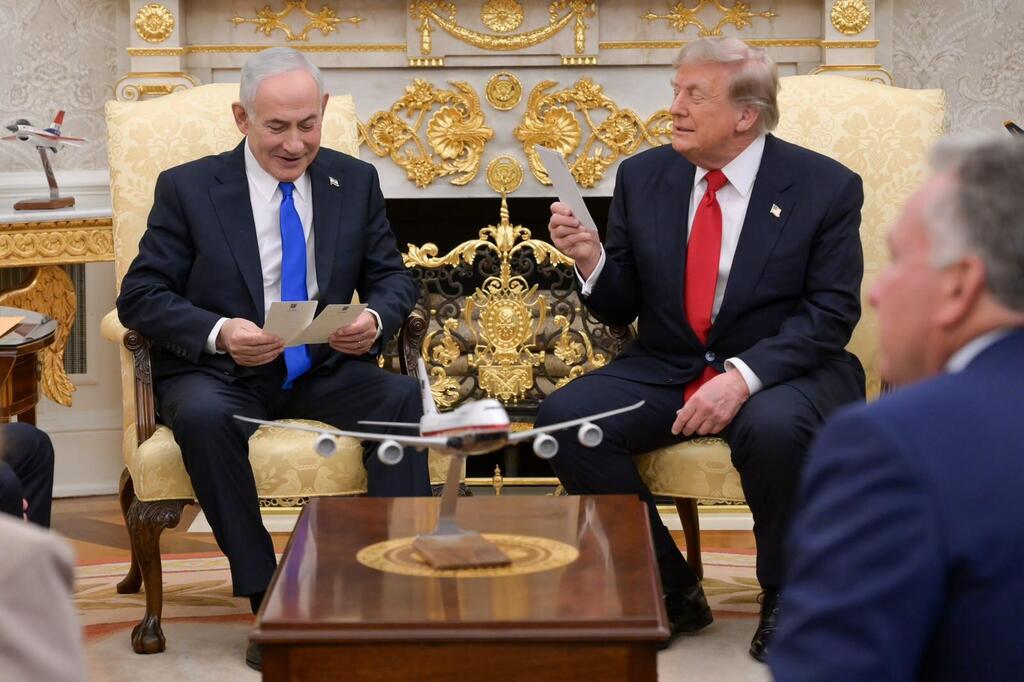
A day after Prime Minister Benjamin Netanyahu, a delegation of senior Saudi officials arrived at the White House on Wednesday morning with a message for US President Donald Trump
(Photo: Maayan Toaf/GPO)
The meetings were scheduled one after another by chance, but they illustrate the dilemma facing Trump, who is trying to end the war before it causes him further political damage ahead of the November midterm elections. Within the Republican Party, some are calling for a resumption of the fighting, but the most prominent voices are pushing to end a chapter that has lasted far longer than originally planned.
Meanwhile, additional fronts are opening, and most countries in the region appear to be involved in the confrontation to one degree or another. Diplomatic efforts are barely taking place, and a senior U.S. official told CNN that a resumption of direct contacts with Iran does not appear likely in the near future.
'There is no solution in a textbook'
At Trump’s meeting with Netanyahu this week, which was also attended by Steve Witkoff and other senior officials, the prime minister expressed doubt that diplomacy with Iran would succeed and explicitly told Trump so, according to Israeli officials familiar with the details. Instead, the two discussed various options for increasing pressure on Iran, including intensifying military strikes and increasing economic pressure. One official said Netanyahu made clear to Trump that the American president is the final decision-maker, in an attempt to refute claims that Israel is trying to push him toward renewing the war.
“We are talking about what needs to be done — there is no solution that appears in a textbook,” an Israeli official who attended the meeting said afterward.
The next day, the Saudi envoy arrived at the White House and presented the kingdom’s position regarding the conflict. The visit by Prince Khalid, a close confidant of the crown prince and Saudi Arabia’s de facto ruler, was brief after originally being scheduled for the previous week. He left Washington shortly after departing the White House.
Despite joint U.S.-Saudi operations this week against Iran-backed militias in Iraq, Saudi Arabia remains interested in reducing escalation. The Saudi defense minister conveyed that message to Vice President Vance, according to people familiar with the conversation. They said the Saudi military action was intended to make clear that the kingdom would defend itself and that attacks on its civilian infrastructure are a red line that would not go unanswered. It was also intended to send a message to Iran’s proxies that this is not their war.
According to the same sources, Saudi Arabia believes Iran will try to create leverage for itself through escalation and will continue using pro-Iranian militias in Iraq and Yemen for that purpose. “The minister’s central message was that Netanyahu is the one pushing for this escalation, while the kingdom is interested in reducing escalation,” a source familiar with the conversation told CNN.
CNN reported that it was unclear exactly what conclusions Trump drew from the meetings, but hours later he claimed that the expanding confrontation, which now also involves new actors such as Egypt and Saudi Arabia, would soon be resolved. “It's going to be straightening out,” Trump said on Wednesday, later hinting at another round of retaliatory strikes: “t’s our turn, and we’ll see if we get there with an agreement at some point. But we’re going to hit them very hard.”
Meanwhile, U.S. officials who spoke with The Wall Street Journal said that for weeks, behind closed doors, Trump had told his advisers that the Iranians were “crazy.” They said he also complained to associates that the temporary peace agreement had ultimately been meaningless and that he had always known it would not work.
Behind the scenes, the Journal reported, Gulf states are becoming increasingly frustrated by what they see as the absence of a clear U.S. strategy as the war drags on, leaving their territory exposed to frequent Iranian attacks. Gulf allies, the officials added, have in recent weeks asked the United States for additional air-defense interceptors and continued guarantees that the American military would help defend them if the fighting continues.
Senior Gulf officials familiar with the discussions told the Journal that several Gulf countries, including the United Arab Emirates and Kuwait, have pressured Trump in recent days to take stronger action against Iran. Some officials even suggested that the Islamic Revolutionary Guard Corps “will not compromise until the United States escalates the situation, takes control of the strait or perhaps considers ground operations.” However, U.S. officials said that while Trump has considered various options, he does not seek to send ground forces.
Limits of air power: 'Who am I hurting there?'
Although Trump has repeatedly insisted that Iran is “begging” for a deal, the Iranians appear to have understood the significant leverage they possess and are more determined than ever to use their control over the Strait of Hormuz as a pressure tool and continue launching missiles at American forces.
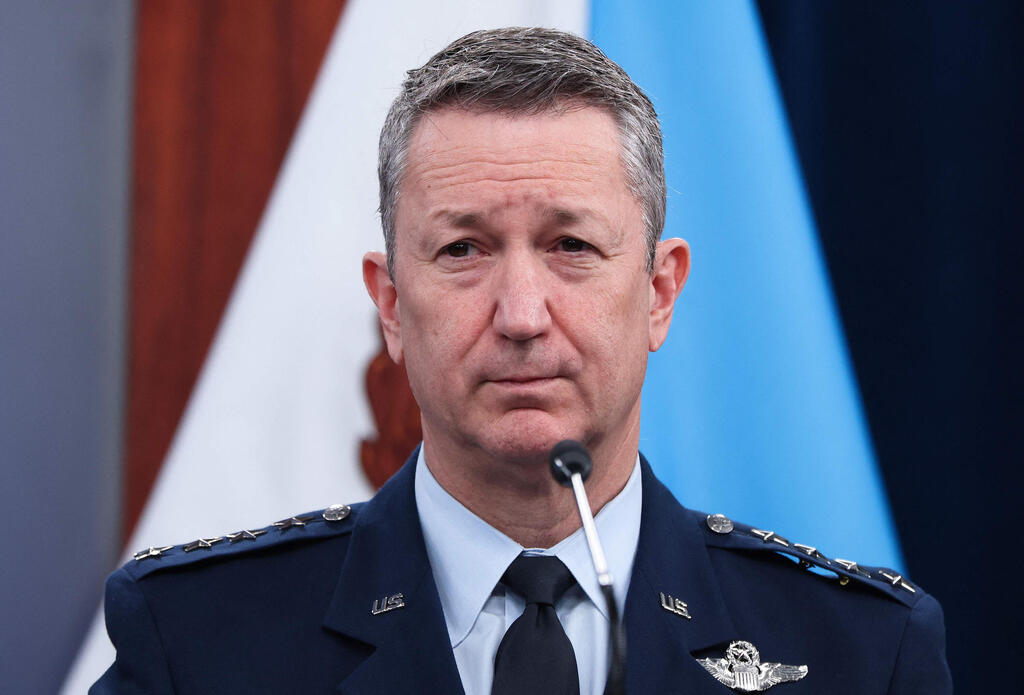
Joint Chiefs of Staff Chairman Gen. Dan Caine. 'Airpower has its limits'
(Photo: Anna Moneymaker/Getty Images/AFP)
Republican officials told CNN that many of Trump’s allies fear the war with Iran threatens to consume his entire presidency and, with it, Republican prospects in the upcoming midterm elections.
Various options for escalating the fighting were presented to Trump and discussed extensively, while additional military assets were moved to the region in preparation for the possibility that the president would give the green light. One plan developed by U.S. Central Command (CENTCOM) includes heavy bombing lasting one to two weeks in an effort to destroy Iran’s missile capabilities, U.S. officials said.
However, during a Capitol Hill briefing last week, Joint Chiefs of Staff Chairman Gen. Dan Caine acknowledged that Trump would likely not be able to achieve all of his war objectives through airstrikes alone. “Airpower has its limits,” Caine told lawmakers.
So far, Trump has refrained from doing so, partly after hearing warnings from Caine about dwindling stocks of air-defense interceptors. Other officials raised concerns about a high number of civilian casualties if Trump follows through on threats to strike infrastructure such as bridges and desalination plants. “Who am I hurting there? I’m hurting the people, so I’m not looking to do that,” the president said during a Fox News interview this week.
At this stage, diplomatic discussions among regional actors are focused on a short-term agreement that would allow the reopening of the Strait of Hormuz. That is according to officials familiar with the talks, who said such an agreement would allow Trump to present an achievement. The strait became a focal point of the confrontation after the United States and Iran interpreted the handling of the issue under last month’s memorandum of understanding in completely different ways.
Republicans, who have largely supported Trump throughout the confrontation but are increasingly concerned that high fuel prices could hurt their party in the midterm elections, have privately made clear that reopening the shipping route is a top priority, party activists said.
“Obviously, we want success there. We think that we've achieved a high level of military success there,” Senate Majority Leader John Thune said this week. “The question on the Strait of Hormuz is something that obviously the president and his team are trying to continue to negotiate, and hopefully they’ll land an outcome or a solution there in the near future.”
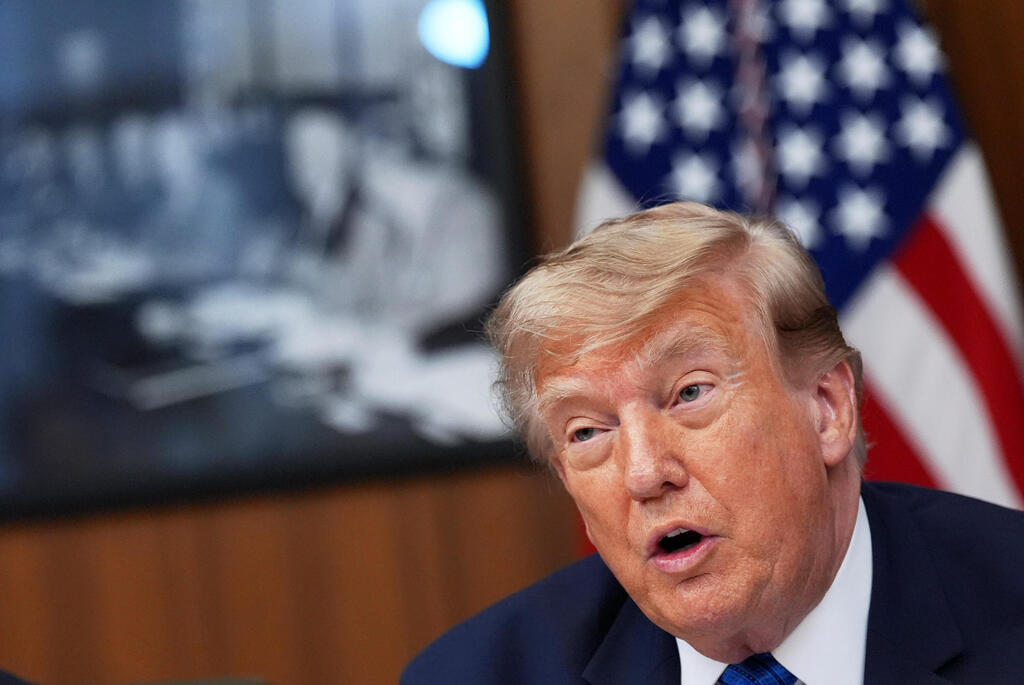
The midterm elections are coming up
(Photo: AP Photo/Jacquelyn Martin)
The White House said Iran “will continue to pay the price” until it returns to the negotiating table in a manner Trump accepts. “The United States signed a memorandum of understanding with Iran, and it violated it, fired on commercial vessels and killed American soldiers. President Trump will not stand by and allow this terrorist behavior to continue. Iran will continue to pay the price until it comes to the negotiating table in a way that President Trump sees as meaningful,” White House spokeswoman Karoline Leavitt said.
Divisions within Iran’s leadership
While mediators, including Qatar and Pakistan, are working quickly to try to restart diplomatic contacts, there are almost no signs of active negotiations. Instead, officials fear that the Islamic Revolutionary Guard Corps now holds full control over decision-making centers, while the political figures with whom the United States had spoken have become little more than symbolic figures.
The situation is further complicated by internal struggles within the Revolutionary Guard itself, where several senior commanders are competing for control. According to U.S. officials and regional partners, this is one of the main reasons for concern that the confrontation will continue for a long time.
At a meeting in the Oval Office this week, Trump hinted at these divisions, saying Iranian attempts to attack American targets were not carried out by the same figures with whom his team is trying to engage in dialogue. “That was a different group than the one we are dealing with,” Trump insisted. “They have already apologized.”
Trump complained that it is difficult to know who is truly making decisions inside Iran and has at times questioned whether Washington and Tehran can reach any agreement at all. Despite this, his senior envoy Steve Witkoff and his son-in-law Jared Kushner expressed confidence that a deal can be reached.