

Even before the ink had dried on the summary of the defense budget approved at a cabinet meeting just days ago, the struggle between the Defense Ministry and the Finance Ministry over the scope of the budget has already resumed. Senior officials fear it could grow even before final approval in the Knesset, in an election year, forcing further cuts to civilian ministries’ budgets.
Officials in the Defense Ministry and the IDF believe they will be unable to meet the target of mobilizing 40,000 reservists for just 60 days in 2026, instead of 60,000 reservists, as decided by Prime Minister Benjamin Netanyahu and approved by the government, ynet has learned. In addition, weapons procurement and training needs are expected to require billions of shekels in additional funding.
Gallery
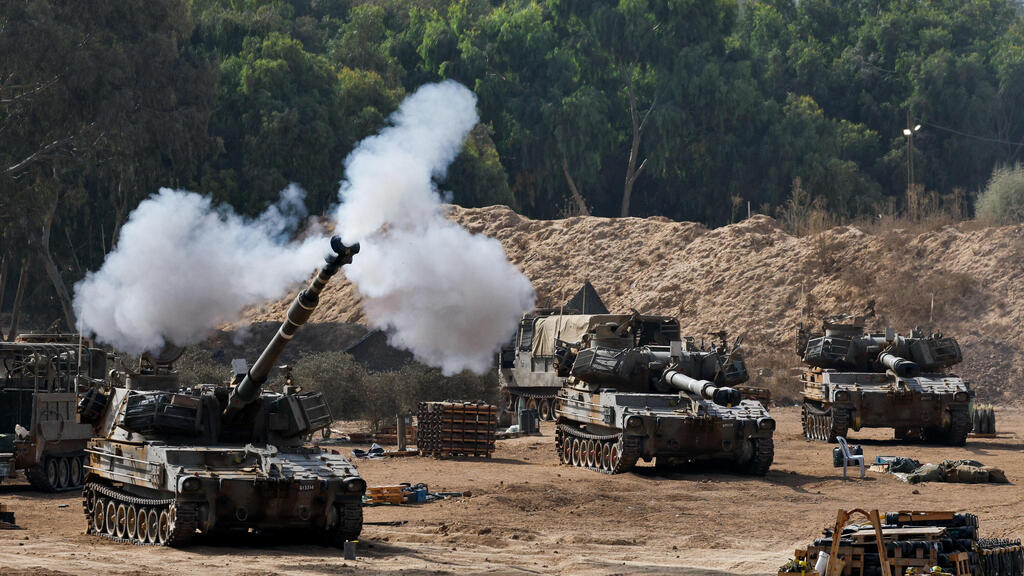
Defense establishment says defense budget that was already agreed upon must be increased immediately
(Photo: Amir Cohen/Reuters)
Following the reduction in reserve duty days and the Finance Ministry’s demand for significant efficiency measures in the IDF next year, the defense budget was set and approved by the government at 112 billion shekels. This came after the Defense Ministry initially demanded a budget of 144 billion shekels, while the Finance Ministry proposed only 93 billion shekels.
Now, security officials believe that to avoid a return to the conditions that preceded October 6, 2023, a budget of at least 120 billion shekels will be required, and possibly even more.
The defense establishment had already presented the IDF’s procurement needs to the prime minister before his departure to the United States, making clear that, in its view, the defense budget that was already agreed upon must be increased immediately.
A senior Finance Ministry official told ynet Wednesday, responding to public remarks made earlier by the Defense Ministry’s director general regarding the system’s needs, that “it is impossible to run a country like this.” The Defense Ministry, he said, must internalize that, given the enormous sums the state budget allocates to defense, it can no longer operate as it did until last year, when it spent funds without oversight and later submitted payment demands to the Treasury, which then paid them. “Those days are over,” he said, adding that Israel cannot pay amounts that were not approved in the state budget.

Defense Ministry Director General Maj. Gen. (res.) Amir Baram; Finance Ministry Director Ilan Rom
(צילומים: Photos: Elad Malka/Defense MInistry, Baruch Greenberg)
Defense Ministry Director General Maj. Gen. (res.) Amir Baram said Wednesday at the Calcalist newspaper’s Forecasts Committee that the Finance Ministry’s method of under-budgeting has not changed since October 7. Baram said he fears the defense establishment will be unable to keep pace with the force buildup required of it. He revealed that he has already established a team to review procurement, and criticized the approach that treats the defense budget as a burden rather than an engine for growth. Without security, he said, there can be no stability, and without stability there will be no foreign investment to drive growth.
If a decision is made to increase the defense budget, the Finance Ministry may have no choice but to impose measures on the public, including canceling benefits it has already promised, such as easing income tax brackets.