


Prime Minister Benjamin Netanyahu on Tuesday dismissed National Security Council head Tzachi Hanegbi, making him the latest in a growing list of top Israeli officials to leave their posts in the year since Hamas’s Oct. 7 attack. With Hanegbi’s ouster, Netanyahu remains the only senior figure who has neither resigned nor called elections over the failures of that day — even as nearly every major security leader has either stepped down or been removed.
The National Security Council, established after the 1973 Yom Kippur War to coordinate and plan Israel’s national security policy, is responsible for advising the government and overseeing the Counterterrorism Bureau. Hanegbi, a veteran Likud figure and longtime Netanyahu ally, was appointed to the post in December 2022.
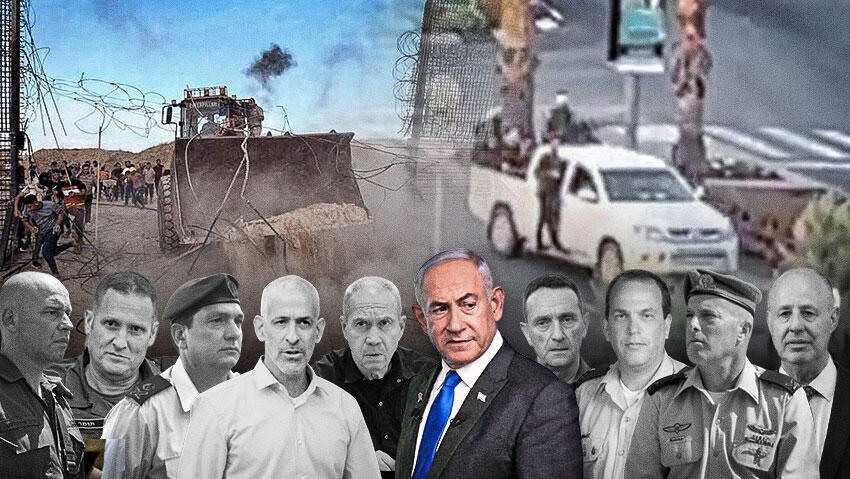
His dismissal did not come over direct responsibility for the Oct. 7 failures but reportedly over growing policy disputes with the prime minister. In recent cabinet meetings, Hanegbi opposed reoccupying Gaza City, supported a phased hostage deal with Hamas and resisted authorizing “Gideon Chariots B,” an expanded IDF operation. He also did not join Netanyahu’s recent visit to Washington.
Hanegbi announced his own departure — not the Prime Minister’s Office. In a statement Tuesday night, he wrote that “the terrible failure of Oct. 7, in which I share responsibility, must be investigated thoroughly to ensure proper lessons are learned and to help restore the public trust that has been fractured.”
Netanyahu’s pattern of dismissals
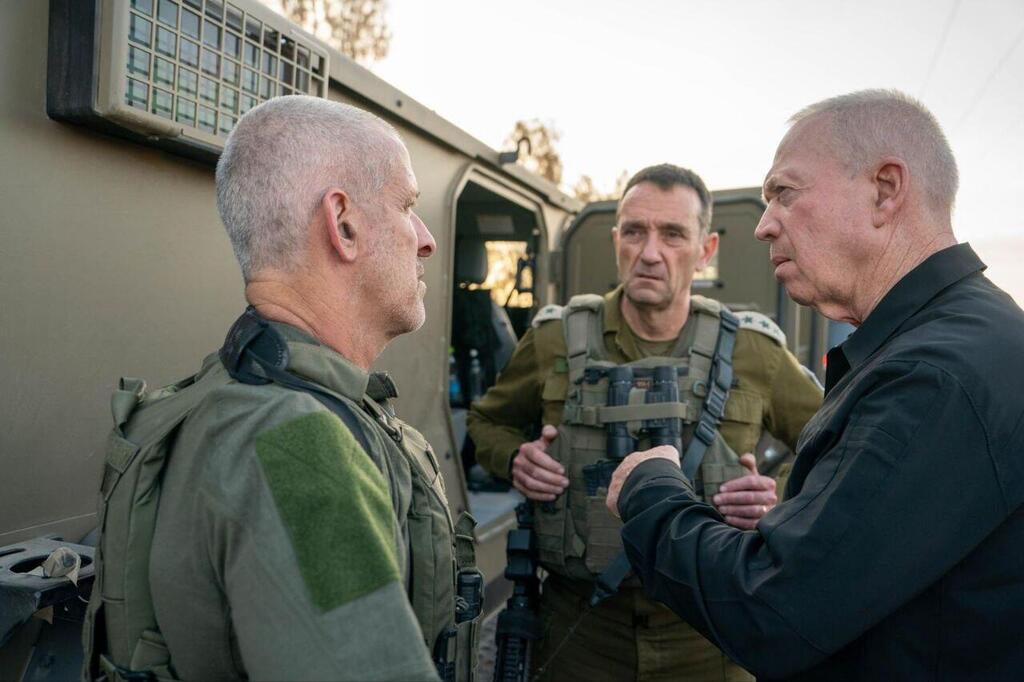
Since the war began, Netanyahu has fired two top security officials: Shin Bet chief Ronen Bar and former Defense Minister Yoav Gallant. Both dismissals were attributed by Netanyahu to what he described as “a growing lack of trust.”
Bar, the domestic intelligence chief, was summoned in March to a meeting where Netanyahu informed him of his dismissal, citing “a continuing and growing lack of trust.” The firing came amid tensions over Bar’s criticism of government policy and the so-called Qatargate probe, involving allegations over hostage negotiations. Bar said afterward that he had already planned to take responsibility before his term ended and that “it is clear that my dismissal is not because of Oct. 7.” He accused the government of ignoring repeated Shin Bet warnings in the year before the Hamas attack.
(Photo: GPO)
Gallant, dismissed for the second time in November 2024, had previously clashed with Netanyahu over judicial overhaul legislation. In announcing his removal, Netanyahu said that “full trust between the prime minister and the defense minister” was essential during wartime. Gallant responded: “The security of the State of Israel was — and will always remain — my life’s mission.”
A wave of resignations Over responsibility for Oct. 7
Unlike the prime minister, most of Israel’s top military and intelligence officials have resigned or requested early retirement, citing their responsibility for the failures of Oct. 7.
In January, IDF Chief of Staff Lt. Gen. Herzi Halevi informed Defense Minister Israel Katz that he would step down “in recognition of my responsibility for the IDF’s failure on Oct. 7.” In his resignation letter, Halevi wrote that “on the morning of Oct. 7 the IDF under my command failed in its mission to protect Israel’s citizens. The country paid a heavy price in lives, in captives, and in those wounded in body and soul.” Halevi said the responsibility for the disaster “will accompany me day by day, hour by hour, for the rest of my life.”
At a farewell ceremony in the Gaza border region, Halevi again took responsibility, called for an external commission of inquiry and vowed that the IDF would conduct “truthful probes.” He also expressed pride in the army’s achievements since the war began, declaring: “We failed, and I carry that for the rest of my life. I am proud of the IDF for its recovery, its path and its results.”
Southern Command, Intelligence and Operations chiefs step down
Soon after Halevi’s announcement, Southern Command chief Maj. Gen. Yaron Finkelman told him he too would resign. “On Oct. 7 I failed in my mission to defend the western Negev and its beloved residents,” Finkelman wrote. “That failure is seared into me for life.” He said he chose to remain in command through the war out of a sense of duty “to lead the fight against Hamas and other terror organizations in Gaza,” adding that he would always stand with bereaved families and wounded soldiers.

(Photo: Yair Sagi)
In April 2024, Military Intelligence Directorate head Maj. Gen. Aharon Haliva also resigned, taking “full responsibility for the intelligence failure” that allowed Hamas’s surprise attack. “The Intelligence Directorate under my command did not accomplish its mission,” he wrote. Haliva had publicly acknowledged his share of responsibility just ten days after the war began, becoming the first senior official to do so.
A similar message came in March from Maj. Gen. Oded Basiuk, head of the IDF’s Operations Directorate. Considered third in the military hierarchy, Basiuk asked to retire after the internal probe of his division found no negligence but noted the need for “responsibility at the highest levels.”
Gaza Division commander and Depth Corps chief exit
Brig. Gen. Avi Rosenfeld, commander of the Gaza Division, announced his resignation in June 2024. “On Oct. 7 I failed in my life’s mission to defend the Gaza envelope,” he wrote to local officials, adding that he had received no warning of war. “For hours we could not defend the communities, the tens of thousands of residents, the thousands of revelers at the Re’im festival or the soldiers at the outposts against thousands of Hamas terrorists,” he said.

(Photo: IDF)
Earlier this month, Maj. Gen. Nimrod Aloni — who had commanded the Gaza Division a year before the Hamas assault — ended his service as head of the Depth Corps. In his farewell speech, Aloni accused the IDF of having “trampled and desecrated the concept of responsibility” and “lost the confidence to put its failures on the table.” He said Israel had erred by “trying to contain its enemies in the south and north, thinking time would work in our favor.”
Senior officers to leave soon
The departures have continued. Air Force Commander Maj. Gen. Tomer Bar, the most senior officer to remain from the Oct. 7 period, is expected to complete his four-year term soon despite requests that he stay on. The leading candidate to replace him is Brig. Gen. Omer Tishler, who served as the Air Force’s chief of staff during the Hamas attack. Defense Minister Katz will decide on the appointment; he has previously said that anyone who held a command on Oct. 7 should not be promoted.
(Photo: IDF)
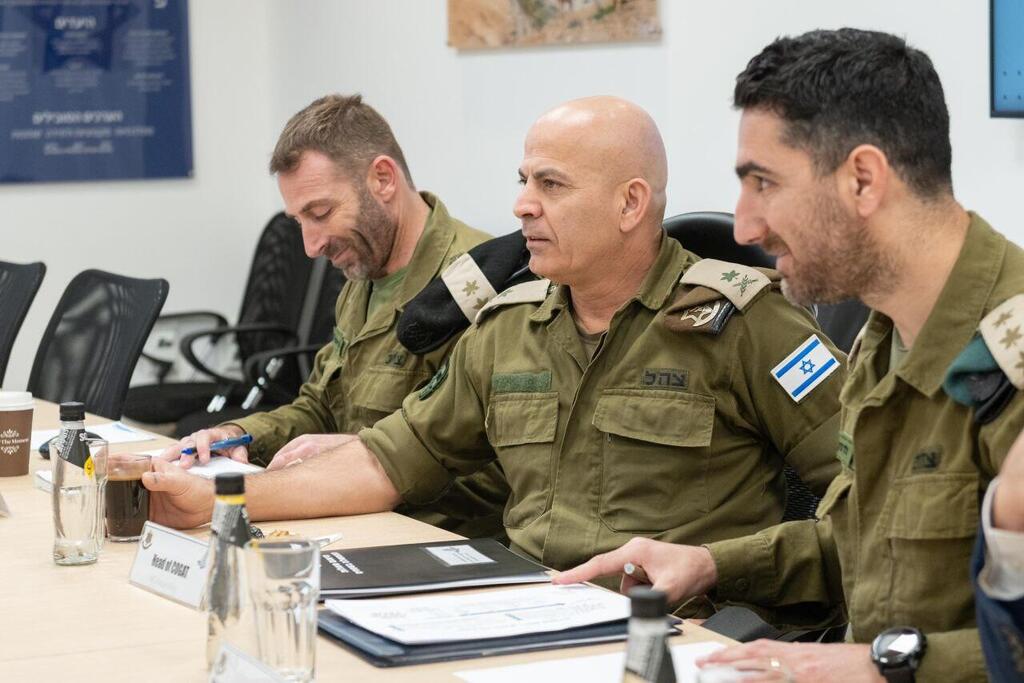
Maj. Gen. Ghassan Alian, head of the Coordinator of Government Activities in the Territories (COGAT), has asked Chief of Staff Eyal Zamir not to extend his tenure again. Zamir, who replaced Halevi earlier this year, will oversee several key appointments in the coming months.
Maj. Gen. Amir Baram, who served as deputy chief of staff during the Hamas assault, also requested to end his term in January 2025, saying that “the intensity of the war has significantly declined.” Baram said he did not intend to complete a full second term but later accepted the post of Defense Ministry director general.
Netanyahu under fire
Despite the widespread resignations and dismissals, Netanyahu has refused to accept personal responsibility for the Oct. 7 failures. In May, responding to a question from ynet, he said, “I put the decision to the public every day. I am constantly subject to criticism. I cannot say I take responsibility without detailing what that means. I stand the public’s test daily — people can express no confidence. We are at war. Do you want elections now?”
Hanegbi’s firing now places Netanyahu as the only major leader from the Oct. 7 era still in office — a position that underscores his determination to stay in power as the political and military fallout from the Hamas assault continues to reshape Israel’s leadership.