

Congress is preparing to launch a war powers debate over President Donald Trump’s authority to bomb Iran under extraordinary circumstances: the military campaign is already underway, and the United States is effectively at war.
Bombs are falling, casualties are mounting and threats of retaliation are escalating. Billions in taxpayer dollars are being spent on a military strategy expected to continue for weeks, with no clearly defined objective or endpoint.
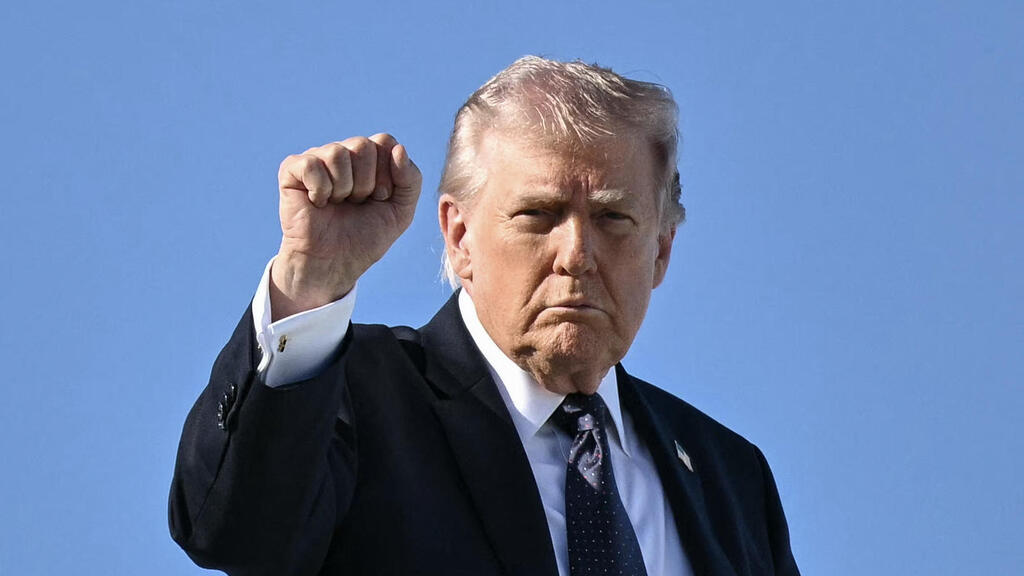
Unlike the run-up to the 2003 Iraq War, which involved prolonged congressional debate after the September 11 attacks, or more limited US strikes in other countries, the joint US-Israeli offensive against Iran, dubbed Operation Epic Fury, is already in full force, with no foreseeable end.
The moment presents a defining test for Congress, which under the Constitution holds the sole authority to declare war, and for a Republican president who has asserted broad executive powers during his second term.
“The Constitution is intended to prevent the accumulation of power in any one branch of government — and in any one person in government,” said David Janovsky, acting director of The Constitution Project at the Project on Government Oversight.
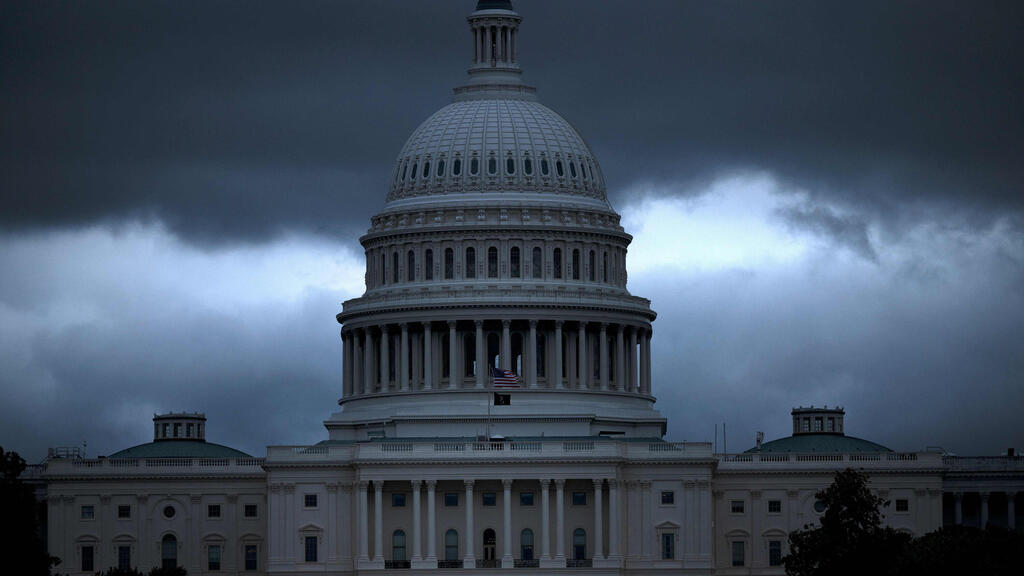
The US Capitol building
(Photo: Brendan Smialowski/ AFP)
“Congress is the people’s representatives in a way that the president isn’t,” he said. “We need the people’s representatives to weigh in on whether we, the people, are going to war right now.”
War powers as a constitutional check
Congress can formally approve military action through a declaration of war or an authorization for the use of military force, known as an AUMF. Such actions are rare.
The United States has declared war five times, most recently in 1941 after the attack on Pearl Harbor. Congress approved AUMFs for the 1990 Gulf War and again in 2001 and 2002 for military campaigns in Afghanistan and Iraq.
In response to presidential overreach during the Vietnam War, Congress passed the War Powers Resolution to limit unilateral military action. Lawmakers in both chambers have now introduced war powers resolutions that could come to votes this week.
Sen. Mark Warner, the top Democrat on the Senate Intelligence Committee, said Trump “does not have the right to do this on his own.”
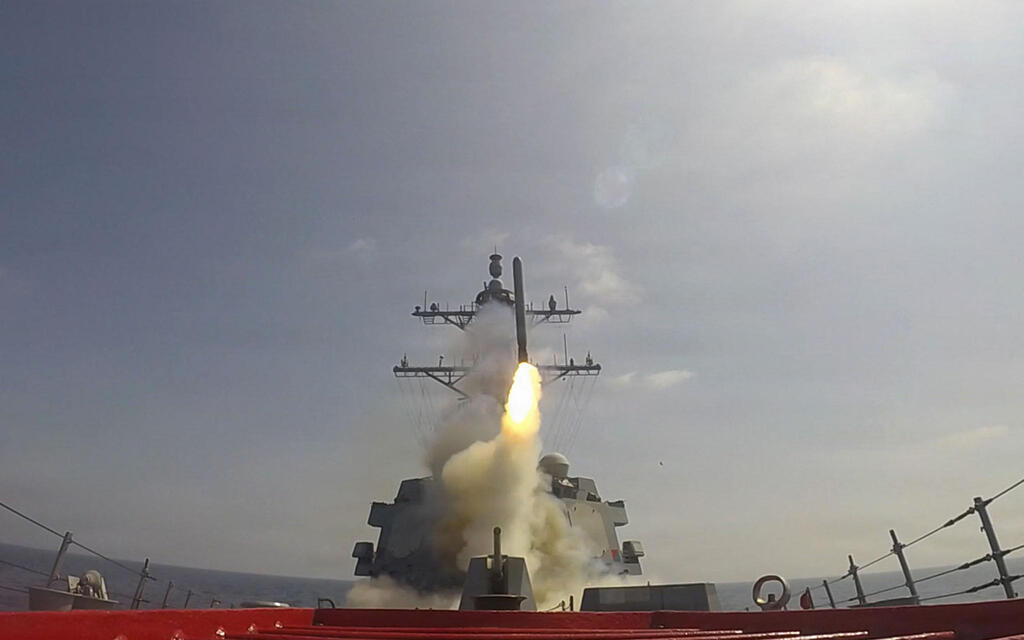
USS Frank E. Petersen Jr., a US Navy destroyer
(Photo: US CENTRAL COMMAND (CENTCOM) / AFP)
“When the president commits American forces to a war of choice, he needs to come before Congress and the American people and ask for a declaration of war,” Warner said on CNN’s “State of the Union.”
Democrats argue Trump has not clearly articulated the strategy or defined the endgame. Some members of Trump’s MAGA coalition have also expressed concern that an expanding overseas war contradicts his “America First” pledge.
White House officials are scheduled to brief congressional leaders this week in closed-door sessions.
The power of the purse
Presidents from both parties have exercised broad authority to launch limited military operations without congressional approval, including Barack Obama’s intervention in Libya and George H.W. Bush’s actions in Panama.
Even if Congress passes a war powers resolution to restrict Trump’s authority, it would likely face a presidential veto. Overriding it would require a two-thirds majority in both chambers.
Legal scholars note that Congress retains a powerful tool: control over federal funding.
“Congress, they know how to stop this if they want to,” said John Yoo, a law professor at the University of California, Berkeley, who helped draft the Bush administration’s 2001 and 2002 authorizations for the use of force. “The Vietnam War ended once Congress pulled funding.”
But with Republicans holding majorities in both the House and Senate — and having recently approved $175 billion in new Pentagon funding — lawmakers are unlikely to block the president’s strategy.
“They agree with him,” Yoo said.
Debate begins
Republican Sen. Tom Cotton, chairman of the Senate Intelligence Committee, said Trump has already laid out his vision.
The United States will not deploy ground forces in Iran, Cotton said Sunday. Instead, Americans should expect an “extended air and naval campaign” that could last weeks.
“There’s no simple answer for what’s going to come next,” Cotton said on CBS’ “Face the Nation.”