

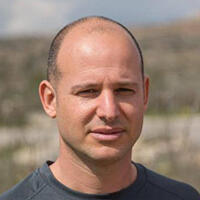
The 679th Reserve Armored Brigade, a storied formation whose history includes the desperate battles on the Golan Heights during the 1973 Yom Kippur War, has added another chapter to its record as the first IDF brigade since the 2006 Second Lebanon War to capture the strategic Silvester Ridge in southern Lebanon.
After nearly two months of intensive ground operations about 15 kilometers from the Israeli border, the brigade is preparing to complete its mission. Col. Itay Zaafrani, 38, commander of the 679th Brigade, said his forces had assumed full responsibility for the Bint Jbeil sector and were conducting daily operations to locate Hezbollah terrorists and expose their infrastructure.
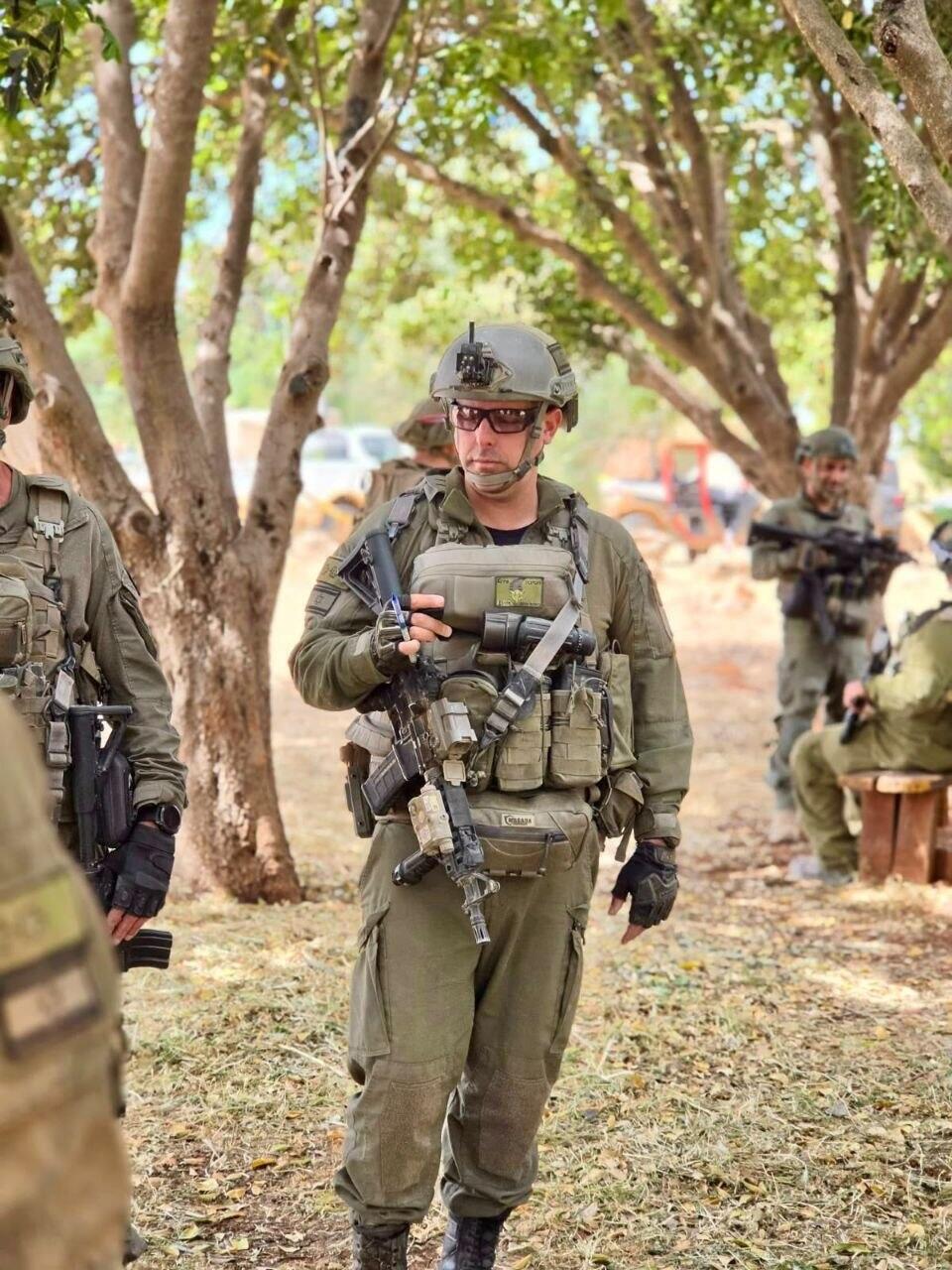
“The brigade took full responsibility for Bint Jbeil, and we operate there every day to locate and uncover the enemy,” Zaafrani told ynet and its parent newspaper Yedioth Ahronoth. The married father of two from Ashdod requested a third year in command so he could continue leading his troops in battle.
Zaafrani said the brigade had faced several significant incidents in recent days. During searches in a densely built area last week, a terrorist opened fire at one of the officers. “We responded immediately with force, sealed off the entire area, brought in air support and used heavy tank fire, and eliminated the terrorist who fired,” he said.
The incident continued to trouble him, however, and he ordered the troops to search the area for another three days to verify the terrorist’s death. The brigade brought in the Oketz canine unit to locate bodies beneath the rubble.
“At one point, the dog went down into the ruins,” Zaafrani said. “It turned out there were two more terrorists hiding inside an underground shaft.”
The commander and deputy commander of the 8112th Battalion’s support company entered the ruins and killed one of the terrorists. The second, a member of Hezbollah’s elite Radwan Force, quickly surrendered.
“He realized he had no chance,” Zaafrani said. “He immediately shouted in English, ‘Don’t shoot,’ and threw his weapon toward the company commander.”
The commander ordered the terrorist to retrieve the body of the military dog, which had been killed, before taking him into custody. Zaafrani said the detainee appeared to have been hiding for a long time and was unshaven, terrified and visibly shaken.
“He kept saying, ‘I want to live. I don’t want to die,’” Zaafrani said. “They had been hiding there for weeks, eating very little and afraid to come out. They were waiting to hear that there was a ceasefire. But even after they heard there was one, they could still hear our forces and the constant searches, and they realized that the IDF was not leaving. Their motivation to fight is almost nonexistent. They mainly want to survive.”
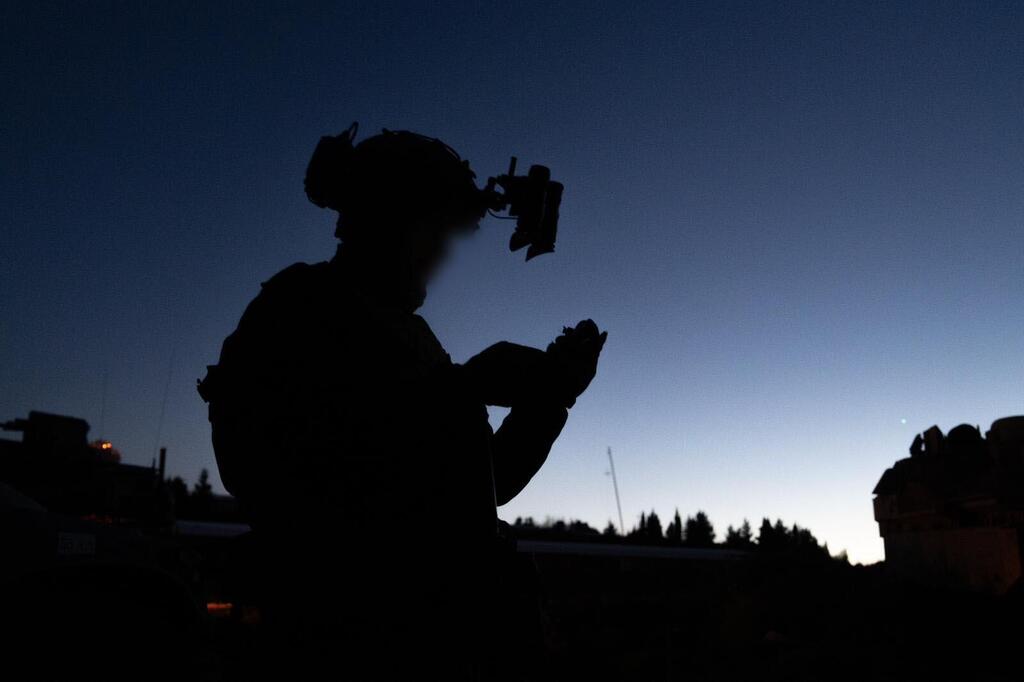
(Photo: IDF)
Zaafrani described the fighting in southern Lebanon as a highly integrated campaign in which nearly every force operated as a self-contained “small army,” combining reserve and regular battalions with engineering, artillery and intelligence-gathering units.
“The combination was an extraordinary force multiplier,” he said. “It is a great feeling to begin a battle already leading 10-0 because you have that kind of support.”
He rejected criticism that Israeli troops in southern Lebanon were being exposed without sufficient protection. In one incident, he said, the brigade’s reconnaissance company identified a Hezbollah anti-tank squad, tracked it with drones and destroyed it with a fighter jet.
“After the strike, I called my wife and excitedly told her, ‘We just eliminated an anti-tank squad,’” he recalled. “She told me, ‘You don’t understand. We are in Israel anxious all day, convinced you are sitting ducks up there.’ Sometimes the feeling at home does not reflect the superiority we have on the ground. Inside the yellow line, I have complete freedom of action to destroy every enemy and every piece of infrastructure.”
Zaafrani recently met Prime Minister Benjamin Netanyahu and said he used the meeting to warn about the growing burden on Israel’s reserve forces. Members of the 679th Brigade, he said, have served more than 500 reserve-duty days over the past three years.
“I told him privately that the reservists are the insurance policy of the IDF and the State of Israel,” Zaafrani said. “Reservists are paying a heavy price because of the manpower shortage, and we must create much more breathing room between deployments.”
He said he avoided entering the political dispute over ultra-Orthodox military conscription and instead presented the issue as an immediate operational problem. “I told him, ‘Mr. Prime Minister, I am not entering the political debate over drafting the ultra-Orthodox. I am offering something practical. What is wearing down now is the patience of the reservists and the people around them.’”
Asked how Netanyahu responded, Zaafrani said: “He listened. I could see it mattered to him.”
Zaafrani said the IDF had pushed Hezbollah significantly farther from the Israeli border and created what he described as a largely empty security zone across southern Lebanon. He said Israeli forces had confiscated large quantities of weapons and damaged Hezbollah’s strategic capabilities, while acknowledging that the organization still retained some ability to operate drones.
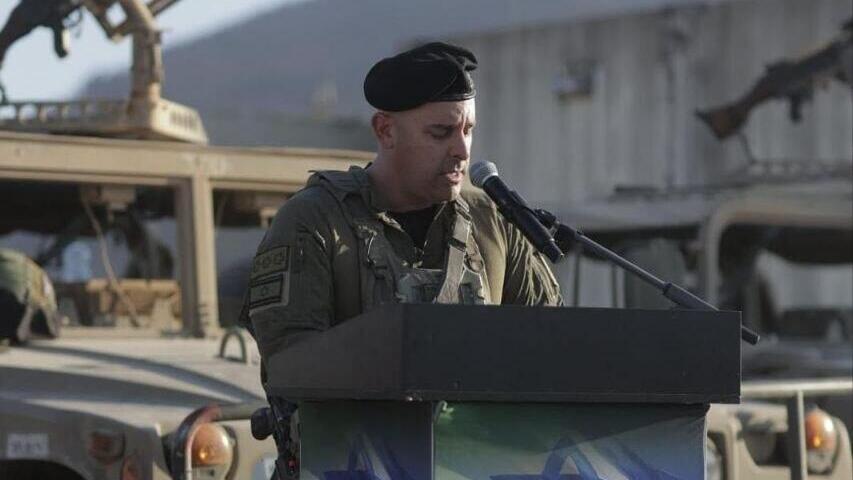
Col. Itay Zaafrani
(Photo: IDF)
“Since the ceasefire, Hezbollah has begun refreshing its forces and supplies. We can see it,” he said. “Beyond the yellow line, the enemy keeps civilians in place because it wants to operate under their cover, but we identify most of that activity and collect precise intelligence.”
Zaafrani argued that evacuating civilians from the combat area had enabled the IDF to operate without Hezbollah using populated areas as cover. He said Israel should continue holding the commanding terrain it captured because it provides the best defensive position for communities in northern Israel.
“There is a price to that,” he said. “To hold these areas over time, you need a large force and strong reserve brigades.”