

A Hezbollah rocket struck a school in the northern Arab town of Deir al-Asad on Friday afternoon, after sirens sounded in the area and in the nearby city of Karmiel and surrounding communities.
According to initial reports, air defenses intercepted five rockets. There were no immediate reports of injuries.
A Hezbollah rocket strikes a school in the northern Arab town of Deir al-Asad


Air raid sirens sounded repeatedly across northern Israel throughout the day Friday as Hezbollah fired rockets from Lebanon, with several projectiles striking communities along the border and causing damage to homes, infrastructure and power lines, though no serious injuries were reported.
From the morning hours, alerts were activated in Kiryat Shmona, Margaliot, Avivim, Misgav Am and Metula, all in the Galilee Panhandle near the northern border with Lebanon. Some of the rockets were intercepted by air defenses, while others fell in open areas.
Israeli artillery pummels southern Lebanon, Friday
In one barrage, a rocket struck a home in Kibbutz Misgav Am, causing heavy damage. A woman in her 90s who was inside suffered shock, but there were no physical injuries. Police, Border Police officers and bomb disposal teams were deployed to the scene to remove additional hazards.
Later in the day, another rocket fired from Lebanon toward Metula hit a packing house and apparently also damaged a high-voltage power line, causing a power outage in the town. A fire broke out, but no injuries were reported.
Residents in the north also faced repeated alerts over possible drone infiltration. During the day, two separate sirens were sounded in Kiryat Shmona over concerns that an unmanned aircraft had entered Israeli airspace. The warnings were also heard in nearby communities, including Manara and Neot Mordechai.
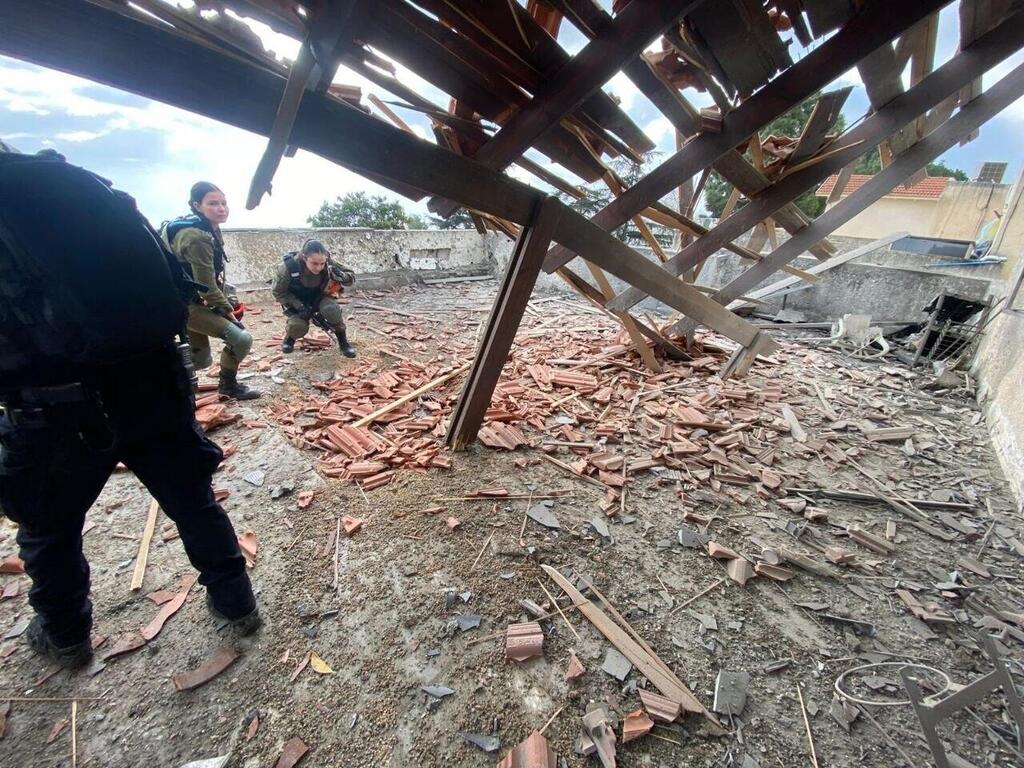
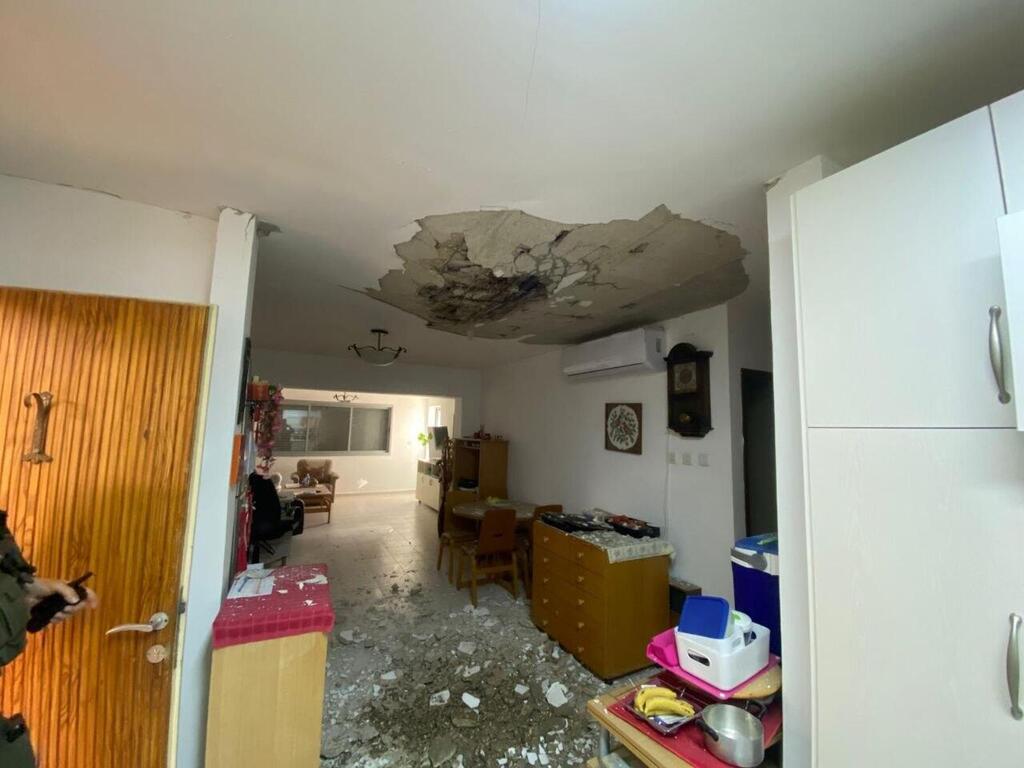
(Photo: from social media)
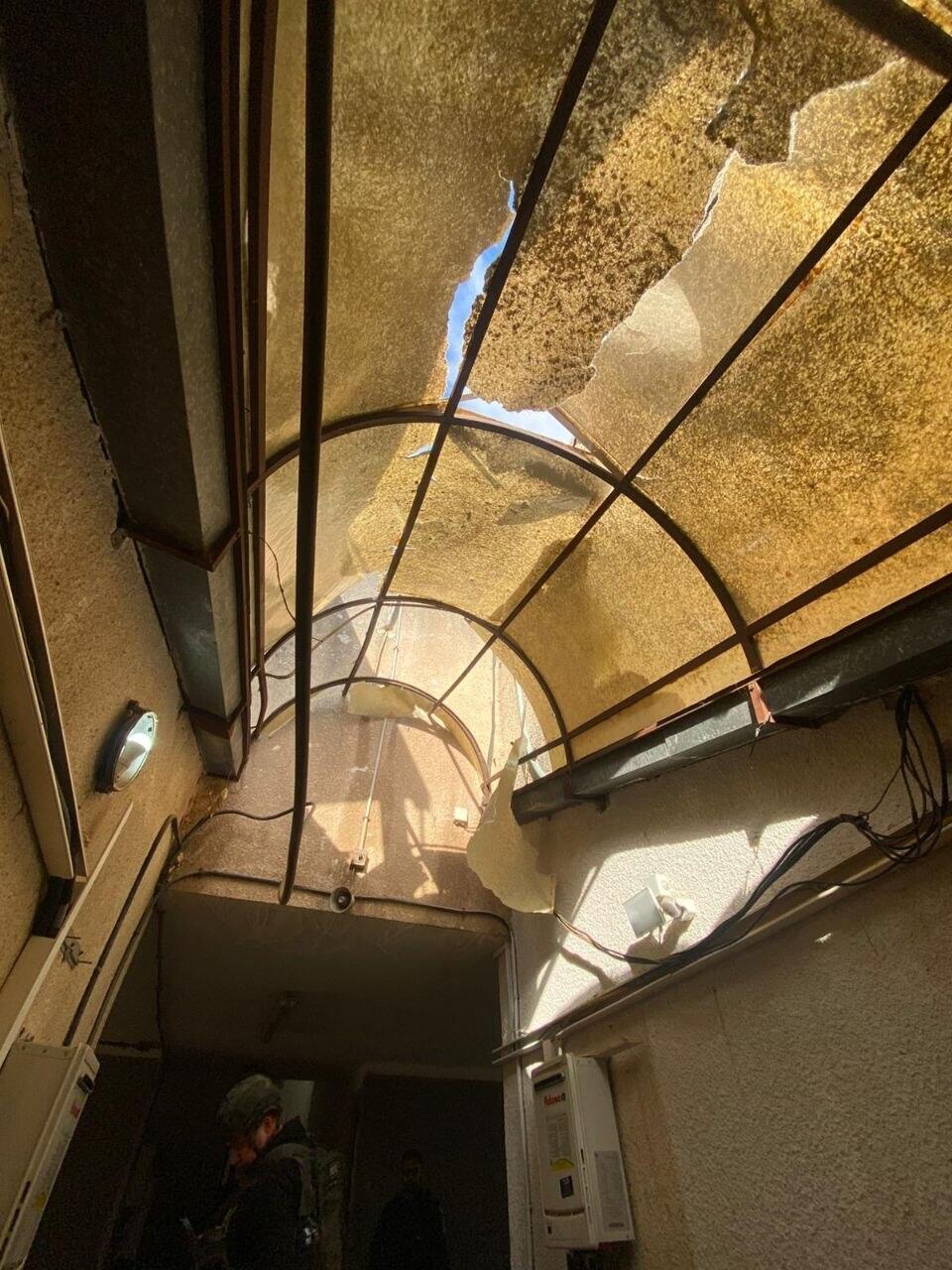
(Photo: from social media)
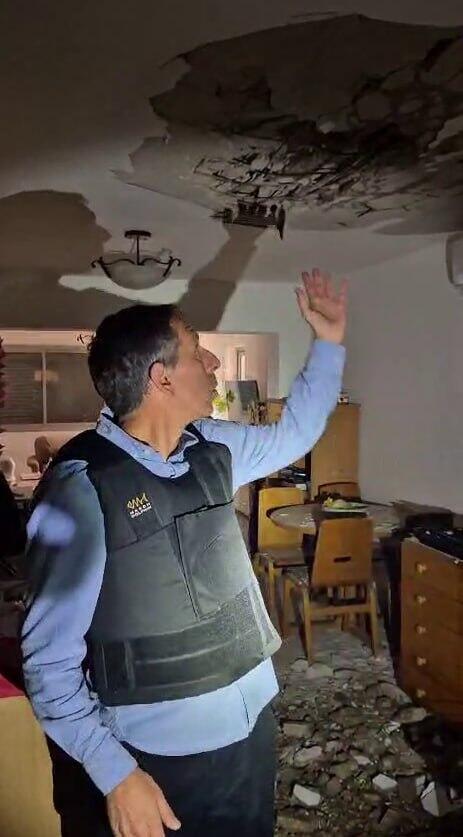
Upper Galilee Regional Council head Asaf Langleben at the site of Hezbollah rocket impact in Misgav Am
Asaf Langleben, head of the Upper Galilee Regional Council, said at the scene in Misgav Am that northern border residents remained under wartime conditions, even as a ceasefire appeared to be taking hold in the war with Iran and diplomatic efforts gathered pace toward possible talks between Israel and Lebanon aimed at easing hostilities.
“Here in Misgav Am, there is no ceasefire, there is war,” he said. “You can see here the damage caused this morning to an apartment where people live. Prime Minister [Benjamin Netanyahu], you must remove the threat from all the communities of the north. Now, not later. If there is no security in the north of the State of Israel, there will be no security in all of Israel.”
Earlier, before dawn, a missile launched from Lebanon triggered sirens far beyond the northern border area, sounding down Israel’s central coastal strip as far south as the city of Ashdod. The projectile was intercepted by air defenses. The Magen David Adom ambulance service said it had received no reports of casualties.
Destruction in the village of Kfar Haboush in southern Lebanon’s Nabatieh sector
IDF airstrike on a rocket launcher in southern Lebanon
(Video: IDF)
The IDF said Home Front Command restrictions remained unchanged following a security assessment and would stay in effect until Saturday at 8 p.m.
Restrictions remained in force in the confrontation line communities along the Lebanon border, as well as in the northern Golan, Upper Galilee, Haifa Bay and the towns of Katzrin and Kedmat Zvi. In those areas, educational activity is permitted only inside standard protected spaces. Gatherings and services are limited to 50 people indoors and 200 outdoors. Workplaces may operate only if a standard protected space can be reached in time during an alert. Essential sectors may also operate under the same conditions, and beaches are closed to the public.
In the rest of the country, full activity is permitted without restrictions, except for a cap of 1,000 people on gatherings in several regions, including the Lower Galilee, central Galilee, the valleys, Carmel, Wadi Ara, Menashe, Samaria, Sharon, Dan, Yarkon and the Shephelah.
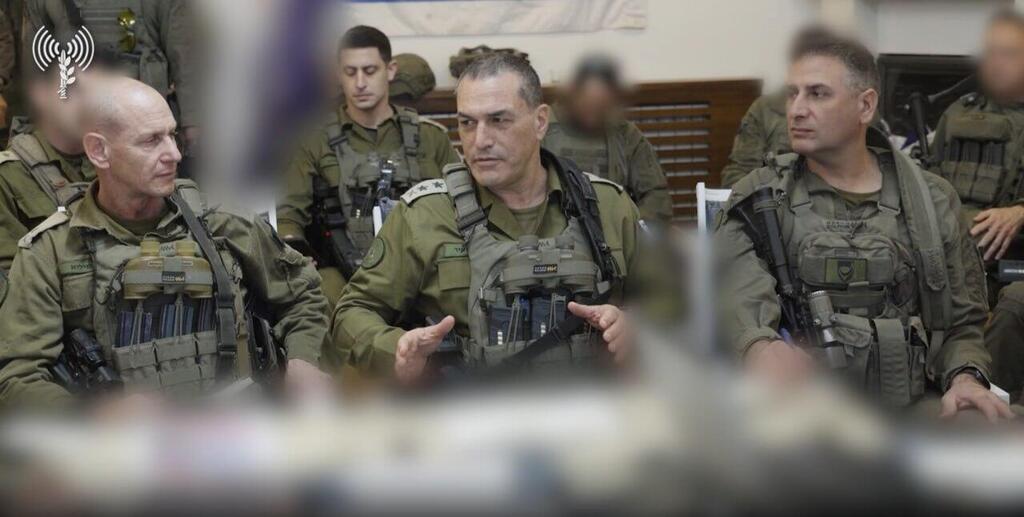
IDF Chief of Staff Lt. Gen. Eyal Zamir (center) in southern Lebanon
(Photo: IDF)
Against the backdrop of the continued rocket fire, IDF Chief of Staff Lt. Gen. Eyal Zamir visited southern Lebanon and said the army was continuing combat operations there, describing the theater as Israel’s main active war zone. Speaking on the outskirts of Bint Jbeil, a town the IDF has said it is surrounding, Zamir said the army was continuing to remove the direct threat to Israeli communities along the border.
“The IDF is in a state of war. We are not in a ceasefire. We are continuing to fight here in this sector. This is our main theater,” Zamir said. Referring to Iran, he added: “There we are in a ceasefire, and we can return to fighting there at any moment, and in a very powerful way.”
Zamir said Israel was deepening its operations in Lebanon and argued that the war had significantly weakened Iran and, in turn, Hezbollah. He also said Israeli forces had struck targets in Beirut and the Bekaa Valley on Wednesday and claimed the terrorist group was in deep shock.
Separately, the military released footage showing an airstrike on a terrorist cell in southern Lebanon. The army said 769th Brigade Combat Team troops had identified a terrorist hiding in brush near their position two days earlier and called in an airstrike. It said a vehicle fleeing the area with other members of the cell was then identified and struck.
91st Division forces eliminate a Hezbollah terrorist cell in southern Lebanon
(Video: IDF )
The IDF said that over the past week, more than 40 terrorists had been killed and more than 50 Hezbollah infrastructure sites destroyed under the direction of the 91st Division.
It also said that since the start of the fighting, it had struck and destroyed more than 200 rocket launchers containing about 1,300 launch barrels. Among those killed this week, the military said, was Ali Kamel Abar al-Hassan, the artillery commander in Hezbollah’s Nasser Unit—one of the terrorist group's three main battle formations in southern Lebanon. It added that more than 250 artillery operatives had been killed, including 15 commanders responsible for artillery formations in different sectors.
Meanwhile, Lebanon’s MTV network, which is known for its opposition to Hezbollah, reported that several members of Iran’s Revolutionary Guard were killed in Israeli strikes in Lebanon on Wednesday targeting several locations in Beirut, including the southern suburb known as Dahieh, a Hezbollah stronghold. The report, citing an informed source, said those killed in the strike, codenamed Operation Eternal Darkness by Israel, had been involved in directing Hezbollah’s operations.