

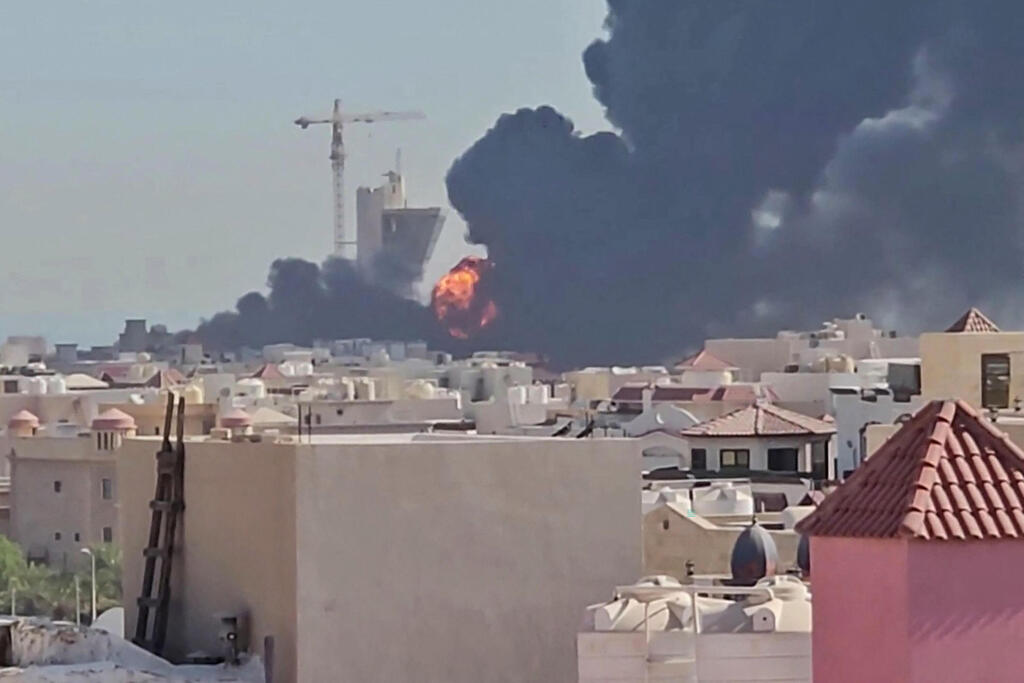
Iran struck a power generation and water desalination facility in Kuwait on Saturday after the United States carried out a seventh consecutive night of airstrikes against military and infrastructure targets inside Iran.
Kuwait activated emergency measures to stabilize its electricity grid after the attack, while the country's state-owned oil company reported casualties and significant damage at one of its facilities.
Bridges across Iran struck by US forces


Kuwaiti firefighting authorities said the Iranian strikes triggered two fires.
The Kuwait Petroleum Corporation said a critical facility had sustained casualties and "significant material damage" after being struck repeatedly during the morning attacks. The company said the site had been evacuated and that authorities were responding to the incident.
Kuwait's Foreign Ministry condemned what it called "Iranian aggression" targeting another electricity generation and water desalination facility.
The latest exchange followed overnight U.S. strikes that Iranian media said hit multiple bridges intended to disrupt supply routes to the strategic port city of Bandar Abbas, as well as other infrastructure targets.
Amid the renewed fighting, Iran accused Washington of violating earlier diplomatic commitments.
"We negotiated, but unfortunately the Americans themselves committed acts of aggression in violation of their commitments under the memorandum of understanding," Iranian Deputy Foreign Minister Kazem Gharibabadi said.
"Now we face the necessity of defending the country. The Americans have already received a clear message that such acts of aggression will get them nowhere."
Since hostilities resumed, Iran has launched attacks targeting U.S. interests and regional allies in Jordan, Iraq, Kuwait, Bahrain, Qatar, Saudi Arabia, the United Arab Emirates and Oman.
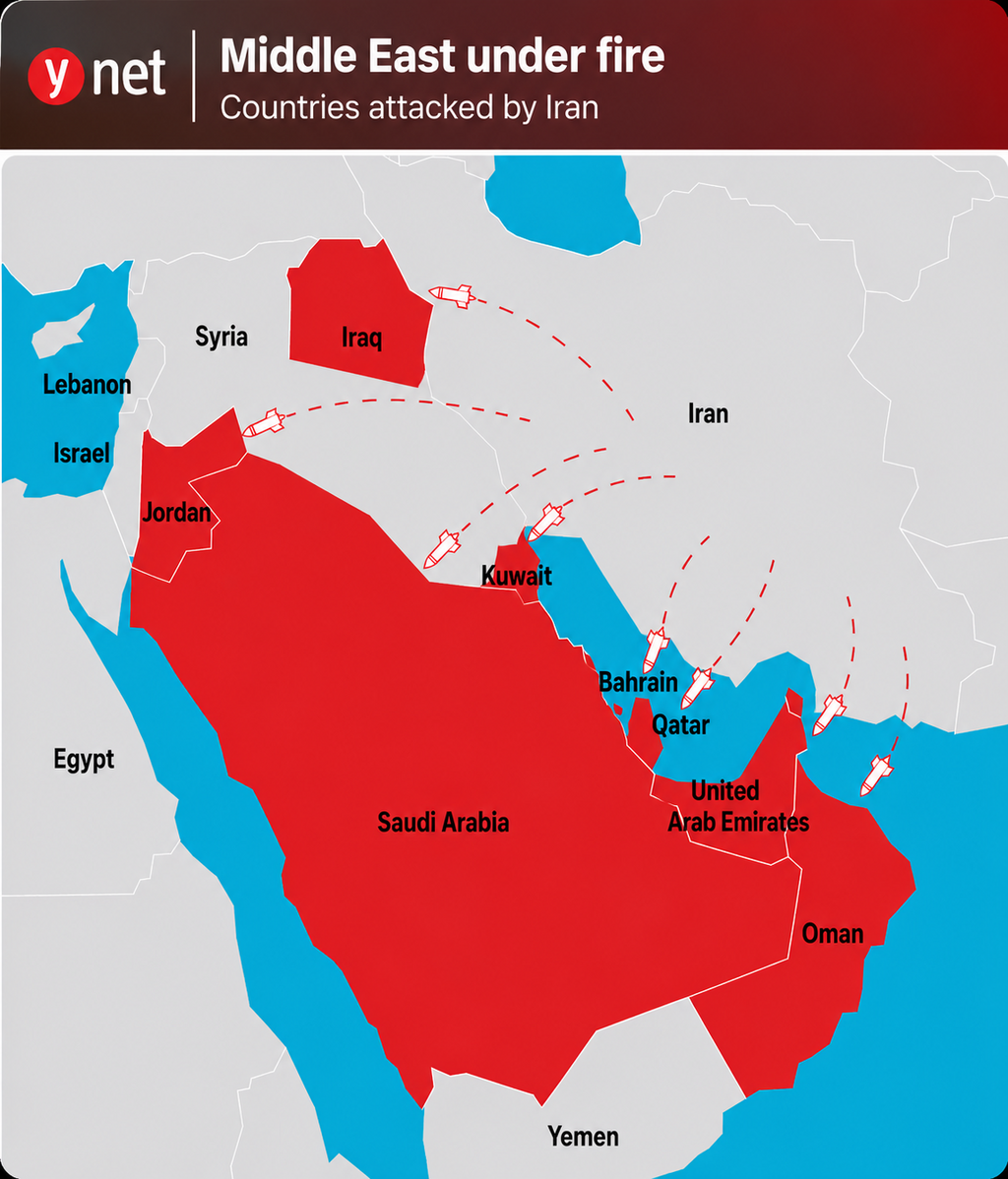
Iran also issued a new warning to the United Arab Emirates, threatening further retaliation if the United States continues attacking Iranian infrastructure.
"If the United States attacks Iranian infrastructure tonight, Dubai and Abu Dhabi airports, as well as the ports of Fujairah and Jebel Ali, should be evacuated immediately to protect civilians from Iranian retaliatory strikes," an unnamed military source told Iran's Fars News Agency.
Meanwhile, Iran's Health Ministry said at least 50 people had been killed and 500 wounded in U.S. strikes since June 27.
Separately, Amir Farshad Ebrahimi, an Iranian-born researcher at a Washington-based think tank, criticized Tehran's response in a post on X, formerly Twitter, arguing that Iran's leadership was repeating mistakes made during the 1980-88 Iran-Iraq War.
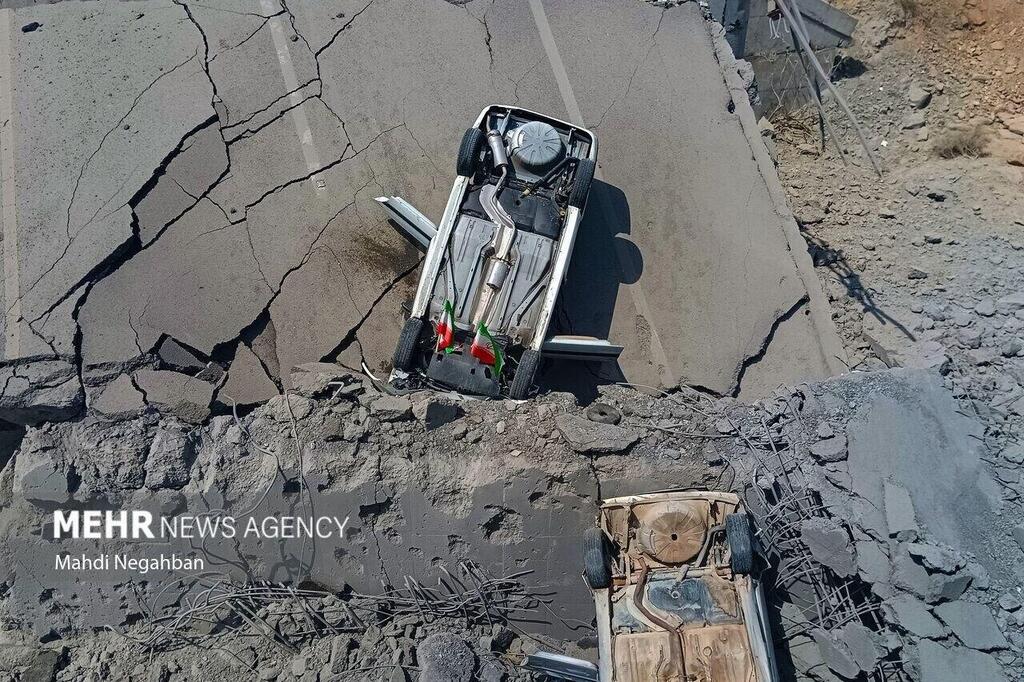
Bandar Abbas-Rudan Bridge struck in Iran
He said that during most of that conflict, fighting remained concentrated far from Tehran, leaving many Iranians detached from the realities of war until Iraqi missile attacks reached the capital in 1988.
"It wasn't until 1988, when Saddam's missiles reached Tehran, that many finally realized there was a war going on," he wrote, referring to former Iraqi President Saddam Hussein.
Drawing a parallel with the current conflict, Ebrahimi said U.S. forces have spent seven consecutive days conducting precision strikes across a roughly 1,350-kilometer (840-mile) stretch of southern Iran, from Chabahar to Ahvaz, destroying drone launchers, missile launchers, launch sites and key infrastructure.
He argued that although the attacks have significantly degraded Iran's military capabilities, much of the public remains largely unaffected because Tehran itself has not come under sustained attack.
"But since no one's messing with Tehran right now, it's like nothing's happening at all!" he wrote.
Target: Bandar Abbas
Over the past two nights, the United States has carried out a series of strikes against Iranian infrastructure around the port city of Bandar Abbas, the capital of Hormozgan province in southeastern Iran, located on the Strait of Hormuz and home to the Islamic Revolutionary Guard Corps' main naval base.
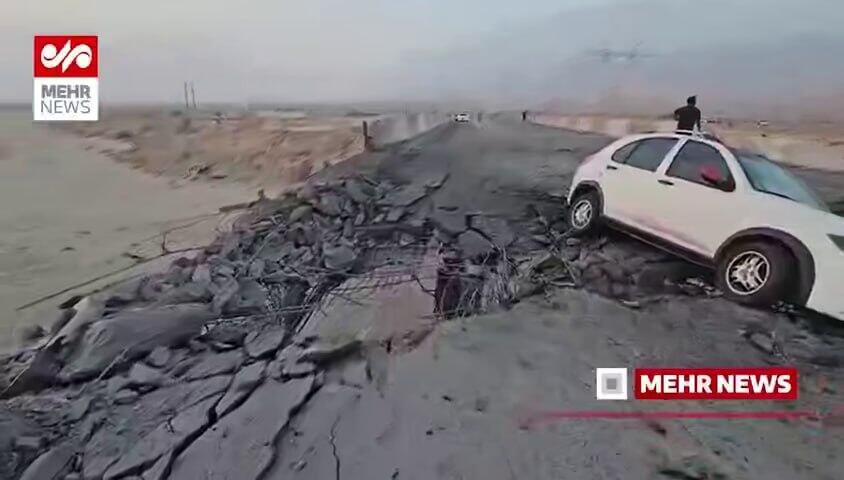
Bandar Abbas-Hajiabad Road
The strikes began after Tehran refused to back down from its demand to assert sovereignty over the strait and collect transit fees from passing vessels, and began targeting ships that did not follow the shipping routes designated by Iranian authorities. Iranian media reported that in recent days the U.S. has bombed roads, railways, tunnels, communications infrastructure and, in particular, bridges.
According to the reports, the bridges targeted include Kahourestan Bridge, which links the Port of Bandar Abbas with the country's interior; Gariveh Bridge, a key crossing in Khamir County; the Bandar Abbas-Shiraz Bridge, which connects the Gulf port to the city of Shiraz; Latidan Bridge, linking the western coastal cities of the province; Marou Bridge, an important alternative local transport route; a bridge under construction on the Keshar corridor intended to serve as part of an expanded future transportation network; Shur Bridge, connecting Tehran with the Persian Gulf; and Abenama Bridge, which links the eastern transportation corridor toward Rudan and Jiroft.
The U.S. objective in targeting the bridges is to disrupt supply routes into Bandar Abbas, limiting Iran's logistical capabilities around the Strait of Hormuz and the naval base it uses to threaten commercial shipping in the area.
The base is critical to the Islamic Republic's ability to project power in the strait and across the Persian Gulf. As a result, recent U.S. strikes have focused on the city and the transportation routes leading to it, which are used to supply Iran's naval facilities with military equipment.
US forces strike the observation tower at Shahid Kalantari Port in Chabahar, along Iran's Gulf of Oman coast
It remains unclear whether airstrikes alone can fully cut supply routes to the area. Iran has multiple alternatives for moving goods and equipment, and without forces on the ground, blocking them all would be difficult. Vehicles were still seen traveling near some of the damaged sites.
On Thursday, the U.S. military also struck the offices of the Radio and Communications Regulatory Authority in Bandar Abbas, which oversees Iran's communications networks, licenses telecommunications operators and manages the country's radio frequency spectrum. Iranian reports on Saturday said the attacks also damaged four communications network sites across Hormozgan province.
Rail lines connecting Bandar Abbas to the rest of Iran were also targeted. Disrupting the railway halted the movement of commercial cargo containers from the port to central Iran and, militarily, prevented Iran from transporting heavy equipment south toward the Strait of Hormuz.
Meanwhile, the United States is enforcing a naval blockade around Iranian ports and coastal areas in an effort to squeeze Iran's economy. U.S. Marines have boarded commercial vessels for inspections, turned back ships that failed to comply with their instructions and, in one case, disabled a vessel that refused to obey orders.