


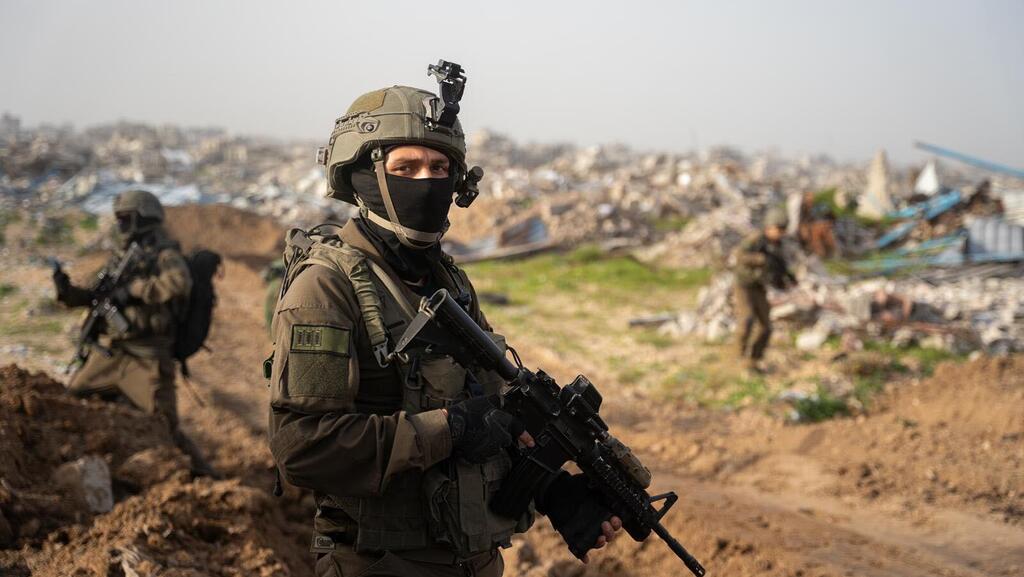
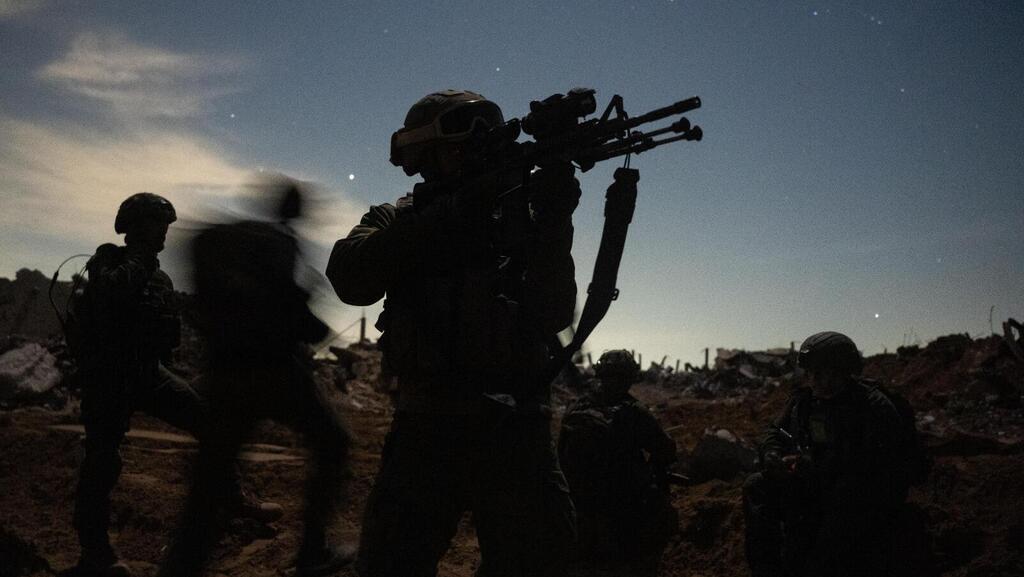
Reservists from the Jerusalem Reserve Brigade are currently gathering at a hotel in Tiberias as part of a professional and psychological decompression process, while summing up their sixth combat deployment since October 7, one that differed from all the previous rounds.
Officers in the brigade refuse to describe the past months, during which they operated along the Yellow Line in northern Gaza, as a ceasefire. Almost every day, they fired small arms, artillery or other fire at suspected targets and terrorists who approached the Yellow Line to test their responses. They searched for and located Hamas tunnels and continued efforts to find and destroy weapons that Hamas still keeps hidden in its many caches.
(Photo: IDF)
About two weeks ago, the brigade’s fighters also took advantage of an incident between Rafah and Khan Younis, in which six Hamas operatives crossed the Yellow Line and were killed after a clash with forces from the 7th Armored Brigade, to deliver a forceful response in their own sector. Within minutes, they requested and received approval to strike predesignated targets and, over the course of 40 minutes, shelled no fewer than 15 targets in the brigade’s area of responsibility beyond the Yellow Line. The reservists struck, “from one moment to the next,” intersections suspected of being booby-trapped, destroyed ambush cameras installed by Hamas and dismantled fighting positions the group had built in recent months within running distance of Israeli positions.
At the same time, the military assesses that Hamas’ main force buildup, which Southern Command is barred from striking due to commitments tied to the current “arrangements reality” is taking place deeper inside the Strip. Hamas is deploying and rearming at nearly every point in the territory it controls beyond the Yellow Line.
During the previous deployment last year, fighters from the 16th Brigade destroyed about 1,500 buildings in the same area, between the neighborhoods of Shuja'iyya, Daraj Tuffah and Zeitoun in eastern Gaza City. Those structures were later completely demolished to prevent their use as hiding places or attack positions for militants. Still, Hamas is exploiting every structure left standing in its territory, even those just dozens of meters from the Yellow Line.
Brigade fighters tracked and uncovered Hamas observation posts inside buildings such as schools and clinics, which Hamas quickly filled with civilians at the start of the ceasefire so they would be classified on IDF maps as “sensitive sites.” Soldiers also identified how Hamas set up roadblocks to channel the population toward “shelters,” under whose cover its military operatives could redeploy. Early in the current deployment, the fighters shelled Hamas photography and observation positions in such a building, killing, according to Palestinian reports, several uninvolved civilians in the Daraj Tuffah neighborhood. An internal investigation found that the force had been required to act only with approval from a senior officer, such as a regional commander.
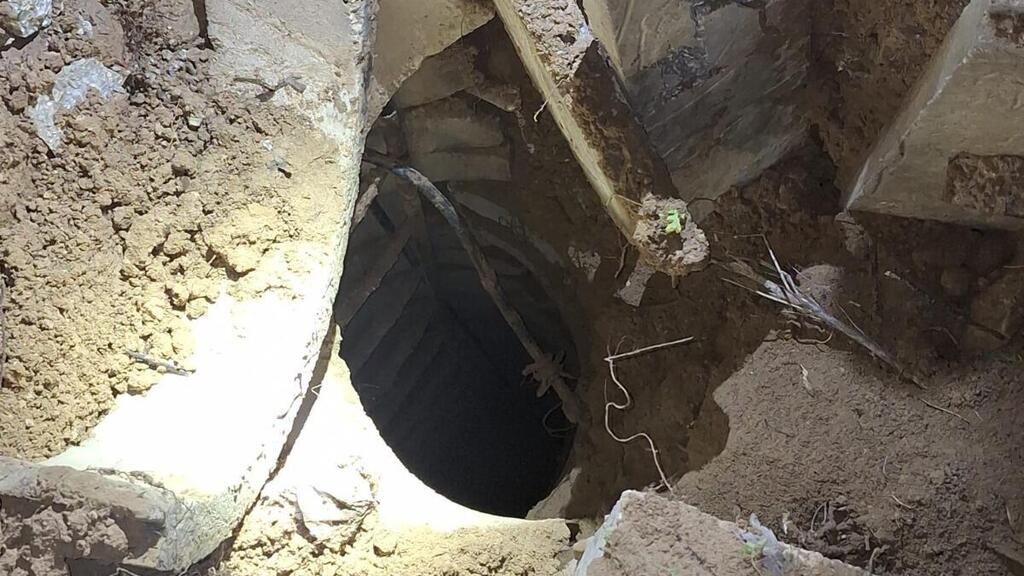
A tunnel shaft located by fighters from the Jerusalem Brigade
(Photo: IDF)
One of the challenges brigade commanders faced compared with previous rounds was restraining fighters who had grown accustomed during ground maneuvers to firing at suspected points with almost no limitations and who were now “required to make adjustments” to the new reality. “Beyond maintaining the Yellow Line, the forces systematically worked to locate tunnels, a mission that is now being continued by the Alexandroni Brigade, which is taking over the sector,” the IDF said.
The brigade lost 16 fighters during the war. In the current deployment, one soldier was seriously wounded by an accidental discharge. On the other side, according to IDF figures, brigade soldiers killed about 14 militants in less than three months of operational activity.
The reservists are returning home this week after being formally released from duty, with a general alert for the next deployment in September, with an asterisk: The brigade will remain on standby in case fighting with Hamas resumes or for other scenarios tied to a possible escalation with Iran. This level of readiness is not new for the unit. Last year, it was activated unexpectedly during Operation Rising Lion shortly after completing another round of fighting in Gaza. According to the IDF, about 80% of the brigade’s fighters reported for the current deployment, a relatively high rate compared with other reserve brigades in the later stages of the war.
Brigade commanders have decided there will no longer be attached personnel from other units, in order to preserve and restore the organic structure of companies and battalions and avoid improper practices that emerged from the ad hoc use of reserve days during the war. As an interim solution to refresh the fighters, it was also decided to end the “week-on, week-off” leave schedule. Instead, soldiers will serve on a two-thirds, one-third rotation — an average of eight days with their company and six days at home.