

As a ceasefire between the United States and Iran took effect overnight between Tuesday and Wednesday, the IDF has continued operating against Hezbollah in Lebanon, while awaiting a possible response from Tehran.
The Islamic Republic is seen as committed to defending Hezbollah if Israel continues operations against the Shiite group in Lebanon, raising the possibility of another Iranian missile barrage overnight.
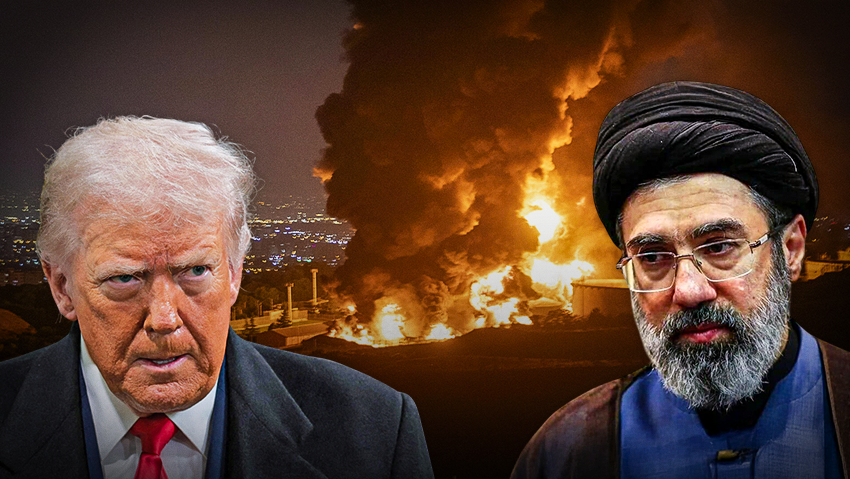
(Photo: Anna Moneymaker / AFP, Stringer / Getty Images)
U.S. forces remain in the region and are being reinforced. The Trump administration is expected to use the ceasefire period to build up forces, maintain pressure in negotiations over a permanent arrangement and preserve military options if the truce does not hold.
For now, the situation is described as a containment phase, with intermittent flare-ups and only partial adherence to the ceasefire. This pattern is typical of conflicts in the region, making developments difficult to assess beyond the coming days. Developments in Lebanon remain a key factor that could affect the stability of the truce, though a planned high-level meeting in Islamabad on Friday could help stabilize it.
The situation in Lebanon presents a dilemma. The ceasefire provides the IDF, particularly the air force, time to regroup, replenish interceptor munitions, rebuild target banks and plan ahead. In such a scenario, the IDF is expected to improve both offensive and defensive capabilities against rocket fire and prepare for faster, more flexible ground operations, in contrast to the slower maneuvering seen earlier in southern Lebanon.
At the same time, it remains unclear whether the United States and the international community would support renewed fighting in Lebanon if operations are halted now. It is also unclear how Washington, Hezbollah and Iran would respond if fighting continues. A miscalculation could destabilize the ceasefire and lead to broader escalation.
Less than a day after the ceasefire took effect, the IDF halted fire in Iran under political direction while maintaining high readiness. Overnight, the air force completed a wave of strikes against dozens of launch sites across Iran, in an effort to disrupt a planned barrage toward Israel. The Home Front Command continues to assess the situation and consider easing restrictions.
IDF strikes in Sidon and Beirut


Operations against Hezbollah have continued. In a major strike, dubbed Operation Eternal Darkness, the IDF targeted more than 100 sites using about 160 munitions in less than 10 minutes. The strikes focused on central headquarters and operatives from field level to senior ranks. If confirmed, the operation represents one of the most significant blows to Hezbollah in the war.
The strike was planned in advance and carried out as operational conditions matured, with the aim of damaging Hezbollah’s command and control system. The IDF chief of staff monitored the operation from the military headquarters in Tel Aviv and emphasized continued operations against Hezbollah.
The working assumption in the IDF is that fighting with Iran could resume on short notice, requiring forces to be ready to act quickly. Iranian forces are also expected to regroup during the ceasefire, though rebuilding damage is likely to take time. At the same time, Iran could use the pause to prepare launch systems for renewed attacks.
The air force has maintained more than 80% operational readiness throughout roughly 40 days of fighting, rotating equipment as needed and continuing both defensive and offensive activity.
Iranian officials have warned of escalation if operations in Lebanon continue. A spokesman for the Iranian parliament’s National Security and Foreign Policy Committee called for strong measures in response, including steps aimed at deterring further operations.
Iranian media cited a security source as saying Tehran is preparing deterrent actions against military targets in Israel, arguing that continued operations in Lebanon despite the ceasefire indicate either a lack of U.S. control or freedom of action granted to Israel.