

A senior Iranian official confirmed Monday afternoon to the Reuters news agency that expected talks between U.S. envoy Steve Witkoff and Iranian Foreign Minister Abbas Araghchi will be held Friday in Istanbul.
Reuters also quoted a regional diplomat who said representatives of several countries in the region, including Qatar, Saudi Arabia, the United Arab Emirates, Oman and Egypt, will attend the meeting in Istanbul, in what now appears to be an effort to convene a kind of regional summit as part of intense efforts to prevent war.
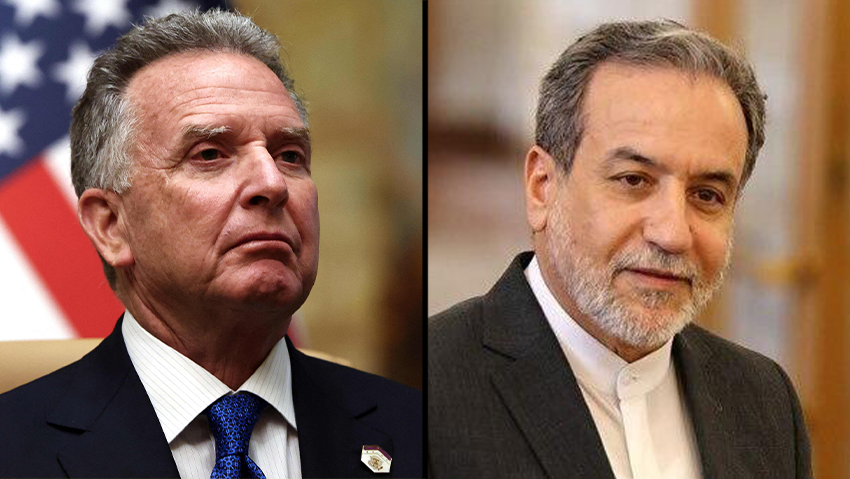
Iranian Foreign Minister Abbas Araghchi and US envoy Steve Witkoff
(Photo: REUTERS/Evelyn Hockstein/Pool )
“The president called on them to make a deal. The meeting is intended to hear what they have to say,” a U.S. official said of the expected talks Friday. Witkoff is due to arrive after traveling to Israel on Tuesday, where he is expected to meet Prime Minister Benjamin Netanyahu, and after taking part Wednesday and Thursday in other negotiations between Russia and Ukraine in Abu Dhabi.
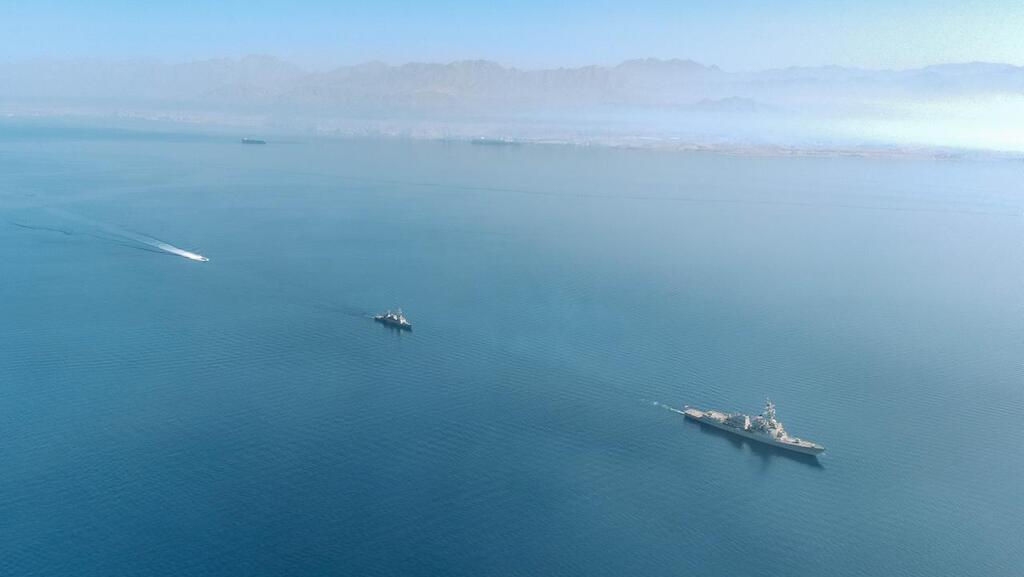
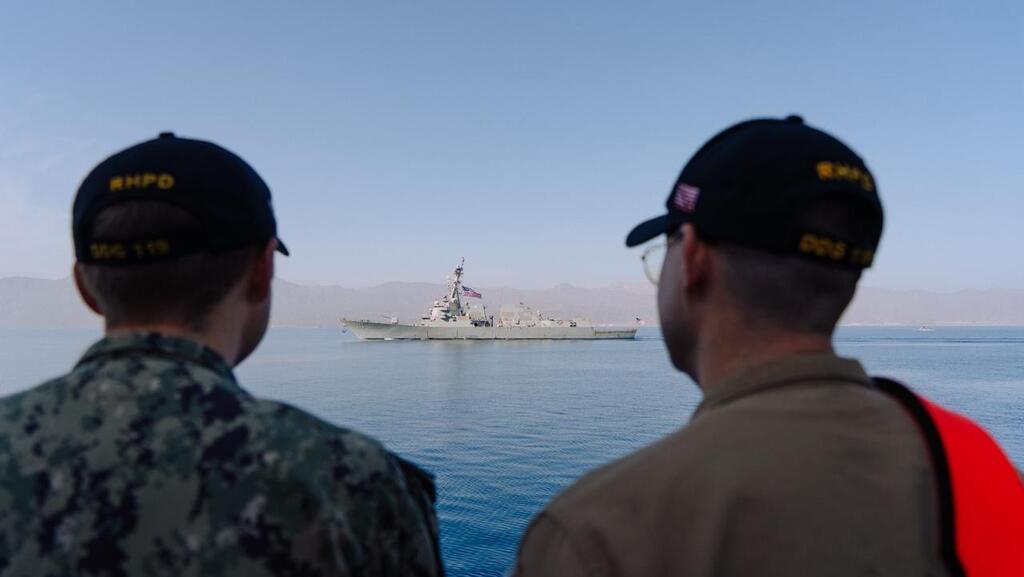
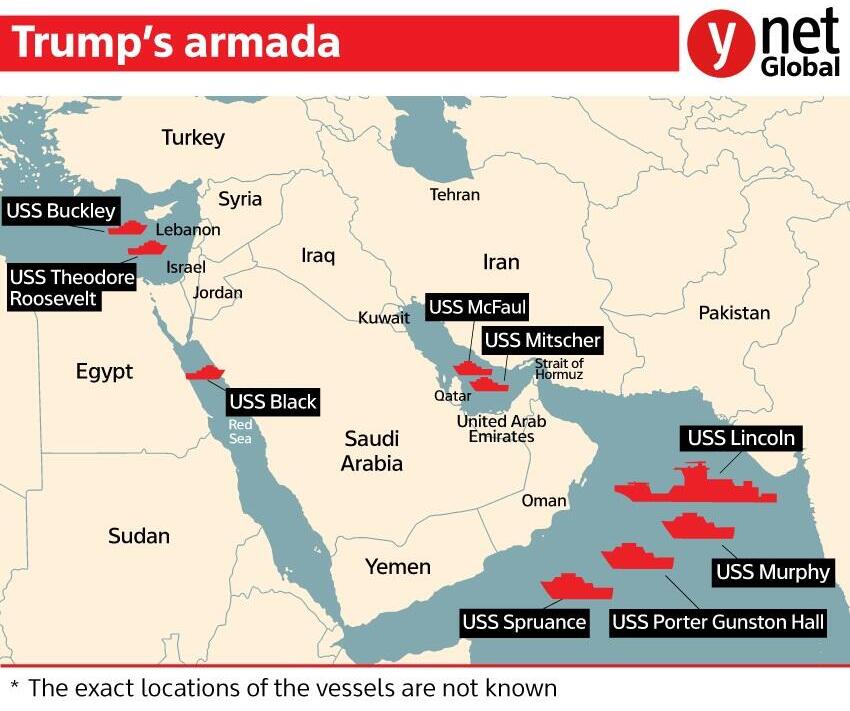
Alongside the diplomatic efforts, the military threat continues. Earlier Monday, the Israel Defense Forces and the U.S. military announced a naval exercise conducted Sunday by their navies in the Red Sea. According to U.S. Central Command, CENTCOM, the exercise included the destroyer Delbert Black, which docked at the port of Eilat over the weekend and has since departed, alongside the Israeli vessel INS Eilat. The Black is one of eight destroyers the United States has sent to the region as part of a buildup of forces, in addition to the aircraft carrier Abraham Lincoln. “The combined exercise demonstrates the strong military cooperation between the U.S. Fifth Fleet and the Israeli Navy,” CENTCOM said in a statement.
The Istanbul talks will take place against the backdrop of peak tensions between Tehran and Washington. Those tensions began with former President Donald Trump’s belligerent statements during protests in Iran against the ayatollahs’ regime last month, when he encouraged the demonstrators, promised them that “help is on the way” and threatened to strike if the regime harmed them. The regime massacred thousands of protesters during the brutal crackdown, with estimates putting the death toll in the tens of thousands, and Trump is now under pressure to follow through on his threats.
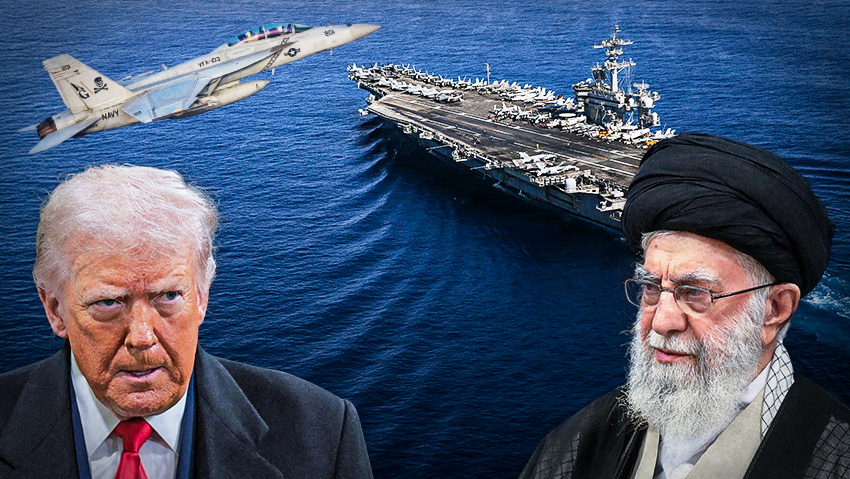
Trump has since sent what he calls a “big armada” to the Middle East, including the Lincoln and eight destroyers, and is reportedly weighing a range of strike options, from limited targeted attacks to a broad campaign aimed at destabilizing the regime. At the same time, Trump has repeatedly said he wants to reach an agreement with Iran, one that would block any future path to nuclear weapons and ostensibly prevent the killing of protesters, even though the mass killings have already ended after the successful suppression of the unrest.
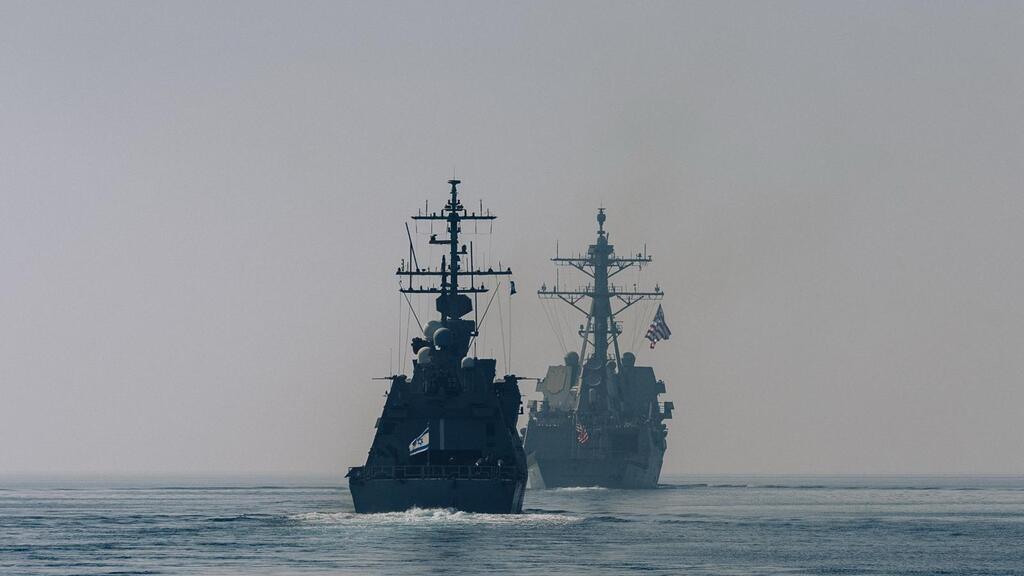
The US destroyer Delbert Black behind the Israeli vessel INS Eilat during an exercise in the Red Sea
(Photo: IDF)
(Photo: IDF)
(Photo: IDF)
According to behind-the-scenes reports, the U.S. administration is presenting Iran with additional demands. Beyond a complete halt to uranium enrichment, Washington is also demanding restrictions on Iran’s ballistic missile program and an end to funding and support for Iran’s proxies across the Middle East.
Iran is firmly refusing a complete halt to uranium enrichment and is also refusing to discuss its missile program. That program was badly hit by Israel during Operation Rising Lion in June last year but has since reportedly undergone significant rehabilitation and has again become a major threat to Israel and to U.S. forces deployed in the region.
When asked Sunday in an interview with CNN about Iran’s ballistic missile program, Araghchi dismissed the idea of discussing it as unrealistic. He urged the United States not to miss what he described as an opportunity to reach a fair and just agreement that would ensure Iran does not obtain nuclear weapons, saying such an outcome could be achieved within a relatively short period of time.
Trump's armada
It is not yet entirely clear whether Iran will refuse to address the missile issue in Friday’s talks. However, a report Monday morning by Iran’s Fars news agency emphasized that the talks will focus on the nuclear issue. Reuters quoted two Iranian officials as saying the uranium enrichment issue is not expected to be the main obstacle to an agreement with the United States, but rather the missile issue, though it was not clear from their remarks whether that issue will be included in the talks.
In any case, Iran’s willingness to hold negotiations comes despite statements by Araghchi and other senior Iranian officials that talks with the United States cannot take place under an atmosphere of threats. In a Reuters report Monday morning, another Iranian official was quoted as saying Tehran wants the United States to pull its military assets away from Iran, meaning the aircraft carrier and destroyers moved closer, as a condition for talks to begin. “Now the ball is in Trump’s court,” the Iranian official said, just hours before reports emerged that the negotiating meeting had been set for Friday. So far, there is no sign Trump intends to remove the military threat alongside the talks.
Trump responds to Khamenei on regional war: ‘I hope we make a deal, if not, we’ll find out’


Trump has declined to say whether he has set a deadline for Iran, but last week he warned that time was running out to reach an agreement and threatened that any future strike would be far harsher than the previous one, referring to the targeted attack on nuclear facilities last June.
Iran’s Supreme Leader Ayatollah Ali Khamenei warned Sunday that a U.S. attack this time would ignite a regional war, implying among other things that Israel would also be attacked in response. Trump replied later that night, “I hope we make a deal. If we don’t make a deal, we’ll find out.” Trump also said, “We have the biggest and strongest ships there, very close. They’ll be ready within days," a remark suggesting U.S. forces would be ready for an attack only in several days. Against this backdrop, there are reports that the United States is still transferring additional air defense systems to the region to help protect its forces and Israel’s airspace.
Witkoff is due to arrive in Israel on Tuesday. Along with Netanyahu, he is expected, according to Reuters, to meet with IDF Chief of Staff Lt. Gen. Eyal Zamir. The talks will focus on the expected negotiations with Iran, amid concern in Jerusalem that Trump could abandon demands for limits on the missile program and an end to support for Iran’s proxies, settling instead for a narrower agreement that would impose restrictions only on the nuclear program. Iran’s missile program is increasingly viewed in Israel as an existential threat. The expectation in Jerusalem is that the Americans will insist on reducing the missiles, particularly their range. If Iran commits not to develop long-range missiles, the threat to Israel would diminish. Tehran, as noted, refuses to discuss the issue.
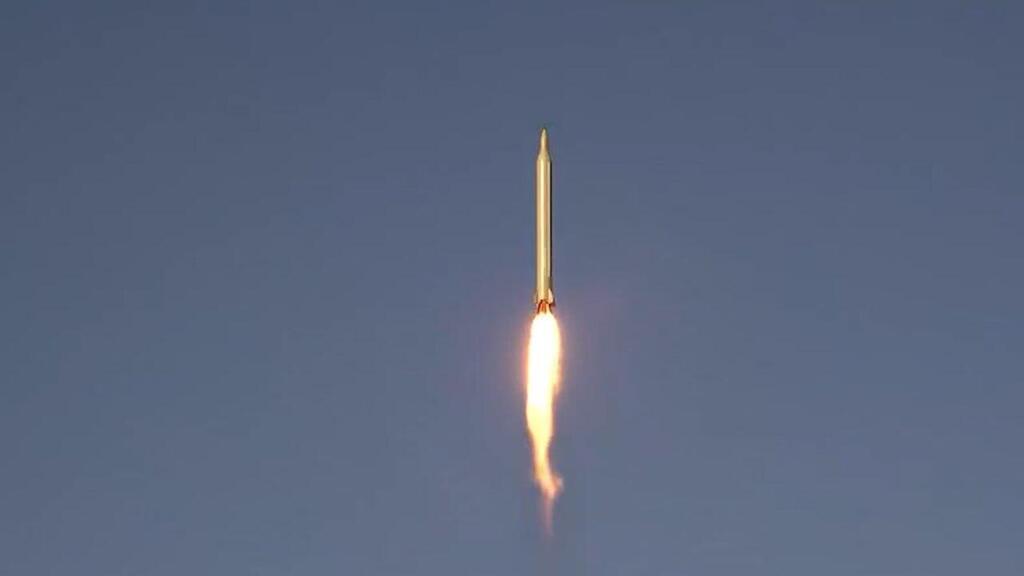
A missile launched by Iran toward Israel during the 12-day war
Witkoff is opposed to a military strike and is seen in Israel as pushing an isolationist line that distances the United States from military conflicts. There is concern he could “fall into the trap” set by the Iranian team, and the big question is how determined Trump is to go all the way. In Israel, it was reported, there is a belief that the die has been cast and that Trump is effectively working to build legitimacy for action. Evidence cited is the large naval force Trump has sent to the region, at a cost of tens of billions of dollars.
Meanwhile, Prime Minister Netanyahu held a routine update meeting Monday with opposition leader Yair Lapid. The meeting was attended by Netanyahu’s military secretary, Maj. Gen. Roman Gofman. Lapid said afterward: “The entire State of Israel is united in the face of Iran. There are no disputes between us about the importance of confronting this threat. It is important that Tehran knows the State of Israel stands united against the regime’s terror.”
First published: 20:29, 02.02.26