

The recent ceasefire has fueled optimism across Iran’s regional network and Hezbollah, even as parallel diplomatic efforts involving Lebanon, Israel and international mediators move forward, according to statements by senior figures and regional analysts.
Hezbollah Secretary-General Naim Qassem said in a speech on Tuesday that any Israeli withdrawal from Lebanon must be “on the basis of clear timelines and from all Lebanese territory,” outlining what he described as five principles: a complete halt to fighting, full withdrawal, prisoner releases (Hezbollah prisoners), the return of displaced persons to the border area and reconstruction.
“Israel will withdraw and the Lebanese army will deploy in the south of the country, and we will cooperate with the process… We thank Iran, which everyone has learned can be relied upon, and which did not agree to end the war without Lebanon’s issue being resolved,” Qassem said.
His remarks reflect what analysts describe as a broader sense of confidence within what he called the “resistance axis” following the signing last week of a memorandum of understanding between the United States and Iran.
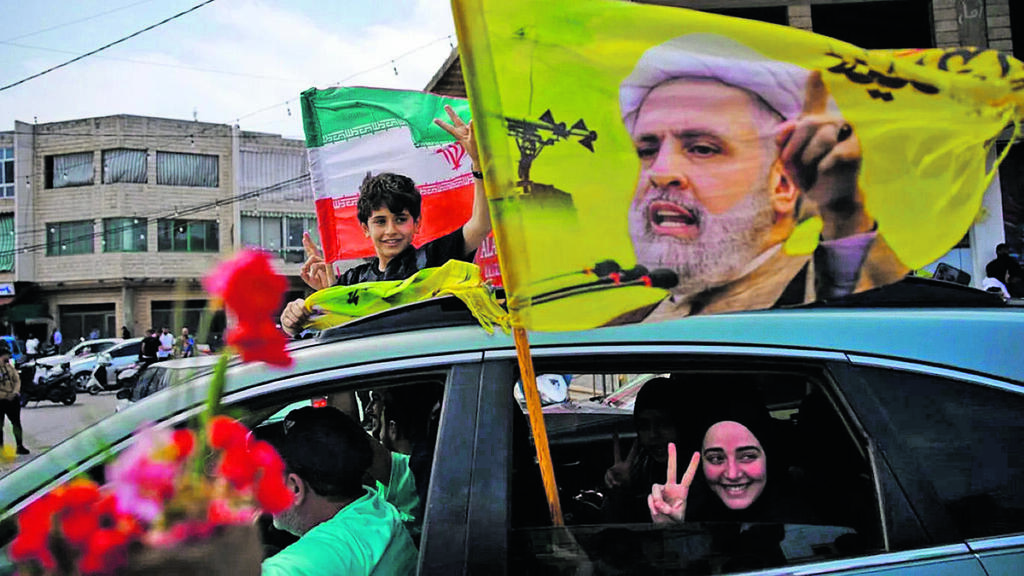
According to regional assessments, the Iran-led bloc has in recent days projected a renewed sense of cohesion after what it views as surviving a prolonged military campaign despite significant setbacks. The camp has sought to emphasize its continued influence in the region and the resilience of its “resistance” doctrine.
Iranian officials reportedly involved in diplomatic contacts are now engaged in discussions with American counterparts, which Tehran-aligned commentators have framed as recognition of a shifting regional order. Hezbollah, which Israel has sought to decisively weaken, is meanwhile being portrayed by its supporters as maintaining its central role in Lebanon.
Observers within the same camp have also pointed to what they describe as unease in Israel and among its allies, citing signs of strain in relations between Washington and Jerusalem and questions in Israel over the effectiveness of recent military campaigns in Lebanon and Iran-related arenas.
Ali Haidar, a writer affiliated with Hezbollah, said the recent conflict represents “a comprehensive test of strategic concepts promoted by the enemies of the resistance axis since October 7.”
“The enemy is not only seeking to destroy weapons and eliminate leaders, but also to impose a new political reality aimed at weakening the resistance and establishing a ‘Israeli era’ in the region,” he said. “However, the resistance axis is frustrating this effort, proving how mistaken the obituaries for its disappearance were… It turns out that military superiority and territorial occupation do not immediately lead to political resolution.”
Separately, a new “conflict prevention cell” for Lebanon was reportedly established in Switzerland this week, involving the United States, Iran, Lebanon, Qatar and Pakistan. The initiative has raised concern in Israel, which is not part of the framework. It comes amid a ceasefire arrangement that is expected to limit Israeli military activity at the request of the United States, with exceptions reportedly including the Ali Taher ridge area, where Israel has targeted an underground Hezbollah facility.
The evolving diplomatic framework appears to grant Hezbollah greater confidence, with senior officials signaling resistance to any arrangement that would constrain the group’s freedom of action. “We will not sign an agreement that leaves the enemy with freedom of action,” Qassem said, signaling opposition to a return to post-October 7 military equations.
Hezbollah deputy leader Wafiq Safa echoed this sentiment in a widely circulated podcast, suggesting that future generations could pursue the group’s long-term vision. “Perhaps not this generation, but the next will realize the vision of conquering the Galilee,” he said. He also referenced the psychological impact of recent Israeli operations, including the killing of Hezbollah leader Hassan Nasrallah, and claimed Iran is “on its way to becoming the dominant power in the region and the fourth strongest force in the world.”
At the same time, indirect Israel-Lebanon talks continued in Washington, described by some officials as a framework supporting an eventual agreement on the ground. One proposal under discussion reportedly involves Lebanese army control of areas evacuated by Israeli forces as pilot zones intended to reduce tensions.
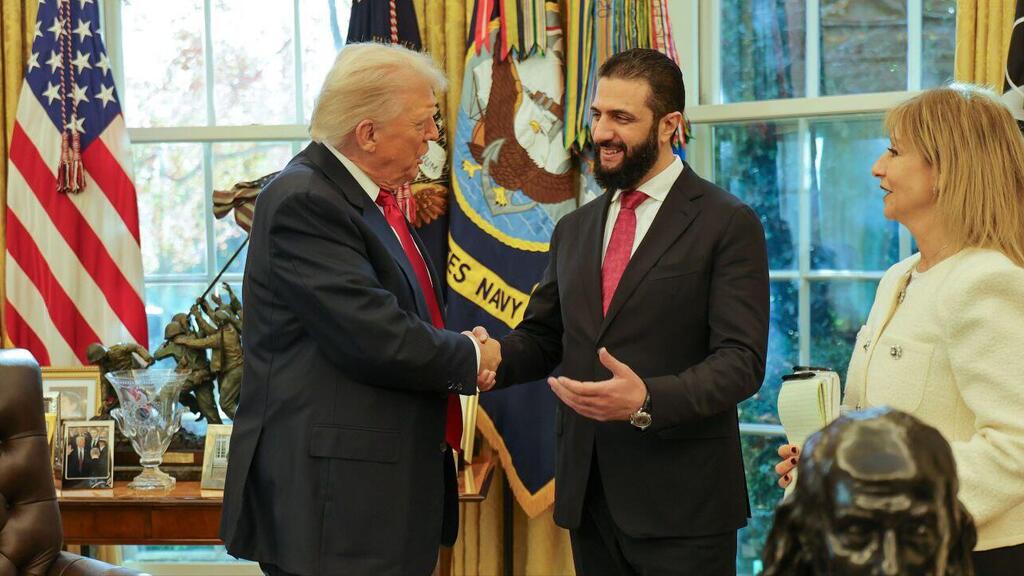
US President Donald Trump meets Syrian President Ahmad al-Sharaa at teh WHite House last year
“We demand a full withdrawal, including disputed points along the border. We expect Israel to propose security arrangements and we will discuss them. I am not pessimistic,” Lebanese Prime Minister Nawaf Salam said.
Syria has also become indirectly involved in the discussions, despite public reluctance from its leadership. U.S. President Donald Trump has reportedly urged Syrian President Ahmad al-Sharaa to play a role in disarming Hezbollah, though Damascus has pushed back.
“I spoke with Trump and proposed other solutions. You will not see Syria in Lebanon,” al-Sharaa said. “Although we were harmed by Hezbollah, we are ready to engage in dialogue.”
Syrian analyst Dr. Samir al-Taqi warned against deeper Syrian involvement. “Do not fall into Trump’s trap. Syria does not need a regional role before it can rebuild itself,” he said. “History shows that anyone who invaded Lebanon eventually left after being severely burned. And remember how volatile Trump is; he is effectively becoming a lame duck these days.”
Qatar has also expanded its diplomatic footprint, participating in both the Swiss talks and Lebanon-related mediation efforts. Its growing involvement — including in Gaza and Iran-related negotiations — has increased its influence with the Trump administration, according to regional observers.
For Israel, the emerging framework presents a complex balancing act between maintaining coordination with Washington and preserving operational flexibility. Officials are expected to seek guarantees regarding Hezbollah’s withdrawal from southern Lebanon and continued freedom of action against renewed entrenchment.
Analysts note that both in Lebanon and Iran, Israel now faces the aftereffects of a strategy whose long-term consequences remain under debate, as political and security arrangements continue to evolve under international mediation.
Milstein is a senior researcher at the Dayan Center at Tel Aviv University
First published: 00:52, 06.26.26