

The fifth round of talks between Israel and Lebanon opened Tuesday in Washington and is expected to continue until Thursday, as the United States pushes for progress on stabilizing southern Lebanon while incidents on the ground continue to test the fragile ceasefire.
Lebanese President Joseph Aoun said the new round of U.S.-backed talks with Israel could be decisive, but stressed that Lebanon would accept nothing less than an end to what he called the “Israeli occupation” of southern Lebanon. His remarks underscored the gap between Beirut’s public position and Israel’s insistence that it must remain along its current security line until Hezbollah is disarmed and southern Lebanon is demilitarized.
Gallery
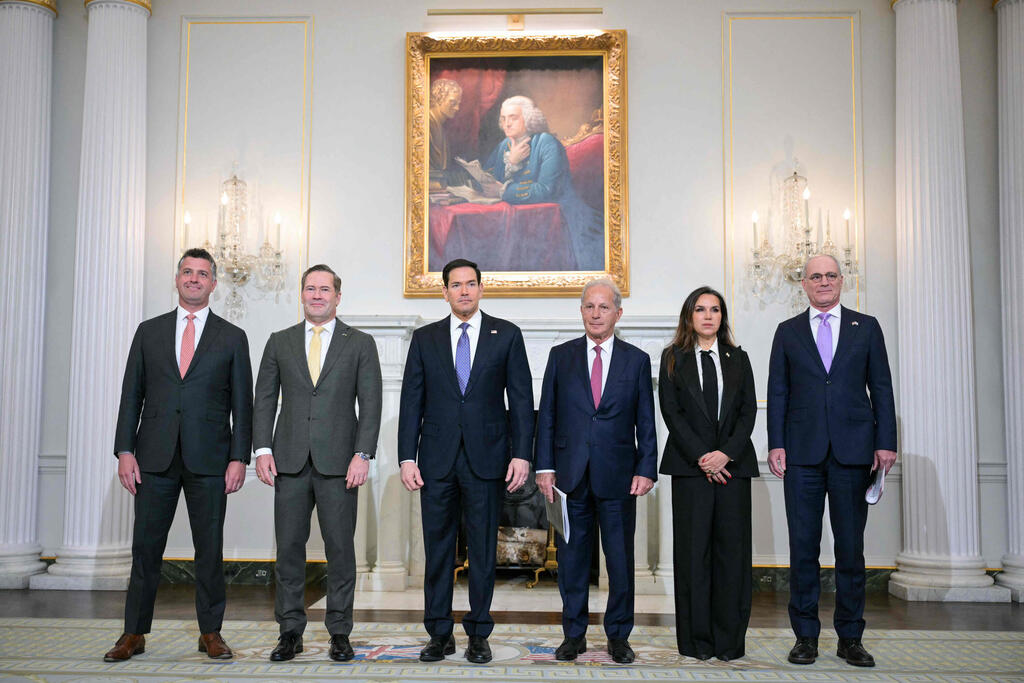
Previous round of Israel-Lebanon talks at the US State Department
(Photo: Oliver Contreras / AFP)
Shortly before the talks began, the IDF said troops fired at Hezbollah terrorists operating under civilian cover on the Ali al-Taher ridge in southern Lebanon. According to the military, forces identified four Hezbollah terrorists riding a bulldozer and a motorcycle as they approached Israeli troops in a way that posed an immediate threat. The troops first fired warning shots to push them away, the IDF said. When the terrorists continued to approach and did not respond to the soldiers’ calls, the forces opened fire again to remove the threat, and a hit was identified.
Earlier Tuesday, after more than a day of temporary calm in southern Lebanon, two people were reported killed by IDF fire in the village of Nabatieh al-Fawqa in the south of the country. Lebanese reports claimed Israeli forces opened fire at Lebanese civilians who had arrived at their home. The IDF later confirmed it had struck in the area, saying the target was an armed terrorist cell identified near Israeli forces on the Ali al-Taher ridge.
Meanwhile, Lebanese television channel Al Jadeed claimed that negotiations between Israel and Lebanon also include a possible exchange involving the remains of missing Israeli navigator Ron Arad and Lebanese prisoners held in Israel. Israel has not confirmed the claim, which surfaced publicly for the first time, and its credibility remains unclear. Israeli officials denied the report, saying the matter was not known to them.
The talks between the Israeli and Lebanese delegations are being held on two parallel tracks, political and military. Israel is represented by Ambassador to Washington Yechiel Leiter, National Security Council deputy foreign policy chief Yossi Draznin and professional officials. The military track includes Brig. Gen. Amichai Levin, head of the Strategic Division in the IDF Planning Directorate, acting military attaché Erik Ben-Dov and additional officers.
In Tuesday’s discussions, the Israeli side is expected to present maps and begin debating pilot areas where the Lebanese army would be asked to prove it can turn territory into zones free of Hezbollah. The pilot program would be closely accompanied by the U.S. military, in an effort to ensure that the Lebanese army can carry out the mission successfully.
Israel would agree to withdraw from the pilot areas and is expected to propose several potential zones, including areas that have already been relatively cleared of Hezbollah terrorists and where the Lebanese army could deploy. The Lebanese side is expected to propose areas of its own.
Israeli officials, however, remain deeply skeptical that the effort can succeed. “The entire move is the result of American pressure to preserve the ceasefire in Lebanon in light of the agreement with Iran,” an Israeli official familiar with the matter said. “Any solution reached today in Lebanon will be problematic because it will not really address the Hezbollah threat, both toward Israel and inside Lebanon. Israel will want to hold the yellow line where it is currently positioned, with maximum freedom of action. Unfortunately, I do not currently see a solution for Lebanon that will satisfy Israel.”
US fears a domino effect
The United States is seeking to show an achievement in the talks, viewing Lebanon as a potential flashpoint that could threaten the broader agreement with Iran and cause it to collapse like a domino chain.
Washington understands that if Hezbollah fires at Israel, Israel will strike Lebanon forcefully, potentially drawing Iran into a response and quickly reigniting a wider war. For that reason, the Americans included a clause in the agreement with Iran referring to the establishment of a deconfliction cell in Lebanon, while also promising Tehran that they would keep Israel restrained.
A senior Israeli official familiar with the matter said the deconfliction mechanism is not connected to Israel and does not control Israeli forces on the ground. “The deconfliction cell is not something we are part of, and it does not manage the forces in the field,” the official said. “The prime minister remains very determined to present it as a vital Israeli interest that Israel stay in the security zone. That is the official message, and it has not changed.”
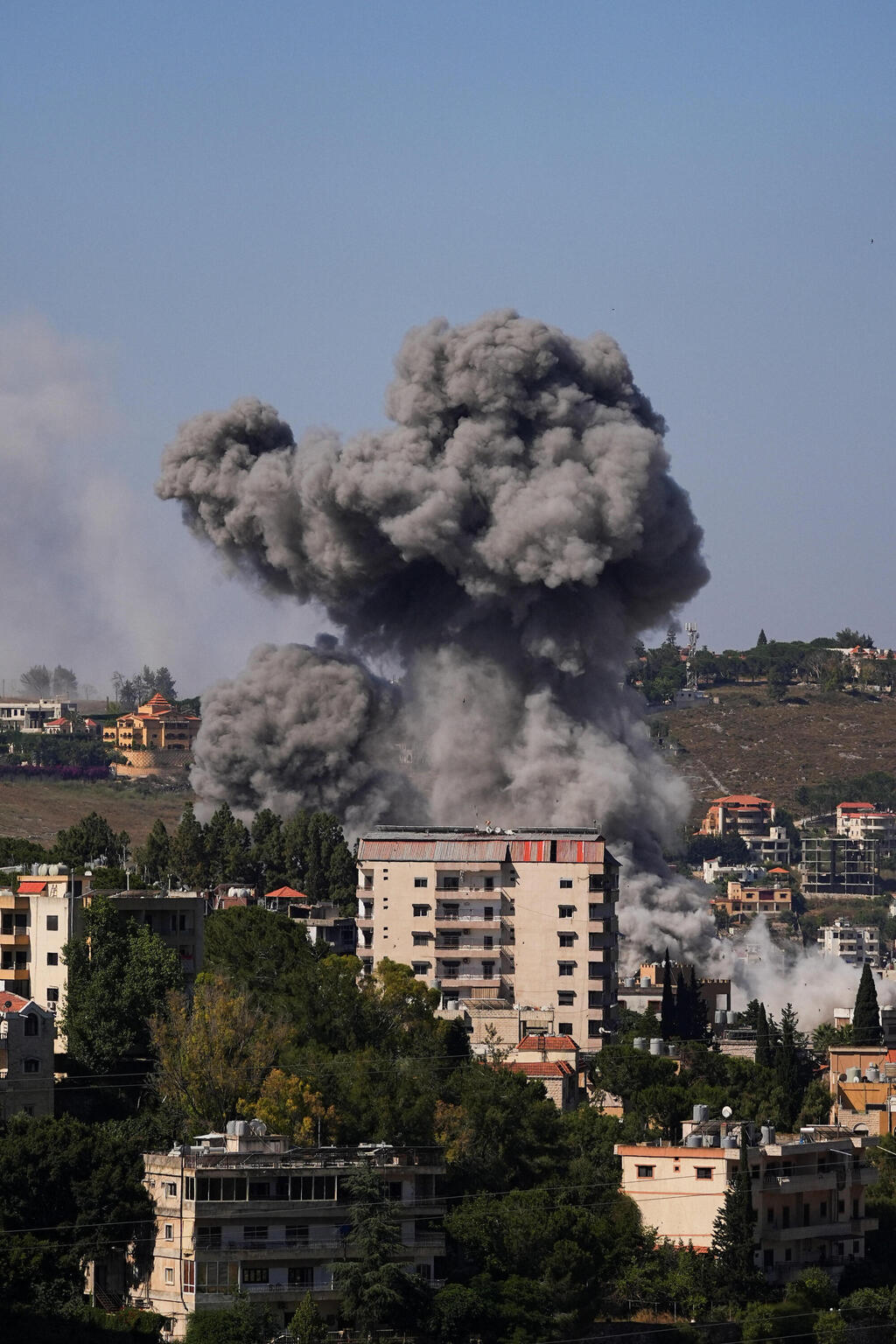
IDF strike in southern Lebanon
(Photo: REUTERS/Stringer)
“Israel says that every time Hezbollah violates the ceasefire, we are obligated to respond,” the official added. “That does not contradict the negotiations with the Lebanese government, which include a clause stating that Hezbollah must be disarmed and southern Lebanon must be demilitarized. We are currently cooperating with the larger story that the area south of the Litani must be demilitarized, and we will not move the IDF from the yellow line and the security zone.”
According to the official, the main complexity concerns where fire is permitted, where it is not and how forces are positioned. “At the moment, the official message is that Israel must remain in the security zone,” the official said. “It is the IDF’s job to make sure they cannot fire on our cities and that our presence prevents the danger of an invasion through the security zone. It is true that the reality is very complex.”
Other Israeli officials expressed deep concern over the situation in Lebanon. “Trump and Netanyahu are trying to produce some achievement in Lebanon, but right now it all looks like a failure,” they said. “Hezbollah continues to violate the ceasefire and drag Israel along.”
The search for Ron Arad’s remains
Regarding Ron Arad, Lebanese media reported about three and a half months ago that IDF special forces operated near the village of Nabi Sheet in eastern Lebanon in an effort to search for the navigator’s remains, but that the goals of the operation were not achieved.
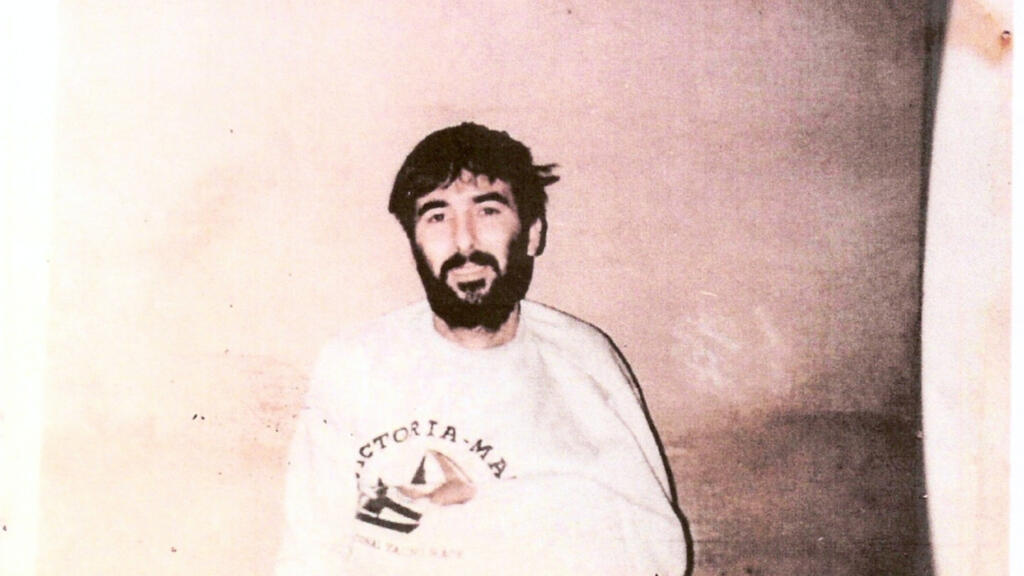
Ron Arad
After the operation, Tami Arad, Ron Arad’s wife, appealed to Prime Minister Benjamin Netanyahu and asked him not to approve operations that could endanger soldiers. “In our eyes, the sanctity of life comes before the obligation to return the bones of a fighter for burial,” she wrote in a Facebook post.
“A great miracle happened tonight,” she wrote. “After this night, we understand that our words until now were not understood by the decision-makers, and therefore it is important for us to clarify: Our desire to know what happened to Ron stops the moment it meets a risk to IDF soldiers. In our eyes, the sanctity of life comes before the obligation to return the bones of a fighter for burial. This is our worldview also regarding our loved one who disappeared nearly 40 years ago.”
First published: 16:07, 06.23.26