

Accumulating evidence suggests the world order as we knew it no longer exists. From scientific breakthroughs, through fundamental shifts in the nature of warfare, to the failure of the political system, all point to the emergence of a new era. Humanity has experienced such turning points before, at the end of World War II and in the late 1980s. In both previous transitions Israel was weak, whereas now it has the resources to rise to the occasion. But doing so will require radical decisions from the next government.
“If we fight, we will be fighting the future and not returning to the past. The enemies who stood against us in the past have no guarantee they will behave in the future as they did before. On the contrary. We must assume they have learned from their failures and will try to correct them.”
Gallery

Trump, this week. A small country needs a strategic asset that even the United States cannot give up
(Photo: Chip Somodevilla, Getty Images)
I returned this week to this speech by David Ben-Gurion from October 18, 1952, against the backdrop of Israeli debate over a possible return to fighting in Gaza, U.S. President Donald Trump’s announcement of a delay in military action against Iran and the deadly drone strikes in the north. Israel’s first prime minister understood a basic element of human existence: people are engaged in a constant learning competition. War is its most extreme, painful and unbearable expression, but it exists in every layer of human activity: science, politics, technology and personal life.
We are living in a period of formation. Everything we know about how war looks, how economies function, what holds democracies together, what the next dominant energy source will be and how actors dissatisfied with progress behave is being updated daily. The global system is at the end of a “super-cycle” that occurs roughly every 30 years. The rules of the next system are being shaped now, and it is extremely difficult to define them.
War is not a pause in history. It is its harshest research and development phase. Everyone is learning simultaneously, everywhere, and at high speed. The only relevant Israeli question this week is whether we are learning fast enough, and if not, how deep a transformation Israel must undergo in order to rise to the moment and, for the first time since its founding, not only shape its own future but also take part in shaping the global system itself.
The discovery of penicillin by Alexander Fleming in the summer of 1928 became a turning point only during World War II, when the urgent need to treat battlefield trauma led to mass production that changed history. It was only with the outbreak of war, when field doctors saw young soldiers dying from simple infections, that the British government sent Howard Florey and Norman Heatley from Oxford to the United States to develop industrial production lines. They arrived in Peoria, Illinois, during the London Blitz in 1941. In a civilian agricultural lab, based on a rotting melon purchased in a local market, a mold strain was found that increased output tenfold compared to the Oxford model. By the Normandy landings in June 1944, the Allies had enough penicillin for every wounded soldier in the field thanks to the industrial production methods that still underpin modern medicine.
The V-2 rocket of Wernher von Braun, which spread terror across England and killed thousands, became the foundation of the US space program. Under Operation Paperclip, von Braun and 1,600 German scientists, many of them linked to the Nazi regime, were brought to Alabama. There, based on Nazi-era knowledge, the Saturn V program was born and eventually landed a man on the Moon in 1969. Two decades later, Elon Musk applied the same propulsion theory to create SpaceX’s Falcon launcher, the first reusable rocket in history. On its back, the company deploys Starlink satellites that, at least in theory, can provide internet to towns in eastern Ukraine and to protesters in Iran whose regimes try to silence them. A rocket designed to kill has become the basic civilian infrastructure of the democratic era. To put it in perspective, German missiles could carry about one ton of explosives, while SpaceX’s Starship, expected to launch dozens of satellites at once, is designed to carry about 150 tons in reusable use.
We Israelis are deeply embedded in this learning competition imposed on us by adversaries who refuse to live peacefully alongside Jewish sovereignty in the land. In the Yom Kippur War, the IDF was severely affected by Soviet “Sagger” anti-tank missiles and air-defense systems. About a decade later, Israel carried out the world’s first systemic use of unmanned aerial vehicles (IAI Scout) as part of the operation to neutralize and destroy advanced Soviet air defenses deployed in Syria (Operation Mole Cricket 19 in the First Lebanon War).

Avigdor Kahalni climbing out of a tank during the Yom Kippur War
(Photo: Tom Heyman)
Saddam Hussein’s missiles drove the development of the Arrow system, which in recent years has intercepted hundreds of Iranian missiles outside the atmosphere. Hamas tunnels met the “Hourglass Fence” barrier, pushing the organization toward the realization that it must strike above ground instead, culminating in a barbaric massacre while invading Israel and holding sovereign territory inside it for hours. This is how the learning competition works on the battlefield, and fiber-optic guided FPV drones striking IDF forces in Lebanon these days are its latest and expected manifestation.
The political learning competition is also at its peak. About 35 years ago, American political scientist Francis Fukuyama wrote his influential essay “The End of History,” in which he argued that what we are witnessing is not only the end of the Cold War but the end of history as such, meaning the endpoint of humanity’s ideological evolution and the universalization of Western liberal democracy as the final form of government.
Generations of politicians were influenced by his work. The late Shimon Peres frequently referenced the idea of “the end of history” in Israeli foreign policy in the 1990s. Under its influence, many argued that liberal democracy, which defeated fascism, Nazism and communism, is a kind of natural law like gravity. Echoes of this thinking appeared in the dominant hypothesis in political science, the “democratic peace theory,” which held that democracies do not go to war with one another and that history is gradually approaching the end of war. This worldview was also reflected in the work of Israeli scholar Yuval Noah Harari until Russia’s violent invasion of Ukraine.
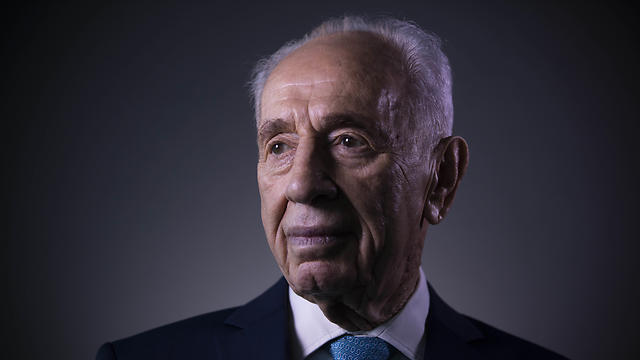
Shimon Peres
(Photo: AP)
Yet human history, to paraphrase Karl Marx, is the history of struggles between ideas. Every idea has an expiration date. It is ideas that end, not history itself. In recent years it appears that all systems have reached their limits. The global order designed in 1945, the United Nations, the Security Council, humanitarian conventions, free trade and globalization, have all been eroded in this learning competition. Meanwhile, the middle class and personal freedoms, once strengthened by these institutions, are now strained by stagnation and exploitation of the system by actors benefiting from it.
In London, Prime Minister Keir Starmer is fighting for his political survival after failing to implement any meaningful reform in 18 months despite a parliamentary majority. Local election results wiped out the Labour Party, and his refusal to make bold moves and pay the political costs of the learning competition may push Britain further into the murky waters of populism. There is a limit to how much the public can endure welfare policies whose costs exceed tax revenues.
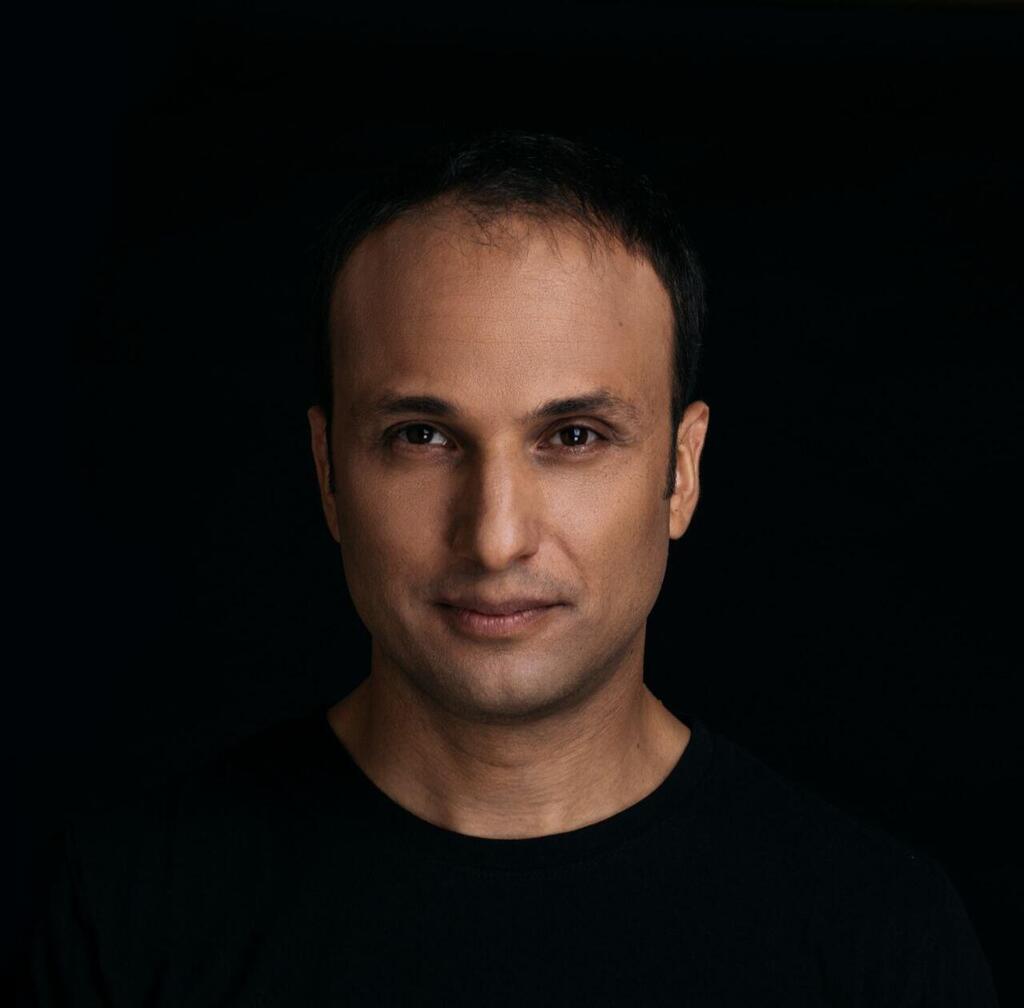
Jonathan Adiri
In Germany, Chancellor Friedrich Merz is struggling to push through the necessary shift in the country he was elected to lead. The collapse of the German economic miracle and the failure of the political system to support the middle class are driving major changes in Germany’s geopolitical posture (“we will build Europe’s largest army,” “we must admit the failure of EU regulation”), in the welfare state (“the model is dead”) and in the national ethos. Merz is using the rise of the far-right AfD, now the largest party in polls, to signal to voters that if the center does not initiate change, it will be forced by extremists.
In France, where the average pension is already higher than the average salary, and after five prime ministers in three years and an ongoing political crisis that blocks economic reform, it appears that President Emmanuel Macron will hand over power in about a year to the right-wing candidate Jordan Bardella.
During the past week, a meeting took place between Trump and Xi Jinping. The Chinese president broke the two-term limit rule, learned from the first round of the trade war, identified rare earth minerals and magnets as his strongest leverage, and used them as strategic pressure that forced the US president to back down. The summit itself was light on formal agreements and heavy on messaging.
Xi received a framework of “strategic stability for three years” and an official invitation to the White House on September 24. Trump received a pause in the minerals crisis, a gradual return of major US tech companies to the Chinese market (top US economic figures joined the delegation), and backing for continuing his national security strategy focused on the Western Hemisphere and American interests in the Middle East, including the war with Iran.
The deeper message was heard not in the official statements but in Trump’s interview after the summit. When asked about a $14 billion arms package for Taiwan, he replied: “A very good bargaining chip for us, actually. A lot of weapons. I have not approved it yet.” When asked whether Taiwan should feel less safe after the summit, he said: “I'm not looking to have somebody go independent. And, you know, we're supposed to travel 9,500 miles to fight a war. I'm not looking for that. I want them to cool down. I want China to cool down.”
Trump is leading what Henry Kissinger used to call “constructive ambiguity.” He is not setting clear red lines, thereby allowing China to continue pressuring Taiwan toward reunification and abandoning independence. Xi has already defined 2027, the 100th anniversary of the People’s Liberation Army, as the year of reunification with Taiwan. He has also recently hosted the Taiwanese opposition leader in Beijing with great ceremony.
At the same time, reports have increased about the success of the Taiwanese semiconductor giant TSMC in Arizona and milestones in large-scale production of four-nanometer chips. Are we witnessing the collapse of Taiwan’s “silicon shield”? Is its monopoly in semiconductors ending, along with the protection it provides?
For Israel, this carries a double meaning: first, a small state needs a unique strategic asset that even its closest allies cannot give up. Second, as discussions on the renewed defense aid framework approach, it is a reminder that the alliance with the United States, however strong, can still experience shocks of existential significance.
Back home. We must not assume that if we return to fighting we will face the same enemy. The long weeks of ceasefire allowed it to learn and adapt. The next round will not resemble the previous one. This week’s Iranian strike on the civilian nuclear facility in Abu Dhabi is a signal of that.
And in the drone arena, the threat is not limited to Lebanon. An FPV drone guided by fiber optics, costing $400 and launched from the West Bank or Gaza, could enter through the window of an apartment in Petah Tikva or Beersheba and instantly dismantle the home front defense systems that have worked effectively until now. The system that repelled 20,000 rockets will not function the same way against 20,000 drones that bypass the entire logic of air defense.

FPV drone used by Hezbollah
The learning competition will not end with an agreement with Hamas, will not end with the new arrangement with Hezbollah, and will not be postponed until after Iran. It will define the modern economy, food security, freedom of navigation and scientific progress for decades.
Historian John Lewis Gaddis defined strategy as “tthe alignment of potentially infinite aspirations with necessarily limited capabilities.” The Israeli equation of 2026 is the reverse of most of its history since 1948: for the first time, Israel is facing a changing world order from a position of strength rather than weakness. It has military capabilities, technological and cyber superiority, a strong economy, an American alliance, a India–UAE–Azerbaijan axis, growing demographics and a public awakening unmatched since the state’s founding.
For the first time, the weak side of the equation is not resources, but aspirations.
Israeli public discourse is still framed in terms of repair, while the resources available toward 2048 allow for bold ambition and radical action to dismantle the institutional decay that has spread throughout the country. This is the gap the Israeli government of January 2027 must resolve: replicating geopolitical and technological success in order to fix internal institutional failure is a complex task that will bring short-term pain.
But if Israel wants to win the ongoing learning competition and thrive in the centennial of Jewish sovereignty in the Land of Israel, there is no alternative. Either it takes radical steps and thrives, or it drifts into a lost decade that ends in collapse similar to the one experienced between 1974 and 1984.